

Education
Finally, UNIOSUN appoints VC after controversy

The Governing Council of Osun State University (UNIOSUN) has announced Prof. Odunayo Clement Adebooye as the fourth substantive Vic-Chancellor of the University.
Adebooye’s appointment comes about two months after his predecessor, Prof. Labode Popoola completed his tenure (November 4, 2021) as a result of controversy that dogged the selection process.
A statement by the University’s Public Relations Officer, Ademola Adesoji, quoted the Governing Council Chair, Mallam Yusuf Ali (SAN) AS saying the selection process that produced the Professor of Plant Physiology was rigorous.
READ ALSO:
- Buhari: I won’t disclose my favourite presidential candidate
- FIRS collects N6.4 trillion as taxes in 2021 — Executive Chairman
- Oromoni: Family rejects DPP’s report, appeals to Buhari for justice
“I am happy that despite the controversies surrounding the appointment process, the Council was able to exert rigorous efforts and sacrifice in the appointment procedures, which culminated in the appointment of Prof. Odunayo Clement Adebooye. We believe that he possesses the attributes to move the University forward and write a fresh chapter in the journey to achieve the dreams of the founding fathers of the University”, he said.
Born on December 18, 1966, Adebooye has spent over two decades at UNIOSUN as a member of the Governing Council, Deputy Vice-Chancellor, Provost/Dean, Director, and Head of Department among others.
He has been a Visiting Professor to many universities in Nigeria, and abroad (Germany, Canada) and provides services for the United Nations.











Education
JAMB Reopens NIN Alignment Window, Gives Candidates One More Chance to Correct Data

The Joint Admissions and Matriculation Board (JAMB) has reopened its National Identification Number (NIN) alignment service, giving eligible candidates another opportunity to correct discrepancies between their examination records and information held by the National Identity Management Commission (NIMC).
The examination body announced the development on Friday, October 16, 2026, through its official social media account, urging candidates with mismatched personal details to take advantage of the reopening and ensure their records are consistent.
However, JAMB warned that the opportunity is a one-time exercise and that submitting an application does not guarantee approval. All requests will be subjected to verification before a decision is made.
The board advised candidates to correct any errors in their NIN records through NIMC before applying to align their details with their JAMB profiles.
Applicants were also urged to review their information carefully and select every correction they require in a single submission to avoid mistakes that could affect the outcome of their applications.
READ ALSO:
- Terrorists Abduct Catholic Priest in Benue as Police Launch Rescue Operation
- 2027: Kwankwaso Signals Fuel Subsidy Comeback as NDC Vows to Crash Petrol Prices
- NAF Deploys Pumps in Desperate Push to Recover Submerged Aircraft After Crash Killed 25
The discrepancies may involve names, dates of birth and other personal information, depending on the fields approved for correction under the service.
JAMB explained that the application procedure, eligible fields, verification requirements and other important details had been outlined in an accompanying episode of its JAMB Explained video series.
Candidates were advised to watch the official guide and follow the prescribed steps before submitting their applications. The board also cautioned against rushing the process or providing incomplete information.
To avoid complications, candidates should first ensure that any approved changes to their NIN records have been fully reflected in the NIMC database before beginning the alignment process with JAMB.
Those who need to update their NIN information can use the NIMC self-service modification portal at https://selfservicemodification.nimc.gov.ng or visit an authorised NIMC centre, subject to the applicable requirements.
After correcting their NIN details, candidates should follow the application channel and instructions specified in JAMB’s official announcement and accompanying video. They should rely on the board’s official website, https://www.jamb.gov.ng, and its e-Facility portal, https://efacility.jamb.gov.ng, for verified guidance.
The reopening is intended to improve the accuracy and consistency of personal records used in Nigeria’s tertiary admission process, where discrepancies between examination and national identity records can create verification difficulties.
JAMB urged candidates to act carefully, ensure that their information is accurate and wait for official confirmation rather than assume that their applications have been approved.
JAMB Reopens NIN Alignment Window, Gives Candidates One More Chance to Correct Data
Education
Nigerian Universities Producing Certificate Holders, Not Problem-Solvers, Says Ojuolape
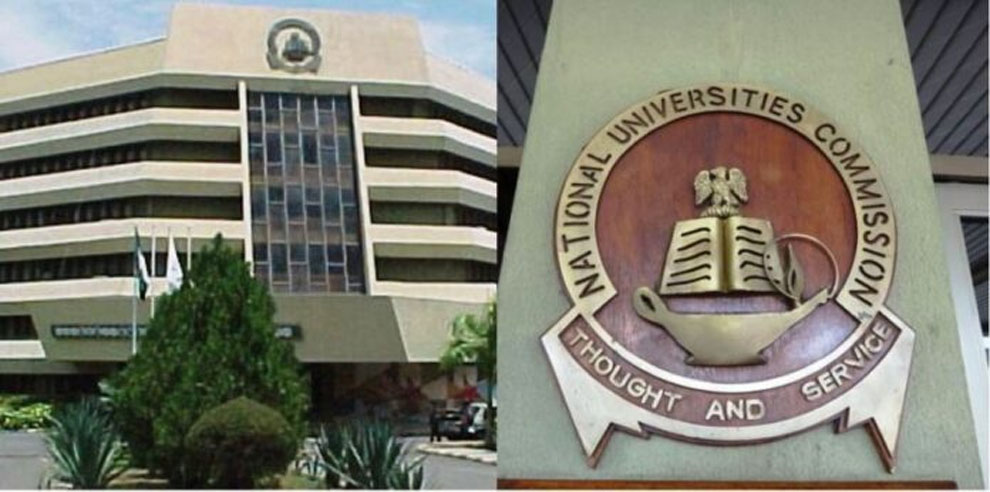
Nigerian Universities Producing Certificate Holders, Not Problem-Solvers, Says Ojuolape
Public affairs analyst calls for urgent curriculum overhaul, stronger industry partnerships and skills-based education
A public affairs analyst and human capital development advocate, Mr Adesola Adefemi Ojuolape, has called for a comprehensive overhaul of Nigeria’s university education system, warning that outdated curricula and excessive emphasis on certificates are leaving many graduates without the practical skills required to compete in the modern labour market.
Ojuolape argued that several academic programmes in Nigerian universities needed urgent reassessment to ensure their relevance to the country’s economic needs, technological advancement and changing employment opportunities.
In a commentary on the state of university education, he expressed concern that the country continued to produce large numbers of graduates without adequately equipping them with the practical knowledge, entrepreneurial abilities and problem-solving skills needed to secure employment or establish sustainable businesses.
According to him, the growing disconnect between university education and the demands of industry has contributed to graduate unemployment, underemployment and frustration among young Nigerians.
He maintained that obtaining a university degree should not be the ultimate objective of education, stressing that graduates must also possess demonstrable skills that enable them to create value, solve practical problems and contribute meaningfully to national development.
Ojuolape said the persistence of outdated teaching methods and curricula had weakened the capacity of some academic programmes to prepare students for the realities of the 21st-century economy, which increasingly depends on technology, innovation, productivity and entrepreneurship.
He called on the Federal Government and the National Universities Commission (NUC) to review existing programmes and identify those requiring modernisation, restructuring, merger or discontinuation.
The analyst also urged universities to strengthen practical training and establish functional skills acquisition centres, technology hubs and entrepreneurship laboratories to complement classroom instruction.
He said universities should build stronger partnerships with industries and employers to ensure that academic programmes reflect current workplace requirements and emerging economic opportunities.
READ ALSO:
- ToluwaniSings’ Final Hours: Aide Reveals Desperate Search Across 8 Hospitals
- Real Madrid Demand Tebas’ Exit After Explosive Nazi Propaganda Row
- Terrorists Abduct Catholic Priest in Benue as Police Launch Rescue Operation
Ojuolape further challenged university administrators and lecturers to update their knowledge and teaching methods, arguing that the rapid pace of technological change had made continuous professional development essential.
He expressed concern that students could spend several years pursuing degrees without acquiring the practical competencies needed to translate their qualifications into employment, entrepreneurship or other productive ventures.
To illustrate his argument, he compared the conventional four-year university route with the possibility of acquiring marketable technical or digital skills within a shorter period, depending on the field and the learner’s commitment.
He identified software development, data analytics, artificial intelligence, cybersecurity, digital marketing, graphic design, renewable energy installation, fashion design, catering, agriculture and other technical trades as areas in which young people could develop commercially useful competencies.
However, he stressed the need for students to make informed educational choices based on their interests, abilities and the practical opportunities available in their chosen fields.
The advocate also called on parents to reconsider the pressure they sometimes place on their children to obtain university admission or pursue particular courses for reasons of family prestige rather than suitability or career prospects.
He advised parents to examine the relevance of academic programmes and the opportunities they offer before committing their resources to university education.
For students, Ojuolape recommended careful consideration of career options, market demands and opportunities for acquiring practical skills, rather than pursuing admission simply to obtain graduate status.
He argued that technical and vocational education should receive greater recognition and investment, noting that skilled workers and entrepreneurs could make significant contributions to economic growth and job creation.
According to him, the ability to solve problems, provide services and create economic value should become a central consideration in evaluating the effectiveness of education.
Ojuolape warned that without substantial reforms, Nigeria risked continuing to produce graduates whose qualifications did not adequately match available employment opportunities or the practical needs of businesses and industries.
He therefore called for a shift from a predominantly certificate-driven system towards one that combines academic knowledge with practical competence, innovation, entrepreneurship and productivity.
While advocating reforms, his position places the responsibility on government, university administrators, lecturers, parents and students to work towards an educational system that prepares young Nigerians for both employment and self-employment.
He maintained that the ultimate measure of a successful education system should include its ability to equip learners with relevant knowledge, practical skills and the capacity to contribute to society.
Ojuolape concluded that Nigerian universities must respond more effectively to changing economic and technological realities if the country hopes to develop a competitive workforce and reduce the growing gap between educational qualifications and employability.
Nigerian Universities Producing Certificate Holders, Not Problem-Solvers, Says Ojuolape
Education
Cross River Seals 58 Schools in Crackdown on Unapproved Education Centres
Cross River Seals 58 Schools in Crackdown on Unapproved Education Centres
The Cross River State Government has shut down 58 unapproved schools in an intensified statewide crackdown on institutions operating without the mandatory Approval to Operate (ATO), warning proprietors against reopening without official authorisation.
The enforcement exercise, being conducted by the state Ministry of Education through its Department of Quality Assurance, targets schools that have failed to meet the regulatory requirements for operating nursery, primary and secondary educational institutions.
The Commissioner for Education, Stephen Odey, said the exercise was aimed at enforcing education standards, protecting pupils and students, and ensuring that schools operate within the state’s approved regulatory framework.
The government said the inspections would continue across Cross River State’s 18 local government areas as authorities work to identify unapproved institutions and ensure compliance with existing regulations.
Odey warned that schools sealed during the operation must not resume activities until they have obtained the necessary approval from the relevant authorities. He also cautioned proprietors against violating closure orders, saying offenders could face further sanctions.
READ ALSO:
- INEC Raises Alarm Over Fake APC Result Naming Okorocha, Seeks DSS, Police Probe
- Fitch Gives Tinubu Fresh Economic Boost as Nigeria’s Outlook Turns Positive
- Ronaldo Hits 980th Career Goal as Al-Nassr Win After Portugal Fallout
According to the state government, the enforcement campaign is not intended to victimise school owners but to ensure that all educational institutions meet the minimum requirements for safe and effective teaching and learning.
Among the schools identified in the government’s October 10 announcement were Impact Group of Schools, Gospel Beacon Academy and Divvy Bliss Schools in Calabar Municipality.
Others included Warriors Seed Academy, Children of Promise Christian School and Future Amazing International Schools in Calabar South.
In Odukpani Local Government Area, the government listed De-Royal Academy School, Maria Assumpta Nursery/Primary School and Success Kids Nursery/Primary School among the affected institutions.
Five schools were also identified in Akamkpa Local Government Area: Creative Brain International School, St. Luck’s Anglican Nursery/Primary School, Our Lady of Perpetual Help, Hot Brain Academy and Armour Christian International School.
The latest closures followed earlier enforcement exercises announced by the government during the week. On October 9, authorities reported identifying 15 schools operating without approval in Calabar Municipality, Odukpani and Yakurr. On October 8, another nine schools were reported shut in Calabar Municipality, while 14 schools were identified in Calabar South on October 7.
The successive operations form part of the government’s effort to strengthen school regulation and quality assurance across the state. However, the individual batches should not be added together without a consolidated list confirming that no school has been counted more than once.
The government has urged proprietors of affected schools to approach the appropriate authorities to regularise their operations and obtain the necessary approvals before reopening.
Parents and guardians have also been encouraged to verify the approval status of schools attended by their children to ensure that the institutions comply with the state’s requirements.
The closures could disrupt learning for pupils and students whose schools have been affected, particularly where families need to find alternative institutions. The government has not provided a consolidated public list of all 58 schools in the reports reviewed or announced a common reopening date for the affected institutions.
The crackdown follows an earlier warning issued by the state government in August 2025, when it announced plans to close unapproved nursery, primary and secondary schools from September of that year.
The state government has maintained that compliance with school approval requirements is necessary to uphold educational standards and ensure that institutions operate within the law.
Cross River Seals 58 Schools in Crackdown on Unapproved Education Centres
-

 metro18 hours ago
₦130m Toyota Tundra Wrecked: Lagos Dealer Questions Police Over Suspect’s Release
-

 metro3 days ago
Money Rituals: Four Arrested in Kwara Over Suspected Human Parts
-

 News3 days ago
2027 Elections: INEC Reveals Why Pantami, Adebutu, Others Were Excluded
-

 metro3 days ago
Osogbo Cultism Crackdown: Six Suspects Arrested as Police Recover Drugs, Charms
-

 Politics3 days ago
2027: Adeleke’s Camp Promises 1.5 Million Votes for Tinubu in Osun
-

 metro2 days ago
Borno Woman Jailed Two Years for Sexual Exploitation of 16-Year-Old Girl
-

 News18 hours ago
₦200m Fake Alcohol Packaging Uncovered as NAFDAC Raids Aba Market
-

 metro2 days ago
Outrage as Residents Scoop Groundnut Oil From Lagos Tanker Crash Scene