
News
Fish importation to end in 2022, says minister
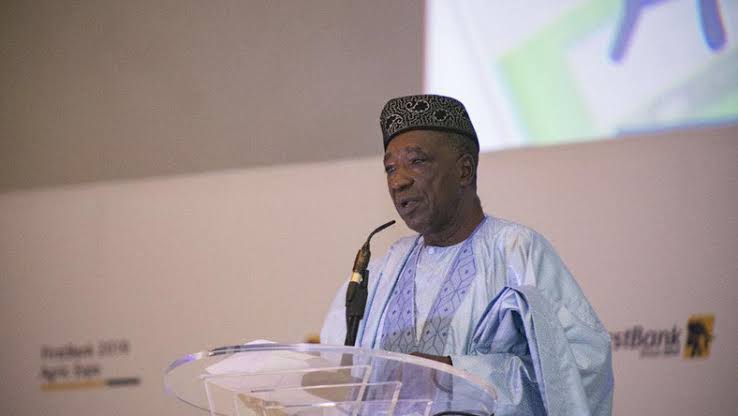
The Federal Government has asked fish importers to consider producing fish locally as it plans to ban its importation in the next two years.
Minister of Agriculture and Rural Development, Sabo Nanono, said this on Monday in Abuja at the 35th Annual Conference of the Fisheries Society of Nigeria (FISON).
He said this was part of measures to prevent capital flight and implement programmes in the agriculture sector geared towards diversifying the economy.
The minister, who was represented by the Director of Federal Department of Fisheries, Mr Imeh Umoh, described fisheries as one of the value chains in the ministry.
“Let me inform you that the vision of Mr President is to grow Nigeria’s agriculture sector to achieve a hunger-free nation, through agriculture that drives income growth, accelerate the achievement of food and nutritional security, generate employment and transform Nigeria into a leading player in the group of food and fish markets, and to create wealth for millions,” he said.
The minister said currently, the total demand for fish was 3.6 million tonnes annually while Nigeria was producing 1.1 million tonnes, leaving a deficit of about 2.5 million tonnes to be supplemented by importation.
Nanono noted that an estimated over 12 million Nigerians were actively engaged in primary and fish production, adding that contribution of fisheries to the national Gross Domestic Products was about 4.5 per cent.
He said the government had directed all fish importers to go into backward integration for local consumption and export to international market as part of the measures of the ministry to reduce this importation and generate employment.
He said several companies had complied with the policy and that the ministry was optimistic that in the next two years, Nigeria would have no business with the importation of fish.
He said it is in this regard that the Federal Ministry of Agriculture and Rural Development was pursuing a holistic approach to the development of the fisheries subsector through the diversification programme along the value chain process.
“In line with the theme of this conference, the ministry has developed various programmes to increase domestic food/fish production and the main target is the empowerment of the youth and other groups especially the women,” he said.
He added, “All these programmes are tailored towards wealth and jobs creation, arrest and prevention of youth restiveness.”
Nanono added that the contributions of the fisheries and aquaculture sub-sector to the Nigerian economy and the ongoing economic recovery programme of the current regime were significant in terms of employment, income generation, poverty alleviation, foreign exchange earnings and provision of raw materials.
President of FISON, Mr Adegoke Agbabiaka, said in order to achieve self-sufficiency in food fish production, the government in the last decade had made a paradigm shift under the Agricultural Transformation Agenda and was considering agriculture, including fisheries, as a business.










News
BREAKING: Tinubu Assents to 2026 Electoral Act, Sets Stage for 2027 Elections
BREAKING: Tinubu Assents to 2026 Electoral Act, Sets Stage for 2027 Elections
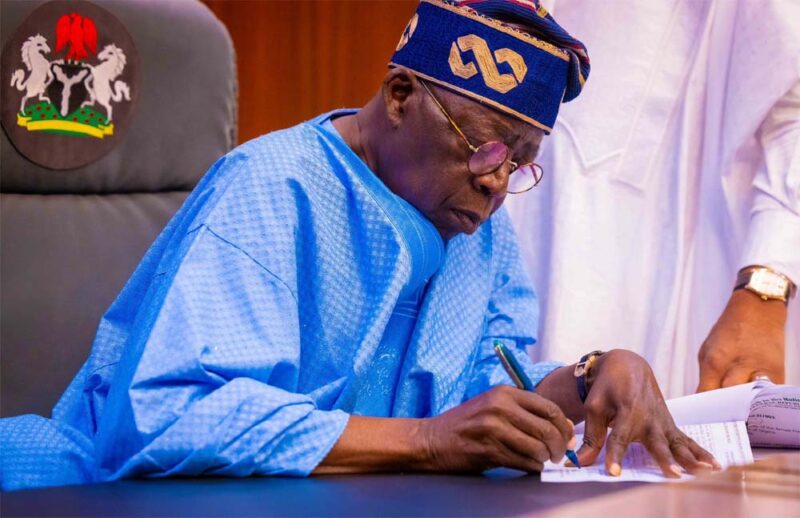
President Bola Ahmed Tinubu has signed the 2026 Electoral Act Amendment into law, setting the legal framework for Nigeria’s 2027 general elections.
The signing ceremony took place on Wednesday at the Presidential Villa in Abuja, with Senate President Godswill Akpabio and Speaker of the House of Representatives Tajudeen Abbas in attendance.
The new law, formally known as the 2026 Electoral Act (Amendment) Bill, was recently harmonised and passed by both chambers of the National Assembly amid debate and opposition from minority lawmakers.
The legislative process leading to the signing saw intense deliberations in both the Senate and the House of Representatives. Lawmakers constituted a joint conference committee to reconcile differences between their respective versions of the bill before transmitting the harmonised document to the President for assent. Earlier, Senate President Akpabio had indicated during an emergency plenary session that the President was expected to sign the amended bill before the end of February. That projection materialised within days.
One of the most significant changes introduced by the 2026 Electoral Act is the reduction of the mandatory notice period for general elections from 360 days to 300 days. Lawmakers explained that the adjustment is intended to give the Independent National Electoral Commission (INEC) greater operational flexibility in planning and conducting elections without breaching statutory timelines.
READ ALSO:
- Korope Drivers Shut Down Lekki–Epe Expressway Over Lagos Ban (Video)
- Kano Closes Entertainment Centres Ahead of Ramadan
- Asari Dokubo Warns Igbo Groups Against Sparking Religious Conflict in Rivers
The issue of electronic transmission of election results generated considerable debate throughout the amendment process. Under the new law, electronic transmission is permitted, while manual collation remains legally recognised, particularly in areas where technical or connectivity challenges arise. INEC retains the authority to issue detailed regulations and guidelines governing how results are transmitted and managed. Supporters argue the compromise reflects operational realities, while critics maintain that the changes may weaken transparency safeguards introduced in previous reforms.
Beyond these headline issues, the amended Act also makes adjustments to party primary timelines, candidate nomination processes, and collation procedures. It includes technical corrections across multiple clauses to improve clarity, reduce ambiguities, and strengthen administrative consistency ahead of the 2027 polls.
With presidential assent now secured, the 2026 Electoral Act becomes the binding legal framework governing presidential, National Assembly, governorship, and state House of Assembly elections. INEC is expected to review and align its regulations and operational guidelines with the new provisions as preparations intensify for the 2027 general elections.
The signing marks a pivotal moment in Nigeria’s democratic process, with political parties, civil society groups, and voters closely watching how the revised electoral framework will shape the next election cycle.
BREAKING: Tinubu Assents to 2026 Electoral Act, Sets Stage for 2027 Elections
News
Korope Drivers Shut Down Lekki–Epe Expressway Over Lagos Ban (Video)

Korope Drivers Shut Down Lekki–Epe Expressway Over Lagos Ban (Video)
LAGOS, Nigeria — Tension erupted on Tuesday along the Lekki–Epe Expressway as commercial mini-bus operators, popularly called korope drivers, staged a protest against a state-imposed ban on their operations along the corridor. The demonstration, which occurred during peak hours around the Ajah axis, caused vehicular movement to nearly grind to a halt, leaving hundreds of commuters stranded and triggering heavy traffic gridlock across adjoining routes. Eyewitnesses reported that drivers parked their buses across the carriageway, chanting and demanding the immediate reversal of the restriction.
Security operatives were deployed to restore order, and traffic flow gradually resumed after several hours of disruption.
Some of the protesting drivers said the ban threatens their primary source of income, as the Lekki–Epe corridor has historically been one of the most profitable routes for informal transport operators. “We have families to feed. You cannot just wake up and push us off the road without providing an alternative,” one driver told reporters. The operators called on the government to reconsider the policy or integrate them into the new transport structure rather than exclude them entirely.
READ ALSO:
- Kano Closes Entertainment Centres Ahead of Ramadan
- Asari Dokubo Warns Igbo Groups Against Sparking Religious Conflict in Rivers
- Bauchi Reduces Working Hours for Civil Servants During Ramadan
The Lagos State Government, however, defended the restriction, describing the protest as unlawful and disruptive to public order. Authorities explained that the Lekki–Epe Expressway has been designated as a Mass Transit and Regulated Transport Corridor under the state’s Bus Reform Initiative, aimed at modernizing public transport, improving safety, and reducing traffic chaos caused by unregulated operations.
According to Sola Giwa, Special Adviser to the Governor on Transportation, consultations were held with transport stakeholders before enforcement, and the transition was not sudden. Small vehicles such as korope buses are now expected to operate on feeder and community routes under the state’s First and Last Mile transport strategy, while high- and medium-capacity buses serve the main corridor.
The ongoing transport reform seeks to replace informal minibuses on major highways with structured, regulated services featuring larger buses and digital ticketing systems. Government officials argue that this will enhance commuter safety, improve traffic flow, and boost economic productivity along one of Lagos’ fastest-growing corridors.
Critics, however, note that informal transport remains a backbone of daily commuting for thousands of residents. Abrupt enforcement without adequate absorption of displaced drivers could exacerbate economic hardship for affected operators.
Many commuters expressed frustration over the disruption caused by the protest but also sympathized with the drivers. “It’s difficult for us because we rely on these buses every day,” said a commuter stranded at Ajah. “The government and the drivers need to find a middle ground.”
As of press time, authorities had restored calm, but the incident underscores the growing tensions between informal transport operators and the Lagos State Government’s efforts to formalize the transport system.
Korope Drivers Shut Down Lekki–Epe Expressway Over Lagos Ban
AG Baby | South East | Fashola |Tacha | Mirable | Alex Otti | Falz | Ikorodu Celine Dion pic.twitter.com/XYoVqWkVJq
— Newstrends.Ng (@Newstrends_ng) February 18, 2026
Korope Drivers Shut Down Lekki–Epe Expressway Over Lagos Ban (Video)
News
Tinubu Urges Senate to Confirm Yusuf for NAHCON, Marafa for INEC

Tinubu Urges Senate to Confirm Yusuf for NAHCON, Marafa for INEC
President Bola Ahmed Tinubu has called on the Nigerian Senate to swiftly confirm the nominations of Ambassador Ismail Abba Yusuf as Chairman of the National Hajj Commission of Nigeria (NAHCON) and Rear Admiral Jemila Abubakar Marafa (retd.) as a National Commissioner of the Independent National Electoral Commission (INEC). The move underscores the administration’s focus on strengthening leadership in key federal institutions ahead of critical national events.
In a letter to Senate President Godswill Akpabio, Tinubu stressed the urgency of filling the leadership gap at NAHCON, following the resignation of the previous chairperson. Ambassador Yusuf, a seasoned diplomat and former Nigerian envoy to Türkiye, brings significant international experience and administrative expertise, making him well-positioned to lead the commission in managing future Hajj operations efficiently.
READ ALSO:
- Galatasaray Stun Juventus 5–2 in UEFA Champions League
- Vinicius Jr’s Wonder Goal Gives Real Madrid Victory Over Benfica
- Trump’s Executive Order Halts US Aid, 250,000 Lives Affected in Yobe
For INEC, the nomination of Rear Admiral Marafa (retd.) is aimed at reinforcing the commission’s leadership ahead of the 2027 general elections. Representing Adamawa State, Marafa’s confirmation would bolster electoral governance, ensuring transparency, credibility, and smooth conduct of national elections.
Both nominations were formally read during Senate plenary and referred to the relevant committees — the Committee on Foreign Affairs for NAHCON and the Committee on Electoral Matters for INEC — with directives for expedited review and reporting within one week.
The President emphasized that having qualified and experienced leadership in statutory bodies like NAHCON and INEC is essential for national stability, and Senate confirmation will enable the nominees to assume office with full legal authority and mandate.
Tinubu Urges Senate to Confirm Yusuf for NAHCON, Marafa for INEC

-

 News1 day ago
Saudi Arabia Confirms Sighting of Ramadan Crescent, Fasting Begins Wednesday
-

 metro1 day ago
Lagos Woman Shares Ordeal After Alleged Rape, Sparks Nationwide Outcry
-
 metro3 days ago
US Freezes Assets of Eight Nigerians Over Boko Haram, ISIL, Cybercrime Links
-

 News1 day ago
Ramadan Begins in Nigeria as Sultan Confirms Crescent Sighting
-
 Entertainment3 days ago
Mystery in Lekki: Police Probe Death of Two Nollywood Crew Found Lifeless in Parked Car
-
 metro3 days ago
Terror in Lagos Traffic: Cutlass Gang Unleashes Mayhem on Mile 12–Ketu Road
-

 Auto3 days ago
Appeal Court Ruling on VIO Limited to Abuja, Not Lagos — LASG
-

 metro1 day ago
Seven Killed in Horrific Crash at Ota Toll Gate
You must be logged in to post a comment Login