

News
Five Tegina Islamiyya children in critical condition – Head teacher
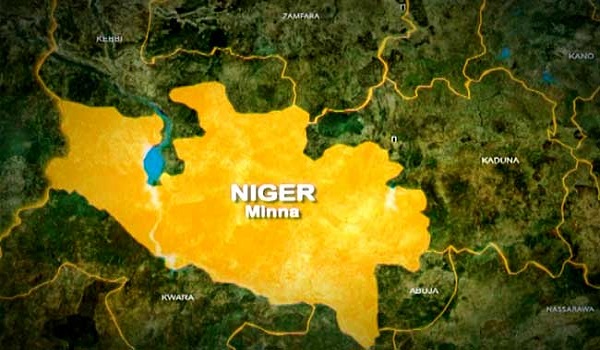
Abductors of the Salihu Tanko Islamiyya School Children have stated that five of the children in captivity are in critical conditions and may die soon.
The head teacher of the school, Alhassan Garba Abubakar, said the abductors told him this in their last conversation.
The abductors, he said, are willing to accept the initial N18m ransom so parents can have their children back.
But the Niger State Government dismissed the new development as a ploy by the abductors to get more money from the parents.
Two of the abducted children were reported to have died last Thursday.
Alhassan said that the bandits sounded urgent on the phone, claiming they do not want more children to die.
“They called me and broke the news of the death. They urged me to make haste for the release of the children because five of them are also in critical conditions.
“With the death of two of the children plus the earlier four who died, six of the children are now gone even though we have paid N50 million earlier, we pray that this time around God will touch their heart to release them,” he said.
The parents have started to start raise money again to prevent further death of their children.
The parents, it was gathered, were anxious over which of the children were in critical conditions.
But Secretary to the Niger State Government, Alhaji Ibrahim Matane, told The Nation that the bandits have been using the same tactics to get more money from the parents and would end up not releasing the children.
He asked the parents to be calm, assuring government was on top of the situation and would get the children back in good health.
“They have been saying this for a long time. It is a ploy and tactic to get more money from the parents. There is no such confirmation or information from our side that anything of such is happening.
“We assure the parents that the government is doing everything, we are mobilizing security and putting in other security measures which cannot be disclosed. They should stop panicking, we will get the children from the bandits in one piece,” he said.
Matane insisted that the government’s stand of not paying ransom remains but added that this does not mean that the government is doing nothing as perceived by many.











News
Nigeria Moves to End Passport Imports, Begins $70m Local Production Plant

Nigeria Moves to End Passport Imports, Begins $70m Local Production Plant
The Federal Government has taken a major step towards ending Nigeria’s dependence on imported international passport booklets, with the commencement of construction of a $70m manufacturing facility in Abuja expected to produce six million electronic passport booklets annually from May 2027.
The facility, which will be the country’s first electronic passport booklet manufacturing plant, is also being positioned as a regional production hub capable of supplying other West African countries and serving the wider Economic Community of West African States market.
Minister of Interior, Olubunmi Tunji-Ojo, disclosed this on Friday during the groundbreaking ceremony for the National Passport Booklet Manufacturing Centre at the headquarters of the Nigeria Immigration Service in Abuja.
He said the facility would initially have an annual production capacity of six million booklets, with plans to expand it to 10 million, significantly exceeding Nigeria’s estimated annual requirement of between 1.8 million and two million passports.
“The requirement of Nigeria is roughly between 1.8 to 2 million passports a year, but by May, we will have the capacity for six million passports a year in production, which we are going to scale to 10 million booklets a year,” the minister said.
The groundbreaking ceremony was performed by the Chairman of the Senate Committee on Interior, Senator Adams Oshiomhole.
Tunji-Ojo said the manufacturing complex would occupy 1.1 hectares, operate off-grid and deploy artificial intelligence in its operations.
He described the project as a significant milestone in Nigeria’s technological and industrial development, noting that its completion would position the country as the first in West Africa to manufacture electronic passport booklets locally.
According to the minister, only three African countries — South Africa, Ethiopia and Algeria — currently manufacture passports within their borders. He, however, noted that Ethiopia was the only one among them with the capacity to manufacture electronic passports.
Beyond meeting domestic demand, he said the Federal Government and its technology partner, Iris Smart, were developing the facility to serve the ECOWAS market and potentially export passport booklets to other countries.
“What we and our partners, Iris Smart, are doing is to build a passport facility that will be able to service ECOWAS and even be able to export to other countries,” he said.
On the financial structure, the minister disclosed that the $70m investment would be fully funded by the private-sector partner, without direct government funding.
“This project is about $70m without a dime from government,” he said, describing Iris Smart as a wholly Nigerian company.
Tunji-Ojo explained that although Iris Smart secured an electronic passport contract in 2003 under the administration of former President Olusegun Obasanjo, the company had continued to import passport booklets instead of manufacturing them locally.
He said he challenged the arrangement upon assuming office, insisting that Nigeria could no longer continue to support manufacturing jobs and industrial activities in other countries while neglecting opportunities at home.
“We said we cannot be aiding employment in other countries and be creating unemployment in our own country,” he said.
The minister recalled a heated exchange with the company over the continued importation of the booklets, saying he insisted that the existing contract should translate into local manufacturing capacity.
According to him, the company subsequently invested more than $5m in a production centre and is now committing approximately $70m to the new manufacturing complex.
He added that the Federal Government had also prioritised technology transfer and local capacity development to ensure that Nigerian officials would independently operate the facility.
“We have invested in knowledge transfer so that at no time will any vendor be able to hold the government of Nigeria to ransom on anything,” he said.
The Comptroller-General of the Nigeria Immigration Service, Kemi Nana Nandap, described the project as the completion of a major phase of reforms aimed at establishing Nigeria’s control over the entire passport production chain.
She recalled that the Service completed its Centralised Passport Personalisation Centre in September 2025, enabling it to personalise passports locally and securely embed citizens’ details in the booklets.
“Today, we can personalise passports here in Nigeria, and we can securely place each citizen’s details into these booklets. Now we are taking the next bold step. We are building the capacity to manufacture these booklets themselves within our country,” she said.
Nandap noted that Nigerians had experienced passport booklet shortages and prolonged waiting periods, stressing that local manufacturing would strengthen the country’s ability to maintain a reliable and efficient passport administration system.
“A nation cannot run a dependable passport system without control over the critical parts of its own supply chain,” she said.
She added that the success of the initiative would ultimately be measured by the quality of institutions established, the standards maintained and the benefits delivered to Nigerians.
Also speaking, Oshiomhole described the project as a practical demonstration of President Bola Tinubu’s Renewed Hope Agenda, particularly its emphasis on local production, employment generation and economic self-reliance.
“We are now going to say Nigerian passports are manufactured in Nigeria, produced in Nigeria and issued by Nigeria for the benefit of Nigerians,” he said.
The former Edo State governor expressed optimism that the facility would be completed and commissioned by May 2027, describing the proposed timeline as an early achievement in the administration’s reform programme.
He also highlighted the employment opportunities expected from the project, arguing that manufacturing creates more sustainable industrial jobs than dependence on imported products and services.
“Those jobs will not come from services; they will come from manufacturing, and this is one,” he said.
Oshiomhole further expressed confidence in the Immigration Service’s capacity to manage passport production locally, stressing the importance of ensuring that the country’s passport system remains firmly under Nigerian control.
Editorial note: I have used May 2027 rather than simply May to make the timeline clear, given the November 20, 2026 date of the announcement. I have also retained the key financial, production-capacity and ECOWAS export details because they give the story a stronger industrial and economic significance.
One important point for publication: the $70m investment, the company’s Nigerian ownership and the claim about African countries manufacturing e-passports should be independently verified if possible.
News
Agunbiade Proposes Council of Grand Chief Imams for Yorubaland, Edo, Delta

Agunbiade Proposes Council of Grand Chief Imams for Yorubaland, Edo, Delta
Calls for Specialised Leadership Platform to Address Succession Disputes, Recognition, Institutional Challenges
A member of Rabwa Islamic Propagation in Riyadh, Saudi Arabia, Mallam Ibrahim Agunbiade, has proposed the establishment of a Council of Grand Chief Imams of Yorubaland, Edo and Delta States to strengthen traditional Islamic leadership, promote unity among Muslim leaders and address challenges confronting holders of the offices of Grand Chief Imams.
Agunbiade made the proposal in a detailed position article dated Thursday, November 19, 2026, following the recent League of Imams and Alfas Conference held at Jogor Centre in Ibadan, Oyo State.
He argued that the conference and the controversies surrounding it should provide an opportunity for meaningful reflection on the institutional structure of Islamic leadership across Yorubaland and neighbouring states rather than becoming a source of further disagreement among Muslims.
According to him, the proposed body, which could also be known as the Assembly of Grand Chief Imams of Yorubaland, would provide a specialised and independent platform for recognised Grand Chief Imams to discuss issues affecting their offices, communities and the wider Muslim Ummah.
The proposal, he explained, was not intended to undermine the League of Imams and Alfas or challenge its relevance in the Muslim community.
Rather, he maintained that the League and the proposed council could operate independently while complementing each other’s responsibilities.
Agunbiade noted that although the League provides a broader platform for Imams, Alfas and Islamic scholars, the peculiar responsibilities attached to the office of a Grand Chief Imam require a dedicated institutional structure.
He described Grand Chief Imams as important figures within the religious, traditional and administrative structures of Muslim communities, stressing that their responsibilities extend beyond leading congregational prayers.
According to him, Grand Chief Imams serve as spiritual heads, custodians of Islamic traditions and representatives of Muslim communities in engagements with traditional rulers, governments and other relevant institutions.
He expressed concern that the peculiar challenges associated with these offices do not always receive adequate institutional attention, making it necessary to establish a platform through which Grand Chief Imams can collectively address their concerns.
Among the issues he identified were disputes over the recognition of Grand Chief Imams, succession arrangements, installation procedures, disagreements between religious authorities, government engagements and the preservation of the dignity of the traditional Islamic office.
Proposed Council to Have State Chapters
Under the proposal, the Council of Grand Chief Imams would comprise recognised Grand Chief Imams from different states, cities and towns across the Southwest, as well as Edo and Delta States.
Agunbiade suggested the establishment of state chapters to provide opportunities for Grand Chief Imams within individual states to deliberate on local challenges and resolve matters before referring issues requiring wider intervention to the regional body.
He explained that the arrangement would promote regular consultations, experience sharing, conflict resolution and collective decision-making among Islamic leaders.
He further argued that no Grand Chief Imam should be left to confront challenges relating to his office, recognition, succession or relationship with traditional institutions without access to the advice and support of fellow Grand Chief Imams.
The proposed council, he added, could also serve as a common platform for engaging state governments, traditional rulers, security agencies and other relevant stakeholders on issues affecting Muslim communities.
Agunbiade Rules Out Rivalry With League of Imams and Alfas
Addressing possible concerns about the emergence of another Islamic organisation, Agunbiade emphasised that the proposed council should not be regarded as a rival to the League of Imams and Alfas or any other established Muslim association.
He maintained that the two institutions could coexist because their areas of concentration and institutional responsibilities would not necessarily be the same.
While the League would continue to provide a broad platform for Imams, Alfas and Islamic scholars, the proposed council would focus specifically on the institutional affairs and peculiar responsibilities of Grand Chief Imams.
He argued that the existence of different Muslim organisations should not automatically be interpreted as evidence of division, provided their responsibilities were clearly defined and their activities contributed positively to Islam and the welfare of Muslims.
However, he warned that the proposed council must not become another platform for the pursuit of personal recognition, political influence or supremacy.
Instead, he said its operations should be guided by Islamic principles of consultation, known as Shura, mutual respect, transparency, accountability and sincere commitment to the service of Allah.
He also stressed that membership should be based on recognised traditional and community-based offices of Grand Chief Imams, with due consideration for established processes and legitimate arrangements within individual Muslim communities.
Calls for Constitution, Annual Assembly
To ensure the sustainability and effective operation of the proposed institution, Agunbiade recommended the development of a comprehensive constitution outlining its membership requirements, leadership structure, tenure of office, responsibilities, meeting schedules and dispute-resolution procedures.
He proposed regular meetings at the state level, alongside regional gatherings that would provide opportunities for broader discussions and collective decisions on matters of common interest.
He also suggested an annual assembly of Grand Chief Imams from the participating states to strengthen relationships, encourage cooperation and develop common positions on issues affecting Islamic leadership across the region.
Beyond administrative coordination, Agunbiade said the council should promote mentorship between senior and younger Islamic leaders, preserve the historical heritage of traditional Islamic leadership and encourage peaceful succession arrangements in communities where such matters arise.
He emphasised that the proposed institution must respect the independence and authority of individual Grand Chief Imams while providing a common platform for consultation and cooperation.
Appeals to Grand Chief Imams Across Nine States
Agunbiade specifically called on Grand Chief Imams across Lagos, Ogun, Oyo, Osun, Ondo and Ekiti States, as well as their counterparts in Edo and Delta States, to give serious consideration to the proposal.
He urged Muslim leaders to look beyond the disagreements surrounding the recent Ibadan conference and use the experience as an opportunity to strengthen Islamic leadership institutions.
According to him, occasional conferences and gatherings may not be sufficient to address the recurring institutional challenges confronting traditional Islamic leadership.
He argued that a permanent and well-structured council would provide a more reliable mechanism for addressing disagreements, protecting the dignity of traditional Islamic offices and promoting unity among Muslim leaders.
The proposed body, he added, would give Grand Chief Imams an opportunity to deliberate freely, resolve disagreements amicably, exchange ideas and collectively advance the interests of the Muslim Ummah.
He expressed optimism that the establishment of the Council of Grand Chief Imams of Yorubaland, Edo and Delta States could become an important milestone in the development of Islamic institutional leadership in the region.
Agunbiade concluded that the objective was not to establish another centre of controversy but to create an institution dedicated to consultation, reconciliation, cooperation and responsible leadership.
He described the desired outcome as unity without uniformity, cooperation without subordination, and leadership anchored in consultation, wisdom and mutual respect.
He also prayed for Allah’s guidance for Islamic leaders, asking that their hearts be united upon righteousness and that they be granted the wisdom to discharge their responsibilities with sincerity, justice and accountability.
Mallam Ibrahim Agunbiade is a member of Rabwa Islamic Propagation, Riyadh, Saudi Arabia.
Agunbiade Proposes Council of Grand Chief Imams for Yorubaland, Edo, Delta
News
Adeleke Rejects Proposed Naming of Osogbo Stadium After Him, Orders Removal of Signpost

OSOGBO – The Osun State Government has ordered the immediate removal of a signpost announcing the renaming of Osogbo Township Stadium after Governor Ademola Adeleke, following clarification that the governor had not given final approval for the proposed change.
The controversy erupted on Wednesday, November 18, 2026, after a large signpost bearing the proposed name, Ademola Adeleke Imole Stadium, was erected at the entrance of the sporting facility.
The development initially generated reports that the state government had renamed the stadium in honour of Adeleke, barely days before his scheduled second-term inauguration on November 27.
However, the state government subsequently disowned the action, explaining that those responsible for installing the signpost had acted without obtaining the governor’s final approval.
READ ALSO:
- Petrol Prices Crash as Dangote Refinery, NNPCL, MRS Adjust Rates Nationwide
- Military Air Strike Destroys ISWAP Hideout, Kills 10 Fighters in Borno
- Fire Destroys Seven Classrooms, Truck, Car at Lagos NNPC Filling Station
- 17 Dead as Gunmen Launch Two Fresh Mass Shootings in South Africa
The Commissioner for Information and Public Enlightenment, Kolapo Alimi, said the governor had only been informed about the proposal and indicated that he would consult before making a decision.
According to Alimi, those behind the installation failed to wait for the governor’s final response before proceeding with the action.
He said Adeleke consequently directed that the signpost be removed immediately, adding that any eventual decision to rename the facility would be formally communicated to the public.
The signpost was subsequently taken down following a directive reportedly issued by the Deputy Governor and Commissioner for Sports, Kola Adewusi.
Also reacting, the General Manager of the Osun State Sports Council, Ademola Daini, described the action of those who installed the signpost as an overzealous move.
The proposed renaming had attracted public attention and mixed reactions, with some residents and commentators questioning the decision to name a public sporting facility after a sitting governor, while others argued that public officeholders could be recognised for their contributions.
The stadium, formerly known as Osogbo City Stadium, is currently undergoing rehabilitation as part of efforts to restore the facility for sporting activities.
The stadium previously served as the home ground for Osun State’s male and female football teams. However, its deteriorating condition forced the teams to consider alternative venues for their league matches.
The facility is also expected to host activities marking Adeleke’s scheduled second-term inauguration on November 27.
The state government has, however, made it clear that no final decision on the proposed renaming should be inferred from the signpost that was erected without the governor’s authorisation.
The government said the public would be properly informed if a decision to rename the stadium was eventually approved.
Adeleke Rejects Proposed Naming of Osogbo Stadium After Him, Orders Removal of Signpost
-

 metro2 days ago
Viral Video: Nigerian Army Explains Why Soldiers, DSS Operatives Met Bandits In Kwara Forest
-

 International1 day ago
Islam Set to Overtake Christianity as World’s Largest Religion by 2035
-

 Business1 day ago
NNPCL, MRS, Other Marketers Slash Petrol Prices Across Nigeria As Motorists Get Fresh Relief
-

 News3 days ago
BREAKING: Fountain Of Life Crisis Deepens As Trustees Reaffirm Jimmy Odukoya’s Removal, Appoint Interim Leader
-

 News1 day ago
Agunbiade Proposes Council of Grand Chief Imams for Yorubaland, Edo, Delta
-

 metro2 hours ago
FG’s ₦100,000 Family Grant: Eligibility, How to Apply and Payment Procedure Revealed
-

 News1 day ago
Adeleke Rejects Proposed Naming of Osogbo Stadium After Him, Orders Removal of Signpost
-

 Education2 days ago
Panic As Fire Engulfs Nigerian University Hostel, Destroys Students’ Valuables