
metro
Floods: FG confirms 500 persons dead, 45,000 houses submerged

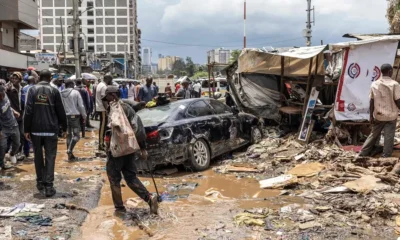
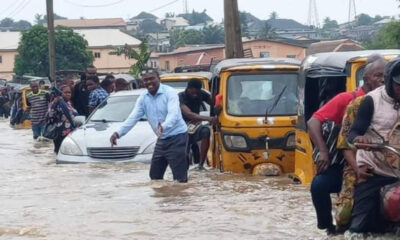
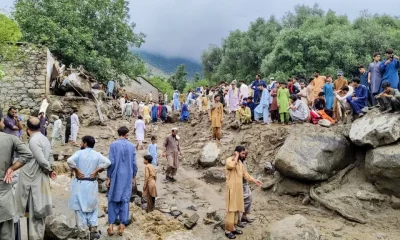
The Federal Government has confirmed that at least 500 persons died last few weeks due to the devastating impact of the floods in many parts of the country.
The figure was released on Tuesday at a meeting in Abuja convened by the FG comprising all relevant agencies of government connected to efforts at tackling the menace in the country.
The FG also revealed that 45,249 houses had been totally destroyed while 70,566 hectares of farmlands have been damaged.
But Minister of Agriculture and Rural Development, Dr. Mohammed Abubakar said though Nigerians could express concerns over the devastating floods, there should be no panic over threats to food security.
THISDAY had reported that a boat carrying more than 80 people, capsized in the south-eastern state of Anambra last Friday, as people desperately tried to escape the floods that had risen as high as rooftops.
In the same area, at least 600,000 people had been displaced, according to National Emergency Management Agency (NEMA).
Apart from the catastrophic flooding for states located along the courses of rivers Niger and Benue, at least three of Nigeria’s overfilled reservoirs have overflowed, causing havoc in its wake.
The Anambra tragedy followed the devastating aftermath of a flood that swept through swaths of neighbouring north-central Kogi state a week ago, leaving buildings submerged under water that rose to levels not seen in a decade, according to officials of the Kogi Red Cross Society.
Also heavily submerged are communities along the fringes of River Benue in Nasarawa State and River Niger traversing the boundary between Kwara and Niger states.
“Many people have been rendered homeless in Lokoja as houses were submerged by flood. The roads served as a link between North Central and Southern parts of the country and many passengers were stranded,” the Red Cross told the CNN.
Governor of Kogi State, Mr Yahaya Bello, had revealed that nine areas along the Niger and Benue River were affected.
“Ibaji is almost 100 per cent under water while the rest range from 30 per cent up … We therefore have a serious and humanitarian tragedy on our hands, but I wish to assure every person, family and community which has been affected that they are not alone and that help is coming,” he noted.
The situation in Kogi, THISDAY gathered, had affected the movement of inter-state travellers, some of whom were stuck in traffic for days.
In addition, the situation had seriously impacted fuel supply in Abuja and environs as tankers from the southern part of the country have not been able to move beyond Kogi which serves as a gateway from the south to the north.
While displaced persons are now taking shelter in the homes of relatives and good Samaritans in neighbouring towns unaffected by the flood, Bello noted that he was working to reduce the impact of the flood.
One of the causes of the latest round of flooding, NEMA said, was the release of excess water from a dam in neighbouring Cameroon which it said was complicating Nigeria’s already disastrous flood crisis.
“The Lagdo dam operators in the Republic of Cameroun have commenced the release of excess water from the reservoir by 13th September, 2022. We are aware that the released water cascades down to Nigeria through River Benue and its tributaries thereby inundating communities that have already been impacted by heavy precipitation,” NEMA said recently.
But Kogi in the north central is not the only state reeling from the devastating impact of the latest flood. In neighbouring Nasarawa State, which is also grappling with flood water cascading down the River Benue, farmers are counting their losses from ravaged farmlands.
It’s the same in north-eastern Adamawa, where more people are dying from flood-related incidents.
In the South-East too due to River Niger bursting its banks around Onitsha and Ogbaru, many houses are now also submerged.
One of the biggest impacts of the flooding THISDAY learnt would be food shortage as farmers in the north cannot move their produce and animals to the south while tanker drivers cannot move fuel to the North.
Areas mostly impacted in Anambra aside Ogbaru and Onitsha North are Onitsha South, Anambra East, Anambra West, Awka North, Ayamelum and Oyi local government areas.
In Kogi, the popular Ganaja road leading to Ajaokuta, Kogi East and Eastern part have been submerged while oncoming have had to park by the roadside.
The situation is also expected to affect the price of rice around December as Olam Nigeria Limited, one of Nigeria’s biggest agri-business companies, said the massive flooding from River Benue damaged the company’s crops and infrastructure.
Vice-president, Olam Nigeria Limited, Ade Adefeko had said the incident affected the company’s $20 million investment and about 25 percent of Nigeria’s rice needs, describing the situation as “very terrible.”
“The entire team from the farm worked very hard to prevent the colossal damage…but it affected us to a large extent. We supply about 25 per cent of Nigeria’s rice needs and that has been affected and have lost over $20 million,” he said.
“When they say it rains. It’s not really raining, it’s pouring. So it’s terrible” he added.
The Olam Rice Farm is located in Lukubi Doma Local Government Area of Nasarawa State. The farm sits on 10,000 hectares and is one of the largest rice farms in Nigeria and Africa with N140 million worth of investment.
But the Permanent Secretary, Federal Ministry of Humanitarian Affairs, Disaster Management and Social Development, Sani Gwarzo, while releasing the latest statistics Tuesday, told journalists that the government was working hard to address the situation.
“In the area of the flood disaster outlook, records from the field have indicated that the 2022 flood is comparable only to the 2012 flood in terms of human displacement, livelihood disruption, infrastructure damage and environmental dislocation.
“The National Emergency Management Agency has confirmed that as at October 9, 2022, water levels at Lokoja and Makurdi along Rivers Niger and Benue is 11 per cent above the level recorded in 2012.
“So far the flood has wreaked havoc in 31 states of the federation and the Federal Capital Territory (FCT). Over 500 persons are reported dead; 1,411,051 affected; 790,254 displaced persons with 1,546 persons injured.
“Furthermore, 44,099 houses are partially damaged; 45,249 houses totally damaged; 76,168 hectares of farmland partially damaged and 70,566 hectares of farmland are completely destroyed by the great deluge,” he revealed.
He added that relief materials were being made available to persons in need, stressing that NEMA had provided relief support to over 315,000 displaced persons across the flood disaster hotspots where state capacities had been overwhelmed.






metro
Police Debunk Viral Terror Attack Video in Abuja, Arrest Suspect

Police Debunk Viral Terror Attack Video in Abuja, Arrest Suspect
The Nigeria Police Force has dismissed a viral video circulating on social media claiming an ongoing terror attack in Abuja, describing the content as false, misleading, and deliberately designed to incite panic within the Federal Capital Territory (FCT).
In a statement issued on Friday by the Force Public Relations Officer, DCP Anthony Placid, the police said there is no record of any such attack in Abuja, stressing that the claims in the video are completely fabricated and malicious.
The Force explained that preliminary investigations showed the video was constructed using unrelated footage sourced from online platforms and edited to create a false impression of insecurity in the nation’s capital.
According to the police, the aim of the content was to spread fear, disrupt public order, and undermine public confidence in Nigeria’s security system.
The statement emphasized that the circulation of such material amounts to misinformation and fake news in Nigeria, which can trigger unnecessary panic and threaten public safety.
READ ALSO:
- Trump Orders JD Vance to Lead Iran War Exit Strategy Ahead of Pakistan Talks
- NBA Warns Lawyers, Courts Against Interfering in Political Party Disputes
- Gunmen Wipe Out Family of Eight in Fresh Plateau Attack
The police also confirmed the arrest of a suspect identified as Pam Joseph in connection with the creation and distribution of the viral video.
Authorities said the arrest followed credible intelligence and digital forensic analysis that traced the origin and spread of the false content to the suspect.
The suspect is currently in police custody and will be charged to court upon completion of investigations.
The Nigeria Police Force reiterated that while citizens have the right to freedom of expression, such rights do not extend to the deliberate spread of false information capable of endangering public peace and national security.
It urged members of the public to verify security-related information before sharing and to rely only on official communication channels for accurate updates.
The Force further warned that individuals or groups involved in spreading false security alerts online will be tracked and prosecuted under relevant cybercrime laws.
Police authorities assured residents that Abuja remains calm and under tight security surveillance, with routine patrols and intelligence operations ongoing across the city.
They added that the security agencies are fully committed to maintaining law and order and preventing any attempt to create fear or confusion through digital platforms.
The development comes amid growing concern over the spread of unverified security alerts in Nigeria, which authorities say can cause unnecessary tension and disrupt daily life.
Police Debunk Viral Terror Attack Video in Abuja, Arrest Suspect
metro
Gunmen Wipe Out Family of Eight in Fresh Plateau Attack
Gunmen Wipe Out Family of Eight in Fresh Plateau Attack
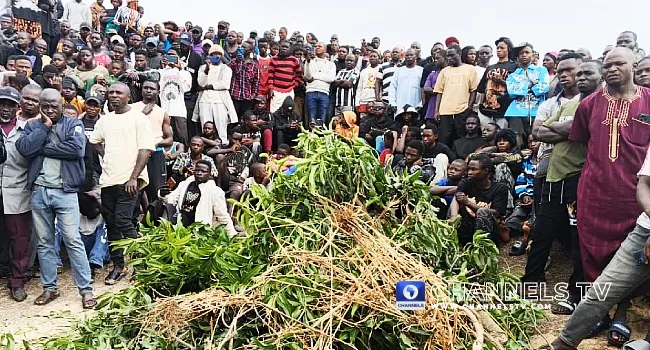
At least eight people have been killed in a fresh gunmen attack in Plateau State after armed attackers invaded Mbwelle village in Bokkos Local Government Area during a late-night raid.
The incident, which occurred on Thursday around 11pm in Plateau State, saw gunmen storm the community and open fire on residents, leaving several others injured and many still missing.
Victims were largely members of the same family, with the deceased identified as Elder Iliya Mangut Dakus, Mr Luck Titus Dakus, Mr Habila Istifanu Dakus, Mr Hassan Istifanus Dakus, Mrs Hassan Moses Dakus, Biggie Lucky Dakus, Sunday Gideon Dakus, and Mr Innocent Barnabas Makwin.
Confirming the attack, the Chairman of the Community Peace Observers in Bokkos LGA, Kefas Mallai, said the gunmen operated for hours without resistance.
“There was an attack last night at Mbwelle village. So far eight persons have been confirmed dead this morning,” he said.
Mallai added that the attackers moved freely during the operation, firing indiscriminately at residents and escaping before security forces arrived.
READ ALSO:
- Germany Opens Fully Funded Scholarships for Nigerians, Africans
- Kwara Governor Mourns 5 Forest Guards Killed in Nuku Bandit Attack
- Amnesty International Condemns Killing of 24 in Kebbi Bandit Attack
He also alleged a delayed response from security operatives, claiming that residents were left vulnerable despite the proximity of security formations in the area.
According to him, “The attack lasted for several hours with no visible security presence to repel the attackers.”
The development has sparked anger among residents, with reports that some community members were considering protests over what they described as repeated failures to protect rural settlements.
Youth leader Christopher Luka also confirmed the killings, describing the incident as devastating and targeted.
“The gunmen came around 11pm and started shooting sporadically. They targeted one family mostly. Eight people are confirmed dead, some injured, others still missing,” he said.
Three additional victims were reported injured and are currently receiving treatment at undisclosed medical facilities.
As of the time of filing this report, efforts to reach the Nigeria Police Force spokesperson in Plateau State were unsuccessful, while military officials attached to the Joint Task Force said they would provide updates later.
The attack is the latest in a series of violent incidents in Plateau State’s Bokkos and surrounding LGAs, where rural communities have repeatedly come under assault by armed groups.
In recent weeks, neighbouring areas including Barkin Ladi, Riyom, and Jos South have also recorded deadly attacks, further heightening fears across the state.
Community groups have continued to accuse attackers of targeting farming settlements and rural roads, while calling for stronger security presence and improved surveillance across vulnerable corridors.
Security analysts warn that the recurring violence reflects a deepening insecurity crisis in Nigeria’s Middle Belt, where communities face frequent night raids, ambushes, and displacement.
Authorities say investigations are ongoing, while additional security deployments are expected in the affected area to prevent further escalation.
Gunmen Wipe Out Family of Eight in Fresh Plateau Attack
metro
Kwara Governor Mourns 5 Forest Guards Killed in Nuku Bandit Attack
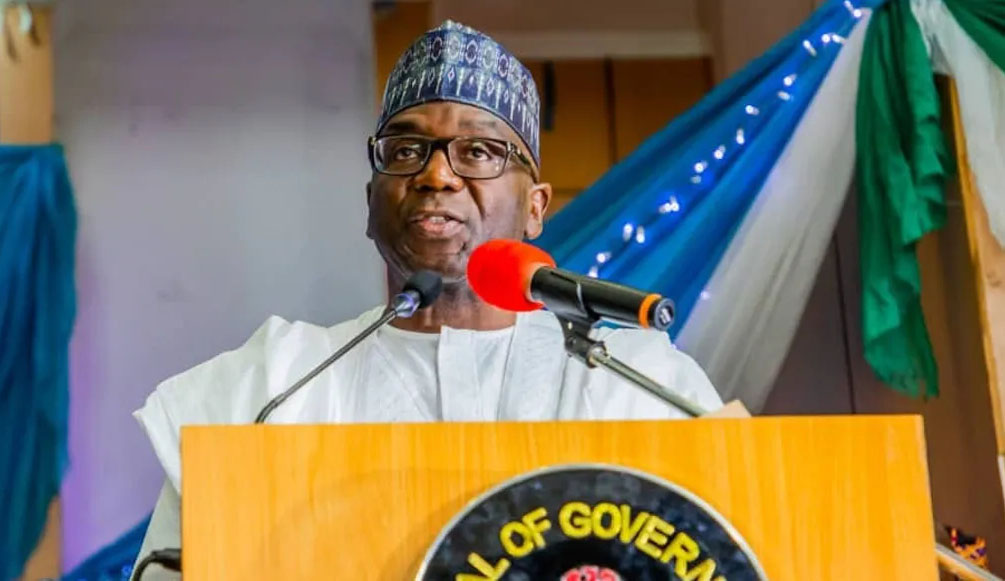
Kwara Governor Mourns 5 Forest Guards Killed in Nuku Bandit Attack
The Kwara State Government has condemned the killing of five forest guards in a deadly bandit attack in Kwara State, as Governor AbdulRahman AbdulRazaq expressed grief over the tragic incident and unveiled fresh measures to strengthen security.
The हमला occurred in Nuku community, Kaiama Local Government Area of Kwara State, where suspected bandits reportedly launched a coordinated midnight raid on a security outpost around 3:00 a.m., killing five forest guards on duty.
In a statement issued through his Special Adviser on Media, Bashir Adigun, the governor described the slain guards as brave patriots who died defending their communities.
“I received the news with a heavy heart. These men paid the ultimate price while confronting armed assailants. Nothing can truly compensate for their sacrifice,” AbdulRazaq said.
According to local sources, the attackers arrived in large numbers, overwhelmed the guards, and set fire to motorcycles and patrol vehicles at the outpost, leaving critical security assets destroyed.
READ ALSO:
- Amnesty International Condemns Killing of 24 in Kebbi Bandit Attack
- Trump Slams Iran Over Strait of Hormuz as Middle East Ceasefire Talks Stall
- Thousands Return to Al-Aqsa Mosque After 40-Day Closure
The latest bandit attack in Kaiama LGA has heightened fear among residents, especially as it comes barely two months after similar deadly raids on Woro and neighbouring Nuku communities.
Security experts say the increasing frequency of such attacks signals a worrying spread of banditry in North Central Nigeria, with forested areas serving as operational bases for armed groups.
Governor AbdulRazaq commended security agencies for their ongoing efforts but urged them to intensify operations to curb the growing threat.
To tackle the situation, he announced the formation of a Kwara State Security Strategy Committee, comprising retired senior military and security officers tasked with strengthening intelligence gathering and coordinating security responses.
The committee is chaired by retired Major General G.A. Wahab, with members including Major General Yemi Abidoye, Major General Abubakar Ndalolo, Rear Admiral Aliyu Lawal, Air Commodore A.S.A. Buhari, Assistant Inspector-General of Police Aderemi Opadokun, and Lieutenant Colonel W.A. Lawal. Shuaib Abdulganiyu will serve as secretary.
The governor said the committee would immediately begin deliberations on practical strategies to address insecurity, particularly in rural and vulnerable communities.
He also assured that the state government would support the families of the deceased guards and work closely with federal security agencies to prevent further attacks.
“Our sincere condolences go to the families and communities of the forest guards. They will forever remain our heroes,” he added.
Authorities have reportedly deployed additional security personnel to the affected area, while investigations are ongoing to track down those responsible for the killings.
The incident underscores growing concerns over insecurity in Kwara State, as residents continue to call for stronger protection and proactive security measures.
Kwara Governor Mourns 5 Forest Guards Killed in Nuku Bandit Attack

-

 Africa2 days ago
ECOWAS Recruitment 2026: Over 30 Job Vacancies Open for Nigerians (How to Apply)
-

 metro3 days ago
2026 NYSC Batch A Stream II: Registration, Swearing-In Dates Announced
-

 Entertainment2 days ago
Saheed Osupa Defends Juju Use Amid Backlash From Islamic Clerics
-

 Politics2 days ago
Court Stops ADC Congress, Orders Status Quo in Leadership Row
-

 Health1 day ago
Sleeping Positions: How They Affect Your Health and Which Ones to Avoid
-
 metro2 days ago
Boko Haram Attack in Borno: Brigadier-General, Soldiers Killed as ISWAP Overruns Military Base
-
 metro2 days ago
US Evacuates Embassy Staff in Nigeria, Lists 23 States as ‘Do Not Travel’
-

 Entertainment3 days ago
Peller Sued for ₦400 Million by Former Tour Bouncer