

News
Foreign investors still wary as Cardoso pitches for hot money inflows
Foreign investors still wary as Cardoso pitches for hot money inflows
Data from the Nigerian Exchange (NGX) reveals that foreign participation in the Nigerian equities market dropped to 8.15% in January 2024, a decline compared to 13.92% and 12.76% recorded in the previous and corresponding month of 2023.
Specifically, a total of N651.52 billion was recorded as transaction in the Nigerian stock market in January 2024, in contrast to the N343.9 billion traded in the previous month.
Out of the N651.52 billion, foreign portfolio investment accounted for N53.11 billion in the review period while domestic transaction was N598.41 billion.
Foreign investments in Nigeria have dwindled significantly in recent years, following the aftermath of the COVID-19 pandemic, and has since remained underwhelming largely because of FX instability and dollar illiquidity.
The inability of foreign investors to easily repatriate their earnings as at when due has been a limiting factor deterring the participation of foreign investors in the Nigerian market.
As a result of low foreign inflows and high demand for the greenbacks, the naira has depreciated by 41% and 21% YTD against the US dollar at the official and parallel market respectively.
CBN embarks of total market reform
- In a bid to manage FX volatility in the country, the CBN has rolled out several guidelines and circulars to the various market stakeholders in the country, ranging from commercial banks, IMTOs, BDCs, amongst others.
- Some of these reforms include the unification of the foreign exchange market, bank reduction of Net Open Positions to 20% for short and 0% long in a bid to curb market speculative activities. The apex bank also removed all limits on margins for IMTO remittances, while introducing a two-way quote system.
- However, despite the increased level of FX supply at the official market, the exchange rate has remained around the region of N1500/$ and N1600. Hence, the need to attract fresh dollar inflows to improve supply.
READ ALSO:
- Hardship: Why S-East won’t join protests — Umahi
- BREAKING: Angry mob beat two policemen to death, injure two others in Edo
- Man gets Hajj slot, bus, cash gift for returning missing N100m to owner
Cardoso woos FPIs
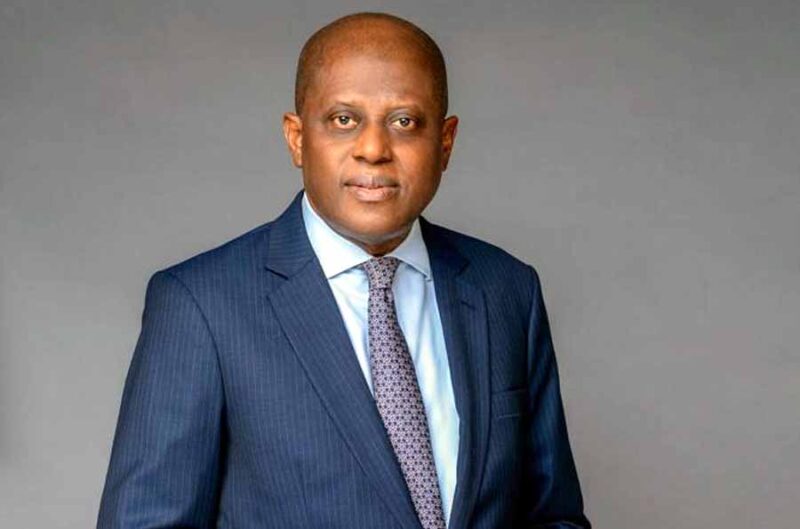
The governor of the CBN, Yemi Cardoso engaged foreign portfolio investors last week to intimate them on some of the reforms by the apex bank to maintain price stability and liberalize the FX market in bid to instill confidence and attract fresh foreign investments.
While responding to questions from the various stakeholders, he highlighted some of the major actions taken by the CBN, which includes paying FX backlogs in excess of $2 billion.
The CBN governor noted that the bank has settled foreign exchange backlogs except for five commercial banks, while noting that the remaining will be settled in the coming days.
Recall that the Governor, earlier in February had revealed the genuine FX backlogs owed across economic sectors had dropped to $2.2 billion, with about $2.4 billion being invalid.
Some of the key take ways from the meeting include:
- Interest Rates – NTB and Bond rates are expected to stay elevated due to the need to tame inflation, with new target at 21.4%.
- Foreign Portfolio Investments – To maintain FP inflows, CBN will avoid policy flip flops. The recent flurry of Policy Circulars was well thought out.
- Investor Confidence – CBN remains focussed is to rebuild the confidence level which was lost under the last Governor and embark on better communication and transparency with the market.
- The apex bank also recently increased the benchmark interest rate by 400 basis points to 22.85%, increased CRR to 45%, while adjusting the asymmetric corridor around the MPR to +100/-700 basis points. This is aimed at tightening naira liquidity while encouraging inter-bank trading activities as opposed to more credit to the public.
- Others include the expectation of a more frequent OMO issuance. Also, according to the CBN, CRR is expected to be done in a non-disruptive manner going forward. Long Term expectation is that CRR maintenance will be automatic. Noteworthy, a few Banks were slightly above 45% before the adjustment.
Expert view
According to Victor Onyema, Lead, Portfolio Management Norrenberger Asset Management, there is some encouragement with the CBN’s recent efforts to restore market confidence and enhance communication with investors. This proactive approach is likely to generate renewed interest in the Nigerian investment landscape, particularly amongst Foreign Portfolio Investors (FPIs).
- “While certain issues, such as the FX backlog, have previously caused caution among FPIs, the recent announcements and communication style of the CBN demonstrate a strong commitment to attracting foreign investment. The planned swift resolution of the FX backlog, as reiterated by the CBN governor, is a positive step towards rebuilding trust and confidence,” he said.
- “The anticipated further rise in interest rates presents attractive opportunities for FPIs in the OMO market. Additionally, higher fixed income yields are likely to trigger some capital movement into the equity market. However, savvy investors recognize this as a potential opportunity to acquire potentially undervalued stocks at favourable entry points.”
- “Overall, the CBN’s recent initiatives, coupled with the evolving market dynamics, suggest a potentially optimistic outlook for the Nigerian investment space. If these play out as planned by the CBN FPIs confidence should increase and inflows would come in,” he added.
Foreign investors still wary as Cardoso pitches for hot money inflows







News
We Must Build Beyond the Next Elections’ — Shettima

We Must Build Beyond the Next Elections’ — Shettima
Vice-President Kashim Shettima has called on political leaders to look beyond election cycles and leave behind institutions that can continue to benefit Nigerians.
His remarks came at the Abuja presentation of Brigadier Musa Usman (1940–1991): Service and Impact, a book documenting the life and public service of the late military governor of the former North-Eastern State.
Represented by Aliyu Modibbo Umar, Shettima said leadership should be measured by the value that remains after an administration has left office.
“We must recover the spirit of selflessness in public service,” he said, urging leaders to “build beyond the next elections and think beyond political boundaries.”
He listed reconstruction, agriculture, education, transport, energy, industrialisation, jobs, environmental restoration, peace and security among areas where leaders must take a long-term approach.
The Vice-President pointed to Musa Usman’s administration as an example of how development can outlive a political tenure. Usman governed the former North-Eastern State from 1967 to 1975, and the region he once administered now covers six states in the North-East.
Shettima said Usman played a major role in developing Maiduguri and establishing infrastructure and institutions that later administrations were able to build upon.
Governor Babagana Zulum, who spoke at the event, described Usman as a leader who combined effective governance with integrity, discipline and humility.
Zulum said the late governor’s contributions included investments in education, healthcare and infrastructure, as well as efforts to strengthen the region’s economy.
The book, written by journalists Mahmud Jega and Theophilus Abbah, also traces Usman’s military career and his rise to leadership at a young age. It was published to preserve his record and the history of the former North-Eastern State.
Shettima said preserving such history could help younger Nigerians understand that lasting public service is about strengthening institutions and improving lives, rather than simply holding office.
News
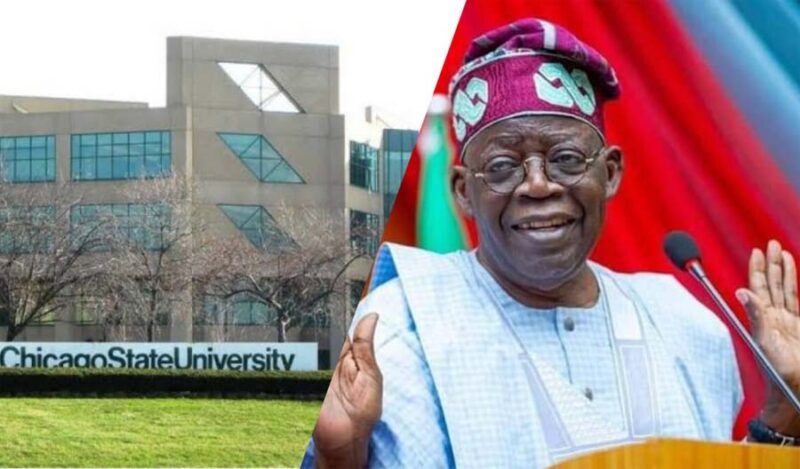
I Wanted to Disgrace Tinubu — Omokri Reveals What He Discovered at Chicago Varsity
I Wanted to Disgrace Tinubu — Omokri Reveals What He Discovered at Chicago Varsity
Nigeria’s ambassador-designate to Mexico, Reno Omokri, has recounted what he described as an unexpected twist during his visit to Chicago State University (CSU) in the United States, saying he initially travelled there with the intention of scrutinising President Bola Ahmed Tinubu’s academic history.
Omokri, a former aide to ex-President Goodluck Jonathan and now a diplomatic appointee of the Tinubu administration, reportedly made the disclosure while recounting his earlier position on the controversy surrounding the President’s academic credentials.
According to the account circulating online, Omokri said his original objective was to find information that could be used to discredit Tinubu, particularly amid years of controversy over the President’s educational background.
However, he said what he encountered at the university changed his understanding of the matter.
Omokri was quoted as saying that he went to Chicago State University with a predetermined objective—to investigate Tinubu and, if possible, expose inconsistencies that could damage the President politically.
But, according to his account, the findings did not produce the outcome he expected.
Instead, he said he became convinced that Tinubu had genuinely been admitted to and attended Chicago State University.
The development is significant because Tinubu’s educational history has remained one of the most contentious issues surrounding his political career, particularly since the 2023 presidential election.
READ ALSO:
- ‘I Was Never the Chosen One’ — Dembele Responds to Mbappe
- Plateau Attacks: Gunmen Kill Passengers, 13 Dead Across Three LGAs
- 2027: Northern Lecturers Back Tinubu, ASUU Disowns Endorsement
The controversy intensified in 2023 when former Vice-President Atiku Abubakar obtained a United States court order compelling Chicago State University to release documents relating to Tinubu’s academic records.
The records were subsequently released following the order of a US federal judge. Reports at the time said the university’s records confirmed that Tinubu attended the institution and graduated in 1979.
CSU Registrar Caleb Westberg also testified under oath that Tinubu had attended and graduated from the university.
However, the controversy did not completely disappear because questions were raised about the specific diploma submitted by Tinubu to Nigeria’s electoral authorities.
Reports of the US proceedings indicated that the university had Tinubu’s academic record but could not authenticate a particular diploma presented to Nigerian authorities because that exact document was not in the university’s possession.
Against that background, Omokri’s reported admission represents a striking change in tone, considering his earlier opposition to Tinubu.
His account suggests that his visit to Chicago State University was initially motivated by political scepticism but ultimately left him convinced that there was indeed a genuine academic connection between Tinubu and the institution.
The development has generated reactions on social media, with supporters of the President viewing Omokri’s account as further vindication of Tinubu’s claim that he attended the Chicago university.
Critics, however, are likely to maintain that the issue was never simply whether Tinubu attended Chicago State University, but also concerned questions surrounding documents, identity details and the certificate submitted to the Independent National Electoral Commission (INEC).
The available reporting from the 2023 legal proceedings provides an important distinction. There is substantial documentary evidence that Tinubu attended Chicago State University and graduated in 1979. CSU’s registrar testified to his attendance and graduation, while the university released academic records pursuant to a US court order.
At the same time, the controversy over the particular diploma submitted to INEC was not identical to the question of whether Tinubu attended the university.
That distinction has continued to fuel political arguments between supporters and opponents of the President.
Tinubu’s education has remained a recurring political issue since the 2023 election, with opponents repeatedly questioning aspects of his academic credentials, while his supporters argue that the available university records establish his attendance and graduation.
The latest account attributed to Omokri therefore adds another dramatic chapter to a controversy that has survived the election, court battles and the release of university records.
For Omokri, the story appears to have taken an unexpected turn: he said he went looking for ammunition against Tinubu but returned convinced that the President was, in fact, admitted to Chicago State University.
I Wanted to Disgrace Tinubu — Omokri Reveals What He Discovered at Chicago Varsity
Interview
“Not as Corrupt as the World Thinks”: Reno Omokri Defends Nigeria’s Image and Safety
Citing economic growth and safe public festivals, Reno Omokri urges the nation to tell its own story rather than rely on external perception indexes.
Nigeria is not nearly as corrupt or unsafe as foreign reports claim, according to Reno Omokri, Nigeria’s Ambassador-designate to Mexico. In a television interview on Channels Television, Omokri explained that international assessment groups often misunderstand Nigerian customs because they apply global benchmarks that ignore local traditions.
A central issue, Omokri noted, is how different cultures view appreciation. In Nigerian society, offering a gift to say thank you to an official who provides excellent service is a familiar sign of respect, much like tipping in other parts of the world.
However, international observers often label this practice as corruption. Omokri stated that the country needs to share its own experiences directly with the world rather than allowing outside groups to set a negative narrative.
Omokri also defended the country’s safety record by pointing to Lagos, where the economy has expanded steadily and major cultural events draw massive crowds.
He highlighted the annual holiday season in Lagos, which brings more than one million visitors together peacefully each year. For Omokri, these vibrant events show that everyday life in Nigeria is full of energy, community warmth, and safety.
-
 Business3 days ago
Dangote: ₦525 Refinery Shares Could Rise to ₦10,000
-
 News2 days ago
SERAP Threatens Legal Action Over ₦126bn INEC Electoral Funds
-

 metro3 days ago
MURIC fires back at Peter Obi: Forget Sallah ceremony, free Nigerian Muslims
-

 metro3 days ago
Abia Police Arrest Father, Three Others Over Alleged Attempt to Sell 16-Month-Old Daughter
-
 International3 days ago
Trump Tells Supporters to ‘Cheat Like Hell’ Ahead of US Election
-

 metro3 days ago
How I Conspired with My Son’s Teacher to Stage His Kidnap for N15m Ransom
-
 Politics2 days ago
Five Islamic Clerics Abducted After Tinubu Re-Election Prayer At Yari’s Zamfara Residence
-
 metro3 days ago
FG Targets 2 Million Creative Jobs by 2030