
Business
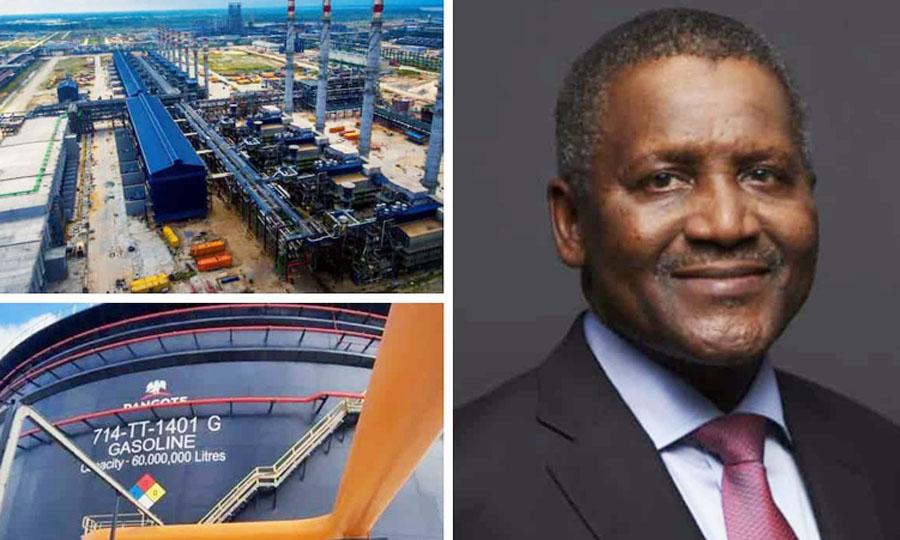
Fresh fuel price hike likely as Dangote refinery suspends petrol sale in naira
Fresh fuel price hike likely as Dangote refinery suspends petrol sale in naira
Petroleum products marketers have predicted a potential shake-up in the downstream sector as Dangote Refinery halts the sale of petrol in naira.
The marketers, while expressing shock over the development, said there are genuine concerns over supply chain disruptions and impending price hikes.
Stakeholders fear the ripple effects may deepen economic pressures on businesses and consumers nationwide.
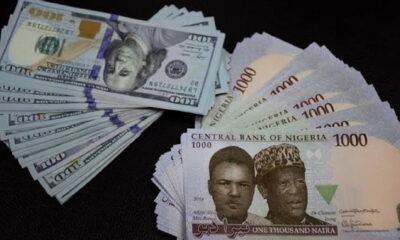
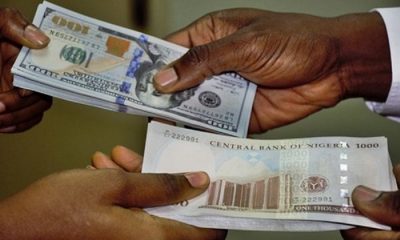
Dangote Refinery, in a statement, said the move was necessary to avoid a mismatch between its sales proceeds and our crude oil purchase obligations, which are currently denominated in US dollars.
“To date, our sales of petroleum products in Naira have exceeded the value of naira-denominated crude we have received. As a result, we must temporarily adjust our sales currency to align with our crude procurement currency.
“Our attention has also been drawn to reports on the internet claiming that we are stopping loading due to an incident of ticketing fraud. This is malicious falsehood. Our systems are robust and we have had no fraud issues.
READ ALSO:
- NLC, TUC urge Tinubu to reverse emergency rule in Rivers
- Rivers administrator to get withheld allocation, says FG
- Tanker explodes on Abuja bridge, many feared dead, 30 vehicles burnt
“We remain committed to serving the Nigerian market efficiently and sustainably. As soon as we receive an allocation of naira-denominated crude cargoes from NNPC, we will promptly resume petroleum product sales in naira. We appreciate your understanding and cooperation during this period”, the company explained.
Commenting on the development, the National President of the Petroleum Products Retail Outlets Owners Association of Nigeria (PETROAN), Mr. Billy Gillis-Harry, expressed rude shock at the development, saying the decision by Dangote will impact petroleum products availability, energy security and pricing.
He said the coming onboard of the Dangote Refinery has been able to stabilise the supply chain while guaranteeing access to product.
However, he warned the suspension of petroleum products into the sldomestic market by Dangote should not be an excuse for importers of products to profiteer by putting the country in a disadvantage condition.
He argued that PETROAN has been at the forefront of canvassing for multiple sources of products for the market, saying the entry of Dangote refinery into the downstream market was received with so much joy.
Gillis-Harry further lamented that the business decision of Dangote to sell his products in dollars has automatically shut out the local market from the business equation because domestic pricing and sales of petroleum products is in naira. On October 1, 2024, the federal government officially announced the commencement of crude oil sale to Dangote Refinery and other local refineries in the local currency.
The move was to reduce the pressure on the foreign reserves and ensure the stability of the local currency.
Fresh fuel price hike likely as Dangote refinery suspends petrol sale in naira








Business
Recapitalisation: 30 Nigerian banks meet CBN minimum capital requirement

Recapitalisation: 30 Nigerian banks meet CBN minimum capital requirement
The Central Bank of Nigeria (CBN) has announced that 30 Nigerian banks have now met the new minimum capital requirements introduced as part of the banking sector recapitalisation programme launched in March 2024.
In a statement issued on Friday, Hakama Sidi Ali, Acting Director of Corporate Communications at the apex bank, said a total of 33 banks have successfully raised additional capital through rights issues, initial public offerings (IPOs), and private placements since the policy was introduced.
According to the CBN, the recapitalisation programme is aimed at strengthening the resilience, stability, and long-term capacity of Nigeria’s banking system to support economic growth and development.
“The Central Bank of Nigeria introduced a capitalisation programme for the banking sector in 2024 to strengthen the resilience, stability, and long-term capacity of the financial system to support Nigeria’s economic development,” the bank said.
“Since the introduction of the policy, banks across the industry have taken steps to strengthen their capital base in line with the revised regulatory requirements.
“As of March 6, 2026, the recapitalisation exercise is progressing steadily. Thirty banks have met the new minimum capital requirements applicable to their respective licence authorisations.
“In total, thirty-three banks have raised additional capital through rights issues, IPOs and private placements as part of the programme.”
READ ALSO:
- ‘I hated my birth name Blessing’ — BBNaija winner Phyna opens up on painful childhood
- Iran War: US Authorizes $151.8 Million Bombs Sale to Israel
- Ghanaian UN Peacekeepers Hit by Missile Attack in Lebanon as Iran‑Linked War Escalates
The apex bank said the capital positions of the remaining banks are currently undergoing routine regulatory verification before final confirmation of compliance within the stipulated timeline.
“The CBN reiterates that the Nigerian banking system remains stable and sound. The recapitalisation programme remains firmly on track and will further strengthen the capacity of the banking sector to support households, businesses, and sustainable economic growth,” the statement added.
The regulator also assured that it would continue to maintain close supervisory engagement with financial institutions to ensure full compliance with prudential and capital requirements.
Earlier, on February 24, Olayemi Cardoso, Governor of the Central Bank of Nigeria, disclosed that 20 banks had already met the minimum capital requirement, noting that the recapitalisation process was progressing steadily across the sector.
Cardoso also revealed that as of February 19, 2026, the total verified and approved capital raised by Nigerian banks had reached about ₦4 trillion, reflecting strong investor participation and confidence in the banking sector.
The recapitalisation programme follows the CBN’s March 28, 2024 directive reviewing the minimum capital base for commercial banks, with institutions given until March 31, 2026 to fully comply.
Under the revised framework, banks with international authorisation are required to have a minimum capital base of ₦500 billion, while national banks must raise ₦200 billion and regional banks ₦50 billion.
Financial analysts say the policy is designed to create stronger and better-capitalised banks capable of financing large-scale investments, supporting businesses, and improving financial stability in Africa’s largest economy.
The recapitalisation exercise has also triggered increased activity in Nigeria’s capital market, with several lenders launching public offers, rights issues, and strategic fundraising programmes to meet the regulatory thresholds.
Industry experts believe the ongoing exercise could lead to further consolidation in the banking sector, including potential mergers and acquisitions among smaller institutions struggling to meet the capital requirements before the deadline.
Recapitalisation: 30 Nigerian banks meet CBN minimum capital requirement
Business
Dangote Refinery Hikes Petrol Price to ₦995 per Litre Amid Global Oil Price Surge

Dangote Refinery Hikes Petrol Price to ₦995 per Litre Amid Global Oil Price Surge
The Dangote Petroleum Refinery has raised its Premium Motor Spirit (PMS) gantry price to ₦995 per litre, marking a sharp increase of ₦221 in just four days amid rising global crude oil prices and shipping costs. The move signals further upward pressure on fuel prices nationwide, with retail petrol likely to surpass ₦1,050 per litre in many parts of Nigeria.
A senior refinery official confirmed the revision, stating that the price adjustment reflects recent fluctuations in international oil markets, crude oil replacement costs, and logistics expenses. The official said, “Yes, the price has been reviewed. The new gantry price is now ₦995 per litre.”
This hike follows an earlier increase this week when the refinery raised its ex-depot price from ₦774 to ₦874 per litre, meaning the cost of petrol from Dangote Refinery has risen nearly 29 per cent within four days. Updated pricing data on petroleumprice.ng confirmed the new benchmark for Nigeria’s downstream petroleum sector.
The refinery temporarily halted truck-out operations early Friday, a move often preceding price adjustments, leaving marketers uncertain about future costs. Industry sources noted that this pause in loading activities indicated a likely price increase, which has now been confirmed.
READ ALSO:
- Nigeria Immigration Service Denies Connection as Cleric Scams Nigerians in US
- Omoile Admits Lying to EFCC in Emefiele $4.5bn Fraud Trial
- Explosion Heard Over Dubai Airport as Debris Falls After Air Defence Interception
Refinery officials emphasised that petrol prices in Nigeria’s fully deregulated market are influenced by global crude oil prices, foreign exchange rates, and supply chain costs, and are not set arbitrarily. They added that the facility has absorbed about 20 per cent of rising costs to reduce the impact on the domestic market.
The development comes amid geopolitical tensions, particularly the US-Iran conflict, which has pushed Brent crude prices above $84 per barrel, fueling additional cost pressures. Dangote Petroleum stated that it will prioritise domestic supply to help insulate Nigerians from global supply shocks.
Data from the Major Energies Marketers Association of Nigeria (MEMAN) shows that imported petrol remains cheaper than locally refined fuel, with landing costs at ₦809.37 per litre, compared to Dangote’s gantry price. Diesel prices reflect a similar trend, with Dangote diesel at ₦1,169.42 per litre versus ₦1,125.70 per litre for imports.
The latest price hike is expected to push retail petrol prices higher, further straining household budgets and increasing transport costs across the country. Consumers and businesses alike are bracing for a surge in energy costs as the ripple effects of the gantry price increase reach filling stations nationwide.
Dangote Refinery Hikes Petrol Price to ₦995 per Litre Amid Global Oil Price Surge
Aviation
FAAN Introduces Hybrid Toll Payment System Following Tinubu’s Directive
FAAN Introduces Hybrid Toll Payment System Following Tinubu’s Directive
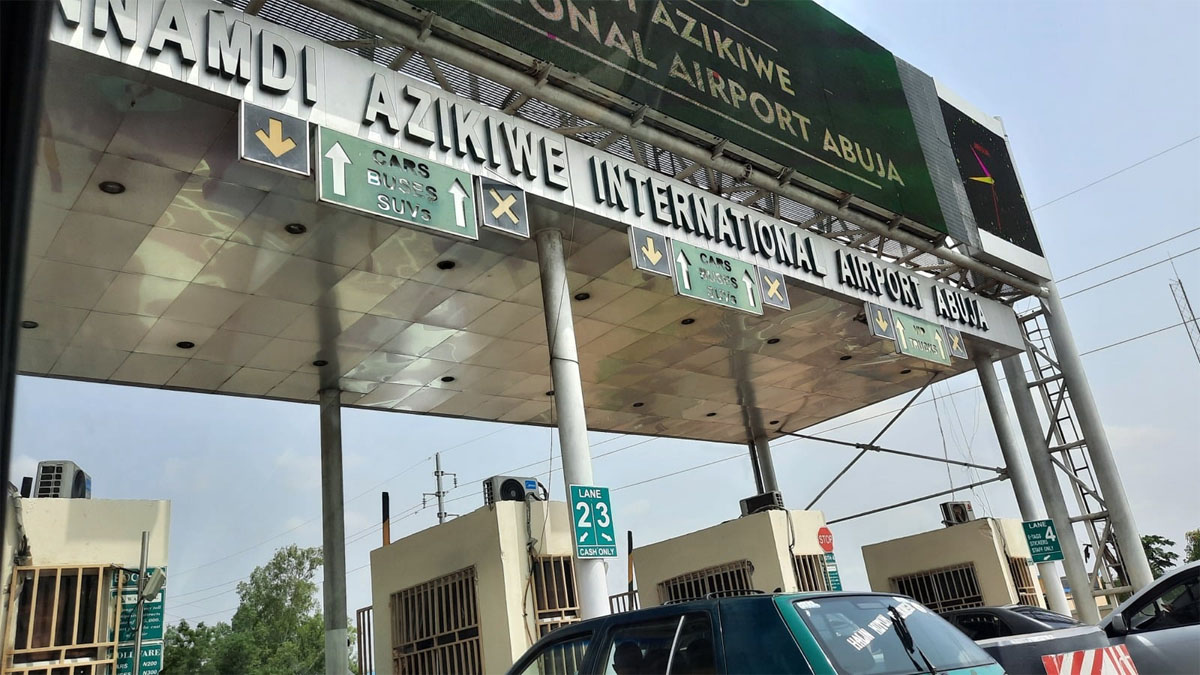
The Federal Airports Authority of Nigeria (FAAN) has introduced a temporary hybrid toll payment system at airports nationwide following heavy traffic congestion caused by the rollout of its cashless toll payment policy. The move comes after President Bola Tinubu directed the authority to ease implementation challenges to prevent travel disruptions.
FAAN Managing Director, Mrs. Olubunmi Kuku, told journalists in Lagos on Thursday that the decision followed severe gridlock at major airport toll gates, particularly Murtala Muhammed International Airport (MMIA), Lagos, as motorists struggled to adapt to fully digital payment methods. “He [the President] saw the traffic congestion and directed us to temporarily revert to a hybrid approach,” Kuku said. “This ensures smoother access while we refine the cashless system — it is a win for the industry.”
The hybrid model allows commuters and travellers to pay tolls using a combination of cash, prepaid FAAN cards, e-tags, debit cards, and other electronic options. Kuku emphasized that the arrangement will let FAAN continue its digital payment initiative while still accommodating users who have yet to register or activate electronic payment channels.
READ ALSO:
- Trump Warns Iranian Military, Including IRGC, to Surrender or Face “Certain Death”
- Trump Rejects Khamenei’s Son, Demands Role in Iran Leadership Selection
- FG Clarifies FEC Decision, Says PhD Not Equivalent to Medical Fellowship in Nigeria
She highlighted that the authority had registered over 100,000 users on its cashless platform between October 2025 and March 3, 2026, with around 60,000 sign-ups occurring in the final three days before the March 1 rollout deadline. The technology reportedly achieved a 99% success rate during initial operations, demonstrating strong potential for adoption once operational challenges are addressed.
Kuku explained that the initial rollout lacked a comprehensive pilot phase due to the pressure to meet the government’s deadline. The additional time granted by the Presidency now serves as an extended pilot period, enabling FAAN to raise public awareness, onboard private technology partners, and enhance monitoring mechanisms to prevent revenue leakages while cash payments are still allowed.
The MD noted that no new deadline has been set for the complete elimination of cash payments. The focus now is on refining the system, ensuring user convenience, and achieving a smooth transition to a fully digital tolling platform in line with global best practices in airport infrastructure management.
FAAN said the hybrid arrangement aims to prevent delays that could cause passengers to miss flights, while also maintaining transparency in revenue collection and improving overall airport operational efficiency.
FAAN Introduces Hybrid Toll Payment System Following Tinubu’s Directive

-

 Education1 day ago
NERD Registration Now Mandatory for NYSC Participation, FG Confirms
-
 News2 days ago
FG Approves Medical Fellowships as PhD Equivalent in Nigerian Universities
-

 metro2 days ago
Police Announce Dates, Requirements for 2026 Constable Recruitment Screening
-

 Entertainment22 hours ago
Davido Loses Close Friend Denisi Amid ₦1bn Legal Dispute
-

 News22 hours ago
BREAKING: Tinubu Posts Yakubu, Omokri, Fani-Kayode, 62 Other Ambassadors (Full List)
-

 metro2 days ago
Family Prepares Funeral for Abducted NYSC Member After ₦10m Ransom Fails
-

 metro1 day ago
CSP Aliyu Giwa Set to Become Nigeria Police Force PRO, Replacing Hundeyin
-

 metro2 days ago
Leadership Reshuffle: IGP Tunji Disu Removes Hundeyin as Nigeria Police Force PRO