

metro
From Pulpit to Ifá Shrine: Ex-Pastor Exposes ‘Deceit’ in Christianity, Embraces Yoruba Tradition

From Pulpit to Ifá Shrine: Ex-Pastor Exposes ‘Deceit’ in Christianity, Embraces Yoruba Tradition
After a two-year soul-searching journey, an Ondo State-based cleric has publicly abandoned his pastoral ministry to embrace Ìṣẹ̀ṣe, the traditional Yoruba spiritual practice, citing widespread deception among Christian leaders and contradictions in the Bible.
Olabanjo Felix, who once led the Image of God Evangelical and Prophetic Ministries in Ibaka, Oka Akoko, Ondo State, has officially transitioned from Christianity to become a Babalawo (Ifá priest). In a viral video that surfaced on Thursday, Felix announced his new spiritual identity as Ifawamiri Aworan Olodumare, declaring his allegiance to the indigenous Yoruba faith. The former pastor told Sunday PUNCH that his decision was not impulsive but the culmination of a two-year period of intense spiritual introspection. During this time, he became deeply troubled by what he perceived as contradictions within the Bible and what he described as the commercialisation and manipulation of Christianity by Nigerian pastors. He emphasised that he publicly announced his transition to stop people from continuing to address him as a pastor, stating that he could not accept a title that no longer reflected his beliefs.
Felix did not mince words in his criticism of the Christian faith as practised in Nigeria. He alleged that there is “no true pastor of the Bible in Nigeria,” with the exception of Pastor Gbile Akanni, and accused many church leaders of turning Christianity into a family business designed to enrich themselves and brainwash their congregations. He claimed that his deep understanding of the Bible, acquired through years of study, made him increasingly uncomfortable with the inconsistencies he found in the scriptures. Felix further alleged that many pastors who publicly condemn traditional religions secretly consult Ifá practitioners for divination, a hypocrisy he said he could no longer tolerate. His frustration, he explained, was not with God but with the institutionalised deception he witnessed, which ultimately drove him to seek spiritual authenticity elsewhere.
READ ALSO:
- Osun election: Adeleke widens lead as Oyinlola, Omisore lose polling units
- 2027: Atiku’s suit seeking Tinubu’s disqualification meets deadline, faces procedural hurdle
- APC Humiliates Aregbesola, Wins His Polling Unit in Osun Governorship Election
Before settling on Ifá, Felix revealed that he had seriously considered converting to Islam. He consulted a Muslim cleric who advised him to study the Quran, and he subsequently downloaded the Yoruba translation of the holy book. However, after reading it, he concluded that he found the same level of deception that had driven him away from Christianity. This realisation, he said, solidified his resolve to look inward toward his ancestral heritage, leading him to explore the traditional Yoruba spiritual system of Ifá. He began searching for genuine Ifá priests who could mentor him, determined to find a path that felt authentic and free from the manipulation he had experienced in the Abrahamic religions.
Felix’s search for guidance eventually led him to the Araba of Isararemọ, Oluṣẹgun Latunji Aifuwapẹ, whom he discovered on Facebook. He reached out to the revered traditional priest and expressed his intention to learn Ifá. Since joining the Araba’s spiritual community, Felix said he has been engaged in prayers, supplications, and the study of herbs and roots, which he described as potent and effective. He insisted that his practice is not fetish, as many outsiders assume, but rather a disciplined spiritual system focused on healing, destiny, and connection to the divine through the Orishas and ancestors. He noted that foreigners from around the world visit the Araba’s centre to learn about Ifá, a testament to the growing global interest in the tradition.
A significant factor in Felix’s decision to embrace Ifá was his personal experience with traditional herbs and roots. He said that his conviction was strengthened by witnessing their potency, which he contrasted with what he perceived as the empty rituals and ineffective prayers of modern Christianity. For Felix, the tangible results of traditional medicine and spiritual practices validated the Ifá system in a way that Christianity could not. He now views Ìṣẹ̀ṣe not as a primitive or backward belief system but as a sophisticated spiritual science that has sustained the Yoruba people for centuries, long before the arrival of colonial religions.
READ ALSO:
- Oyo Police Smash Human Parts Syndicate: 10 Arrested, Heart, Skull Recovered
- Heavy Security, Long Queues, Massive Turnout Mark Osun Governorship Election in Ede
- Protest in Osogbo Over Ballot Paper Shortage, Missing Voter Names
Felix’s public renunciation of Christianity has generated significant buzz on social media, with reactions sharply divided. Some online users have applauded his courage to follow his convictions and reconnect with his ancestral roots, while others have questioned the sincerity of his years in ministry. A number of commentators speculated that Felix may have always been a traditional practitioner in disguise, while others expressed sympathy for his former congregation, who had trusted his pastoral leadership. The viral video has also reignited broader conversations about the role of Christianity in Nigeria, the legacy of colonialism, and the growing movement of Nigerians returning to indigenous spiritual practices.
Felix’s story is part of a larger trend across the African diaspora, where individuals are increasingly rejecting foreign religions in favour of indigenous spiritual systems like Ifá, Vodun, and Candomblé. This movement is often framed as an act of decolonisation—a reclamation of identity, culture, and spirituality that was suppressed during the transatlantic slave trade and colonial era. For many, embracing Ifá is not merely a religious choice but a political and cultural statement about the importance of ancestral heritage and self-determination. Felix’s journey underscores this shift, as he described his transition as a homecoming to a faith that feels more authentic and aligned with his identity as a Yoruba man.
Now known as Ifawamiri Aworan Olodumare, Felix has fully embraced his new role as a Babalawo. He expressed gratitude to his mentor, the Araba of Isararemọ, for guiding him through the transition. While he acknowledged that his decision has attracted criticism, he remains firm in his conviction, stating that he cannot continue to live a lie. He said he will now dedicate his life to the practice and propagation of Ifá, focusing on healing, spiritual counselling, and the preservation of Yoruba cultural heritage. He also reiterated that his practice is transparent and open, in contrast to the hidden hypocrisy he claims to have witnessed in Christian circles.
Olabanjo Felix’s journey from Christian pastor to Ifá priest is a deeply personal and controversial one, reflecting broader tensions between tradition and modernity, faith and authenticity, and colonialism and cultural reclamation. While his allegations against Christianity have drawn sharp criticism from religious leaders, his story has resonated with many who feel disconnected from the faiths imposed on their ancestors. Whether viewed as a betrayal or a homecoming, Felix’s transition highlights the complex spiritual landscape of contemporary Nigeria and the enduring power of indigenous belief systems.
From Pulpit to Ifá Shrine: Ex-Pastor Exposes ‘Deceit’ in Christianity, Embraces Yoruba Tradition
PUNCH






metro
FG Declares Thursday Public Holiday for Nigeria’s 66th Independence Anniversary
FG Declares Thursday Public Holiday for Nigeria’s 66th Independence Anniversary
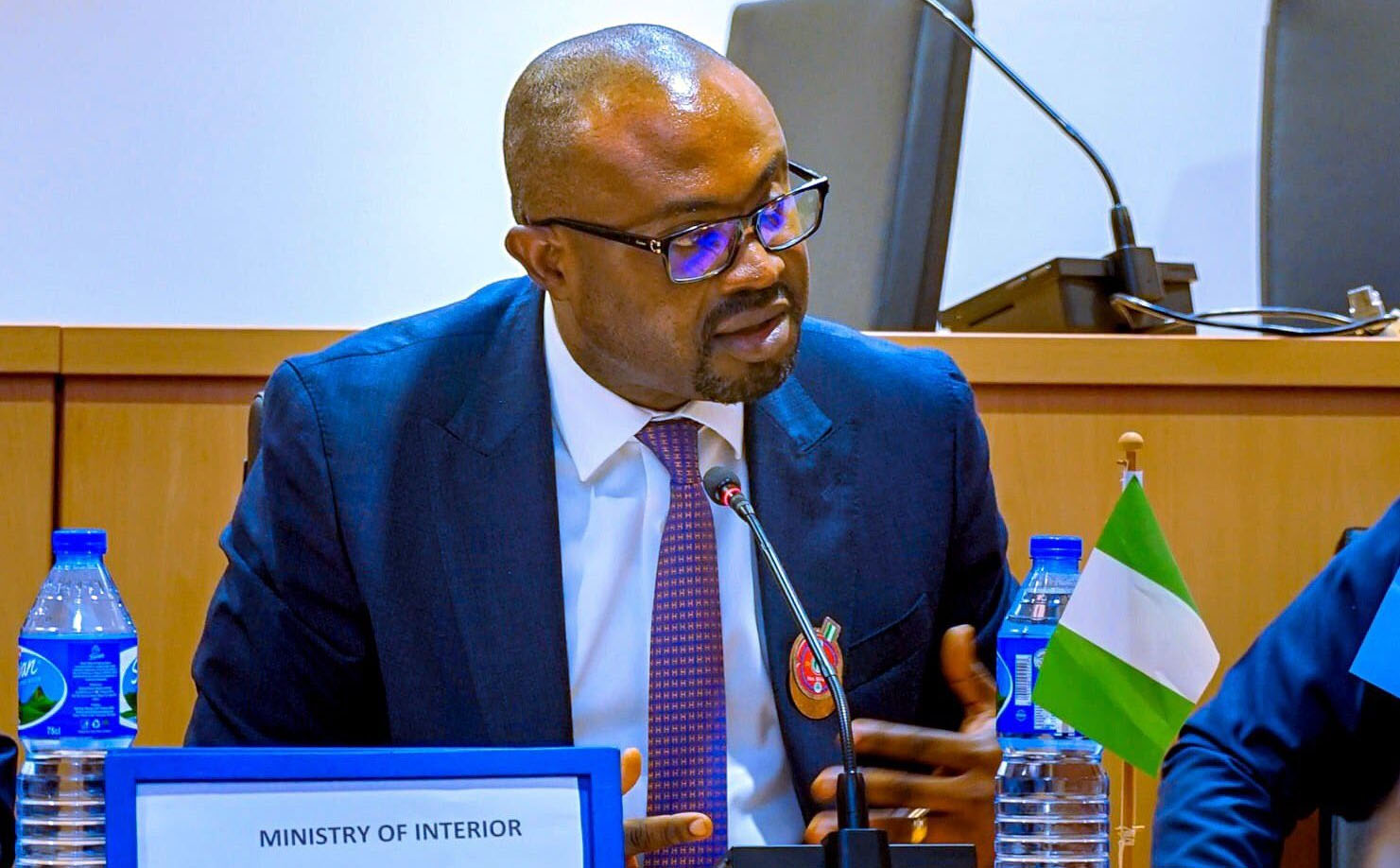
The Federal Government has declared Thursday, October 1, 2026, a public holiday to mark Nigeria’s 66th Independence Anniversary.
The Minister of Interior, Olubunmi Tunji-Ojo, announced the declaration on behalf of the Federal Government on Wednesday, congratulating Nigerians at home and abroad on the national celebration.
The minister urged Nigerians to use the occasion to promote national unity, patriotism, peaceful coexistence and mutual respect, while reflecting on the sacrifices of the country’s founding fathers and heroines.
Tunji-Ojo said peace and stability remained important to national development and called on citizens to remain committed to building a stronger and more prosperous Nigeria.
The minister also assured Nigerians that the Federal Government remained committed to strengthening national security, improving public safety and creating an environment where citizens could live and work with confidence.
The 2026 celebration marks 66 years of Nigeria’s independence, following the country’s attainment of independence from British colonial rule on October 1, 1960.
READ ALSO:
- Flood Cuts Off Part of Agbarho-Ughelli Road, Strands Commuters in Delta
- Dangote Draws Battle Lines as Fuel Import Fight Heads Back to Court
- Tinubu Returns After 30 Days in Europe, Says ‘I’m Healthy and Ready to Work’
The Federal Government is marking the anniversary under the theme, “From Reforms to Stability: Consolidating Nigeria’s Renewed Hope for Shared Prosperity.” The anniversary programme was earlier announced as a low-key celebration.
As part of the programme, an Independence Day Public Lecture is scheduled for Wednesday, September 30, while President Bola Ahmed Tinubu is expected to deliver a nationwide broadcast on Thursday, October 1.
The President is also expected to participate in other anniversary activities in Lagos, including the premiere of a documentary on the late businessman and politician MKO Abiola at the National Theatre.
The Federal Government has urged Nigerians to use the Independence Day celebration to reflect on the country’s journey since 1960 and renew their commitment to a united and peaceful Nigeria.
The October 1 public holiday applies nationwide, giving workers and other citizens an official day off to commemorate Nigeria’s Independence Day.
FG Declares Thursday Public Holiday for Nigeria’s 66th Independence Anniversary
metro
Five Remanded Over ‘Tinubu Must Go’ T-Shirts in Borno

Five Remanded Over ‘Tinubu Must Go’ T-Shirts in Borno
Five men have been remanded in custody in Maiduguri, Borno State, after they were arraigned over the alleged printing and wearing of “Tinubu Must Go” T-shirts.
The defendants — Baba Aji Gremami, 44; Mustapha Abba Yemen, 28; Abbacha Mohammed Ali, 32; Adam Umar Gubio, 21; and Abdulhamid Mohammed, 21 — were arrested on September 25 around the West End Roundabout area of Maiduguri, according to a First Information Report issued by the State Criminal Investigation Department.
Police alleged that the five men conspired to print and wear the T-shirts bearing the inscription “Tinubu Must Go”, with the intention of causing a breach of public peace in the area.
They were subsequently charged with criminal conspiracy, inciting disturbance, disturbance of public peace and thuggery under Sections 60, 78, 79 and 392 of the Borno State Penal Code.
The defendants appeared before the Chief Magistrate Court I in Maiduguri and pleaded not guilty to the allegations. Their lawyers subsequently applied for bail.
The court remanded the five men in custody and adjourned the matter to October 6, 2026, for a ruling on the bail application. The substantive case was also listed for October 26, 2026.
The police case centres on the alleged intention behind the production and wearing of the shirts, with the authorities maintaining that the conduct was capable of causing a breach of public peace. The charges, rather than the political slogan alone, form the basis of the criminal proceedings.
READ ALSO:
- Flood Cuts Off Part of Agbarho-Ughelli Road, Strands Commuters in Delta
- Dangote Draws Battle Lines as Fuel Import Fight Heads Back to Court
- Tinubu Returns After 30 Days in Europe, Says ‘I’m Healthy and Ready to Work’
The arrests have generated controversy, particularly over the balance between freedom of expression and public-order laws.
Amnesty International condemned the detention, arguing that wearing a shirt expressing political dissent should not, by itself, constitute a criminal offence. The organisation called for the men’s release and urged the authorities to protect the rights to freedom of expression and association.
The African Democratic Congress (ADC) in Borno State also condemned the arrests. The party said the men were being detained for expressing a political opinion and called for their immediate release. The party’s position is separate from the police allegations before the court.
There have also been claims that the arrests were politically directed, including an allegation that a senior political figure in Borno ordered the action. However, such claims have not been independently established, and the police report cited in the case does not establish that a political figure ordered the arrests.
The development comes as political activity increases ahead of the 2027 general elections, with opposition parties and supporters using different platforms to express criticism of the Federal Government and promote alternative political positions.
The case has consequently drawn attention to the application of freedom of expression, political dissent and public-order laws in Nigeria.
For now, the five men remain defendants in an ongoing criminal case. They have pleaded not guilty, and the allegations against them have yet to be determined by the court.
Five Remanded Over ‘Tinubu Must Go’ T-Shirts in Borno
metro
FG Targets 24-Hour Electricity in Lagos, Abuja, Kano, Others
FG Targets 24-Hour Electricity in Lagos, Abuja, Kano, Others
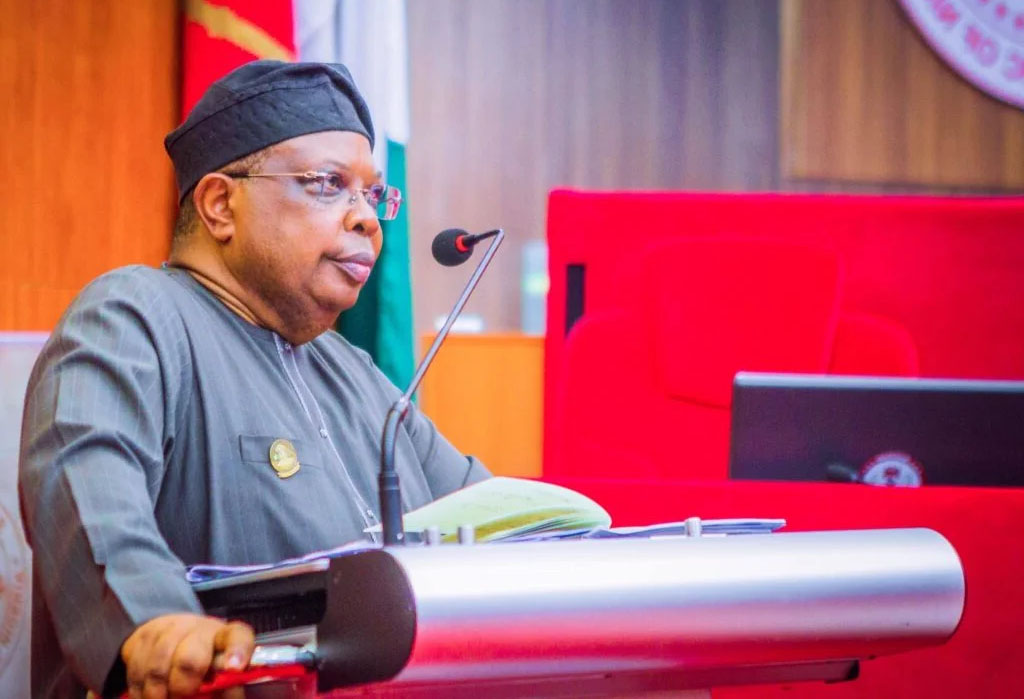
The Federal Government has begun discussions with electricity distribution companies on plans to establish Energy Zones aimed at delivering stable 24-hour electricity supply to homes, businesses and industries in major high-demand areas across Nigeria.
The proposed zones will initially focus on the Lagos axis, Abuja-Kaduna-Kano corridor and Enugu-Port Harcourt corridor, according to the Minister of Power, Joseph Tegbe.
Tegbe disclosed the plan after a strategic meeting with the leadership of selected electricity distribution companies (DisCos) as the government intensifies efforts to improve reliability across the power sector.
The proposed Energy Zones are designed to address bottlenecks at the distribution end of the electricity supply chain and ensure that more of the power generated and transmitted through the national grid reaches consumers.
Tegbe said the country’s power challenge extends beyond generation and transmission, stressing that the ability of distribution companies to take up available electricity and deliver it to homes, businesses and industries remains a major constraint.
He said the proposed zones would help close that gap, unlock additional commercial and industrial demand and improve the revenue and collection performance of DisCos.
The government also plans to expand electricity infrastructure in high-demand areas so that supply capacity can grow alongside the needs of Nigeria’s expanding economy.
The Energy Zones proposal comes as the government reports recent improvements in electricity generation and transmission. Tegbe said generation and transmission had risen above 5,000 megawatts (MW) in recent weeks, compared with about 3,700MW to 4,700MW before June, with generation reaching a reported peak of 5,330MW in August and September.
READ ALSO:
- Flood Cuts Off Part of Agbarho-Ughelli Road, Strands Commuters in Delta
- Dangote Draws Battle Lines as Fuel Import Fight Heads Back to Court
- Tinubu Returns After 30 Days in Europe, Says ‘I’m Healthy and Ready to Work’
However, the minister has acknowledged that higher national generation figures do not automatically translate into reliable electricity for every community because of problems across the transmission and distribution networks.
The government has therefore been prioritising infrastructure repairs and upgrades along major electricity corridors. Tegbe previously said transformers commissioned at Apapa, Ijora, Alausa and Lekki in Lagos had unlocked 672MW of transmission capacity, while a 300MVA transformer at Katampe in Abuja added another 240MW.
The government has also been working to increase electricity metering. Tegbe said about 350,000 meters were installed during his first 100 days in office, bringing cumulative installations to more than one million by August 2026.
He also said the resolution of legal issues surrounding the AMMON smart-meter programme had cleared the way for procurement of about 1.4 million additional smart meters.
The minister has identified the Lagos, Enugu-Port Harcourt and Abuja-Kaduna-Kano corridors as priority areas for stabilisation, alongside plans for a proposed Transmission Super Grid.
The focus on Lagos reflects the state’s substantial industrial and commercial electricity demand. The Federal Government has been conducting technical assessments along major industrial corridors, including the Lagos-Sagamu corridor, to identify infrastructure problems affecting power delivery.
The government has also been pursuing targeted projects to improve electricity supply to industrial areas. In Abuja, Tegbe said the Idu Industrial Area was being targeted for a 50MW electrification project, with the first 10MW phase expected by December 2026 and the remaining capacity planned for 2027.
The proposed Energy Zones are expected to complement such targeted interventions by concentrating infrastructure and distribution improvements in areas where electricity demand is already high.
The initiative is also expected to support manufacturing, businesses and industrial production, with the government linking more reliable electricity to economic growth, job creation and industrialisation.
However, the Federal Government has not announced a specific implementation date, capacity target or detailed infrastructure investment plan for the proposed Energy Zones. The 24-hour electricity supply therefore remains a government target under the initiative and should not be interpreted as a guarantee that consumers in Lagos, Abuja, Kano or the other identified areas will immediately receive uninterrupted power.
The proposed zones also come against the backdrop of continuing financial and operational challenges in the electricity market. Tegbe said the government had mobilised about N1.23 trillion to address part of the sector’s accumulated debt burden.
He has also said the government currently has no plan to increase electricity tariffs, with the immediate focus instead on improving supply reliability, strengthening infrastructure, metering consumers and addressing financial weaknesses across the power value chain.
The minister has acknowledged that many Nigerians are still without reliable electricity, despite reported improvements in generation and transmission. He said the government would continue to focus on incremental improvements rather than promise a quick solution to the sector’s longstanding problems.
Representatives of the Abuja Electricity Distribution Company (AEDC), Ikeja Electric, Eko Power, Ibadan Electricity Distribution Company (IBEDC) and Sahara Energy Group participated in the latest discussions on the proposed Energy Zones.
The Federal Government now intends to work with the participating electricity companies on strengthening distribution infrastructure and ensuring that available electricity can be delivered more efficiently to high-demand customers.
For consumers, the key issue will be whether the proposed investments can translate improvements recorded at the generation and transmission levels into more dependable electricity at the distribution and household level.
For now, the 24-hour electricity plan remains at the development and engagement stage, with the government yet to provide a firm rollout date or detailed specifications for the proposed Energy Zones.
FG Targets 24-Hour Electricity in Lagos, Abuja, Kano, Others
-

 metro1 day ago
Osogbo Food Bonanza Turns Nightmare as Discount Vendor Vanishes With Customers’ Millions
-

 metro2 days ago
24 Hours in Darkness: Iju Ishaga Residents, Businesses Count Losses as Ikeja Electric Fails to Restore Power
-

 metro3 days ago
Passenger Dies After Jumping From Moving Bus In Lagos
-

 Politics3 days ago
APC Sweeps Enugu LG Election, Wins All 17 Chairmanship, 260 Councillorship Seats
-

 News2 days ago
Agbede Mourns Baba Alado, Says Mushin Has Lost Pillar of Peace
-

 Education1 day ago
FG Releases 2026–2028 Approved Textbooks, Introduces QR Codes for Tracking
-

 Sports24 hours ago
Nigeria XI vs Guinea-Bissau: Awoniyi, Lookman, Adams Lead Super Eagles Attack
-

 metro24 hours ago
Hamzat Clarifies Lagos Traffic ‘Lifestyle’ Remark After Backlash