
metro
FRSC Revives Annual Lecture Series Under CM Shehu Mohammed, Ushering in New Era of Road Safety Leadership
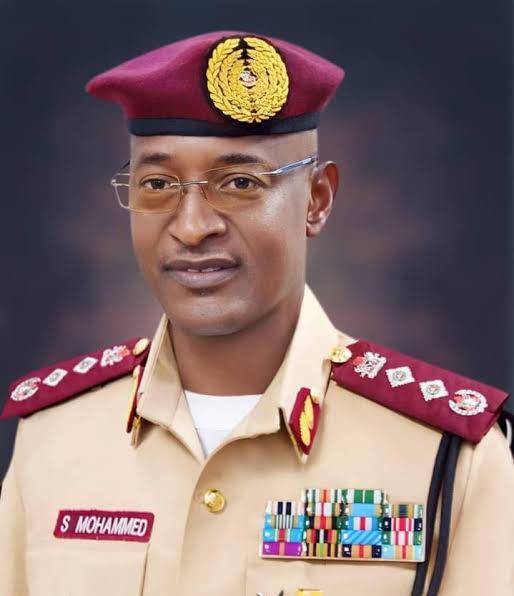
FRSC Revives Annual Lecture Series Under CM Shehu Mohammed, Ushering in New Era of Road Safety Leadership
By Bisi Kazeem
On Wednesday, September 3rd, 2025, the Banquet Hall of the State House, Presidential Villa, Abuja, came alive, not with the formality of ceremony but with the urgency of purpose. It hosted a gathering of some of the finest minds in leadership, law, academia, security, technology, and global road safety, as Nigeria reawakened an important intellectual tradition: the FRSC Annual Lecture Series.
First instituted in 2009, the Annual Lecture Series was designed as a platform for ideas, policy direction, and sustained awareness on the menace of road crashes. Over the years, it attracted distinguished voices, from Chief Emeka Anyaoku, CON, CFR, who spoke on “Capital Waste on Nigeria Roads”, to Prince Michael of Kent and Jean Todt, UN Special Envoy on Road Safety.
These lectures inspired policy shifts and created a knowledge hub for stakeholders across sectors.
Now, after a brief hiatus, the Lecture Series was reintroduced under the visionary leadership of Corps Marshal Shehu Mohammed, mni, a man who has come to symbolise innovation, pragmatism, and unrelenting commitment to safer highways. Since his assumption of office, Corps Marshal Shehu Mohammed has pursued a reformist agenda that aligns road safety not only with enforcement but with technology, research, and inter-agency collaboration.
Representing President Bola Ahmed Tinubu as Special Guest of Honour, the Vice President underscored the Federal Government’s commitment to safer roads. He called on the Federal Road Safety Corps (FRSC) and other relevant stakeholders to recommit themselves to the implementation of the Nigeria Road Safety Strategy.
He noted that while progress has been made, much work is still required to reduce the burden of road crashes across Nigeria. He implored government and private sector stakeholders to pursue homegrown solutions while collaborating with global partners to ensure safer roads and sustainable transport systems.
The event was graced by ministers, legislators, senior security chiefs, members of the diplomatic corps, and representatives of international organisations — all affirming that road safety is not just a transport issue but a matter of national development.
Under his stewardship, the FRSC has:
Gone paperless by introducing an electronic document management system, enhancing transparency and efficiency within the Corps; Strengthened synergy with sister security agencies, recognising that road safety is inseparable from national security; Deepened partnerships with universities, innovators, and ministries to harness digital solutions for smarter traffic management. Reinvigorated drivers’ training and retraining programmes, ensuring that the culture of safe driving is instilled at the grassroot level of governance, as well as; Championed the integration of road safety into national development discourse, ensuring that every crash prevented is treated not just as an enforcement victory, but as a triumph for public health and economic growth.
These milestones are not isolated achievements. They are stepping stones toward a larger vision, one that places Nigeria firmly in the global conversation about emerging transport systems, safe mobility, and sustainable development.
The theme of this year’s Lecture; “Road Safety Management and Emerging Transportation Trends: Global Partnership for Optimal Performance”is both timely and forward-looking.
The keynote was delivered by Mr. Saul Billingsley, Executive Director of the FIA Foundation, London, one of the most respected global advocates for road safety and sustainable transport. His perspectives have set the tone for a multi sectoral dialogue enriched by distinguished discussants, including: Hon. Justice Monica Dongban-Mensem, CFR, President of the Court of Appeal (bringing the justice system’s perspective on road safety and NGOs), General Christopher Gwabin Musa, OFR, Chief of Defence Staff (on national security and safety management), Dr. Bosun Tijani, Minister of Communications, Innovation and Digital Economy (on digitalization and innovation for highway safety), Prof. Patricia Manko Lar, Acting Vice Chancellor, University of Abuja (on education and research in road safety), and Mazi Afam Osigwe, SAN, President of the Nigerian Bar Association (on the role of law and professional bodies). Together, they will interrogate how Nigeria can translate global best practices into homegrown solutions for safer, smarter roads.
For Corps Marshal Shehu Mohammed, the reintroduction of this Lecture Series is not about prestige. It is about people. It is about the countless lives lost daily to preventable crashes; the families torn apart by grief; the economic toll of injuries and fatalities; and the urgent responsibility of government and citizens alike to reverse the tide. He has risen to this challenge because road crashes remain a leading killer of young people worldwide.
In Nigeria, they claim thousands of lives annually, most of them in the most productive age bracket. Every statistic represents a human story, a dream cut short, and a contribution lost to the nation.
Thus, the FRSC Lecture Series is not just another high-level dialogue. It is a clarion call for a national movement: one that brings the government, private sector, academia, civil society, and citizens into a common resolve. A resolve that says our roads must no longer be corridors of tragedy but avenues of opportunity and growth.
Looking back at the roster of past speakers, ranging from His Excellency John Dramani Mahama, former President of Ghana, to Governor Akinwunmi Ambode of Lagos State, the Lecture Series has consistently set the bar high.
Each edition contributed to shaping Nigeria’s journey toward safer highways. But this 8th edition marks more than a continuation. It signals a rebirth. A statement that the FRSC, under its present leadership, is not only guarding the roads but also guiding the nation’s vision of mobility in the 21st century.
As I earlier stated at the beginning of this article, on September 3rd, 2025, when the Banquet Hall doors opened and the Vice President declared the Lecture Series underway, it was not be just another calendar event, it marked the beginning of a renewed national conversation. One that recognises that every crash prevented is a life saved. One that affirms that safe mobility is the foundation of development. One that ignites a movement for safe roads, bright futures, and a Nigeria where journeys end in joy, not grief.
This 8th edition was more than a continuation. It signalled a rebirth, a statement that the FRSC, under its present leadership, is not only guarding the roads but also guiding the nation’s vision of mobility in the 21st century.
The FRSC Annual Lecture Series is back. And with it, a promise: that Nigeria’s road to the future will be safer, smarter, and shared by all.
DCM Bisi Kazeem fsi (rtd)











metro
2027 Polls: Christian Group Cautions Shari’a Council Over INEC Boycott Threat
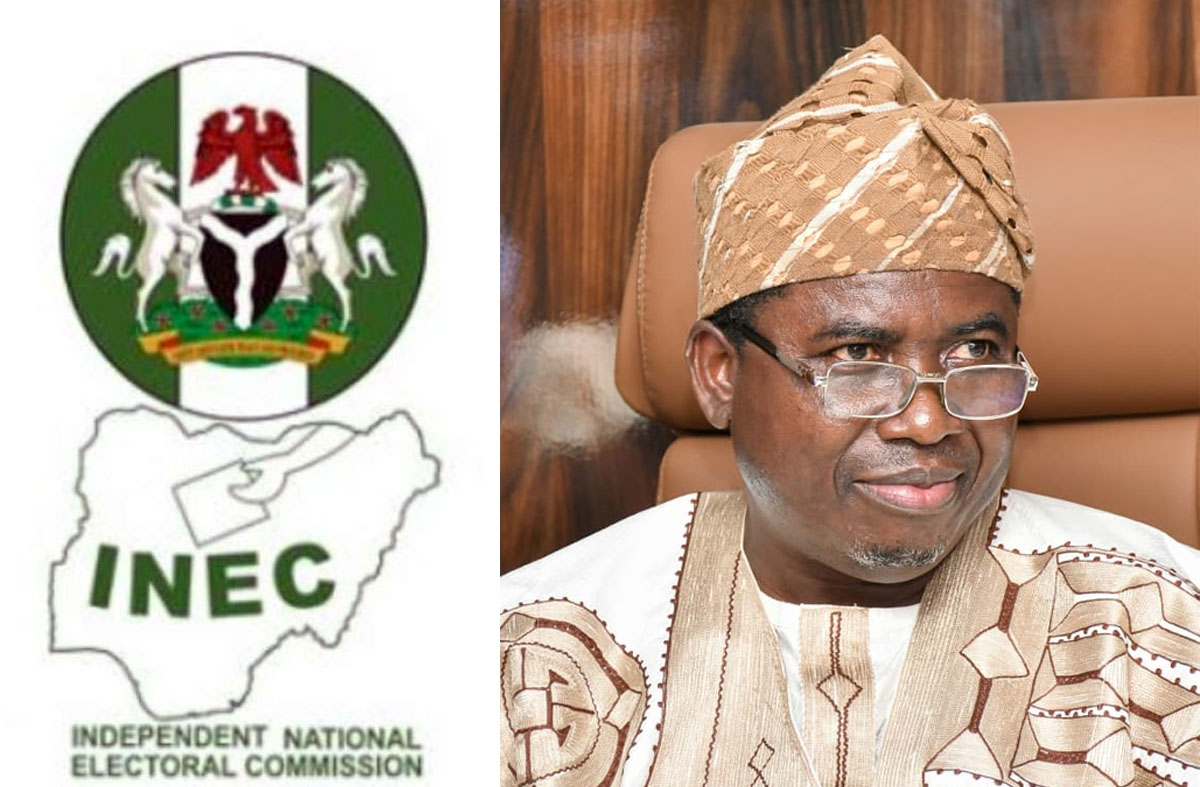
2027 Polls: Christian Group Cautions Shari’a Council Over INEC Boycott Threat
The Christian Social Movement of Nigeria (CSMN) has cautioned against attempts to politicise the leadership of the Independent National Electoral Commission (INEC), warning that threats to boycott elections on religious grounds could heighten tensions and weaken public confidence ahead of the 2027 general elections.
In a joint statement signed by its Governing Council Chairman, Elder Sunday Oibe, and Chief Executive Officer, Bosun Emmanuel, the group urged religious bodies and socio-political organisations to exercise restraint in public pronouncements capable of straining Nigeria’s already fragile political and security environment.
The warning followed a recent call by the Supreme Council for Shari’ah in Nigeria (SCSN) for the resignation of INEC Chairman, Prof. Joash Amupitan. Speaking at its 2026 pre-Ramadan lecture in Abuja, the Islamic body described the INEC chairman as a threat to electoral credibility and cautioned that Muslims might reject elections conducted under his leadership, citing concerns about neutrality and integrity.
READ ALSO:
- Starvation Cult Preacher Faces Expanded Murder, Terrorism Charges in Kenya
- Lagos Allocates 180 Shops to Displaced Alabarago Market Traders
- Cubana Chief Priest Vows to Oppose Peter Obi in 2027 Presidential Race
Reacting to the development, CSMN clarified that its position was not in defence of any administration or individual but a principled appeal to safeguard the credibility of Nigeria’s electoral process. The group stressed that appointments into key national institutions such as INEC leadership must strictly follow constitutional provisions rather than religious or sectional pressure.
“With the numerous challenges facing Nigeria, all well-meaning citizens must exercise restraint in words and actions that could escalate an already volatile situation,” the statement read.
The organisation noted that previous administrations had appointed INEC chairmen from different religious backgrounds without triggering threats of election boycotts. It warned that injecting religion into the administration of elections risks deepening divisions and undermining trust in democratic institutions.
CSMN further observed that leadership appointments in federal institutions have historically reflected Nigeria’s diversity and should not be exploited for religious mobilisation. According to the group, sustained religious polarisation could erode confidence in national institutions and weaken democratic stability ahead of 2027.
On broader constitutional concerns raised by some Islamic organisations, the Christian body called for clearer legal interpretation of the role of Sharia within Nigeria’s plural legal system, advocating long-term constitutional reforms aimed at promoting equity, justice and national unity.
The group urged religious leaders, civil society organisations and political actors to embrace dialogue, respect institutional processes and prioritise national cohesion. It emphasised that Nigeria’s stability depends on reducing religious confrontation rather than intensifying it as preparations gradually begin for the next electoral cycle.
2027 Polls: Christian Group Cautions Shari’a Council Over INEC Boycott Threat
metro
Suspected IED Explosion Rocks Bayelsa Secretariat, Police Arrest Suspect

Suspected IED Explosion Rocks Bayelsa Secretariat, Police Arrest Suspect
A suspected improvised explosive device (IED) detonated early Wednesday at the Bayelsa State Secretariat Complex in Yenagoa, prompting an emergency response from security agencies and temporarily disrupting official government activities. Authorities have assured the public that the situation is under control, with no casualties and no property damage reported.
The Bayelsa State Police Command, led by Commissioner CP Iyamah Daniel, confirmed the incident, stating that the explosion occurred at approximately 6:00 a.m. Security operatives, including the Explosive Ordnance Disposal (EOD) Unit, the Special Drone Unit, and other tactical teams, were immediately deployed to the scene to contain the situation.
Upon arrival, police cordoned off the area and conducted a detailed search, during which they discovered another unexploded device, which was safely neutralised by EOD personnel. The swift response ensured that the Secretariat and nearby facilities were secured without further incident.
READ ALSO:
- Regina Daniels Shares Emotional Message on Children’s Welfare Amid Custody Battle
- Electricity Workers Serve 21-Day Nationwide Strike Notice to FG
- NAPTIP Cracks Down on Traffickers as 23 Nigerians Return from Thailand
Police also arrested a suspect, identified as Pentecost Elijah, a 60-year-old man from Otuan Community in Southern Ijaw Local Government Area. He is currently undergoing interrogation at the State Criminal Investigation Department, and authorities stated he will be charged in court once investigations are concluded.
In response to the explosion, the Bayelsa State Government ordered a temporary four-hour closure of the Secretariat, affecting over 6,000 state employees. The directive, issued by the Head of Service, Dr Wisdom Ebiye Sawyer, allowed security agencies to complete safety checks and restore normalcy.
Access roads leading to the State Secretariat and Bayelsa State Government House were cordoned off during the security operation, while officers urged residents to remain calm and vigilant. Authorities also called on the public to report any suspicious activities to the police to prevent further threats.
The incident has raised concerns over the security of government institutions in Nigeria and highlighted the importance of emergency preparedness, bomb detection, and rapid response operations. Residents have been assured that normal operations have resumed and that the security of the secretariat and its staff remains a top priority.
Suspected IED Explosion Rocks Bayelsa Secretariat, Police Arrest Suspect
metro
Electricity Workers Serve 21-Day Nationwide Strike Notice to FG
Electricity Workers Serve 21-Day Nationwide Strike Notice to FG
Electricity workers under the National Union of Electricity Employees (NUEE) have issued a 21-day nationwide strike notice to the Federal Government (FG), warning of potential disruption to power generation and distribution if longstanding labour grievances are not addressed. The union cited anti-labour practices, wage violations, unpaid pensions and taxes, and worsening job insecurity across the Nigerian Electricity Supply Industry (NESI) as the basis for their action.
In a letter dated January 26, 2026, addressed to the Minister of Power, NUEE’s Acting General Secretary, Igwebike Dominic, lamented that repeated attempts to resolve precarious working conditions in power generating companies (Gencos) and distribution companies (Discos) since the privatisation of the sector over 12 years ago have been largely ignored. The union emphasised that previous communications to the ministry failed to elicit meaningful responses.
The union accused sector employers of refusing to negotiate or implement collective agreements and conditions of service, particularly in Gencos. They also highlighted the failure to implement the 2025 National Minimum Wage Act and consequential adjustments for electricity workers. According to NUEE, the sector remains plagued by managements that disregard procedural agreements and workers’ statutory rights.
READ ALSO:
- NAPTIP Cracks Down on Traffickers as 23 Nigerians Return from Thailand
- Kwara, Katsina Bloodshed: TMC Condemns Attacks, Dismisses ‘Jihadist Preacher’ Claims
- Dangote Refinery Slashes Petrol Price to ₦774, Ends PMS Bonus Window
Workers further decried restrictions on union activities, claiming that employers deny employees the constitutional right to unionise. The union said that deducted union dues, Pay As You Earn (PAYE) taxes, and pension contributions have not been remitted for prolonged periods, in some cases stretching to 82 months in Discos including those in Kaduna and Kano states.
NUEE also raised concerns about the “militarisation” of workplaces, alleging harassment, intimidation, and threats against employees by managements of companies such as Ikeja Electric and Egbin Power Plc. They stressed that despite repeated electricity tariff hikes and increased revenues, workers’ welfare has stagnated, with no promotions, salary increments, or bonuses, while frontline staff often bear the brunt of customer frustrations.
The union also accused investors in the sector of failing to fulfil post-privatisation promises, including capital injection, metering, network expansion, and improved power supply, citing these as evidence of the privatisation exercise’s shortcomings.
NUEE has called on the Federal Government to urgently intervene by convening all stakeholders to resolve the crisis. The union warned that continued neglect would leave workers with no choice but to take “legitimate labour action” to defend their rights. “We demand the immediate resolution of all these anti-labour issues within twenty-one days of the receipt of this letter. Otherwise, we will not be constrained to take our fate into our hands by employing any legitimate labour weapon suitable for the situation. This is not a threat,” the statement said.
The notice signals rising tensions in the Nigerian power sector, with potential nationwide consequences if negotiations fail. Observers say any prolonged strike could significantly affect households, businesses, government institutions, and the overall economy, highlighting the urgent need for intervention to avert a power supply crisis.
Electricity Workers Serve 21-Day Nationwide Strike Notice to FG

-
 News2 days ago
BREAKING: Tinubu Holds Reconciliation Meeting With Wike, Fubara, Rivers Leaders at Aso Rock
-

 Business3 days ago
BoI Gets CBN Approval to Launch Non‑Interest Banking Window in Nigeria
-

 metro2 days ago
Leadership Crisis at NAHCON as Chairman Abdullahi Saleh Usman Resigns
-
 News2 days ago
US Judge Orders FBI, DEA to Release Tinubu’s Criminal Records, Faults Delays
-

 News1 day ago
Oyo Muslims Reaffirm Loyalty to Sultan on Islamic Matters — Grand Chief Imam
-

 International2 days ago
US to Deport 18 More Nigerians on ‘Worst-of-the-Worst’ Criminal List (Full Names)
-

 News2 days ago
OWN Calls for Immediate Resignation of INEC Chairman
-

 Business2 days ago
Naira Posts Strong Comeback, Breaking Two‑Year High Against Dollar