
Business
Fuel Prices Rise Again as Marketers Respond to Dangote Refinery Price Increase

Fuel Prices Rise Again as Marketers Respond to Dangote Refinery Price Increase
Petrol prices across Nigeria are expected to rise to at least ₦1,332 per litre following fresh adjustments by marketers reacting to a new pricing template linked to the Dangote Petroleum Refinery. The development signals another round of fuel price increase in Nigeria, as downstream operators respond to higher ex-depot rates and shifting supply dynamics.
The latest adjustment emerged after MRS Oil Nigeria Plc issued a revised pricing notice to its dealers, setting its petrol pump price at ₦1,332 per litre. The company also fixed company delivery at ₦1,290 per litre and self-collection at ₦1,282 per litre. According to the notice, all loading operations will be carried out directly from the Dangote refinery, further reinforcing the refinery’s growing influence in Nigeria’s petroleum distribution market.
The upward review follows a series of incremental increases in the refinery’s ex-depot pricing. Within the month, the refinery raised its gantry price from earlier levels to about ₦1,275 per litre, representing multiple adjustments in quick succession. These repeated changes have continued to push fuel prices higher nationwide, as marketers recalibrate their retail rates to reflect current costs.
Coastal pricing has also been revised upward, reflecting broader cost pressures associated with global shipping, crude sourcing, and logistics. These changes indicate that Nigeria’s fuel pricing structure remains closely tied to both domestic refining costs and international market conditions, particularly fluctuations in global crude oil prices.
READ ALSO:
- Trump Issues 48-Hour Ultimatum to Iran Over Strait of Hormuz Crisis
- Silenced No More: A Survivor’s Story of Abuse by His Mother
- Rivers Police ‘Octopus Strike Force’ Accused of Extorting ₦150,000 From Lagos Traveller
The rapid succession of price revisions highlights increasing volatility in the downstream sector. Industry data suggests that the refinery has adjusted its pricing template several times within March alone, with successive increments affecting both gantry and coastal rates. Each adjustment has contributed to a cumulative rise in petrol costs, leaving marketers with little room but to pass on the increases to consumers.
Nigeria’s reliance on domestic refining is gradually reshaping the fuel supply chain. The Dangote refinery, with a capacity of 650,000 barrels per day, is becoming a central hub for both local consumption and regional fuel distribution. Its pricing decisions now play a significant role in determining petrol pump prices in Nigeria, as marketers source products directly from its loading terminals.
At the same time, global factors continue to influence domestic pricing. Ongoing geopolitical tensions affecting key oil transit routes, combined with fluctuations in international crude oil markets, have contributed to supply uncertainties. These external pressures, alongside exchange rate movements and freight costs, are key drivers behind the sustained increase in fuel prices in Nigeria.
The impact of rising petrol prices is already being felt across transportation, logistics, and household expenses. As fuel remains a major cost component in the economy, higher pump prices typically translate into increased fares, elevated goods prices, and broader inflationary pressure.
In addition to petrol, diesel prices have also been adjusted upward, with Automotive Gas Oil reportedly rising to around ₦1,750 per litre. This increase is expected to affect industries, power generation, and businesses that depend heavily on diesel for operations, further compounding the economic impact of rising energy costs.
With marketers already updating their pricing structures, consumers are expected to see new pump prices implemented across filling stations nationwide in the coming days. Analysts warn that further adjustments may occur if refinery prices continue to fluctuate or if global oil market conditions remain unstable.
Fuel Prices Rise Again as Marketers Respond to Dangote Refinery Price Increase








Railway
Eid-el-Fitr: NRC to Operate Three Lagos–Ibadan Train Trips on March 23

Eid-el-Fitr: NRC to Operate Three Lagos–Ibadan Train Trips on March 23
The Nigeria Railway Corporation (NRC) has announced the operation of three scheduled train trips on the Lagos–Ibadan Train Service (LITS) corridor on Monday, March 23, in response to increased passenger demand during the Eid-el-Fitr travel period.
The announcement was made in a statement by NRC spokesperson Callistus Unyimadu, who explained that the additional services are intended to ease passenger movement, reduce congestion, and provide more travel options for commuters returning after the festive celebrations. He noted that the Lagos–Ibadan rail route, connecting Lagos and Ibadan, remains one of the busiest rail corridors in the country, particularly during public holidays when road traffic is usually heavy.
According to the NRC, departures from Lagos will take place at the Mobolaji Johnson Train Station at 7:45 a.m., 1:40 p.m., and 4:00 p.m. From Ibadan, trains will depart from the Obafemi Awolowo Train Station at 8:00 a.m., 10:50 a.m., and 4:30 p.m. The corporation said the schedule was designed to improve travel flexibility, enhance rail transport convenience, and accommodate the surge in passenger turnout typically recorded during festive periods.
READ ALSO:
- BBL Death: Joe Akatugba Warns Actresses Against Cosmetic Surgery for Fame
- Dangote Petrol Price Hits ₦1,275/Litre After Fifth Hike in March
- Festival of Fertility: FG Orders Arrest, Promises Justice for Victims
Unyimadu reaffirmed the corporation’s commitment to delivering safe, reliable, and efficient rail services, noting that operational adjustments are often made during peak travel seasons to meet growing demand. He advised passengers to arrive early at train stations, comply with ticketing and security procedures, and plan their journeys in advance to avoid delays or inconvenience.
The NRC also appreciated passengers for their continued patronage and cooperation, describing it as essential to maintaining smooth operations across its services. The introduction of additional train trips is part of broader efforts to support intercity mobility during high-demand periods such as Eid-el-Fitr, when large numbers of Nigerians travel between major cities.
Rail services along the Lagos–Ibadan corridor have increasingly become a preferred alternative to road transport due to their relative speed, safety, and reduced exposure to highway congestion. Transport authorities continue to encourage the use of rail infrastructure as part of efforts to improve public transportation efficiency and ease pressure on Nigeria’s road networks during festive seasons.
Eid-el-Fitr: NRC to Operate Three Lagos–Ibadan Train Trips on March 23
Business
Dangote Petrol Price Hits ₦1,275/Litre After Fifth Hike in March

Dangote Petrol Price Hits ₦1,275/Litre After Fifth Hike in March
Nigeria’s Dangote Petroleum Refinery has increased its petrol price (Premium Motor Spirit) to ₦1,275 per litre, marking the fifth price hike in March and underscoring growing instability in Nigeria’s deregulated fuel market.
The latest adjustment came barely hours after an earlier increase, reflecting a ₦100 rise (8.5%) from the previously reported ₦1,175 per litre, and a ₦30 jump from the ₦1,245 per litre announced late Friday. The rapid revisions highlight the intensity of fuel price volatility currently shaping the downstream sector.
In a notice to marketers and customers, the refinery stated that previous pricing templates are no longer valid, urging stakeholders to disregard earlier communications.
“Kindly note that the prices contained in our previous correspondence are no longer applicable,” the company said, confirming that the new petrol price regime took effect from 12:00 a.m., March 21, 2026.
The refinery also raised its coastal price from ₦1,512,648 to ₦1,646,748 per metric tonne, representing an increase of ₦134,100 (8.9%), further reflecting mounting cost pressures across supply channels.
READ ALSO:
- Festival of Fertility: FG Orders Arrest, Promises Justice for Victims
- US Approves Sale of Stranded Iranian Oil to Curb Rising Global Energy Prices
- Netanyahu Clarifies Jesus Remarks, Denies Offending Christians Amid Backlash
While the new pricing applies immediately, the company noted that customers with valid bank guarantees will continue to load products, provided they cover the price differential.
The frequent price changes are largely driven by rising global crude oil prices, foreign exchange constraints, and supply chain disruptions linked to geopolitical tensions. As a refinery operating within a deregulated system, Dangote sources crude at international rates, making its pricing highly responsive to global market movements.
Despite expectations that local refining would stabilise Nigeria’s fuel supply, the latest increases show that the domestic market remains strongly tied to international oil benchmarks.
Data from industry tracker Petroleumprice.ng indicates that petrol prices have climbed sharply in March, rising from below ₦900 per litre to over ₦1,200 within weeks, reflecting a sustained upward trend.
The continued surge in petrol prices in Nigeria is expected to have widespread economic implications, including higher transportation costs, increased food prices, and intensified inflationary pressure on households and businesses.
Analysts warn that unless global oil prices ease or exchange rate stability improves, further fuel price increases may occur, reinforcing concerns about the vulnerability of Nigeria’s deregulated fuel market to external shocks.
Dangote Petrol Price Hits ₦1,275/Litre After Fifth Hike in March
Railway
NRC announces free train rides, extra trips for Eid Fitr
NRC announces free train rides, extra trips for Sallah special
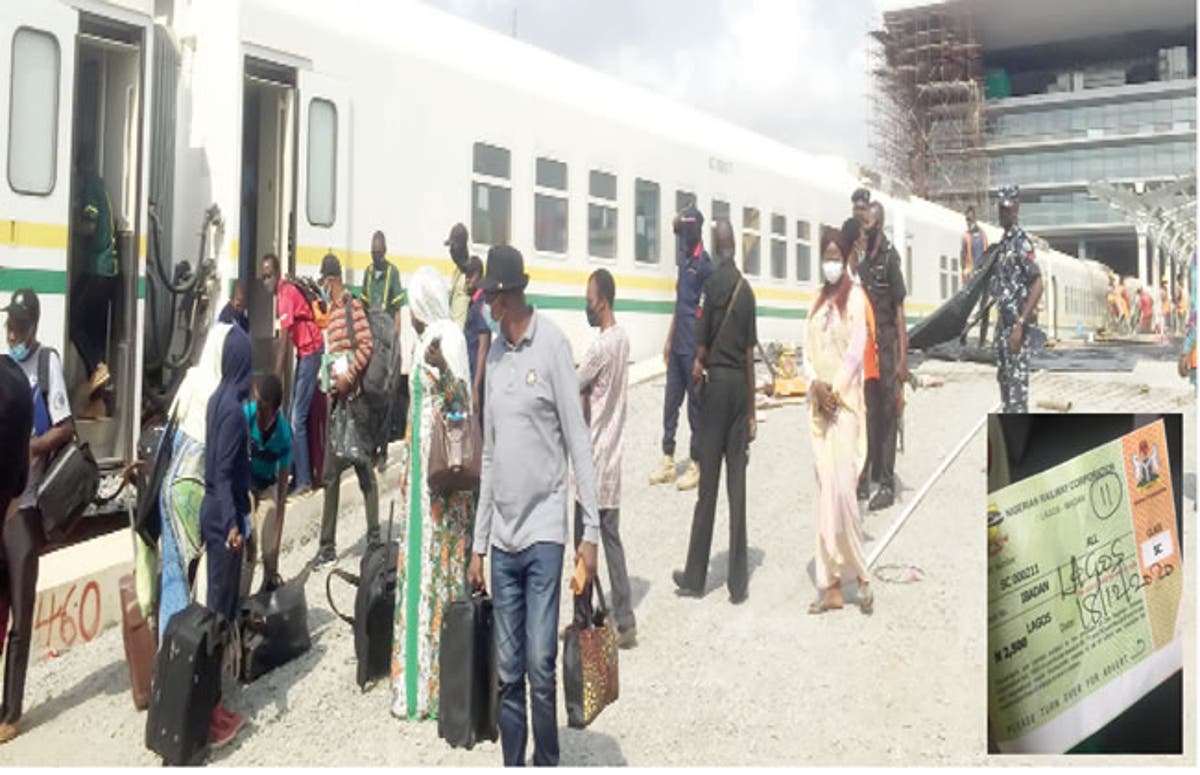
Getting home for the holidays just got a whole lot easier as the Nigerian Railway Corporation (NRC) has rolled out its special Sallah train schedule, deploying extra trips and increasing capacity to ensure Nigerians can celebrate Eid-el-Fitr with their loved ones without the usual travel stress.
From the bustling Lagos-Ibadan corridor to the scenic Warri-Itakpe route, the NRC is stepping up its game to handle the festive surge.
Its key highlights of the Sallah schedule as contained in its latest statement are as follows:
* Lagos–Ibadan (LITS): On Thursday, March 19, the service will run three special trips.
* From Lagos: 7:40 a.m., 1:40 p.m., and 4:00 p.m.
* From Ibadan: 8:00 a.m., 10:50 a.m., and 4:30 p.m.
* Abuja–Kaduna (AKTS): To keep the capital connected, the NRC is boosting frequency. After two trips on Thursday, the corridor will move to three trips daily from Friday, March 20, through Monday, March 23.
* Warri–Itakpe (WITS): This route maintains its thrice-weekly flow.
* Warri to Itakpe: Sundays, Tuesdays, and Fridays (8:00 a.m.).
* Itakpe to Warri: Mondays, Wednesdays, and Saturdays (12:00 p.m.).
* Eastern Narrow Gauge: The Port Harcourt–Aba service remains fully operational on its regular schedule, ensuring the South-East stays moving.
These details are contained in a statement signed by the NRC Chief Public Relations Officer, Callistus Unyimadu.
Osun free rides
In a heart-warming partnership, the NRC and the Osun State Government are bringing back the Imole Special Train.
Indigenes of Osun State can travel from Iddo Station in Lagos to Osogbo free of charge. This initiative, fully sponsored by the state, aims to ease the financial burden on families during the festive season.
“This special arrangement is designed to accommodate increased passenger traffic… ensuring a safe, reliable, and efficient rail transport service,” stated Callistus Unyimadu, NRC’s Chief Public Relations Officer.
Tips for travellers
To ensure your trip is as smooth as the tracks, the NRC recommends:
* Arrive Early: Be at the station well ahead of your departure time.
* Verify Tickets: Ensure you follow all official ticketing and security protocols.
* Check the Date: Remember that the Lagos-Ibadan special three-trip schedule is for March 19 only before reverting to normal service.

-

 metro1 day ago
Festival of Fertility: FG Orders Arrest, Promises Justice for Victims
-

 metro1 day ago
Nigerian Woman, Children Die in US Road Accident
-

 metro3 days ago
Fani-Kayode, Dele Momodu Trade Fresh Insults in Escalating Social Media Feud
-

 International2 days ago
Netanyahu Clarifies Jesus Remarks, Denies Offending Christians Amid Backlash
-

 metro3 days ago
Sokoto Cleric Defies Sultan, Holds Eid al-Fitr Prayer Over Moon Sighting Dispute
-

 metro17 hours ago
Shock as Governor Oborevwori’s Aide Collapses, Dies at Event
-

 metro21 hours ago
Gas Explosion Kills Two, Destroys Properties in Ajah Area of Lagos
-

 metro3 days ago
Sham Marriage, Tax Fraud: Kazeem Faces Denaturalisation in US