
News
Fuel queues in Abuja, depots raise price to N710/litre
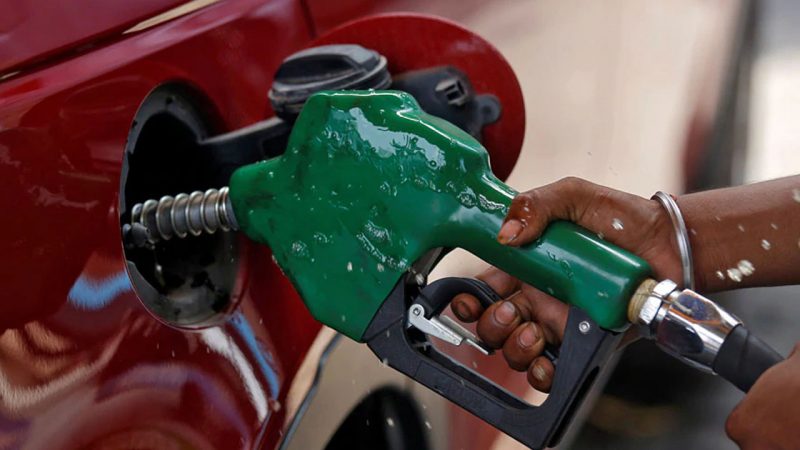
Fuel queues in Abuja, depots raise price to N710/litre
Fresh queues for Premium Motor Spirit, popularly called petrol, surfaced in Abuja, parts of Niger and Nasarawa States on Friday, following the closure of many filling stations operated by independent marketers.
Dealers closed their retail outlets due to their inability to access petrol as a result of the hike in the ex-depot price of the commodity to N710/litre by private depot owners.
Motorists besieged the few stations that dispensed petrol on Friday, particularly those operated by the Nigerian National Petroleum Company Limited and some major oil marketers in Abuja and neighbouring states.
This led to massive queues in outlets, such as the NNPC mega station on the Gwarimpa axis of the Zuba-Kubwa Expressway, Conoil and Total filling stations directly opposite the headquarters of NNPC in the Abuja city centre, and Salbas filling station at the Dei-Dei end of the Zuba-Kubwa expressway, among others.
Independent oil marketers, who own over 70 per cent of filling stations across the country, blamed the hike in the ex-depot price of petrol as dispensed by private depot owners.
The National President of the Independent Petroleum Marketers Association of Nigeria, Abubakar Maigandi, told Saturday PUNCH that private depot owners had raised the ex-depot price of PMS to N710/litre, whereas the pump price of the commodity at NNPC retail stations was N617/litre.
READ ALSO:
- Euro: France beat Portugal on penalties, to play Spain in semi-finals
- Farooq Kperogi : LGBTQ storm in $150bn Samoa deal teacup
- No guy has toasted me in five years, UK-based lady laments scarcity of men
Maigandi said, “The current situation is a result of how the private depot owners have been selling their products. It has been very difficult for independent petroleum marketers to get the product and sell it in Abuja and neighbouring states, as well as in other states in the North.
“So, the queues you are seeing now are because of the cost of PMS by private depots. The private depots are selling at N710/litre, but if you check the price of the same product at NNPC retail outlets, it is N617/litre.
“Therefore, by the time the independent marketers buy from private depots and bring it to our filling stations, we will not be able to sell our product because our cost price is already so high, while the cost at NNPC retail outlets is far lower.
“And you know that when we buy it at the rate of N710/litre, we have to add transportation cost again because there is no equalisation. And when we add the cost of transportation, the pump price is going to be higher than the N710/litre ex-depot price, whereas NNPC stations sell at N617/litre.”
Maigandi explained that because of the widespread number of stations operated by IPMAN, any distortion in the supply of products to members of the group would lead to fuel queues because major marketers and NNPC stations were fewer in number.
On whether IPMAN members cannot get direct PMS supply from NNPC, instead of buying the product from private depots, he replied, “That is what we have been negotiating with them (NNPC), and they promised us that they will start giving us our allocation.
“They have started, but the quantity is small compared to the number of retail outlets operated by IPMAN nationwide. We are getting products from NNPC, but the volume is too small for our members.
“So, we are requesting additional volumes because, in Abuja alone, we have over 250 retail outlets belonging to IPMAN members. This is just for Abuja. We have not talked about Niger, Kaduna, and other states in the North, not to mention the number nationwide.”
Maigandi, however, stated that the queues for petrol were not pronounced in remote villages, adding that “when you go to the villages, you will see that there are no queues.”.
“But in the city centres, where you have NNPC stations selling very cheaper than the N710/litre price, you will see queues there, as well as in front of the few outlets that have products to dispense.”
The IPMAN president said petrol was not scarce, as there were enough volumes in-country concerning what was imported by NNPC – Nigeria’s sole importer of the commodity.
“There is no scarcity. There is the product. The queues are caused basically by the market challenge, as I have explained to you. But as soon as we get products from NNPC or at fairly good prices, we will dispense and the queues will vanish,” he stated.
Officials at the Federal Minister of Petroleum Resources confirmed that there was enough product in-country, and stated that the market had been deregulated.
“It is a deregulated downstream oil sector, so dealers buy and sell based on demand and supply. There is enough product from NNPC. There is no scarcity,” an official at the ministry, who requested not to be named due to a lack of authorisation to speak on the matter, stated.
Another official at NNPC assured motorists that the queues would clear out fast because the company had enough product in-country.
Fuel queues in Abuja, depots raise price to N710/litre










News
INEC Seeks N1.04 Trillion for 2027 Elections, Operational Needs – Amupitan
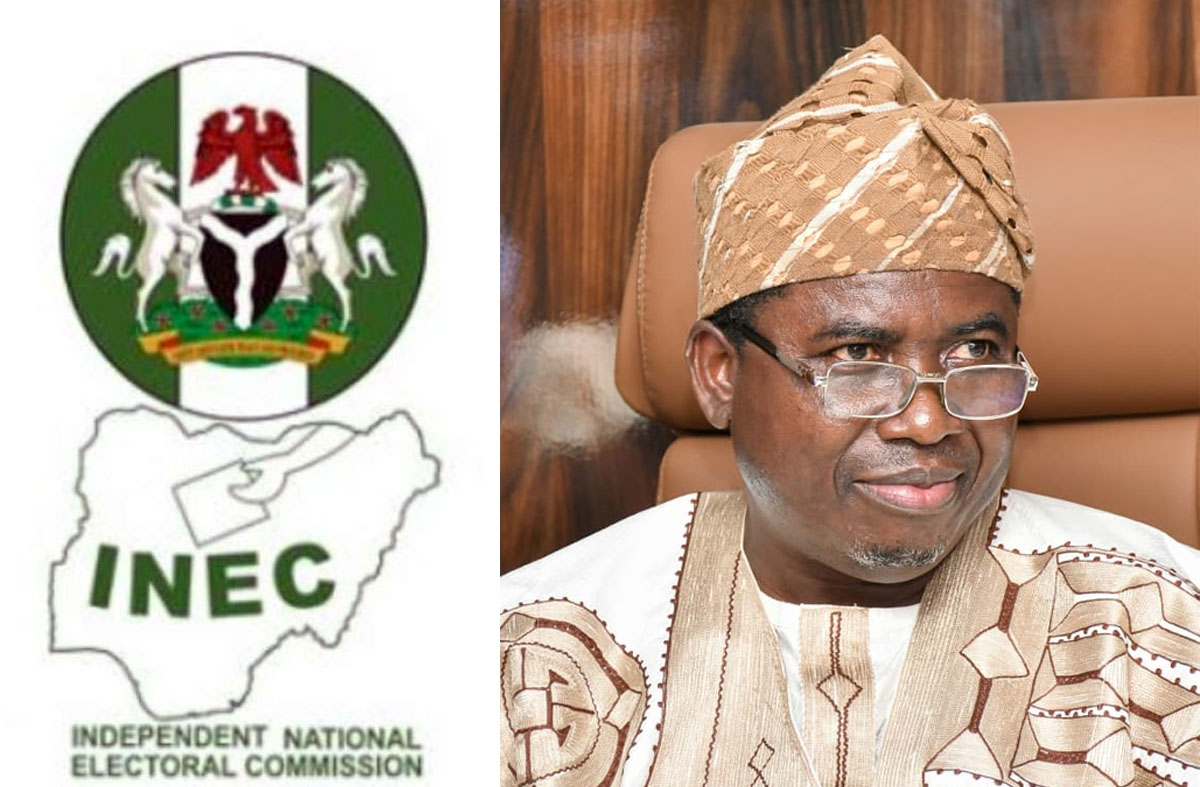
INEC Seeks N1.04 Trillion for 2027 Elections, Operational Needs – Amupitan
The Independent National Electoral Commission (INEC) has requested a total of ₦1.04 trillion from the Federal Government of Nigeria to fund off-cycle elections this year, the 2027 general election, and its operational activities in 2026, subject to approval by the National Assembly of Nigeria.
The request was made by INEC Chairman Prof. Joash Amupitan while defending the commission’s spending proposal before the Joint Committee on Electoral Matters of the National Assembly. Amupitan urged lawmakers to grant timely approval and release of funds, warning that delays could hamper preparations for upcoming elections.
According to the INEC chairman, the commission is seeking ₦873.778 billion for the 2027 general election and ₦171 billion for its 2026 operational activities. The 2026 allocation covers Federal Capital Territory (FCT) area council elections, by-elections scheduled for next week, and the Ekiti and Osun governorship elections slated for June and September.
READ ALSO:
- Alake: Killers of Mining Marshal Will Face Full Wrath of the Law
- Lagos Police Launch Manhunt for Suspect in Brutal Ajah Murder
- Lookman Shines as Atlético Madrid Hammer Barcelona 4-0
Breakdown of the 2027 Election Budget
The N873.778 billion earmarked for the 2027 general election includes:
- ₦379.748 billion for operational costs
- ₦92.317 billion for administrative expenses
- ₦209.206 billion for technology
- ₦154.905 billion for election capital costs
- ₦42.608 billion for miscellaneous expenses
For the N171 billion proposed for 2026 operations, Amupitan said:
- ₦109 billion would cover personnel costs
- ₦18.7 billion for overheads
- ₦42.63 billion for election conduct
- ₦1.4 billion for capital expenditure
He noted that the budget was prepared in line with Section 3(3) of the Electoral Act 2022, which mandates submission of election budgets at least one year before a general election.
Calls for Timely Fund Release and Dedicated Network
Amupitan criticized the envelope system of budgeting, describing it as unsuitable for INEC’s operational needs that often require urgent interventions. He appealed for a bulk release of funds, highlighting the need for a dedicated communication network to enhance accountability and transparency during elections.
“If we have our own network, Nigerians can hold us responsible for any hitch,” he said.
Lawmakers Back INEC’s Proposal
Senator Adams Oshiomhole argued that no government agency should impose the envelope budgeting system on INEC, emphasizing that full release of funds is critical for smooth election preparations. Similarly, House member Billy Osawaru called for the budget to be placed on first-line charge, allowing the commission access to all funds immediately.
Following deliberations, the joint committee approved a one-time release of INEC’s annual budget and pledged to consider increasing allowances for National Youth Service Corps (NYSC) members deployed for election duties. The proposed increase would cost ₦32 billion, equating to ₦125,000 per corps member.
Senator Simon Lalong, chairman of the Senate Committee on Electoral Matters, assured INEC of lawmakers’ support, pledging close collaboration to ensure a successful 2027 election. House Committee chairman Bayo Balogun also promised legislative backing but cautioned INEC against overpromising, citing prior misrepresentations about real-time uploads to the INEC Result Viewing (IReV) portal, which was never provided for in the Electoral Act but only in INEC regulations.
The approval of the commission’s budget and operational requests is expected to enhance election preparedness, technological deployment, and transparency ahead of the 2027 general elections, while addressing logistical and operational challenges that have hampered past polls.
INEC Seeks N1.04 Trillion for 2027 Elections, Operational Needs – Amupitan
News
Aso Rock Goes Solar as Tinubu Orders National Grid Disconnection

Aso Rock Goes Solar as Tinubu Orders National Grid Disconnection
President Bola Tinubu will fully disconnect the Aso Rock Presidential Villa from the national grid by March 2026 following allegations of electricity overbilling for power not supplied, the State House has confirmed.
The State House Permanent Secretary, Temitope Fashedemi, made the disclosure while defending the 2026 State House budget before the Senate Committee on Special Duties. He revealed that the solar mini-grid project at the Presidential Villa was completed in December 2025 and is currently undergoing technical testing ahead of a full transition to solar power.
Fashedemi explained that during the testing phase of the new solar installation, officials discovered what he described as significant overbilling by the electricity distribution company. According to him, the State House observed instances where it was billed for electricity that was not supplied and has begun reconciliation discussions to address what he termed “legacy liability.”
READ ALSO:
- 2026 Electoral Bill: Senate Explains Limits of IReV in Real-Time Transmission
- El-Rufai to Appear Before EFCC After Alleged Airport Arrest Attempt
- Four Sentenced to Death for Murder of Ahoada DPO in Rivers
The Villa is serviced by the Abuja Electricity Distribution Company (AEDC), which in February 2024 publicly listed several government agencies as debtors. At the time, AEDC said the Presidential Villa owed N923.87 million in unpaid electricity bills. Other major debtors included the Federal Capital Territory Administration (FCTA) and some federal ministries.
The Tinubu administration had earlier allocated N10 billion in the 2025 budget for the solarisation of the Presidential Villa through a solar mini-grid system. An additional N7 billion has been earmarked for the same project in the 2026 Appropriation Bill, bringing total allocations to N17 billion over two years.
Fashedemi noted that a similar transition to solar power at the State House Medical Centre in May 2025 has already demonstrated cost savings and reliability. He said the facility has operated almost entirely on solar energy and battery storage since then, with minimal reliance on grid electricity and no generator use.
He expressed optimism that by March 2026, the Presidential Villa would complete its transition and fully exit the national grid, relying primarily on renewable energy for its electricity needs.
The development aligns with broader efforts to promote renewable energy adoption in Nigeria, reduce public sector energy costs, and address concerns over electricity billing transparency. If fully implemented, Aso Villa will operate largely on solar power supported by battery storage systems, significantly reducing dependence on grid supply and diesel generators.
Aso Rock Goes Solar as Tinubu Orders National Grid Disconnection
News
2026 Electoral Bill: Senate Explains Limits of IReV in Real-Time Transmission

2026 Electoral Bill: Senate Explains Limits of IReV in Real-Time Transmission
The Nigerian Senate has declared that genuine real-time transmission of election results can only be achieved if the Independent National Electoral Commission (INEC) adopts a full e-voting system, clarifying ongoing debates surrounding the review of the 2026 Electoral Bill.
Chairman of the Senate Ad-hoc Committee on the Review of the 2026 Electoral Bill, Adeniyi Adegbonmire, made the clarification during an interview on Arise News Channel on Thursday.
According to him, the INEC Result Viewing Portal (IReV) was never designed to function as an electronic voting platform and cannot deliver instant transmission of votes under Nigeria’s current manual voting structure.
IReV Is Not an E-Voting Platform
Adegbonmire explained that IReV is strictly a results publication portal. He stressed that ballot papers are thumb-printed and counted manually at polling units before results are entered into Form EC8A by the presiding officer.
“It is the Form EC8A that has been filled manually and will be transmitted to IReV,” he said, adding that changing the terminology in the Electoral Bill from “transmit” to “upload” would not alter the process.
READ ALSO:
- El-Rufai to Appear Before EFCC After Alleged Airport Arrest Attempt
- Four Sentenced to Death for Murder of Ahoada DPO in Rivers
- Nigerian Army Rescues Eight Kidnapped Wedding Guests in Kano
The senator dismissed claims that the Senate intends to stop INEC from using IReV in the 2027 general elections, describing such reports as misinformation.
“The Senate never said INEC should not use IReV for the 2027 elections. IReV is software developed by INEC to publicise results already declared at polling units. It is not an e-voting platform,” he stated.
Manual Voting Still Determines Results
Under Nigeria’s current electoral framework, voters cast ballots manually, and votes are counted by hand at polling units. The presiding officer then records the figures in Form EC8A, which must be signed and countersigned by party agents before being uploaded to IReV.
Adegbonmire emphasised that electronic transmission begins only after manual collation is completed.
“When you have not complied with the proper filling of Form EC8A, you cannot transfer, transmit or upload it,” he said.
He further clarified that electronic transmission does not affect the sanctity of voting, since vote casting and counting remain manual.
Why E-Voting Is Key to Real-Time Results
The senator argued that for true real-time election result transmission, Nigeria would need a system where votes are cast, counted, and automatically transmitted electronically from polling units to a central server — a process only achievable through a legally backed electronic voting system.
Although INEC introduced technology such as the Bimodal Voter Accreditation System (BVAS) and IReV during the 2023 general elections, vote counting is still conducted manually under the Electoral Act 2022.
The ongoing review of the 2026 Electoral Bill has therefore reignited national debate over broader electoral reforms, digital infrastructure upgrades, and the possibility of transitioning to e-voting in Nigeria ahead of future elections.
Lawmakers say adopting e-voting would require substantial legal amendments, investment in secure digital infrastructure, cybersecurity protections, and extensive voter education.
Until then, the Senate maintains that real-time transmission, in the strictest sense, remains unattainable under the present manual voting system.
2026 Electoral Bill: Senate Explains Limits of IReV in Real-Time Transmission

-

 News3 days ago
Oyo Muslims Reaffirm Loyalty to Sultan on Islamic Matters — Grand Chief Imam
-

 Education16 hours ago
Supreme Court Affirms Muslim Students’ Right to Worship at Rivers State University
-

 metro15 hours ago
IKEDC Sets Feb 20 Deadline for Customers to Submit Valid IDs or Face Disconnection
-

 metro3 days ago
Former NAHCON Chief Explains Why He Stepped Down, Denies Conflicts
-

 International3 days ago
US to Deport 18 More Nigerians on ‘Worst-of-the-Worst’ Criminal List (Full Names)
-

 Business2 days ago
Dangote Refinery Slashes Petrol Price to ₦774, Ends PMS Bonus Window
-

 metro2 days ago
Kwara, Katsina Bloodshed: TMC Condemns Attacks, Dismisses ‘Jihadist Preacher’ Claims
-

 Business18 hours ago
Naira Could Trade Below ₦1,000/$ With Dangote Refinery at Full Capacity — Otedola