FULL LIST: Phones that WhatsApp will no longer work on in 2025 - Newstrends
Connect with us

Business

FULL LIST: Phones that WhatsApp will no longer work on in 2025

Published

on

FULL LIST: Phones that WhatsApp will no longer work on in 2025

WhatsApp and WhatsApp Business will no longer be available on some older smartphones starting May 5, 2025, as Meta phases out support for devices that don’t meet its updated system requirements.

This update is part of Meta’s commitment to enhancing security and ensuring the app performs smoothly on modern hardware and software. The company says the decision is aimed at helping the platform maintain its efficiency and safeguard user data.

While this change will mostly affect older phones — especially those released over a decade ago — users are advised to upgrade their devices to avoid losing access.

READ ALSO:

Apple devices affected:

WhatsApp will require iOS 15.1 or later iPhone models that won’t meet the minimum requirement include:

iPhone 5s

iPhone 6

iPhone 6 Plus

These models can only run iOS 12.5.7, which falls below WhatsApp’s new cutoff.

Android Devices Affected:

Back on January 1, 2025, WhatsApp ended support for Android phones running version 4.4 (KitKat) or older. Users with these devices were urged to update their operating systems where possible — but for phones stuck without official updates, using WhatsApp is no longer an option.

Affected Android phones include:

Samsung:

Galaxy S3

Galaxy Note 2

Galaxy Ace 3

Galaxy S4 Mini

Motorola:

Moto G (1st Generation)

Moto E (2014)

Razr HD

HTC:

One X

One X+

Desire 500

Desire 601

LG:

Optimus G

G2 Mini

L90

Nexus 4

Sony:

Xperia Z

Xperia SP

Xperia T

Xperia V

Users still relying on these older devices will need to upgrade to newer models if they want to keep using WhatsApp.


FULL LIST: Phones that WhatsApp will no longer work on in 2025

Business

BVN Enrolment Hits 68.6 Million as Growth Slows – NIBSS

Published

on

BVN Enrolment Hits 68.6 Million as Growth Slows – NIBSS

Nigeria’s Bank Verification Number (BVN) database rose to 68.6 million in March 2026, according to the Nigeria Inter-Bank Settlement System (NIBSS), signalling continued adoption of the biometric identification system despite a noticeable slowdown in new registrations.

The latest figures show that BVN enrolment increased by about 754,000 between January and March 2026, compared to the 67.8 million recorded at the end of 2025. The growth rate is significantly lower than the 4.3 million new registrations achieved in 2025, largely driven by the Non-Resident BVN (NRBVN) initiative, which enabled Nigerians in the diaspora to enrol remotely.

Analysts warn that if the current trend persists, total BVN registrations for 2026 may fall short of last year’s performance.

Despite the steady rise in enrolment, a substantial gap remains between the number of BVNs and bank accounts in the country. Data indicates that Nigeria had over 320 million active bank accounts as of March 2025, far exceeding the total number of BVNs. While a single BVN can be linked to multiple accounts, experts believe a significant number of accounts may still not be connected to any BVN, raising concerns about compliance and financial transparency.

In response, the Central Bank of Nigeria (CBN) has introduced new guidelines aimed at strengthening the BVN framework, enhancing security, and curbing fraudulent activities within the banking system.

Under the revised rules, only individuals aged 18 and above are eligible to register for a BVN. Customers are also restricted to changing the phone number linked to their BVN only once, a measure designed to limit identity manipulation. Additionally, banks are mandated to intensify monitoring of suspicious transactions.

A key feature of the updated framework is the introduction of a temporary watchlist system. BVNs linked to suspicious transactions will be flagged for up to 24 hours, during which the account holder will be contacted to provide clarification. The measure is expected to enable quicker detection of potential fraud while allowing legitimate customers to resolve issues promptly.

The BVN, a unique biometric identification number, serves as a unified identity for bank customers across Nigeria’s financial system. It links multiple accounts owned by an individual and plays a critical role in safeguarding the sector against fraud.

Stakeholders say the continued expansion of the BVN database reflects stronger regulatory oversight and growing acceptance of digital identity systems, even as efforts intensify to bridge the gap between bank account ownership and BVN linkage.

BVN Enrolment Hits 68.6 Million as Growth Slows – NIBSS

Continue Reading

Railway

British Museum, Oxford experts visit NRC Legacy Museum, seek heritage partnership

Published

on

British Museum, Oxford experts visit NRC Legacy Museum, seek heritage partnership

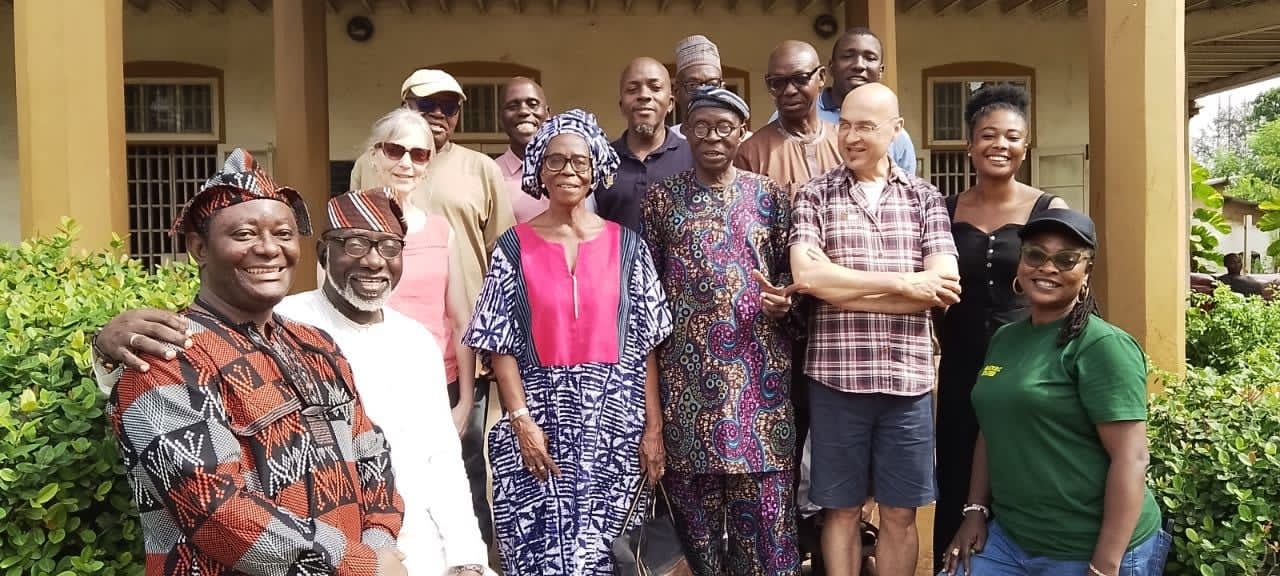
A delegation of experts from the British Museum and University of Oxford has visited the Nigerian Railway Corporation (NRC) Legacy Museum, opening discussions on potential international collaboration to preserve and revitalise Nigeria’s railway heritage.

The familiarisation tour was led by Paul Bagu, alongside Mrs. Julia Hudson, as the team assessed the museum’s historical assets and conservation needs.

During the visit, the delegation toured key sections of the facility, including the iconic Old Running Shed, home to ageing locomotives and vintage coaches that reflect Nigeria’s rail transport evolution.

The experts expressed strong interest in restoration efforts, stressing the urgency of preserving the artefacts through technical support and global partnerships.

Describing the museum as a critical archive of Nigeria’s industrial past, Bagu noted that it holds “immense cultural and historical value,” adding that collaboration in conservation, restoration, and knowledge exchange would be vital to safeguarding the assets for future generations.

A major highlight of the tour was the historic coach used by Queen Elizabeth II during her visit to Nigeria.

The delegation pointed to the shared railway history between Britain and Nigeria as a strong foundation for deeper institutional partnerships.

“The historical links between Britain and Nigeria’s railway development present a unique opportunity to build enduring collaborations that celebrate this shared heritage,” Bagu said.

Drawing parallels from West Africa, he referenced a successful railway heritage initiative in Freetown, where sustained efforts by local enthusiasts have helped revive a once-dormant museum.

He urged similar grassroots commitment in Nigeria to complement institutional support.

President of the Legacy Museum Railway Compound, Mr. Taye Olaniyi, welcomed the delegation, describing the visit as a validation of the museum’s growing relevance.

He also acknowledged the contributions of retired NRC director, Mr. Nate Adediron, to the development of the facility.

“We are honoured to host our distinguished guests. Their visit underscores the importance of global partnerships in advancing our vision of making the NRC Legacy Museum a leading railway heritage centre in Africa,” Olaniyi said.

Providing technical depth to the engagement, Engr. Dr. Quadri A.T., Assistant Director (Mechanical) at NRC, briefed the visitors on the operation and maintenance of both legacy and modern locomotives.

His presentation highlighted ongoing efforts to preserve historical assets while aligning with contemporary rail development standards.

The delegation also explored thematic exhibits covering railway administration, Nigeria’s political evolution, and transitional milestones in national development—elements that reinforce the museum’s educational value.

Commending the initiative, Bagu encouraged greater public engagement, particularly among young Nigerians, to ensure long-term sustainability of heritage preservation efforts.

The visit concluded with the presentation of certificates to key contributors and institutions, followed by a group photograph session.

The engagement marks a significant step toward international collaboration and strengthens efforts to position the NRC Legacy Museum as a premier railway heritage destination in Africa.

Continue Reading

Business

Tax Evasion: Lagos Government Sues Bi-Courtney, DAAR, 33 Others

Published

on

Lagos State Internal Revenue Service (LIRS)

Tax Evasion: Lagos Government Sues Bi-Courtney, DAAR, 33 Others

The Lagos State Government has initiated legal proceedings against 45 individuals and corporate entities over alleged unpaid taxes amounting to several billions of naira.

The cases have been filed before the state’s revenue court as part of intensified efforts to enforce compliance with tax regulations and improve internally generated revenue.

Prominent among those listed in the suits are Bi-Courtney Aviation Services, operators of the Murtala Muhammed Airport Terminal Two; DAAR Communications Plc, owners of Africa Independent Television; and Leaders & Company Limited, publishers of ThisDay newspaper.

Official figures indicate that Bi-Courtney Aviation Services allegedly owes N38.7 million, while DAAR Communications has an outstanding liability of N22.4 million. Leaders & Company Limited is also accused of defaulting on taxes to the tune of N67.1 million.

Other organisations identified as major defaulters include GMT Energy Resources Limited, with liabilities exceeding N145.8 million, and Sheriff Deputies Limited, which allegedly owes over N132.1 million.

The list further features companies such as Heyden Petroleum Limited, AA Rescue, and Primero Transport Services Limited, alongside several others with varying tax obligations.

Additional firms named in the court filings include IENG Nigeria Limited, James Fisher Nigeria Limited, V Care Diagnostics Limited, Venture Garden Nigeria Limited, Saro Africa International Limited, and Barry Callebaut Nigeria Limited.

Media and technology firms, including Native Media Limited, First Consulting Media & Centre Limited, and Eyowo Integrated Payments, were also listed as defendants.

The State Attorney-General and Commissioner for Justice, Lawal Pedro, disclosed that the decision to commence legal action followed repeated notices issued to the affected parties, which were ignored.

He noted that while individual tax liabilities range between N13.5 million and N35 million, corporate organisations account for the bulk of the outstanding sums.

Pedro explained that the state government resorted to litigation after the taxpayers failed to fulfil their statutory obligations or take advantage of opportunities provided to regularise their tax status.

He added that the enforcement initiative forms part of broader efforts to strengthen tax compliance and boost revenue required for infrastructure development and essential public services.

The Attorney-General further clarified that taxpayers who complied with pre-action notices and settled their outstanding liabilities would not be prosecuted.

He urged residents and business operators to adhere strictly to tax laws by filing annual returns and paying assessed taxes promptly, warning that continued default could attract penalties, interest, and further legal consequences.

Tax Evasion: Lagos Government Sues Bi-Courtney, DAAR, 33 Others

Continue Reading
HostArmada Affordable Cloud SSD Shared Hosting
HostArmada - Affordable Cloud SSD Web Hosting

Trending