

Business
Dangote’s fuel prices still high despite global crude slump — S&P Global
Dangote’s fuel prices still high despite global crude slump — S&P Global
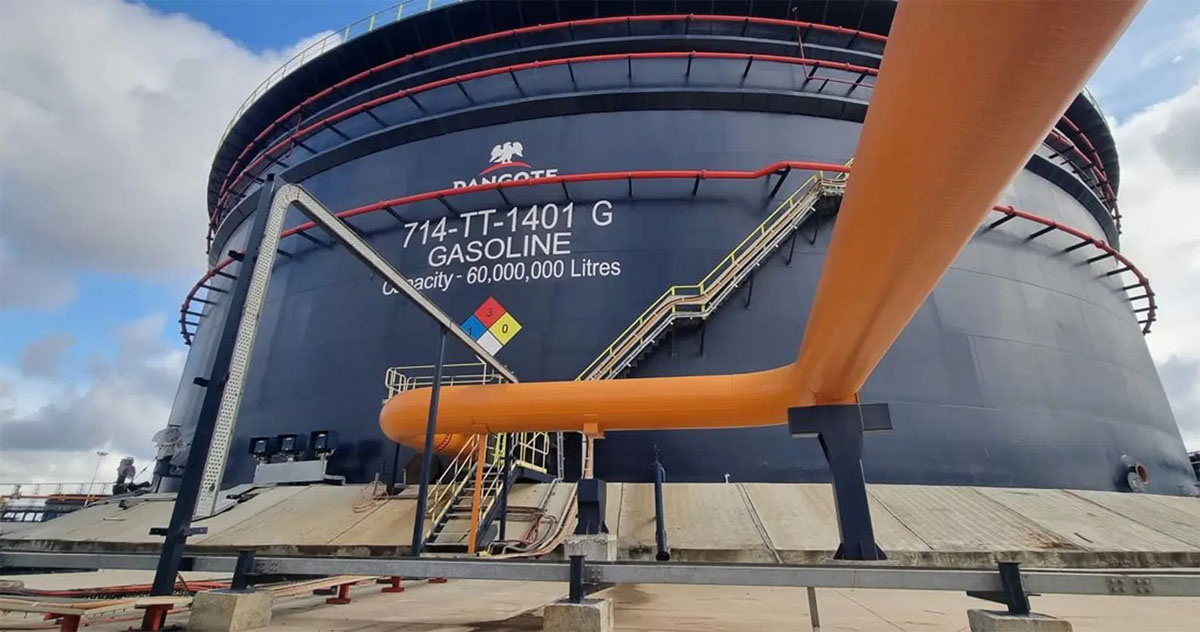
Despite recent reductions, petrol prices from the Dangote Petroleum Refinery remain relatively high when compared to the global drop in crude oil prices, according to a new report by S&P Global.
This pricing strategy, analysts say, has made fuel importation into Nigeria more attractive for marketers.
The 650,000 barrels per day refinery, located in Lekki, Lagos, has cut petrol prices multiple times since launching operations. The refinery brought down its pump price from around N1,100 per litre in September to N860 in March, though prices later increased again following a pause in the naira-for-crude exchange policy.
However, S&P Global pointed out that the refinery’s reductions did not match the global dip in fuel prices.
“Incentives to ship products to West Africa have also come from the pricing at Nigeria’s Dangote refinery. While flat prices have been driven down massively amid falling crude prices, Dangote has not lowered gantry prices for truck volumes significantly.
“Between April 1 and April 9, the Eurobob M1 swap fell from $734.25 per metric tonne to $603/MT, a 17.9 per cent fall, before recovering somewhat. But over the same period, Dangote’s truck price at the gantry dropped just 1.7 per cent from N880/litre to N865/litre, according to reporting from the MEMAN retail organisation.
“This has encouraged a flood of products to West Africa, where high domestic prices have led marketers to import from international traders in greater volumes,” the report said.
READ ALSO:
- FG begins free Cesarian Sessions in over 100 hospitals (See list)
- AfDB Adesina speaks on shocking truth that keeps Africa poor
- Kano man Shamsu Yakubu arrested for licking goat’s genitals
On Wednesday, the refinery adjusted its gantry price downward again to N835 per litre and advised partners to retail at N890 per litre within Lagos.
“High-quality Dangote petrol will now be available at the following prices across all our partner retail outlets: Key partners, including MRS, AP (Ardova), Heyden, Optima Energy, Hyde, and Techno Oil, will offer petrol at N890 per litre, down from N920 in Lagos.
“In the South-West, the price will be N900 per litre, reduced from N930. In the North-West and North-Central, the price will be N910 per litre, lowered from N940. In the South-East, South-South, and North-East, the price will be N920 per litre, down from N950,” the company said in a statement on Wednesday.
A market survey conducted by our correspondent at several stations in Lagos and Ogun States revealed further price reductions by various outlets, as a fresh round of competition unfolds.
Independent player SGR, which operates four outlets in Mowe and Sagamu, slashed its pump price to N878 per litre—lower than Dangote’s. Meanwhile, Heyden and MRS were seen selling at N885 and N890 respectively, although some Dangote-affiliated stations and outlets run by the Nigerian National Petroleum Company Limited still charged around N910 to N920 per litre.
A source close to the Dangote Group, who requested anonymity due to lack of authorisation to speak on the matter, revealed that a more significant price cut had been scheduled for April 10—Aliko Dangote’s 68th birthday—but the suspension of the naira-for-crude policy stalled the plan.
“Alhaji was planning a massive price cut on his birthday, April 10, but that could not happen because of the suspension of the naira-for-crude policy. Nevertheless, he was still able to do something, though marginally.
“Now that the Federal Government has returned the naira-for-crude policy fully and the crude prices are crashing, the competition has returned. I can tell you that the Dangote refinery is planning to crash the price of petrol and make it affordable for the masses,” the source said.
READ ALSO:
- CBEX: Investors hospitalised following trading platform crash
- Father impregnated underaged step-daughter thrice, police tells Lagos court
- Military replaces theatre commander in Borno over renewed terrorist attacks
In addition to the local dynamics, S&P Global reported a broader shift in global petrol trade patterns. Europe, traditionally exporting large volumes to the US during summer, has rerouted shipments toward West Africa this year.
“Typically, the summer driving season sees increased flows from Europe to the US Atlantic Coast amid an uptick in summer driving demand. At the same time, specification differences between Europe and WAF, which exist in the summer, disappear in the winter, typically resulting in fewer volumes fixed to Nigeria.
“The threat of tariffs and changes in Nigeria’s refining landscape has seen this trend flip in 2025. Large volumes are presently set to arrive in West Africa’s Offshore Lome hub, while the USAC has been demanding more limited flows amid demand-side fears and tariff threats,” it was reported.
Citing tracking data from S&P Global Commodities at Sea, the report revealed that around four million metric tonnes of petrol are set to arrive in West Africa in the 30 days leading up to April 27 — a level not recorded in over two years.
This influx coincides with a surge in Nigerian fuel imports. Between April 8 and 16, traders brought in 156.9 million litres of petrol, according to import data.
Meanwhile, the Chief Executive of the Nigerian Midstream and Downstream Petroleum Regulatory Authority, Farouk Ahmed, stated on Tuesday that daily imports of petrol have dropped significantly — from 44.6 million litres per day in August 2024 to just 14.7 million litres per day as of April 2025.
It should be noted that Dangote is still in legal proceedings with the NMDPRA over the agency’s decision to grant import licences to independent fuel marketers.
Dangote’s fuel prices still high despite global crude slump — S&P Global
(PUNCH)








Auto
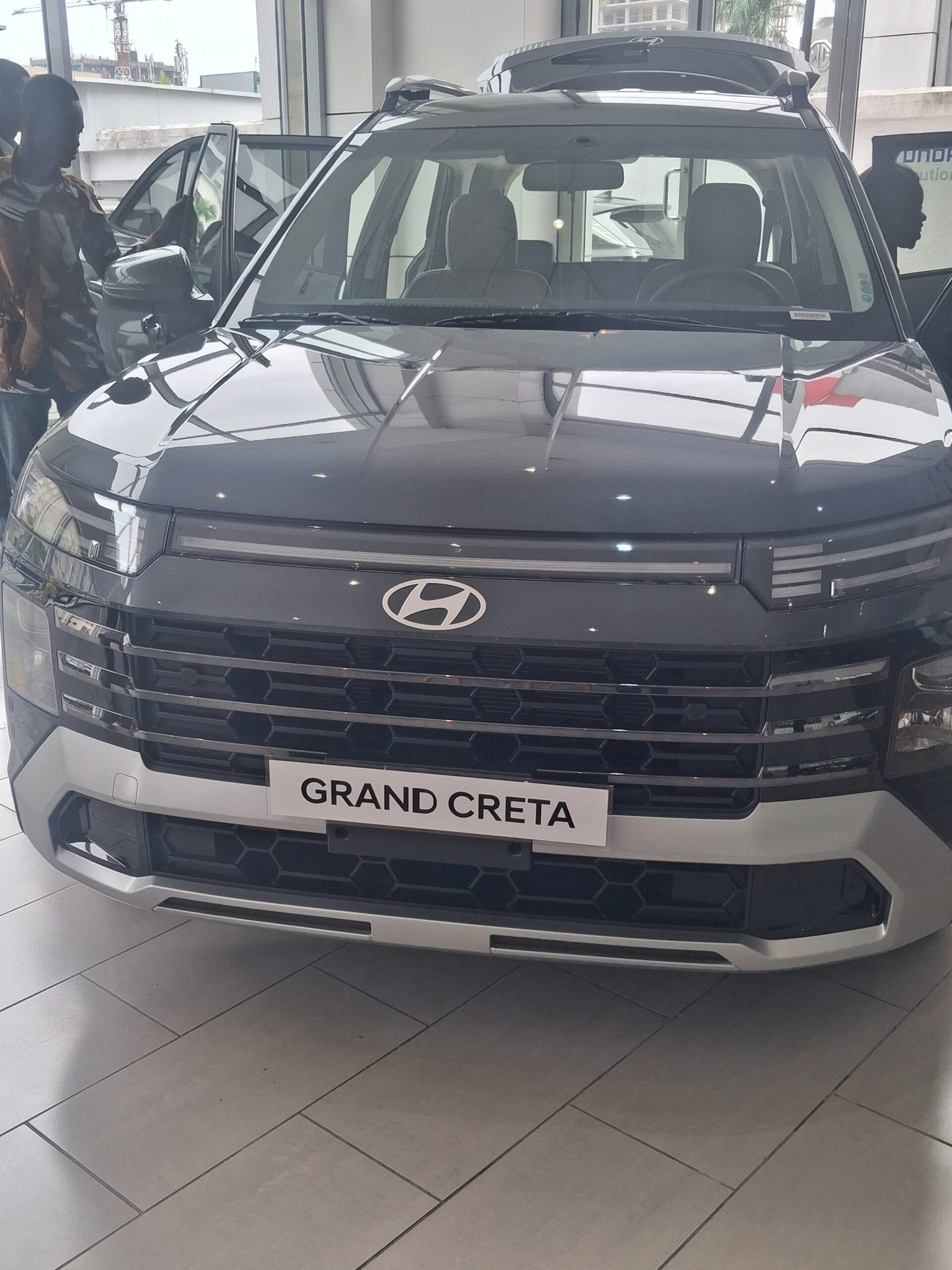
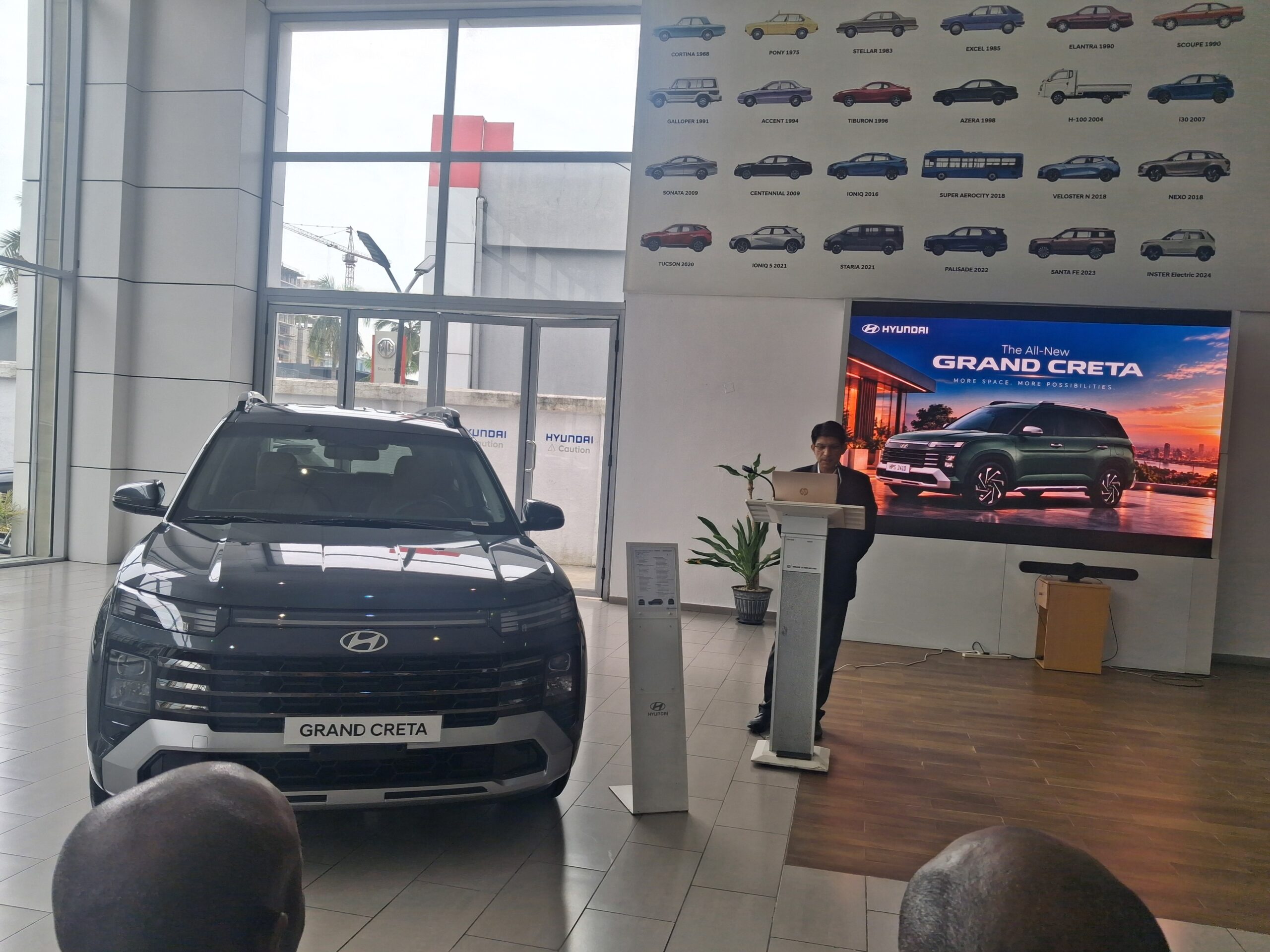
Happening now: Hyundai unveiling of Mufasa and Grand Creta
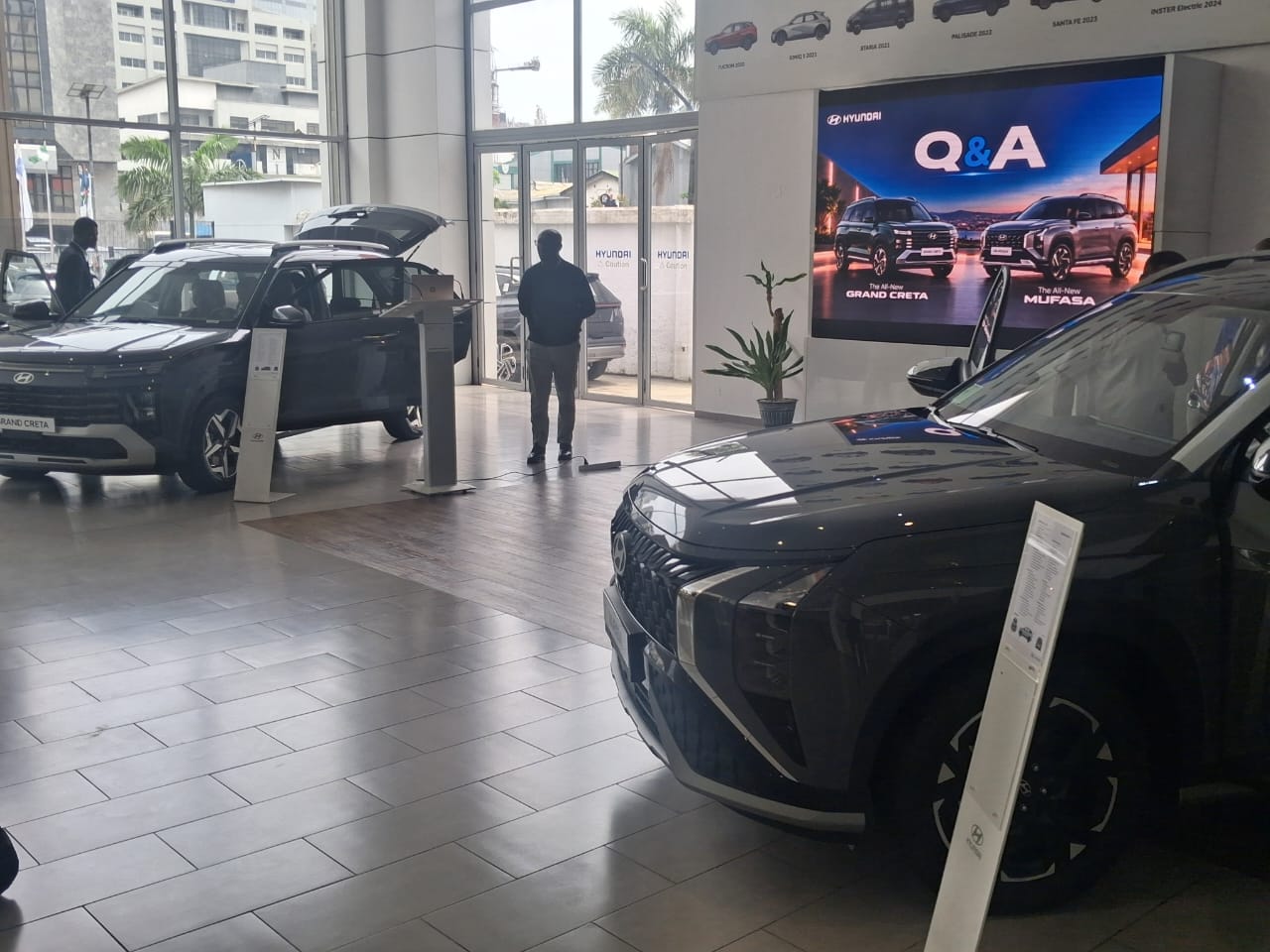
Happening now: Hyundai unveiling of Mufasa and Grand Creta (photos)
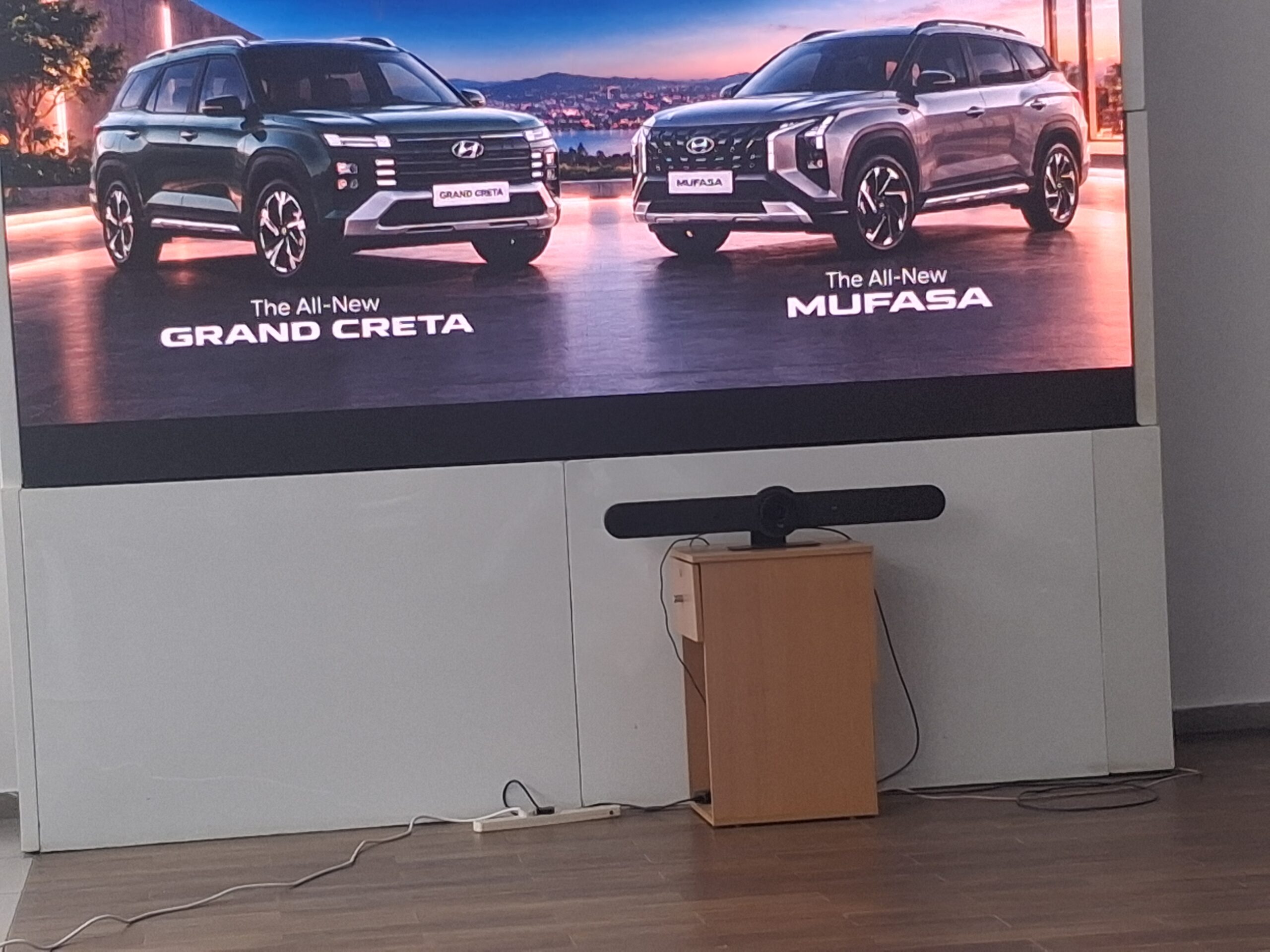
Two latest models of Hyundai auto brands are currently being officially rolled out in Lagos. The new vehicles are Mufasa and Grand Creta.
The unveiling is taking place at the Hyundai showroom on Akin Adesola Street Victoria Island, Lagos.
Auto
No 5% Petrol Tax Plan, Oyedele Says, Amid Public Concerns
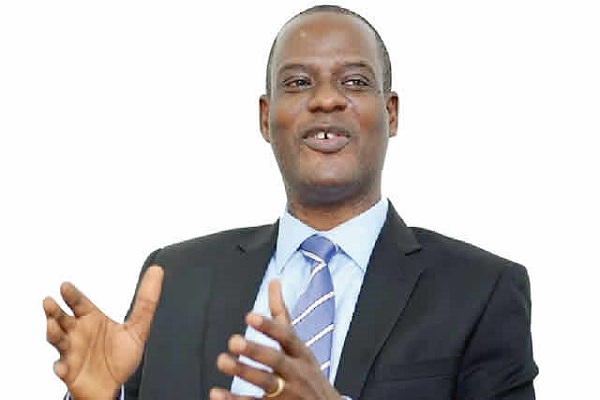
No 5% Petrol Tax Plan, Oyedele Says, Amid Public Concerns
The Federal Government has no plan to introduce a new tax on petrol, Minister of Finance and Coordinating Minister of the Economy, Taiwo Oyedele, has said, dismissing reports that the administration of President Bola Tinubu intends to impose a five per cent levy on petroleum products.
Oyedele clarified the issue in a statement posted on his X account on Tuesday, insisting that a fuel tax was not being considered by the government.
“In my interview with ARISE News, I was clear: a fuel tax is not on the table,” he said.
His statement follows reports linking him to the proposed five per cent tax, which sparked concerns about a possible increase in the cost of petrol amid Nigeria’s persistent cost-of-living crisis.
Petrol prices have remained a major driver of transportation and distribution costs since the removal of the fuel subsidy, contributing to higher prices of food and other essential goods and services.
The prospect of an additional levy had raised fears that households and businesses could face further financial pressure.
However, Oyedele’s clarification indicates that the Federal Government is not currently considering the proposed fuel tax, amid broader efforts to reform Nigeria’s tax system and strengthen public finances.
Auto
Beyond the Showroom: Why After-Sales Service Will Define Auto Industry Winners
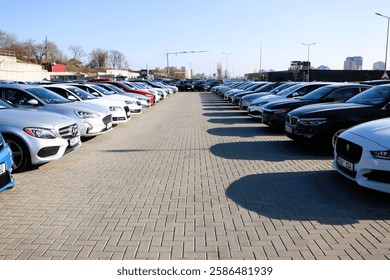
Beyond the Showroom: Why After-Sales Service Will Define Auto Industry Winners
Nigeria’s automotive industry must look beyond vehicle prices, specifications and flashy new models if it hopes to win lasting customer confidence. The real test of competition increasingly lies in what happens after the sale — when a vehicle needs servicing, spare parts, repairs or warranty support.
A car purchase is not a one-off transaction. It marks the beginning of an ownership journey that could last several years, during which the quality of after-sales service can determine whether a customer remains loyal to a brand or regrets the decision to buy it.
When customers struggle to obtain genuine parts, secure timely repairs or get clear answers to warranty claims, their frustration can damage confidence not only in a dealer but also in the manufacturer and the wider automotive market.
After-sales service must therefore move from the background to the centre of automotive competition in Nigeria.
Promises must translate into performance
Effective customer care starts with clear, credible commitments. Buyers deserve to understand warranty coverage, servicing schedules, access to genuine parts, repair procedures and the support available when problems arise.
But promises alone are not enough. A warranty has limited value if customers cannot access a competent service centre. A roadside assistance number means little without an effective response system. And a repair-time guarantee is only as good as the technicians, parts and processes supporting it.
Automotive distributors and dealers must ensure that their marketing promises are matched by the operational capacity to deliver.
Buyers, on their part, should ask questions before committing their money, examine warranty conditions and establish what support they can realistically expect throughout the vehicle’s lifespan.
Competing on ownership experience
Nigeria’s automotive market would benefit enormously if brands competed not only on the vehicles they sell but also on the quality of ownership experience they provide.
Such competition could drive improvements in service delivery, warranty transparency, spare-parts availability, technical training, repair turnaround and customer communication.
Some players are already putting more structured after-sales propositions before buyers. Carloha’s CarlohaCare 6-6-7 programme, for instance, combines a six-year warranty, six years of free servicing and a seven-day repair promise, subject to applicable terms and conditions. Its CarlohaCare Rescue service extends the proposition to assistance beyond the workshop.
These offerings illustrate how clearly defined service commitments can become part of a vehicle’s value proposition, rather than an afterthought.
However, the objective should not be to crown a permanent winner or single out one company as the industry benchmark. Every provider must demonstrate that its commitments are practical, transparent and consistently delivered.
The wider industry should embrace continuous improvement, with customers ultimately judging brands by their real-world experiences.
Automotive journalism must ask tougher questions
Automotive journalism has a critical role in broadening the conversation.
Coverage of the sector often focuses on vehicle launches, new technologies, prices, specifications and expansion plans. These remain important, but consumers also need independent reporting on the realities of vehicle ownership.
Journalists can examine warranty conditions, investigate spare-parts availability, interview service managers and fleet operators, document consumer experiences and assess how effectively companies resolve complaints.
They should celebrate genuine improvements while holding businesses accountable when their public commitments fall short.
The Nigerian Automotive Journalists Association (NAJA) is well positioned to encourage this conversation through informed reporting, industry analysis, interviews and stakeholder engagement.
The goal should be to bring manufacturers, distributors, dealers, fleet operators and consumers around a fundamental question: What level of care should Nigerians reasonably expect after buying a vehicle?
That conversation must remain independent, balanced and evidence-led, rather than becoming a promotional platform for individual brands.
Make after-sales service a buying criterion
The shift towards stronger customer care will gather momentum when Nigerians begin to assess after-sales support as seriously as they consider engine performance, fuel economy, safety features and purchase price.
A private buyer should ask about warranty coverage, servicing costs and the location of authorised workshops. A fleet operator should evaluate parts availability, repair turnaround and vehicle downtime alongside acquisition costs. Families should know what assistance is available when a vehicle breaks down far from home.
Dealers that offer transparent terms and dependable support should earn a competitive advantage. Those that fall short should have a clear incentive to improve.
This is particularly important in a market where vehicle ownership involves significant financial commitment and prolonged exposure to maintenance costs. A seemingly attractive purchase can become expensive if parts are difficult to source or repairs take too long.
The industry must therefore recognise that customer care is not merely a cost centre. Properly managed, it can build loyalty, strengthen brand reputation, generate repeat business and encourage referrals.
The real test begins after payment
Nigeria does not need an automotive market in which businesses compete only to sell more vehicles. It needs one in which they also compete to keep customers satisfied long after the keys have been handed over.
The true measure of a brand is not simply how attractively it markets a vehicle or how efficiently it closes a sale. It is how responsibly it responds when the customer needs help most.
As competition intensifies, the companies that combine good products with reliable service, accessible parts and transparent customer support will have a stronger foundation for lasting success.
For buyers, the message is equally clear: look beyond the showroom, ask the difficult questions and compare the support behind the badge.
Buy the car. Demand the care.
-
 News2 days ago
FG Challenges World Bank’s 124% Debt-to-Revenue Warning, Cites Rising Income
-

 metro22 hours ago
Army Major, Soldiers Killed in ISWAP Ambush in Yobe State
-

 metro3 days ago
NAFDAC Probes Corps Member’s Death at Enugu Camp as Fake Drug Claims Emerge
-

 Politics3 days ago
Buhari Feared Tinubu Presidency, Resisted Pressure to Back Him – Baba-Ahmed Claims
-

 metro22 hours ago
Breaking: Afenifere Leader Pa Fasoranti Dies at 100
-

 metro2 days ago
Ogun House Fire Horror: Husband Arrested After Wife Dies Following Domestic Dispute
-

 Entertainment2 days ago
Nollywood Mourns as Actress, Beauty Queen Tenia Abraham Dies at 32
-

 News2 days ago
NLC, Falana Mobilise Nigerians Against Petrol Price Hike, Mount Pressure on Tinubu Govt