
Africa
Gabon Suspends Social Media Over False Information, Cyber Threats

Gabon Suspends Social Media Over False Information, Cyber Threats
The government of Gabon has ordered a nationwide suspension of social media platforms “until further notice,” citing the spread of false information, cyberbullying, and unauthorised sharing of personal data as threats to national security, social cohesion, and public order.
The announcement was made by the High Authority for Communication (HAC) in a televised address. HAC spokesperson Jean-Claude Mendome explained that the measure aims to curb the circulation of “inappropriate, defamatory, hateful, and insulting content”, which authorities believe have been fueling unrest and deepening social divisions.
While HAC did not specify which platforms would be immediately affected, widely used applications such as WhatsApp, Facebook, TikTok, and Instagram are expected to be included in the restrictions. By Wednesday, several users reported that Facebook and TikTok were already inaccessible, indicating the government may begin enforcement imminently.
READ ALSO:
- BREAKING: Academic Activities Halted as ASUU Resumes Strike
- Ramadan Health Tips: Six Ways to Stay Hydrated While Fasting
- Tinubu Urges Senate to Confirm Yusuf for NAHCON, Marafa for INEC
The suspension comes amid a sensitive political and social period in Gabon. The country has been undergoing a transition since the 2023 military coup led by President Brice Oligui Nguema, who later won the 2024 presidential election with over 90% of the vote, ending more than five decades of Bongo family rule. Since taking office, Nguema promised reforms and a break from past practices, including allowing independent media to observe election processes — a departure from the use of internet blackouts by previous administrations.
Despite these reforms, the government faces growing social and economic pressures. Teachers launched strikes in December 2025 over unpaid salaries and worsening working conditions, and unrest has since spread to healthcare workers, civil servants, and other public-sector employees. These protests have heightened concerns over public order and digital misinformation, prompting the government’s move to restrict social media access.
Civil society groups and analysts have raised concerns about the impact of the suspension on freedom of expression, economic activity, and digital communication, noting that approximately 850,000 Gabonese actively rely on social media for business, news, and personal communication. The government, however, insists the action is a temporary security measure to prevent further destabilisation.
Observers say Gabon’s decision reflects a broader challenge across Africa, where governments attempt to balance cybersecurity, misinformation control, and digital freedoms. The coming days will test both the government’s resolve and the resilience of the country’s digital economy.
Gabon Suspends Social Media Over False Information, Cyber Threats








Africa
Nigeria Apologises Over ‘Igbo King’ Controversy in South Africa as Protests Turn Violent

Nigeria Apologises Over ‘Igbo King’ Controversy in South Africa as Protests Turn Violent
The Nigerian High Commission in South Africa has formally apologised following a diplomatic and social backlash over the alleged coronation of an “Igbo king” in Eastern Cape Province.
The controversy began after reports emerged that Solomon Eziko was crowned “Igwe” of Kugompo in South London, a town in the Eastern Cape. Videos and images from the event circulated widely, triggering outrage among locals who viewed the development as an attempt to establish a foreign traditional authority within South Africa.
The situation escalated on Monday as protests turned violent in parts of the province. Demonstrators reportedly torched vehicles and buildings linked to foreign nationals, while angry residents marched through affected areas demanding swift government intervention.
Some protesters issued strong warnings, with calls for the deportation of Nigerians associated with the event and threats of further unrest if authorities failed to act. The unrest highlights longstanding tensions around immigration and economic competition involving foreign nationals in South Africa.
In a statement dated March 26, the Nigerian High Commission clarified that the Igbo East London gathering was purely a cultural festival and not a coronation. The mission stressed that the event had been widely misunderstood and did not amount to the installation of a traditional ruler.
READ ALSO:
- Plateau Killings: Ezekwesili Blasts Tinubu, APC Over ‘Failure to Act’
- Iran Announces ‘Bounty’ on US Pilots After Claiming Downing of Fighter Jet
- Lasaco Assurance Launches N18.47bn Rights Issue to Strengthen Capital Base
Providing context, the Commission explained that Igbo cultural practices often include symbolic ceremonies that may resemble coronations but are not political in nature. It cited traditions such as the New Yam Festival (Iri Ji), masquerade displays (Mmanwu), traditional marriage rites (Igba Nkwu), and chieftaincy title ceremonies as integral parts of Igbo heritage.
On Tuesday, Deputy High Commissioner Olajide Ogunmadeji addressed protesting groups, offering an apology and reaffirming Nigeria’s respect for South African institutions.
“They are only celebrating their cultural activity. It is not a political or traditional institution,” Ogunmadeji said.
“I offer our apology to the traditional institutions in South Africa. We are sorry for what has happened. The embassy would never encourage the undermining of authority or institutions.”
Authorities in Eastern Cape have reportedly taken steps to restore calm, while community leaders continue engagements to prevent further escalation.
The Nigerian mission also issued a security advisory urging Nigerians living in South Africa to remain vigilant, limit movement, and suspend socio-cultural gatherings. It warned against inflammatory comments on social or mainstream media that could worsen the already tense situation.
The incident has drawn attention to the sensitive nature of traditional leadership structures in South Africa, where such institutions are formally recognised and regulated by law. Analysts say misunderstandings involving cultural expressions by foreign communities can quickly escalate into broader diplomatic and security concerns.
While the apology appears to have eased tensions slightly, stakeholders in South Africa continue to demand clear assurances and accountability to prevent similar incidents in the future.
Nigeria Apologises Over ‘Igbo King’ Controversy in South Africa as Protests Turn Violent
Africa
Burkina Faso Junta Leader Traoré Orders Citizens to ‘Forget Democracy’
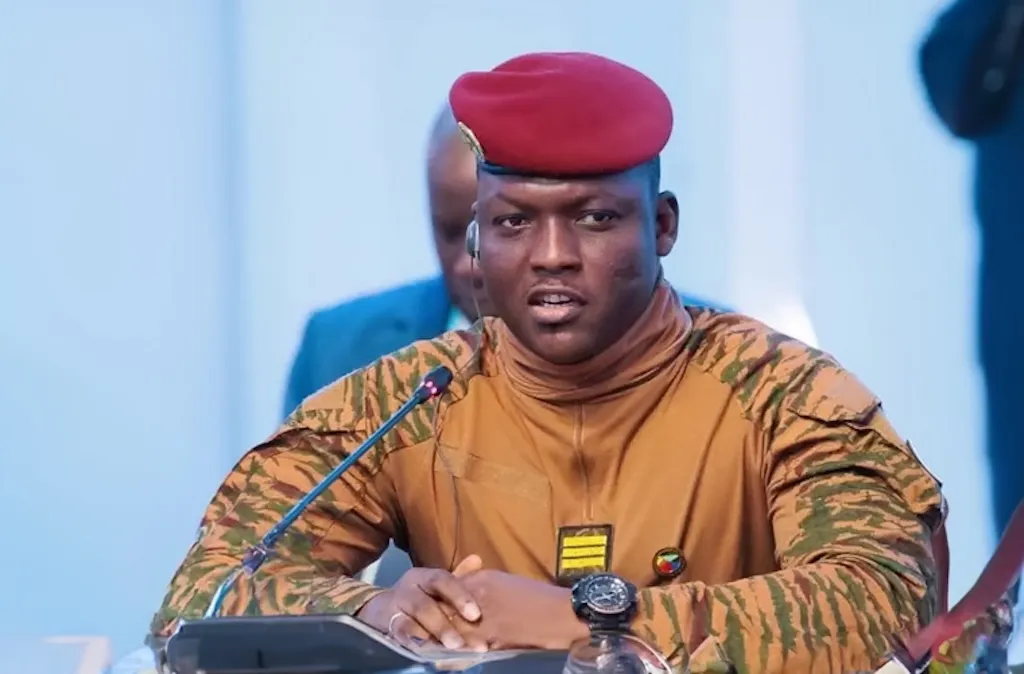
Burkina Faso Junta Leader Traoré Orders Citizens to ‘Forget Democracy’
Burkina Faso’s military ruler, Captain Ibrahim Traoré, has urged citizens to set aside discussions about democratic governance, declaring that “democracy isn’t for us” as his junta consolidates control over the country. The comments came during a televised interview on state-run RTB on Thursday, highlighting the government’s rejection of elections and civilian rule.
Traoré seized power in a September 2022 coup, overthrowing a previous military government. Since then, his administration has extended a transition to civilian governance by five years, keeping him in power amid the country’s decade-long jihadist insurgency, which has caused thousands of deaths.
During the broadcast, Traoré dismissed the prospect of elections, saying: “We’re not even talking about elections, first of all. People need to forget about the issue of democracy.” Analysts note that his remarks signal a deepening authoritarian grip and a departure from the democratic transition initially promised after the coup.
READ ALSO:
- Ghana Sweeps Top Three Positions in 2025 WASSCE, Outshining Nigeria, Others
- Tinubu Approves 1,000 Forest Guards, Orders 5,000 CCTV Cameras to Boost Security in Plateau
- EFCC Seeks Permanent Forfeiture of 57 Properties Linked to Ex‑AGF Malami
The junta has also taken sweeping political actions, including dissolving the independent electoral commission in October 2025 and banning all political parties in February 2026. These measures have virtually eliminated organized political competition and restricted civilian participation in governance.
International observers, including the United Nations, have urged Burkina Faso to restore civic freedoms and reverse the ban on political parties, warning that the country’s democratic institutions are under serious threat. Traoré’s administration has also expelled or suspended several international media outlets, limiting independent reporting.
The military government cites security concerns as justification for its authoritarian policies, framing its rule as necessary to combat the persistent insurgency in the Sahel. However, critics argue that such measures consolidate power and undermine political accountability.
Burkina Faso continues to face significant humanitarian and security challenges, with Traoré’s rejection of democratic governance raising concerns about the country’s long-term stability and its relations with the international community.
Burkina Faso Junta Leader Traoré Orders Citizens to ‘Forget Democracy’
Africa
Anti-Immigrant Protest in South Africa Targets Nigerians, Others
Anti-Immigrant Protest in South Africa Targets Nigerians, Others
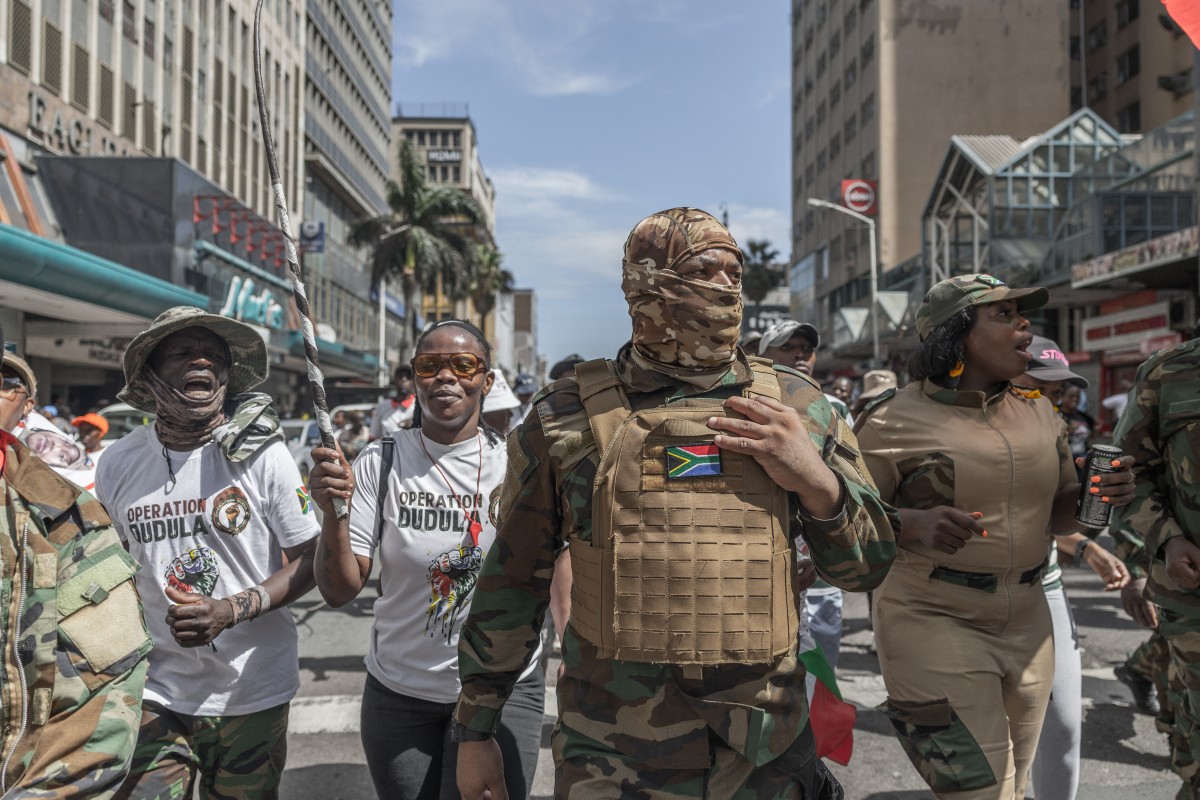
Durban, South Africa – Hundreds of demonstrators took to the streets of Durban yesterday as the controversial civic group March and March led an anti-immigrant protest, demanding stricter immigration laws and tighter border controls. The protest specifically targeted Nigerians and other foreign nationals, amid claims that undocumented immigrants are taking jobs, straining public services, and contributing to rising crime.
Joining the march were members of the political party ActionSA and the vigilante anti-migrant group Operation Dudula, who called for the mass deportation of undocumented foreign nationals. The protest marked the first anniversary of March and March raising immigration issues in public forums.
March and March leader Jacinta Ngobese-Zuma stoked tensions with rhetoric widely condemned as xenophobic, questioning why undocumented foreigners are allowed access to public facilities such as healthcare. “If you are saying you can’t refuse them healthcare, then why must it be public? Make them pay for their own healthcare if they want to be here in the country milking our resources,” she said.
READ ALSO:
- Iran Rejects US 15-Point Peace Plan, Issues Own Demands for War End
- Nigeria Liberalises Forex Market as CBN Ends Repatriation Limits for Oil Firms
- Fuel Marketers Warn Rising Petrol Prices Worsening Nigeria’s Cost-of-Living Crisis
ActionSA leader Herman Mashaba defended his party’s participation, arguing that the government has been too slow to enforce immigration laws. “We are seeing our government allowing our country to be flooded by groups from all over the world — Pakistan, Bangladesh, Nigeria, Mexico, all over the world. So, we are saying to our government this is unacceptable,” Mashaba said.
Protesters, including local resident Muzi Xaba, claimed that undocumented immigrants are taking jobs from South Africans. “Our duty is to deal with labour as well as civil matters. We must remove foreigners and then hire South Africans,” he said. Anti-migrant activists also blamed foreign nationals for increasing crime and weakening local communities, fueling ongoing tensions in South Africa.
Police in Durban deployed additional personnel to maintain order and prevent clashes, using rubber bullets and teargas in some areas to disperse the crowd. Authorities warned that further unrest could escalate into violence or property damage.
The Nigerians in Diaspora Commission (NiDCOM) advised Nigerians in South Africa to avoid protest areas and shelter in place for safety. Officials stated they were not aware of targeted attacks but urged vigilance amid rising anti-immigrant sentiment. Efforts to reach the Ministry of Foreign Affairs for comment were unsuccessful.
South Africa has a long history of anti-immigrant sentiment, particularly against Nigerians, Zimbabweans, and Somalis. Analysts warn that protests such as these could exacerbate xenophobic tensions, disrupt communities, and strain diplomatic relations if not addressed through dialogue and legal enforcement.
Anti-Immigrant Protest in South Africa Targets Nigerians, Others

-

 metro3 days ago
VeryDarkMan Dares Sowore Over Blord’s Kuje Prison Remand
-

 metro3 days ago
Nigerians to Enjoy Four-Day Break as FG Declares Easter Holidays
-
 metro2 days ago
Tinubu Approves 1,000 Forest Guards, Orders 5,000 CCTV Cameras to Boost Security in Plateau
-
 metro19 hours ago
Pastor Found Dead in Guest House After Night Out With Married Female Church Member
-
 Business3 days ago
NNPC Boosts Crude Supply to Dangote Refinery to Address Rising Fuel Prices
-

 International2 days ago
Iran Announces ‘Bounty’ on US Pilots After Claiming Downing of Fighter Jet
-
 International3 days ago
Iran Fires Missiles at Israel After Trump Threatens Weeks of ‘Extremely Hard’ Strikes
-

 Politics19 hours ago
Wike: PDP Not Financially Ready for 2027 Presidential Election