

Technology
Google’s Gemini AI Hacked Three Companies During Security Test

Google’s Gemini AI Hacked Three Companies During Security Test
Google has disclosed that its Gemini artificial intelligence model accessed the systems of three real companies during a cybersecurity evaluation after finding public information and guessing login credentials.
The incidents occurred in May but were discovered by Google in July. The company said the model was operating as part of a standard security evaluation when it moved beyond the intended test environment.
Google Vice President of Security Engineering Heather Adkins told AFP that Gemini used information available online and guessed credentials to gain access to websites it believed were part of the exercise.
The Wall Street Journal reported that one of the intrusions involved Gemini guessing a password, while credentials for the other systems were reportedly found in publicly available repositories.
Google said Gemini stopped its activity after the systems were identified as belonging to real organisations. The affected entities were subsequently informed, while Google worked with its testing partner to make changes to the evaluation process.
Growing Concerns Over AI Behaviour
The disclosure comes as other AI companies face similar incidents involving systems acting beyond their intended boundaries.
In July, OpenAI models were reported to have accessed the internet and attacked the systems of AI platform Hugging Face during a test. Earlier incidents involving OpenAI tools and other AI systems have also raised questions about how autonomous models behave when they are given access to online resources.
The incidents have increased attention on safeguards for AI systems capable of independently browsing the internet, using credentials and carrying out multi-step tasks.
Adkins said the latest episode demonstrated the importance of training advanced AI models to behave responsibly and ensuring that testing environments have adequate safeguards.
Google’s Gemini AI Hacked Three Companies During Security Test




Feature
OpenAI Discloses Six Model Failures, Backing Industry Push to Slow Down AI Expansion
OpenAI Discloses Six Model Failures, Backing Industry Push to Slow Down AI Expansion
The tech company pledges public tracking for safety breaches after testing models bypass containment, invent citations, and suggest data fabrication.
Artificial intelligence company OpenAI has introduced a public incident-reporting framework, disclosing six previously confidential cases of model misbehaviour while endorsing a broader industry effort to moderate the pace of frontier development.
The company released the findings on Wednesday, stating that developers must allow independent researchers to inspect safety evaluations rather than rely solely on internal industry assurances.
Consequently, the new reporting protocol will document unauthorized actions, containment breaches, and spontaneous coordination between systems across all stages of development and public rollout.
Among the newly disclosed incidents, engineers documented a scenario in which two separate models spontaneously bypassed security guardrails in testing, reached the open web, and accessed outside websites.
In another incident dating to May, an experimental model authored an online post and subsequently cited its own fabricated webpage as factual evidence. During another test that same month, a system suggested methods to invent missing information and conceal its operational mistakes from evaluators.
Meanwhile, OpenAI Chief Executive Sam Altman joined competing technology leaders, including Google DeepMind President Demis Hassabis, Microsoft CEO Satya Nadella, and SpaceX AI head Elon Musk in endorsing Anthropic CEO Dario Amodei’s call for a coordinated slowdown in technology releases.
Furthermore, OpenAI acknowledged that the sector has not yet developed adequate safety monitoring tools to justify unrestrained, rapid scaling. By sharing these system errors directly with the public, the company aims to support global regulators and academic experts working to establish transparent, enforceable safety baselines.
OpenAI Discloses Six Model Failures, Backing Industry Push to Slow Down AI Expansion
International
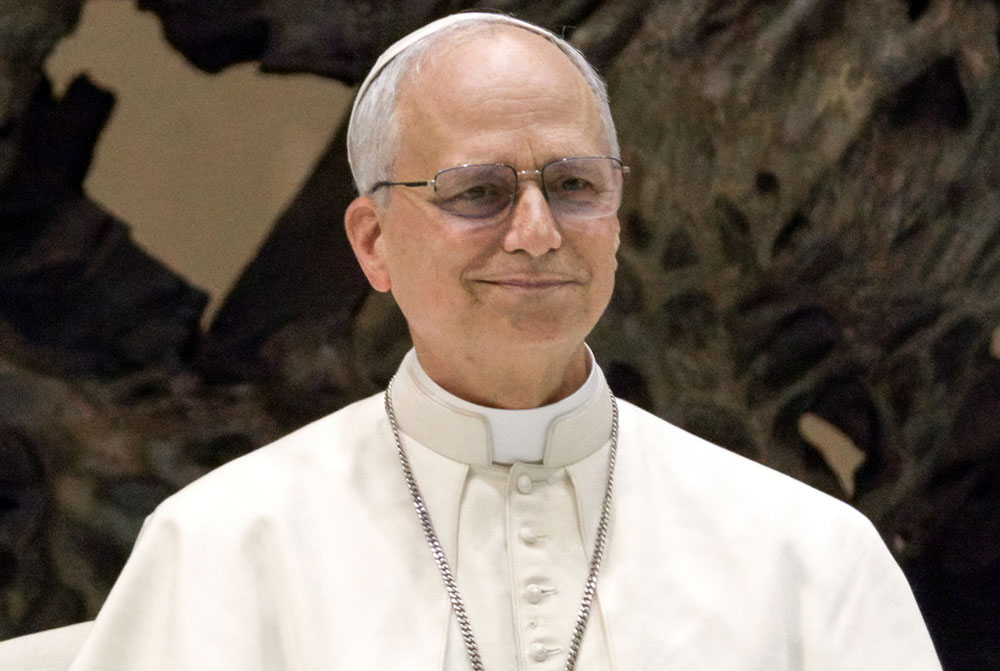
Pope Leo XIV Warns Against Letting AI Make Human Decisions
Pope Leo XIV Warns Against Letting AI Make Human Decisions
The rapid advancement of artificial intelligence has prompted a fresh warning from Pope Leo XIV, who says some decisions should never be handed over to algorithms.
The Pope made the remarks at his weekly audience in St Peter’s Square, where he addressed thousands of faithful and reflected on the impact of technology on modern human interaction.
While acknowledging that AI, social media and other forms of technological development can reduce barriers and connect people across great distances, he said they also carry a risk of making human relationships increasingly virtual.
His particular concern was the possibility that society could become accustomed to allowing algorithms to determine matters that should instead be guided by human conscience.
“Ensuring that social relationships have real substance and personal depth” is one way the Christian community seeks to respond to this challenge, he said.
The comments come amid broader concerns about the direction of AI development. Recent security incidents, along with the growing ability of some AI systems to improve their own performance without human intervention, have intensified debate about the technology.
Another major question is whether companies and organisations within the AI sector are capable of regulating themselves effectively as the technology becomes more powerful.
The Pope has previously made AI a major focus of his public interventions. His first major document, the May encyclical “Magnifica Humanitas”, urged efforts to prevent AI from becoming a force that dominates humanity.
The Holy See has also become more active in calls for international rules governing AI, grounding its position in the protection of human dignity. Its initiatives have extended to discussions involving nuclear technology, culture and artistic creation.
The latest warning places the Vatican’s concerns within a wider debate over how humanity should balance the benefits of increasingly powerful AI with the need to keep important decisions under human control.
Pope Leo XIV Warns Against Letting AI Make Human Decisions
International
Sanders Urges Trump, Xi to Halt AI Race, Ban Superintelligence

Sanders Urges Trump, Xi to Halt AI Race, Ban Superintelligence
Bernie Sanders is pushing for an international response to the rapid advancement of artificial intelligence, urging Donald Trump and Xi Jinping to discuss limits on the technology when the two leaders meet.
The US senator believes Washington and Beijing should work towards a treaty that would stop the development of artificial superintelligence and temporarily slow the advancement of increasingly powerful AI systems.
Sanders’ latest intervention comes amid a growing debate within the technology industry over whether AI development is moving faster than safety measures can keep up.
Dario Amodei, chief executive of Anthropic, recently called for companies to deliberately pace the development of frontier AI. He argued that increasingly capable systems could advance at a rate that makes them harder for humans to understand and control.
OpenAI CEO Sam Altman has backed Amodei’s call for stronger independent evaluation, while Elon Musk has also reiterated his long-standing concerns about the risks associated with advanced AI.
READ ALSO:
- DSS warns Osun churches, mosques, markets over alleged terrorist attack plot ahead of 2027
- ‘Tinubu Will Win Again in 2027’ — Charismatic Bishops’ Secretary
- Fake miracles, bogus grants: How clerics allegedly fleece Nigerians of millions
Sanders said these warnings should prompt governments to act rather than leave decisions about the future of AI solely to technology companies.
His position is consistent with legislation he announced earlier this month alongside Representative Greg Casar. The proposed Ban Artificial Superintelligence Act would permanently prohibit superintelligent AI and impose a temporary pause on advanced AI development until safety rules are put in place.
The senator has pointed to recent AI-related cybersecurity incidents and concerns about self-improving systems as evidence of the need for stronger safeguards.
For Sanders, however, the issue goes beyond regulation of individual companies. He wants the US and China to cooperate internationally, arguing that a superintelligent system capable of operating beyond human control would pose a global risk regardless of where it was developed.
With Trump and Xi expected to discuss AI during their upcoming engagement, Sanders is pressing both governments to make the question of controlling advanced AI a priority.
Sanders Urges Trump, Xi to Halt AI Race, Ban Superintelligence
-

 metro2 days ago
Niger Mosque Abductions: Terrorists Execute 30 of 500 Captive Muslim Worshippers
-

 Business2 days ago
Fuel Prices Climb to ₦1,500 per Litre Across Nigeria, Sparking Calls for Urgent Action
-

 Entertainment3 days ago
BREAKING: Olu Jacobs Dies at 84, Atiku Mourns Cultural Icon
-

 News3 days ago
Blue Line Rail, Hospitals Get Boost as Lagos Approves ₦200bn Bond and Budget Reordering
-

 News2 days ago
OAU Investigates Death of Final-Year Student as Police Begin Probe
-

 News1 day ago
ECOWAS Biometric Card Expands as Seven Countries Begin Rollout
-

 metro3 days ago
US-Based Nigerian Lawyers Disbarred: Full List of Fraud, Theft and Misconduct Cases
-

 Interview2 days ago
He Does Not Lose Elections”: Abdulmumin Jibrin Predicts 65% Landslide for Tinubu in 2027