
International
Henry Kissinger, ex-US secretary of state dies at 100

Henry Kissinger, ex-US secretary of state dies at 100
Henry Kissinger, a former US secretary of state and national security adviser who escaped Nazi Germany in his youth to become one of the most influential and controversial foreign policy figures in American history, has died.
He was 100.
Kissinger died Wednesday at his home in Connecticut, according to a statement from his consulting firm, Kissinger Associates.
Kissinger was synonymous with US foreign policy in the 1970s. He received a Nobel Peace Prize for helping arrange the end of US military involvement in the Vietnam War and is credited with secret diplomacy that helped President Richard Nixon open communist China to the United States and the West, highlighted by Nixon’s visit to the country in 1972.
But he was also reviled by many over the bombing of Cambodia during the Vietnam War that led to the rise of the genocidal Khmer Rouge regime and for his support of a coup against a democratic government in Chile.
READ ALSO:
- Stop luring Muslim students to Pastor Chris Oyakhilome’s programme – MURIC tells Lagos govt
- Cristiano Ronaldo faces $1bn lawsuit over crypto advert
- Lagos shuts RCCG, 7 hotels over noise pollution
But many members of Congress objected to the secretiveness of the Nixon-Kissinger approach to foreign policy, and human rights activists assailed what they saw as Kissinger’s neglect of human rights in other countries. No issue complicated Kissinger’s legacy more than the Vietnam War. When Nixon took office in 1969 – after promising a “secret plan” to end the war – roughly 30,000 Americans had been killed in Vietnam.
Despite efforts to shift more combat responsibilities to the South Vietnam government, American involvement persisted throughout Nixon’s administration – critics accused Nixon and Kissinger of needlessly expanding the war – and US engagement ultimately ended with the fall of Saigon in 1975 and more than 58,000 American lives lost.
In a highly controversial decision, Kissinger shared the 1973 Nobel Peace Prize with his North Vietnamese counterpart Le Duc Tho for that year’s Paris peace accords; citing the absence of actual peace in Vietnam, Tho declined to accept, and two members of the Nobel committee resigned in protest over the award.
Henry Kissinger, ex-US secretary of state dies at 100
CNN


International
Strait of Hormuz Crisis: Iran Threatens to Stop Gulf Oil Shipments
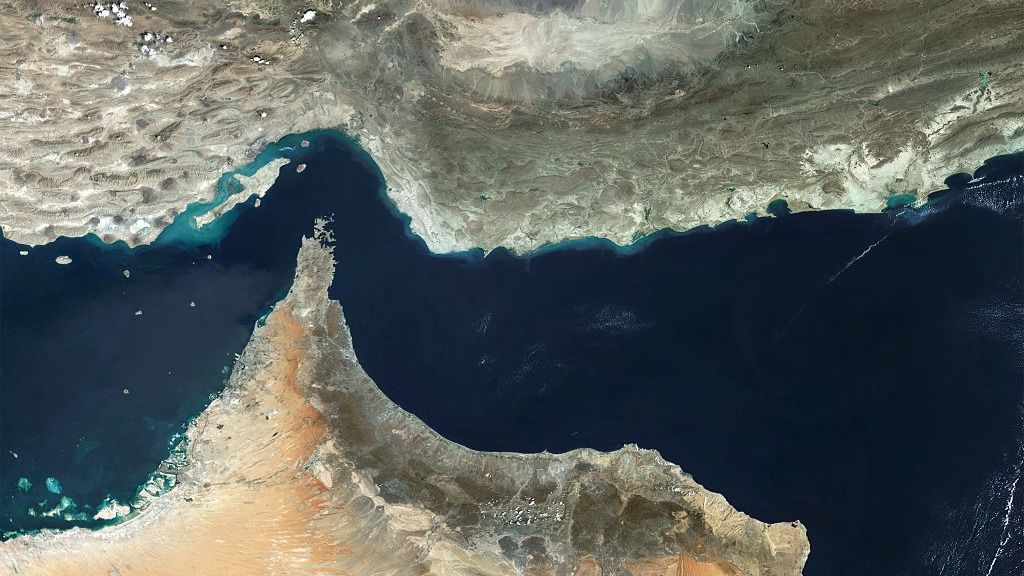
Strait of Hormuz Crisis: Iran Threatens to Stop Gulf Oil Shipments
Iran has threatened to halt oil exports from the Gulf region as its conflict with the United States and Israel intensifies, raising fears of a major disruption to global energy supplies.
The warning comes despite assurances from Donald Trump that the war could soon come to an end.
Tehran’s stance follows attacks on vessels travelling through the Strait of Hormuz, a narrow but critical maritime corridor through which nearly 20 per cent of the world’s crude oil passes to markets in Asia and Europe.
The waterway connects major oil producers such as Saudi Arabia, Iraq, Kuwait, and the United Arab Emirates to global energy markets, making it one of the most important chokepoints for international oil trade.
The disruption has already unsettled global oil markets and heightened concerns over possible oil supply shortages.
Earlier in the week, oil prices surged above $100 per barrel after reports that Iranian strikes and rising security risks forced shipping traffic to slow across the Gulf. Prices later eased after Trump said the war would be “ended soon,” helping calm markets that had reacted sharply to the escalating tensions.
However, Iran’s Islamic Revolutionary Guard Corps (IRGC) dismissed the claim, insisting that neither Tehran nor Washington would determine when the war ends.
According to the IRGC, the Iranian armed forces “will not allow the export of a single litre of oil from the region to the hostile side and its partners until further notice.”
READ ALSO:
- Turaki‑Led PDP Rejects Court of Appeal Ruling, Heads to Supreme Court
- US to Designate Sudanese Muslim Brotherhood as Terrorist Organisation
- NRC Investigates Assault Allegation Against UI Lecturer at Moniya Station
Iran’s Foreign Minister, Abbas Araghchi, also signalled the country was ready for a prolonged confrontation.
He said Iran was prepared to continue missile strikes against its enemies “as long as needed and as long as it takes,” while suggesting that further diplomatic negotiations with Washington were unlikely in the near term.
Meanwhile, countries across the region are moving to contain the fallout from the escalating crisis.
In Egypt, authorities have raised fuel prices by as much as 30 per cent in response to rising global oil costs, while Pakistan has offered naval escorts for commercial vessels travelling through the Gulf to protect shipping lanes.
France has also deployed warships to the region to help secure maritime traffic amid fears of further attacks on tankers.
Energy industry leaders have warned that a prolonged disruption in the Strait of Hormuz could have severe consequences for the global economy.
The chief executive of Saudi Aramco, Amin Nasser, cautioned that the longer the disruption continues, the more serious the impact on global oil markets.
He warned that “catastrophic consequences” could follow if shipping through the vital energy corridor fails to resume quickly.
To reduce the impact of potential disruptions, Saudi Arabia has begun redirecting part of its oil exports through its East-West pipeline to the Red Sea port of Yanbu, allowing some shipments to bypass the Strait of Hormuz.
However, energy analysts say the alternative route cannot fully replace the massive volumes of crude normally transported through the Gulf.
Experts warn that if the conflict escalates further and shipping through the Strait of Hormuz is significantly disrupted, as much as 15 million barrels of oil per day could be removed from global supply.
Such a shock could push oil prices toward $150 per barrel, trigger higher global fuel prices, and intensify inflation pressures across economies worldwide.
Strait of Hormuz Crisis: Iran Threatens to Stop Gulf Oil Shipments
International
US Seeks Control of Iranian Oil, Not Peace – Envoy to Nigeria
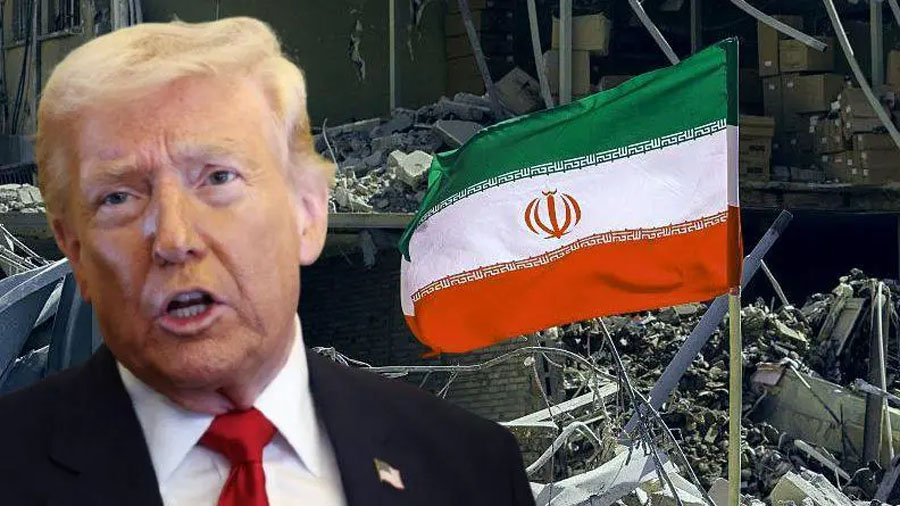
US Seeks Control of Iranian Oil, Not Peace – Envoy to Nigeria
Abuja, Nigeria — The Iranian Ambassador to Nigeria, Gholamreza Mahdavi Raja, has accused the United States of using the ongoing Middle East conflict to secure control over Iran’s energy reserves, describing Washington’s actions as driven by hegemonic ambitions. His comments were made on Trust TV’s Daily Politics on Monday and reflect Tehran’s view that US policy prioritizes oil dominance over peacebuilding.
Raja said the recent US and Israeli airstrikes on Iran are part of a broader strategy to weaken the country and seize its oil-rich territories. “The main aim of the United States and the Zionist regime for such brutal and unprovoked aggression is to seize Iranian energy reserves. The Zionist regime seeks Iran’s disintegration—they announced it themselves,” he stated. Despite repeated attacks on infrastructure, Raja emphasized that Iran’s government continues to function normally and that the Iranian people remain united in defending their sovereignty.
READ ALSO:
- Turaki‑Led PDP Rejects Court of Appeal Ruling, Heads to Supreme Court
- US to Designate Sudanese Muslim Brotherhood as Terrorist Organisation
- NRC Investigates Assault Allegation Against UI Lecturer at Moniya Station
The ambassador rejected any external interference in Iran’s political affairs, particularly regarding the appointment of Ayatollah Mojtaba Khamenei as Supreme Leader, son of the late Ayatollah Ali Khamenei. He said, “Iran is an independent country. We make our own decisions without outside interference,” countering claims of US influence over Tehran’s leadership succession.
On the humanitarian impact of the conflict, Raja accused US missiles of hitting civilian targets, including a school in Minab City, claiming many children were killed. He insisted that Iranian strikes target only military bases, while Washington and Israel allegedly conduct “false flag operations” to blame Tehran.
Raja also denied accusations that Iran sponsors terrorism in Nigeria, stating that its relations with the Islamic Movement of Nigeria (IMN) are purely spiritual and cultural, dismissing Israeli claims as politically motivated. He emphasized that Iran is willing to assist Nigeria in combating extremism, citing shared concerns over groups like Boko Haram and ISWAP.
Addressing global energy concerns, the ambassador warned that further military escalation could destabilize the region and drive global oil prices higher. He refuted reports of Iran closing the Strait of Hormuz, stressing that Tehran’s goal is defense, not disruption of international energy flows. Raja’s comments come amid a broader conflict that began after joint US‑Israeli strikes in February 2026, which triggered regional tensions and disrupted global energy markets. Analysts say the situation underscores US-Iran tensions, the struggle over energy dominance, and the potential for wider Middle East instability.
US Seeks Control of Iranian Oil, Not Peace – Envoy to Nigeria
International
Qatar Arrests Over 300 for Sharing Misleading Iran Attack Images
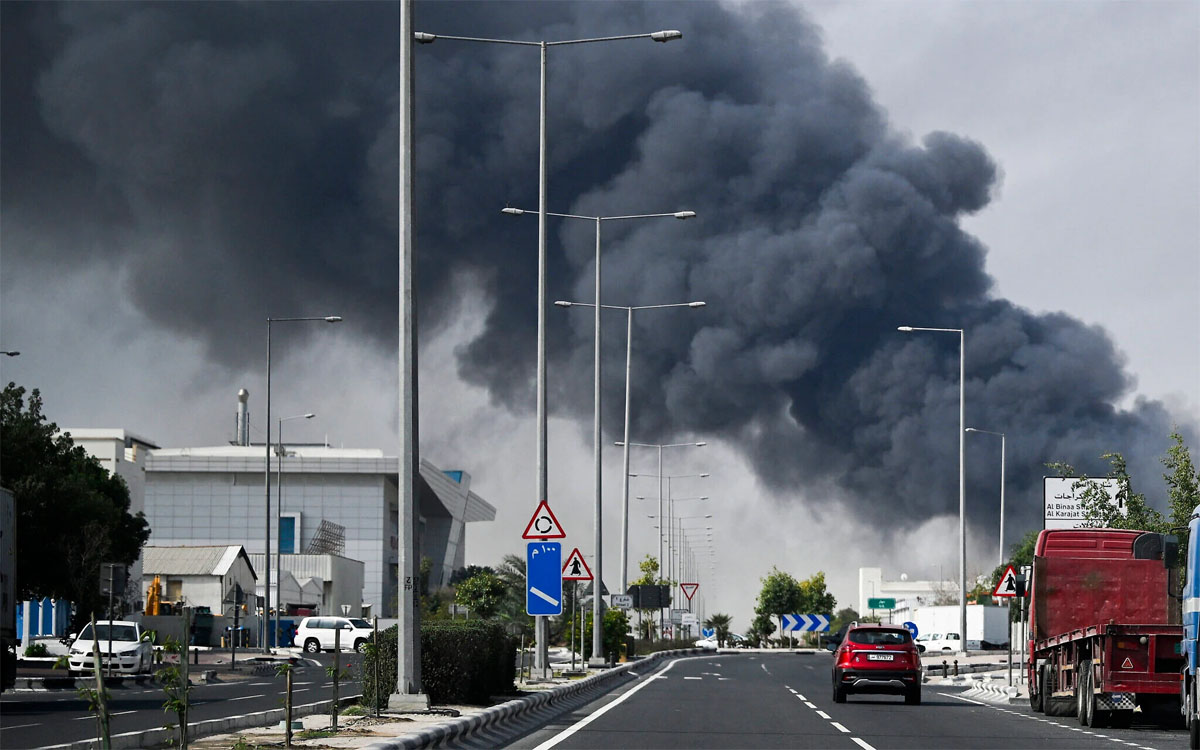
Qatar Arrests Over 300 for Sharing Misleading Iran Attack Images
Qatari authorities have detained over 300 individuals for recording, posting, and circulating unauthorised images and videos of Iranian attacks in the Gulf, the Ministry of Interior confirmed on Monday. The arrests were conducted by the Department for Combating Economic and Cyber Crimes under the General Directorate of Criminal Investigations, targeting people of various nationalities whose social media posts and messages officials described as misleading or capable of “stirring public opinion.” Legal and administrative actions are reportedly underway for those detained.
The crackdown comes amid escalating Gulf security tensions following daily Iranian drone and missile strikes on airports, military bases, energy facilities, and residential areas across the region. Qatari authorities have urged residents and visitors to avoid filming, posting, or sharing images and videos of ongoing attacks unless sourced from official channels, warning that unverified content could cause public alarm and spread false narratives.
READ ALSO:
- US Issues Terror Alert Over Possible Attacks on Embassy, Schools in Nigeria
- ‘We Will Decide When War Ends’ — Iran’s Revolutionary Guard Fires Back at Trump
- Middle East Crisis Pushes Petrol Price to N1,300 Per Litre in Nigeria
Authorities in Qatar’s neighbouring countries have taken similar measures. In Bahrain, four people were arrested for recording and distributing footage of Iranian attacks and spreading what officials called false information. In Kuwait, three individuals were detained after posting a video mocking the situation, while the United Arab Emirates (UAE) issued text warnings urging residents not to film or circulate images of missile strikes or damage, with the UAE Attorney General’s Office warning of legal consequences for violations. Despite these measures, videos and images continue to circulate widely on social media and private messaging platforms, highlighting the challenges Gulf states face in controlling misinformation.
Qatari authorities emphasised that the arrests aim to prevent rumours and unverified narratives that could undermine public order and social stability. Citizens and residents are urged to follow official updates, maintain personal safety precautions, and avoid sharing content that has not been verified by recognised government or security sources.
The wave of arrests reflects a broader Gulf-wide strategy to curb misinformation during periods of heightened tension, particularly amid the ongoing Middle East conflict involving Iran’s drone and missile strikes. Gulf governments are increasingly monitoring social media platforms and online messaging channels to enforce strict regulations against sharing sensitive or unverified content, aiming to preserve public safety and prevent panic.
The crackdown also underscores the importance of cyber security and information control during regional crises. Authorities have reiterated that sharing misleading or unverified content online can lead to detention, prosecution, and other legal penalties, reinforcing the strict stance of Gulf nations on social media compliance during times of conflict.
Qatar Arrests Over 300 for Sharing Misleading Iran Attack Images

-
 News2 days ago
Tinubu Approves Salary, Allowance Increase for Nigerian Armed Forces
-
 International2 days ago
Top 10 Strongest Militaries in the World in 2026 – Full Ranking
-

 metro1 day ago
Viral Video Shows Man Disarming Robbers After Minna Bank Heist, ₦10m Stolen
-
 Business2 days ago
NNPCL, Marketers Increase Petrol Price Again Within 24 Hours After Dangote Refinery Hike
-

 metro2 days ago
EFCC Intercepts Wife of Federal High Court Chief Judge With $160,000 Cash
-

 metro1 day ago
Tragedy in Ibadan as Woman, 26, Dies at Boyfriend’s Residence
-
 News2 days ago
Strait of Hormuz Crisis Threatens Nigeria’s Food Inflation Progress as Oil Prices Surge
-

 metro1 day ago
Students Escape as Four-Storey School Building Collapses in Lagos