

metro
Herdsmen: Ogun monarchs, residents accuse soldiers of assault
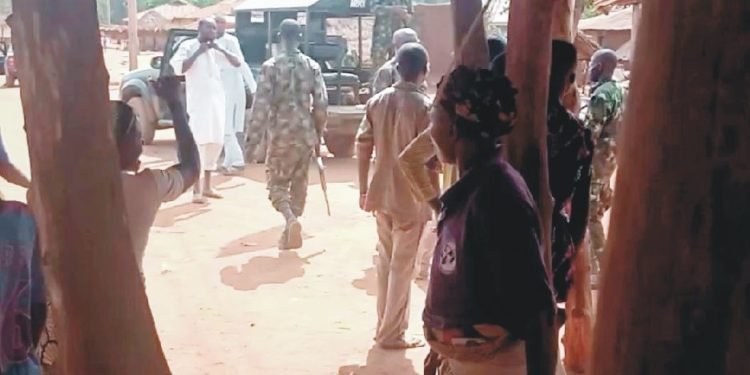
Some monarchs and residents of Ketu-speaking villages in the Yewa North Local Government Area of Ogun State have accused some soldiers from 35 Artillery Brigade Alamala, Abeokuta of flogging them for preventing herdsmen to from grazing in their communities.
They told The Nation that the soldiers, numbering about 10, humiliated them when they escorted the herders to graze in their villages.
One of the residents, identified simply as Mulero, was said to have been beaten mercilessly, leaving him with serious injuries, for insisting that the herdsmen would not be allowed to graze.
It was also gathered that traditional rulers were beaten after they were forced to convoke a meeting.
According to them, the herdsmen, who had departed the village after their continued presence was rejected suddenly resurfaced about 2pm on December 19, 2020 with the soldiers from the 35 Artillery Brigade, Alamala, Abeokuta.
The soldiers headed straight to the palace of the traditional ruler of the community, Chief Olaleye Adigun, calling out the villagers and warning them against preventing the evicted herdsmen from returning to the village.
It was in the middle of this strange encounter that the soldiers were told that the herders would not be allowed to remain in the community because of their brutal killing of residents and the destruction of their farmlands in recent times.
“Everyone was frightened by the action and utterances of the soldiers but I summoned courage to tell them how a Geography teacher Mr. Yomi Akinola, and two students of the Community High School, Ibeku, among others, were killed by the herdsmen while our women were raped and killed on their way to the farm,” a resident said
The resident also said, “Before I knew it, the herdsmen had motioned to the soldiers who immediately pulled me out of the audience and flogged me mercilessly with a wire whip. It was as if I stole something valuable.
“As I speak, my body still aches because of the wounds, even after I had been treated in a hospital.
“Numerous other villagers were subjected to the brutal act as the soldiers escorted the herdsmen from one village to another all in a bid to intimidate us into allowing them to graze on our farms.”
Indigenes of Iselu, Ibeku, Agbon-Ojodu, Asa and other villages were also assaulted by the soldiers at the instance of the herdsmen.
One of them, Gabriel, was said to be given deafening slaps after he was identified as one of those who resisted the herdsmen’s attempt to graze.
Narrating their ordeal in a petition, the traditional rulers said the herdsmen confirmed that they invited the soldiers to intimidate and beat them.
The traditional rulers are the Oniggua of Iggualand, Oba Micheal Dosumu; the Eselu of Iseluland, Oba Akintunde Akinyemi; and the Alademeso of Igan Alade, Oba Gabriel Olalowo.
The monarchs in a petition addressed to the Brigade Commander, 35 Artillery Brigade, Nigerian Army, Alamala, Abeokuta, titled, ‘Matter of urgency,’ dated January 7, 2020, said, “The Baale was asked to gather his subjects and people from nearby villages which he did.
“The soldiers told the people that the purpose of their visit was to inform them that the Fulani herders would be coming into their communities to graze cows.
“After their address, they asked if anyone had questions or comments to make in reaction to the information. Expectedly, one Mr Seye Mulero responded by calling the attention of the soldiers to the inherent challenges of allowing the herders in their communities based on the sad previous experiences in the community.
“That the said Seye Mulero further cited past killings, maiming and destruction of farms to buttress his point. Sadly, at this point, the soldiers seized him and mercilessly beat him up.
“In the same manner, the Fulani herders in company with the suspected soldiers left Ibeku for Asa, the adjoining village, to address the Baale of Asa and his subjects as they had earlier done at Ibeku, the people refused to respond, having heard what transpired at Ibeku.
“However, one of the Fulani herders sighted some people in the audience and picked on them as those that purportedly shouted on them at Ibeku while brutalising their victim (Seye Mulero). The herders asked the soldiers to also deal with them.”










metro
MURIC Condemns NMDPRA Over Fresh 830,000-Tonne Petrol Import Approval
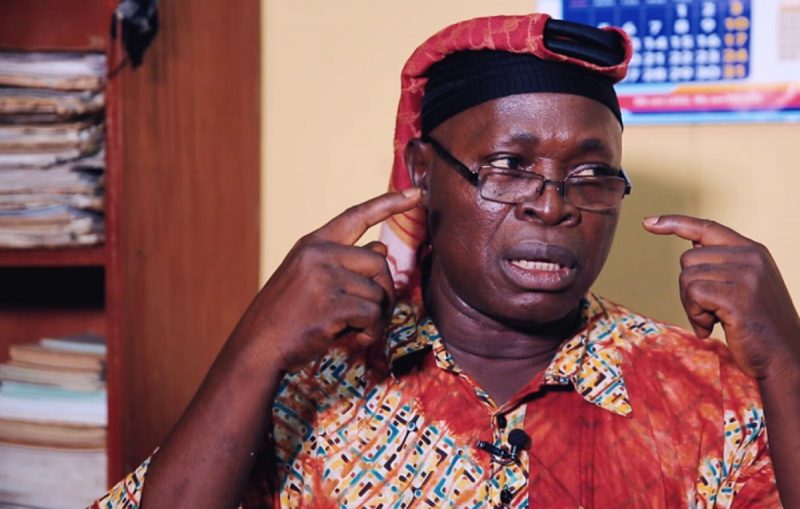
MURIC Condemns NMDPRA Over Fresh 830,000-Tonne Petrol Import Approval
The Muslim Rights Concern (MURIC) has condemned the decision of the Nigerian Midstream and Downstream Petroleum Regulatory Authority (NMDPRA) to approve the importation of 830,000 metric tonnes of Premium Motor Spirit (PMS), popularly known as petrol, for the fourth quarter of 2026.
MURIC described the approval as “unnecessary, wasteful, counterproductive, regressive and unpatriotic”, arguing that Nigeria should be giving greater priority to its growing domestic refining capacity, particularly the Dangote Petroleum Refinery.
In a statement issued on Thursday, September 24, 2026, the group’s Executive Director, Professor Ishaq Akintola, questioned the rationale behind continued petrol imports at a time when local refining capacity has expanded significantly.
The NMDPRA recently approved the import permits for six major petroleum marketers ahead of the final quarter of the year. The beneficiaries reportedly include Matrix Energy, AA Rano, AYM Shafa, NIPCO, Pinnacle Oil and Bono Energy.
According to MURIC, the latest development is difficult to reconcile with the increasing contribution of domestic refineries to Nigeria’s petrol supply.
“MURIC considers this move as unnecessary, wasteful, counterproductive, regressive and unpatriotic. We therefore condemn it in the strongest terms,” Akintola said.
The group argued that the decision was particularly troubling because of the reported capacity of the Dangote Refinery to supply the Nigerian market.
MURIC said the refinery had repeatedly expressed concern over continued petrol imports, despite its ability to produce substantial volumes of PMS for domestic consumption.
In August, Dangote Refinery said the continued arrival of imported petrol was creating uncertainty in its production planning and inventory management. The refinery said imported PMS accounted for about 43 per cent of the petrol supplied to Nigeria in July and maintained that it had sufficient capacity to meet and exceed domestic requirements.
MURIC therefore questioned why Nigeria would continue importing a product that a major Nigerian refinery is capable of producing.
“Dangote refinery exports fuel to foreign countries including Europe. It should be our pride. How can Nigerian petroleum authorities be importing the same fuel from outside?” the group asked.
The organisation added: “This is not rocket science. It is simple logic. It doesn’t add up. It is laughable. NMDPRA is taking coal to Newcastle.”
However, the NMDPRA has explained that the latest approvals are intended to prevent possible supply shortages during the fourth quarter, particularly as demand is expected to rise during the Christmas and end-of-year travel period. A spokesperson for the authority confirmed that the permits were approved to ensure that there were no supply gaps.
The development has also generated different reactions within the petroleum industry.
The Independent Petroleum Marketers Association of Nigeria (IPMAN) said the regulator was acting within its statutory responsibility by issuing the import licences, while stressing that the real issue would be whether the imported products could compete favourably with locally refined petrol.
IPMAN said the imports could benefit consumers if the landed cost was lower than the price of locally refined petrol.
MURIC, however, maintained that government agencies should work more closely with local refineries instead of continuing to rely on imported petroleum products.
The organisation also cited the need to encourage domestic investment, reduce dependence on foreign refined products and maximise the economic benefits of Nigeria’s refining capacity.
The latest approval comes amid an ongoing legal dispute between Dangote Refinery and the petroleum regulator over the issuance of petrol import licences. Dangote has challenged the continued granting of such licences, arguing that imports should not be encouraged where domestic supply is sufficient. The case remains before the courts.
Available NMDPRA data also show that domestic refineries have become increasingly important to Nigeria’s petrol supply. In the first quarter of 2026, domestic refineries reportedly accounted for about 76.7 per cent of total petrol supply, while petrol imports fell significantly compared with the previous year.
MURIC urged the NMDPRA and other agencies in the petroleum sector to review the continued importation of refined fuel and strengthen cooperation with Nigerian refineries.
“We expect NMDPRA and all other government agencies in the petroleum industry to cooperate with our local refineries. The importation of refined fuel should stop forthwith,” the group said.
The controversy is likely to keep attention focused on the balance between competition, fuel security and the protection of Nigeria’s emerging domestic refining industry, particularly as the country enters the final quarter of 2026.Suggested alternative headlines:
MURIC Condemns NMDPRA Over Fresh 830,000-Tonne Petrol Import Approval
metro
Cameroon Horror: Nigerian Pastor Flees As Mummified Body Is Found Under Church Property

Cameroon Horror: Nigerian Pastor Flees As Mummified Body Is Found Under Church Property
Police uncover coffin buried 1.5 metres underground as investigation into Nigerian pastor’s properties deepens
A Nigerian cleric has reportedly gone into hiding in Cameroon after security operatives uncovered a mummified body buried beneath a concrete slab at a property linked to his church in Yaoundé.
The shocking discovery has plunged Mercy of God Ministry, founded by Nigerian-born cleric Kedi Samuel Kenechukwu, also known as Ekedi Samuel, into the centre of a widening investigation by Cameroonian authorities.
The latest discovery was reportedly made on September 19, 2026, at a property in Nkoabang, Yaoundé, during an investigation into activities allegedly linked to the cleric.
According to reports from Cameroon, police discovered a white-and-gold coffin buried about 1.5 metres underground beneath a concrete slab.
Inside the coffin was what investigators described as a mummified human body.
The remains were reportedly dressed in traditional blue clothing decorated with gold embroidery and appeared to be those of a woman.
But authorities have not yet publicly established the identity of the deceased, when she died or how she came to be buried beneath the property.
The discovery has therefore raised a string of unanswered questions as investigators intensify their probe.
Secret burial uncovered
The discovery reportedly followed an examination of the property after part of the structure was damaged, exposing an underground section.
Police subsequently conducted a search and allegedly found the coffin concealed beneath the concrete.
Investigators are expected to carry out further forensic examinations to establish the identity of the remains and determine the circumstances surrounding the death.
Authorities have also reportedly sought permission to conduct additional searches of the premises amid concerns that further evidence could be hidden within the property.
The latest discovery comes barely days after investigators reportedly made another disturbing finding at a different property linked to the ministry.
On September 6, security operatives reportedly raided a property in the Ngousso area of Yaoundé, where they allegedly found 20 people inside a basement.
The group reportedly comprised 10 women, eight men and two children, aged six and seven.
The discovery triggered further investigations into the activities taking place at properties allegedly associated with the ministry.
30 rooms, underground pit discovered
The investigation subsequently moved to the Nkoabang property.
According to reports, investigators found about 30 rooms, five vehicles, several hundred kilogrammes of food and functioning freezers on the premises.
READ ALSO:
- Former Super Eagles Captain Troost-Ekong Embraces Islam, Recites Shahadah in Doha
- Milei Slams UN as ‘Useless’ Over Falklands Dispute
- Lagos Arrests Man Over Viral Video of Toddler Being Flogged
- Kwara Police Deny Shooting Motorcyclist at Oyun Bridge, Explain Viral Video
An underground pit measuring approximately two metres deep was also reportedly discovered.
The purpose of the pit has not been established publicly.
The discovery of the mummified remains has now added another disturbing dimension to the investigation.
Cameroonian authorities are reportedly examining whether there is any connection between the body and the other findings made during their operations.
However, there is currently no established evidence publicly showing that the cleric caused the death of the person whose remains were discovered.
Cleric reportedly disappears
Kenechukwu, who has reportedly been operating in Cameroon since 2018, is said to have disappeared as authorities intensified their investigation.
Cameroonian security agencies are reportedly searching for him and have taken steps to alert relevant authorities as efforts to locate him continue.
The cleric is reportedly being sought over allegations arising from the broader investigation, including claims concerning human trafficking, unlawful detention and kidnapping.
The allegations have not been proven in court.
Authorities are expected to question Kenechukwu over the discoveries and establish his relationship with the properties and the people found there.
Investigation deepens
The case has generated considerable concern in Cameroon because of the nature of the discoveries reportedly made at properties associated with the ministry.
The finding of 20 people in a basement, the existence of numerous rooms and an underground pit, and the subsequent discovery of a coffin containing mummified remains have all intensified scrutiny of the ministry’s activities.
Investigators are expected to focus on establishing whether the different discoveries are connected or merely occurred at properties belonging to the same religious organisation.
Forensic experts will also be expected to determine the identity of the deceased, establish the cause and approximate time of death, and examine the circumstances surrounding the burial.
Until those investigations are completed, several critical questions remain unanswered.
Who was the deceased?
How did she die?
Why was her body placed inside a coffin and buried beneath a concrete slab?
Who buried the remains there, and when?
And perhaps most importantly, what connection, if any, does the discovery have with the activities under investigation at the church properties?
For now, those questions remain with Cameroonian investigators as the search for the Nigerian cleric reportedly continues.
The case is expected to generate further developments as security agencies conduct additional searches and forensic examinations.
Cameroon Horror: Nigerian Pastor Flees As Mummified Body Is Found Under Church Property
metro
Bauchi Farmer Hacked to Death Over Witchcraft Allegation, Four Arrested
Bauchi Farmer Hacked to Death Over Witchcraft Allegation, Four Arrested
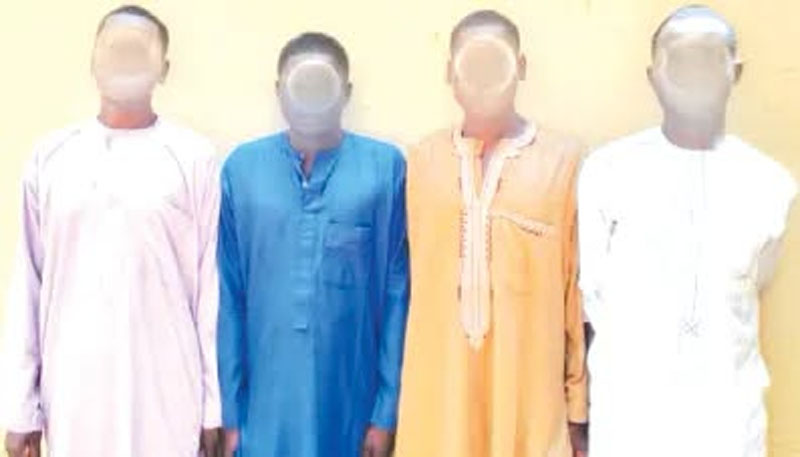
The Bauchi State Police Command has arrested four men over the alleged killing of a 45-year-old farmer, Garba Abdullahi, who was reportedly attacked after being accused of causing a woman’s illness through witchcraft.
The incident occurred on Tuesday, September 22, 2026, in Dunari Village, Atahowa District, when Abdullahi was returning from his farm.
The suspects were identified by the police as Shitu Dahiru, 25; Magaji Dahiru, 42; Sabi’u Auwalu, 20; and Abbah Abdulzahar, 19.
According to the police, the suspects allegedly accused Abdullahi of being responsible for the illness of a woman identified as Sawaida Dahiru before attacking him at about 11:40am.
The suspects allegedly used knives and machetes to inflict multiple injuries on different parts of Abdullahi’s body, leaving him unconscious.
His 35-year-old younger brother later reported the incident at the Gadau Divisional Police Headquarters at about 12:35pm.
Police operatives who responded to the report evacuated Abdullahi to the General Hospital, Azare, where he was subsequently confirmed dead by a medical doctor.
READ ALSO:
- Milei Slams UN as ‘Useless’ Over Falklands Dispute
- Lagos Arrests Man Over Viral Video of Toddler Being Flogged
- Kwara Police Deny Shooting Motorcyclist at Oyun Bridge, Explain Viral Video
His remains were released to his family for burial, while the four suspects were taken into police custody.
The case has since been transferred to the State Criminal Investigation Department (SCID), Bauchi, for further investigation and possible prosecution.
The Commissioner of Police, Sani-Omolori Aliyu, condemned the killing and warned residents against resorting to jungle justice or violence based on unverified and superstitious allegations.
The police commissioner stressed that no person had the right to take another person’s life and urged residents to report disputes, suspicions and suspected criminal activities to security agencies rather than take the law into their own hands.
He also appealed to members of the public to provide timely and credible information that could help security agencies prevent crime and protect lives and property.
The incident has renewed concerns over violence arising from witchcraft allegations in parts of Bauchi State. Another woman, Habse Ubale, was reportedly hacked to death in the state in an earlier incident after she was accused of being a witch.
Police had arrested one suspect in that case and launched a search for two others.
The latest killing highlights the dangers of acting on unverified claims of witchcraft and other forms of superstition. Security authorities have repeatedly urged communities to seek lawful intervention when disputes arise rather than resort to violence.
The four suspects remain accused persons, and their alleged involvement in Abdullahi’s death will be determined through the investigation and judicial process.
Bauchi Farmer Hacked to Death Over Witchcraft Allegation, Four Arrested
-
 News2 days ago
NLC Backs ₦500 Petrol Demand, Workers Propose ₦500,000 Salary
-

 Politics2 days ago
Obi vs Soludo: ₦86.67bn Handover Figure Meets ₦127.37bn Debt Claim
-

 Education2 days ago
UK Student Visa: 63 Countries Exempt From Proof of Funds, Nigeria Excluded
-

 metro2 days ago
Saudi Arabia Rejects Nigeria’s Request for More 2027 Hajj Slots
-

 Health2 days ago
Lagos Intensifies Surveillance as Adulterated Palm Oil Raises Food Safety Concerns
-

 metro2 days ago
Nationwide Blackout Looms As Electricity Workers Give NAF Three-Day Ultimatum
-

 News3 days ago
MURIC Warns FG: Any Move Against Atiku Now Lacks Tact
-

 metro11 hours ago
Police Probe Alleged Self-Kidnapping of Adeleke’s Aide in Osun
You must be logged in to post a comment Login