
Business
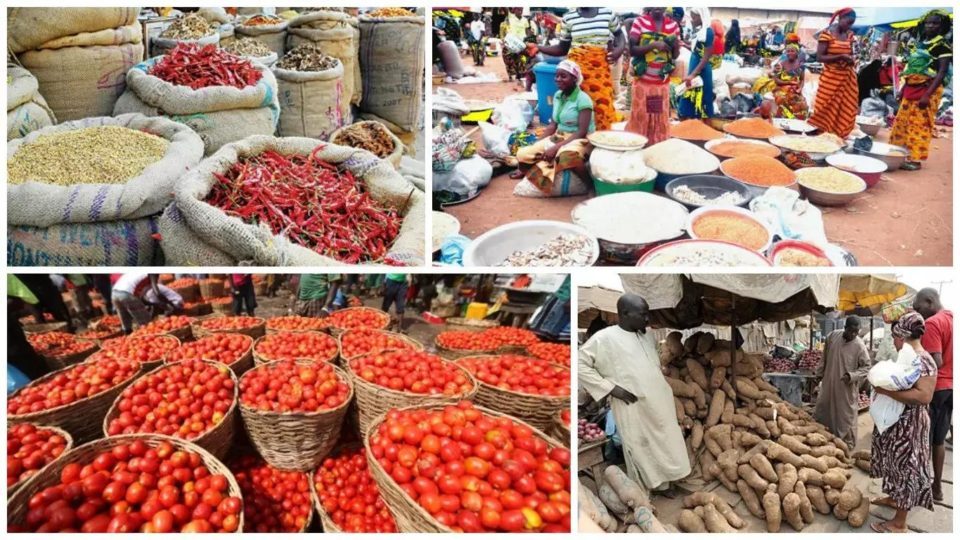
Higher food prices push up inflation rate to 22.04 per cent
Higher food prices push up inflation rate to 22.04 per cent
For the third consecutive time this year, the inflation rate has risen, hitting 22.04 per cent in March.
The latest rate is contained in the Consumer Price Index (CPI), released on Saturday by the National Bureau of Statistics (NBS).
The NBS report noted that March increase was 0.13 per cent points higher than the February 2023 headline inflation rate of 21.91 per cent.
It stated, “On a year-on-year basis, the headline inflation rate was 6.13 per cent points higher compared to the rate recorded in March 2022 which was 15.92 per cent.”
This shows that the headline inflation rate (year-on-year basis) increased in March 2023 when compared to the same month in the preceding year (March 2022).
“However, on a month-on-month basis, the all-item index in March 2023 was 1.86 per cent, which was 0.15 per cent points higher than the rate recorded in February 2023 (1.71 per cent),” NBS said.
According to the report, this means that in March 2023, on average, the general price level was 0.15 per cent higher relative to February 2023.
The NBS also said items such as food and non-alcoholic beverages contributed largely on the divisional level to the increase in the headline.
It stated, “The contributions of items on the divisional level to the increase in the headline index are food and non-alcoholic beverages (11.42 percent); housing, water, electricity, gas, and other fuel (3.69 percent).”
An analysis of the rate increase shows clothing and footwear (1.69 percent); transport (1.43 percent); furnishings, household equipment and maintenance (1.11 percent); education (0.87 percent); health (0.66 percent); miscellaneous goods and services (0.37 percent); restaurant and hotels (0.27 percent); alcoholic beverage, tobacco and kola (0.24 percent); recreation and culture (0.15 percent) and communication (0.15 percent).
The NBS said food inflation in March 2023 rose to 24.45 percent on a year-on-year basis, representing a 7.25 percent points higher compared to the rate recorded in March 2022.
The statistics body explained that the rise was caused by increases in prices of oil and fat, bread and cereals, potatoes, yam and other tubers, fish, fruits, meat, vegetables, and spirits.
States
On the a state profile, Sokoto, Zamfara, and Plateau residents paid less for food in the period under review, the agency noted.
The report also stated, “In March 2023, food inflation on a year-on-year basis was highest in Kwara (28.84 percent), Ondo (28.22 percent), and Lagos (27.92 percent).
“Sokoto (18.99 percent), Zamfara (20.57 percent) and Plateau (21.38 percent) recorded the slowest rise in food inflation on a year-on-year basis.
“On a month-on-month basis, March 2023 food inflation was highest in Bayelsa (3.11 percent), Rivers (3.00 percent), and Ondo (2.98 percent), while Bauchi (1.03 percent), Zamfara (1.08 percent), and Ogun (1.13 percent) recorded the slowest rise in food inflation.”









Business
Rite Foods, BJAN champion consumer safety at Ososa factory tour

Rite Foods, BJAN champion consumer safety at Ososa factory tour
By Daphne Uduneje
To commemorate World Consumer Rights Day 2026, the Brand Journalists’ Association of Nigeria (BJAN) partnered with Rite Foods Limited to host a high-level stakeholder engagement at the company’s ultra-modern manufacturing plant in Ososa, Ogun State.
Under the theme “Safe Products, Confident Consumers,” the event combined rigorous policy discourse with a firsthand look at the cutting-edge technology behind one of Nigeria’s leading indigenous brands.
The journey began at Rite Foods’ Lagos office, transitioning from the city’s urban bustle to the expansive, scenic greenery of the Ososa facility. For the journalists in attendance, the factory’s exterior—a sprawling, sophisticated complex—signalled a facility capable of competing on a global scale.
Inside, the hum of precision machinery served as the backdrop for the day’s discussions. Olufemi Ajileye, General Manager for Operations at Rite Foods, welcomed guests by emphasizing that safety is the bedrock of their market strategy.
Since breaking into the carbonated soft drink sector, Rite Foods has leveraged advanced technology and stringent quality controls—including international laboratory testing for water purity—to earn and maintain public trust.
Despite improvements in legislation, speakers noted a persistent gap in consumer awareness. Sola Salako-Ajulo, founder of the Consumer Advocacy Foundation of Nigeria (CAFON), described consumer confidence as the “oxygen of any market.”
To empower the public, she unveiled the CAFON Consumers Companion (3C), an AI-powered platform designed to educate Nigerians on their rights and provide a roadmap for dispute resolution.
“Consumers often feel powerless,” she noted, “but technology can bridge the gap between grievance and redress.”
The Regulatory Stance
The Federal Competition and Consumer Protection Commission (FCCPC) and NAFDAC reaffirmed their commitment to enforcement:
FCCPC: Executive Vice Chairman Tunji Bello (represented by Olubunmi Dorcas Otti) urged businesses to maintain transparency, noting that economic participation thrives only when safety is guaranteed.
NAFDAC: Director-General Mojisola Adeyeye (represented by Tinuola Akinnubi) reminded attendees that consumer rights are legally enforceable obligations, highlighting the importance of “technological traceability” in the modern market.
BJAN Chairman Daniel Obi emphasized that the association had sustained this initiative for over a decade because consumer protection is a collective burden.
“It is not the responsibility of regulators alone,” Obi stated. “Businesses, media, and civil society must work in harmony.”
The event concluded with a guided tour of the production floor. Journalists observed a seamless, automated “dance” of technology where drinks were corked, labeled, and packaged with surgical precision.
As the delegation departed Ososa, the takeaway was clear: building a “confident consumer” requires more than just marketing—it requires the transparency of the factory floor and the accountability of the boardroom.


Business
NNPC Boosts Crude Supply to Dangote Refinery to Address Rising Fuel Prices
NNPC Boosts Crude Supply to Dangote Refinery to Address Rising Fuel Prices
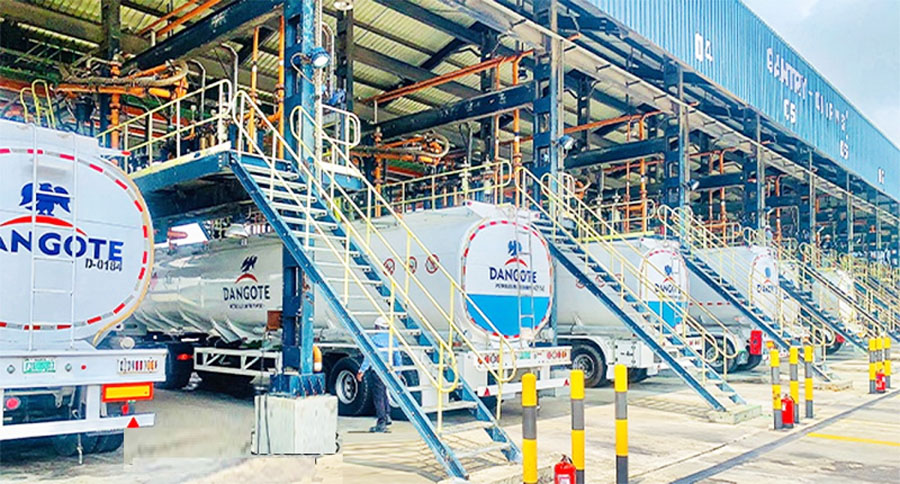
The Nigerian National Petroleum Company Limited (NNPC) has raised the allocation of crude oil cargoes to the Dangote Petroleum Refinery from five to seven cargoes for May 2026, a strategic move aimed at strengthening domestic fuel production and reducing Nigeria’s dependence on imported crude amid rising petrol prices.
According to Reuters, two trade sources and a senior refinery official confirmed the development. “NNPC has allocated more cargoes to Dangote Refinery for May. While this will not completely meet our demands, it can help. We are also in negotiation with NNPC for additional volumes,” the official said.
READ ALSO:
- Couple Jailed 15 Years for Selling Infant, Toddler in Calabar
- IGP Orders Massive Security Deployment in Plateau After Deadly Jos Killings
- Ohanaeze Ndigbo Disowns ‘Igwe Ndigbo’ Installation in South Africa
For April 2026, the refinery will continue to receive the five cargoes previously allocated, as the increase only takes effect in May. Dangote Refinery CEO, David Bird, had earlier stated that the plant typically requires 13 to 15 cargoes per month under the crude-for-naira programme, but currently receives only five. The shortfall has forced the refinery to import additional crude at premiums of up to $18 per barrel above Brent crude prices, driven by global market disruptions, including the ongoing Iran-US-Israel conflict.
The refinery, which has a production capacity of 650,000 barrels per day, has been increasing gasoline supplies to Nigeria’s domestic market, currently meeting over two-thirds of daily petrol demand, roughly 60 million litres. However, the limited crude supply has exposed the refinery to global price volatility, prompting multiple ex-gantry price adjustments in March 2026 — from ₦774 to ₦1,275 per litre, before settling at ₦1,200 per litre.
Analysts say the increased allocation of crude cargoes will help ease the pressure on domestic petrol prices and provide a buffer against international crude market fluctuations, but the refinery still relies partly on imports to meet its full operational capacity. The move underscores NNPC’s commitment to supporting local refining capacity and ensuring energy security in Nigeria.
NNPC Boosts Crude Supply to Dangote Refinery to Address Rising Fuel Prices
Railway
Easter train: NRC increases Lagos-Ibadan trips, offers free Osun holiday transit
Easter train: NRC increases Lagos-Ibadan trips, offers free Osun holiday transit
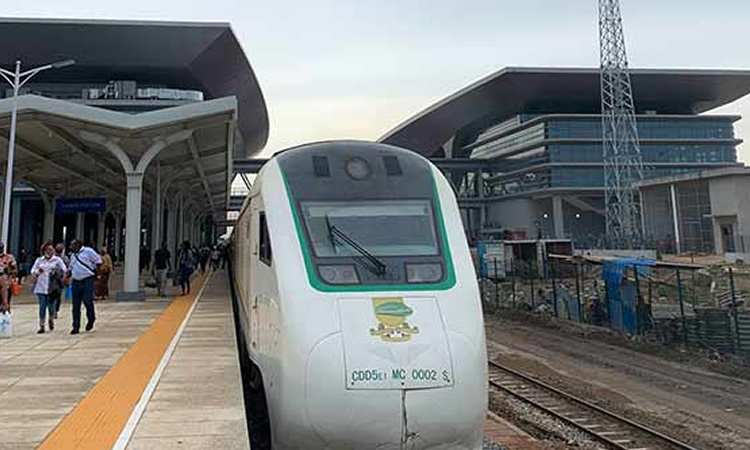
With the 2026 Easter celebrations just around the length of a rail track away, the Nigerian Railway Corporation (NRC) has moved to prevent holiday travel gridlock by significantly boosting its service capacity.
In a move to accommodate the seasonal influx of travellers, the corporation announced a strategic mix of increased trip frequencies and a unique government-backed free transit programme.
The centrepiece of this holiday rollout is the Lagos-Ibadan Train Service (LITS). Anticipating a massive exodus from the coastal hub on Thursday, April 2, the NRC has added a third daily trip to its schedule. Commuters departing from the Mobolaji Johnson Station in Ebute Metta can now choose between 7:45am, 1:40pm, and 4pm slots.
Those returning from the Obafemi Awolowo Station in Ibadan have similar flexibility, with departures staggered at 8:00 a.m., 10:50am, and 4:30pm.
Adding a layer of relief for budget-conscious travellers, the NRC is collaborating with the Osun State Government to provide a fully funded narrow gauge service. This initiative allows passengers to travel from Lagos to Osogbo at no cost.
According to the corporation, the “free train” is scheduled to leave Iddo Station on Friday, April 3, at 10am, with the return leg bringing holidaymakers back to Lagos on Monday, April 6, at the same hour.
It also noted that while the South-West corridors see these specific boosts, the rest of the national network remains steady, the Northern Corridor (Abuja–Kaduna service) will maintain its robust schedule, offering up to three daily trips over the weekend to keep the Idu and Rigasa link fluid.
The Delta-Kogi Link (Warri–Itakpe line) continues its daily operations, though it will pause this Thursday for its standard safety maintenance window.
Also, the Eastern Line (The Port Harcourt–Aba service) remains on its morning-departure and afternoon-return cycle.
NRC management stressed that while capacity has increased, security and ticketing protocols remain a top priority. They are urging the public to arrive at stations early and cooperate with security personnel to ensure the holiday remains peaceful.
As the corporation looks toward a busy weekend, they continue to pitch rail travel as the safest and most dependable alternative for Nigerians traversing the country this Easter.

-

 Entertainment3 days ago
Funke Akindele, Toyin Abraham Spark Reactions Over Alleged Snub at Iyabo Ojo’s Premiere
-

 Education2 days ago
WAEC Releases 2026 WASSCE Timetable for School Candidates
-

 Auto2 days ago
Lagos NURTW Chairman Sego Distributes Exotic Cars, Luxury Items to Cabinet Members (Video)
-

 metro2 days ago
Cars Torched as South Africans Protest Alleged Nigerian ‘Igbo King’ Coronation
-

 News3 days ago
UK Raises Visa Costs, Tightens Immigration Rules From April 8
-

 Railway1 day ago
Easter train: NRC increases Lagos-Ibadan trips, offers free Osun holiday transit
-

 Education2 days ago
JAMB Releases 2026 UTME Mock Results, Delists Over 20 CBT Centres
-

 Sports2 days ago
Osimhen Among Highest-Paid African Footballers in 2026 — See Full List