

metro
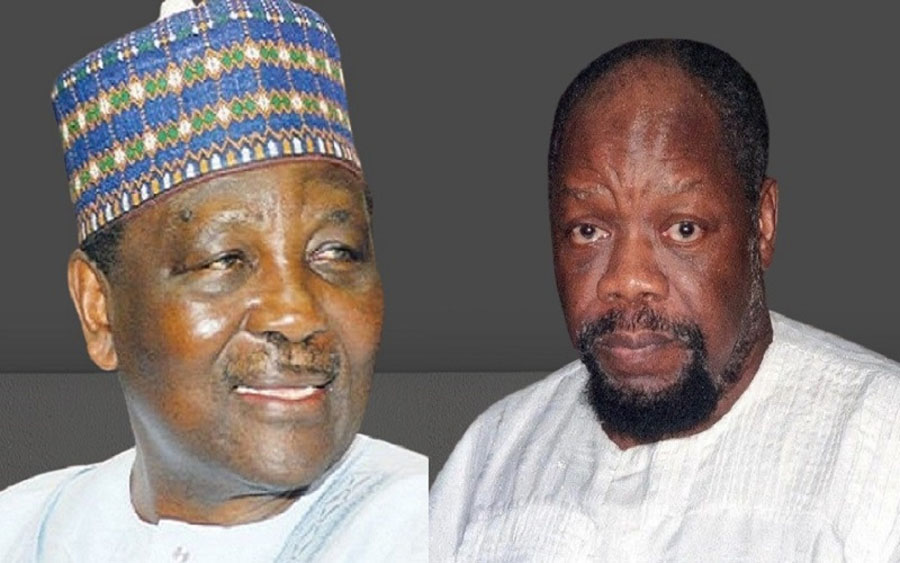
How Ojukwu ‘deliberately frustrated’ Nigeria’s last peace chance before Civil War — Gowon
How Ojukwu ‘deliberately frustrated’ Nigeria’s last peace chance before Civil War — Gowon
ABUJA — Former Head of State, Yakubu Gowon, has reopened one of the most painful chapters in Nigeria’s history, accusing late Biafran leader, Chukwuemeka Odumegwu Ojukwu, of frustrating repeated efforts to stop the country from sliding into civil war. The claim is contained in Gowon’s newly released 859-page autobiography, “My Life of Duty and Allegiance,” which offers a deeply personal account of the failed peace talks, political mistrust, and constitutional disputes that shattered negotiations between the federal military government and the Eastern Region before the 1967–1970 Nigerian Civil War. Gowon, now 92 years old, spoke extensively in the autobiography about the tensions that followed the January and July 1966 coups and the events that eventually pushed Nigeria into a 30-month war that claimed an estimated one to three million lives. The book was launched at a well-attended ceremony at the Bola Tinubu International Conference Centre in Abuja, attended by Vice President Kashim Shettima and former President Goodluck Jonathan.
“Ojukwu deliberately and effectively thwarted every effort we made to amicably resolve our national issues,” Gowon wrote in the memoir. The former military ruler said several attempts were made to reach a political settlement after the killings of Igbos in parts of Northern Nigeria triggered outrage, fear, and growing separatist pressure in the Eastern Region. According to him, the federal military government agreed to the January 1967 meeting in Aburi, Ghana, believing dialogue could still prevent the collapse of the federation. “We went to Aburi with open minds and with the sincere hope of finding a basis for national reconciliation,” Gowon wrote. The meeting, brokered by former Ghanaian leader Lt.-Gen. Joseph Arthur Ankrah, brought together Nigeria’s top military officers at a time the country was already under severe strain from coups, ethnic killings, and deepening distrust within the armed forces.
READ ALSO:
- Sold for ₦18,000 Each, Resold for ₦76,000: Two Minors Rescued After 4 Months
- Oyo Grand Chief Imam Declares Marathon Prayers Over Insecurity, Peace of Oyoland
- No Fatalities in Zaria Mosque Collapse Despite Social Media Rumors
But Gowon said the talks ran into trouble after both sides returned from Ghana with different interpretations of what had been agreed. In a separate interview on Arise TV, Gowon provided further details on the fundamental disagreement that derailed the accord, revealing that Ojukwu’s demand for regional control of military forces was a red line the federal government could not cross. “Although we said that the military would be zoned, you know, the control… he wanted, you know, those zones to be commanded by the governor. Say you have a military zone in the north, it would be commanded by the governor of the military in the north; the military zone in the east would be commanded by, you know, by him,” Gowon explained. “Of course, we did not agree with that one.” Gowon emphasized that the federal delegation never intended the summit to serve as a platform for constitutional restructuring or military devolution. “What was presented by Ojukwu as the Aburi Accord was, in reality, his own interpretation of our discussions,” he wrote.
The former leader also disclosed that he was unwell upon returning from the summit and unable to respond promptly to the terms Ojukwu had announced publicly, which he said led to confusion. “Unfortunately, I know people would not believe it, I was having a serious attack of a kind of fever or whatever it is, and I could not make a decision,” he noted. Gowon accused Ojukwu of acting unilaterally by announcing the accord’s outcome without mutual clarification. To address the ambiguity, Gowon said the federal government organized a follow-up meeting in Benin City with all regional governors — an effort Ojukwu ultimately snubbed, citing safety concerns. “We had to organise a meeting of all the governors. And he was invited to attend so that we can deal with the Accord. And we met at Nifo in Benin. And he did not turn up,” Gowon recounted. He expressed regret that the opportunity to salvage the accord was lost due to Ojukwu’s absence. “If he had come to that meeting, we could have resolved it.”
Beyond the diplomatic breakdown, Gowon’s autobiography contains explosive allegations that Ojukwu was secretly preparing for war even as peace talks progressed. The former head of state claimed that the Eastern Region’s arms build-up suffered a setback in October 1966 after a DC-4 aircraft carrying weapons crashed in the hills of Northern Cameroon. “It did not matter that his plan was to buy some more time to enable him to stockpile arms and ammunition. We were also mindful that he had cleverly planned to apply the brakes on our ability to deploy the numerical advantage of the existing firepower of the Nigerian Army,” Gowon wrote. In a dramatic revelation, Gowon’s autobiography alleges that France supported Ojukwu’s secessionist efforts in exchange for control of Biafra’s mineral deposits. The former head of state wrote that Ojukwu mortgaged the mineral wealth of Biafra to the Rothschild banking family for approximately $10 million (about N5 million at the time) to secure French-backed support for the rebel government. According to Gowon, as the war intensified, France provided the rebel government with enormous support through the former African territories it controlled, with the backing provided in exchange for what France hoped to gain from a successful Biafran breakaway. The true depth of the transaction only became known when the Nigerian Consulate in New York intercepted intelligence on a B-26 aircraft purchase routed through a South American country.
READ ALSO:
- Fuel Subsidy, FX Reforms: Cabals Plot to Destabilise Nigeria — Tinubu
- Forland, TSS Motors strengthen technical capacity with specialised truck training
- Iran Threatens Wider War Beyond Middle East If US Attacks Again
Gowon further alleged that Ojukwu confirmed the arms stockpiling during a meeting in Enugu in May 1967 with a delegation of the National Conciliation Committee comprising Obafemi Awolowo, Samuel Aluko, Jereton Mariere, and J.I.C. Onyia. According to Gowon, Ojukwu declared during that meeting that the Eastern Region had attained “equality of arms,” which would allow it to negotiate Nigeria’s future from a position of strength. Gowon quoted Ojukwu as saying: “Quietly I built up. If you do not know it, I am proud, and my officers are proud, that here in the East we possess the biggest army in Black Africa. I am no longer speaking as an underdog; I am speaking from a position of power.” However, Gowon dismissed Ojukwu’s claim as exaggeration, insisting that federal forces still maintained a clear military advantage. “I did not believe Ojukwu’s play to the gallery; I only said to myself that we would see about that,” he wrote.
The memoir also sheds light on the early tensions between the two leaders, revealing that Ojukwu opposed Gowon’s emergence as Head of State after the July 1966 counter-coup. Gowon disclosed that Ojukwu preferred Brigadier Babafemi Ogundipe, the most senior officer in the army hierarchy, to succeed the murdered Major General Johnson Aguiyi-Ironsi. “Ojukwu refused my offer of friendship. By extension, he wilfully refused to recognise my leadership,” Gowon wrote. Despite Ojukwu’s refusal to recognise his authority, Gowon said he retained him as military governor of the Eastern Region in what he described as an altruistic decision. “My decision to retain Ojukwu in office was altogether altruistic though subsequent events made it seem a huge mistake,” he wrote. Gowon also revealed that he personally intervened to stop any move against Ojukwu, as some northern officers believed the Eastern governor was complicit in the January 15, 1966 coup that led to the assassination of key northern political and military leaders.
Gowon also defended the federal military government’s decision to create 12 states shortly before Biafra’s declaration, saying the move was aimed at addressing fears of domination among minority ethnic groups. According to him, several minority communities in the old Eastern Region wanted direct recognition from the federal government and feared being politically overshadowed. “The creation of states was intended to give all groups a sense of belonging within Nigeria,” he wrote. Gowon rejected claims that the federal government was eager for war, insisting that military confrontation became unavoidable only after the declaration of Biafra on May 30, 1967. The former military ruler also defended the ‘No Victor, No Vanquished’ policy announced at the end of the Civil War in January 1970, saying reconciliation and reintegration were necessary to rebuild the country after years of bloodshed. “We fought to keep Nigeria one, not to destroy a people,” Gowon wrote. “We had to think about the future of the country beyond the bitterness of war,” he added. “We exhausted every peaceful avenue available to us. But Nigeria had to survive.”
Gowon’s claims have not gone unchallenged. The apex Igbo socio-cultural group, Ohanaeze Ndigbo, swiftly rejected the former head of state’s account, accusing him of rewriting history. The Deputy National Publicity Secretary of Ohanaeze, Ikechukwu Oji, insisted that Gowon was the one who reneged on the Aburi Peace Accord. “The Aburi Peace Accord was signed and the specific terms and conditions were stated in a document that is available in the archive,” Oji said. “Unfortunately, after Gowon got home from Ghana, he was wrongly advised by some international bodies and locals not to implement the agreement that had been signed.” Similarly, a group called Rising Sun accused Gowon of distorting history, arguing that the demand for regional control of security forces was a legitimate push for justice and true federalism. “If Nigeria had followed the Aburi Accord in its true form, there would have been no war. There would have been no genocide,” the group’s statement read.
The Aburi meeting, held from January 4–5, 1967, was one of the last-ditch efforts to preserve Nigeria’s unity in the face of mounting ethnic tensions. The failure to implement the accord ultimately paved the way for the declaration of the Republic of Biafra and the onset of a brutal civil war. The book presentation attracted significant financial backing from Nigeria’s economic elite, with former Defence Minister Theophilus Danjuma donating three billion naira and ordering copies distributed to twenty university libraries. Industrialist Aliko Dangote contributed 500 million naira, while businessman Abdul Samad Rabiu purchased copies worth 25 million naira. Speaking at the launch, former President Goodluck Jonathan lamented that valuable chapters of West African history are routinely lost when key actors remain silent, while Catholic Bishop Matthew Kukah described the volume as an important masterclass in selfless stewardship.
How Ojukwu ‘deliberately frustrated’ Nigeria’s last peace chance before Civil War — Gowon







metro
Kidnappers torture abducted corps members, slash ransom to N100m
Kidnappers torture abducted corps members, slash ransom to N100m
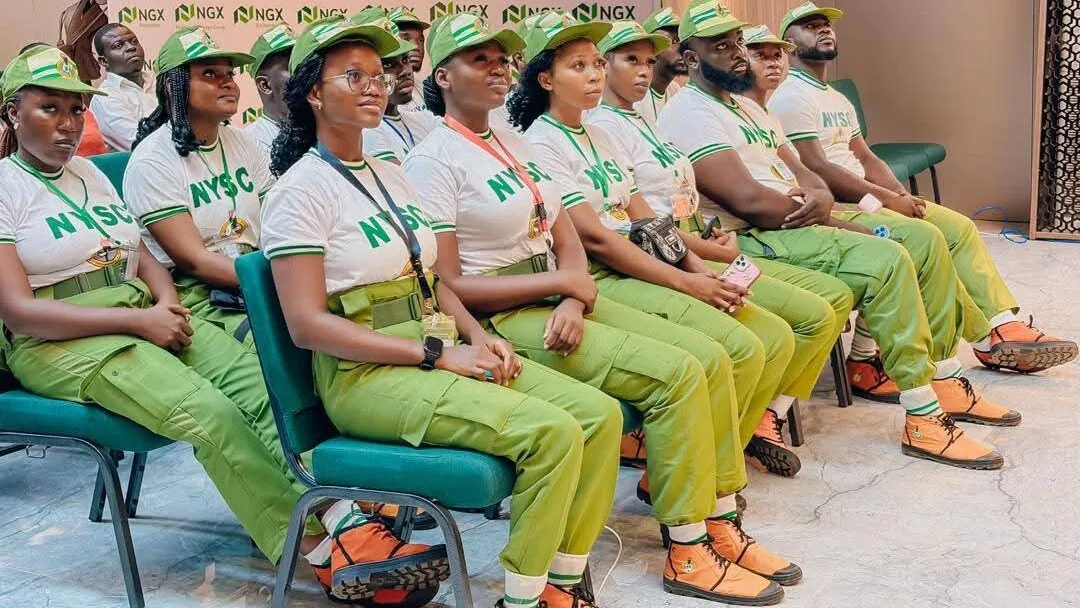
Relatives of 20 abducted corps members have raised fresh concerns over the safety of the victims, alleging that kidnappers have subjected them to physical torture while reducing their ransom demand to N100 million.
The prospective National Youth Service Corps (NYSC) members were reportedly travelling from Ibadan, Oyo State, to orientation camps in Abia and Akwa Ibom states when gunmen attacked two buses along the Owerri–Onitsha Road in Umunoha, Mbaitoli Local Government Area of Imo State, on October 1.
The abductors initially reportedly demanded N50 million from each victim, putting the total ransom at N1 billion.
However, relatives said the kidnappers have now reduced the demand to N5 million per victim, bringing the total to N100 million.
The families also alleged that the abducted corps members were being beaten in captivity, including female victims, raising fears over their physical condition as the rescue operation continues.
A relative of one of the victims, Alimot Akande, said the situation had become increasingly frightening, appealing to the authorities to intensify efforts to secure the victims’ safe release.
According to the relatives, the abductors have maintained contact with some families through the phones of the captives and have used the communication to demand ransom.
READ ALSO:
- Family seeks N10m to free kidnapped newlywed, other victims
- Trump launches ‘Super Intelligence Force’ to keep US ahead in AI race
- NDLEA intercepts N5bn worth of drugs at ports, arrests Milan-bound businessman
The families had earlier appealed to the Olubadan of Ibadanland, Oba Rashidi Ladoja, for intervention after the kidnappers reportedly demanded the initial N1 billion ransom.
Meanwhile, security agencies have intensified efforts to locate the kidnappers’ hideout and rescue the victims.
The Imo State Police Command said its operatives had traced the suspected kidnappers to a location in the bush. However, the operation has reportedly been complicated by intelligence that the area may have been planted with improvised explosive devices (IEDs).
The police said drone surveillance was used to identify the suspected location of the captives, with plans underway to deploy additional operational equipment to safely access the area.
The Inspector-General of Police, Olatunji Disu, has also deployed the Deputy Inspector-General of Police in charge of Operations, Shehu Umar Nadada, to Imo State to coordinate the rescue operation.
Nadada subsequently reviewed the security deployment and directed additional tactical resources towards efforts to rescue the abducted corps members.
Police authorities have assured the families that efforts are ongoing to locate the victims and bring them home safely.
There have also been varying reports over the exact number of people abducted and those already rescued. The police initially reported that some victims had been rescued after the attack, while relatives continued to maintain that 20 prospective corps members remained affected by the abduction.
The two buses involved in the incident have reportedly been recovered as security agencies continue operations around the area.
The Oyo State Government has also joined efforts to secure the release of the victims, maintaining contact with the Imo State Government and security agencies.
The incident has renewed concerns about the safety of prospective corps members travelling to NYSC orientation camps, particularly along major highways where kidnapping remains a persistent security challenge.
For the affected families, the immediate priority remains the safe return of their loved ones as security agencies work to overcome the reported explosives threat and reach the suspected kidnappers’ hideout.
Kidnappers torture abducted corps members, slash ransom to N100m
metro
Family seeks N10m to free kidnapped newlywed, other victims
Family seeks N10m to free kidnapped newlywed, other victims
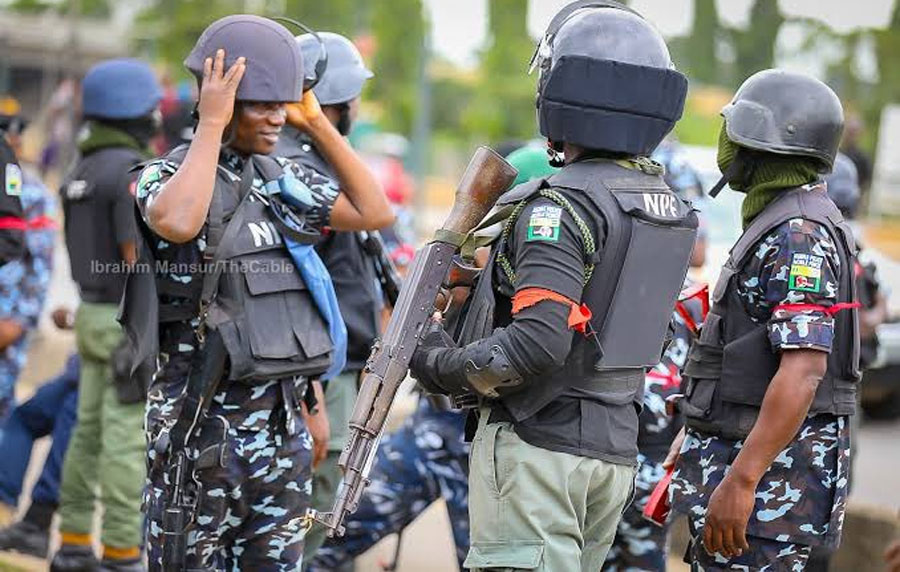
The family of a newlywed woman kidnapped in Kwara State has appealed to Nigerians for financial assistance to raise ₦10 million being sought for the release of her and other victims still held by their abductors.
The victims were among six passengers reportedly abducted along the Eruku-Iyemero Road, a route linking communities in Kwara and Kogi states.
The incident involved newlyweds Funmilayo Bamidele and Rev. Abiodun David, who were travelling with other passengers when suspected kidnappers intercepted their vehicle.
Following the abduction, the victims’ vehicle was reportedly found abandoned around Ayetoro in Ekiti State, prompting security agencies and authorities from Kwara, Kogi and Ekiti to intensify efforts to locate the victims and rescue them.
READ ALSO:
- JUST IN: WAEC appoints Suleiman Kum as new Nigeria National Office head
- Ojudu Reveals How Tinubu, He Narrowly Escaped Death In Third Mainland Bridge Crash
- Trump launches ‘Super Intelligence Force’ to keep US ahead in AI race
The family of Precious Alonge, one of those abducted, has now appealed for public support, saying they need to raise ₦10 million to secure the release of the captives.
The appeal comes amid growing concern over the safety of travellers using the route, which has witnessed security challenges and kidnapping incidents.
One of the six abducted passengers has reportedly been rescued, while efforts are continuing to secure the release of those still in captivity.
The families of the victims have continued to appeal for assistance as security agencies work to locate the kidnappers and secure the safe return of the remaining captives.
The incident has renewed concerns about kidnapping along inter-state roads in Nigeria, particularly routes connecting communities across Kwara, Kogi and Ekiti states.
Security authorities have yet to provide a full account of the circumstances surrounding the abduction or disclose details of any arrests made in connection with the incident.
The families are urging members of the public, community leaders and other well-meaning Nigerians to support their efforts to secure the safe release of the remaining victims.
Family seeks N10m to free kidnapped newlywed, other victims
metro
NDLEA intercepts N5bn worth of drugs at ports, arrests Milan-bound businessman
NDLEA intercepts N5bn worth of drugs at ports, arrests Milan-bound businessman
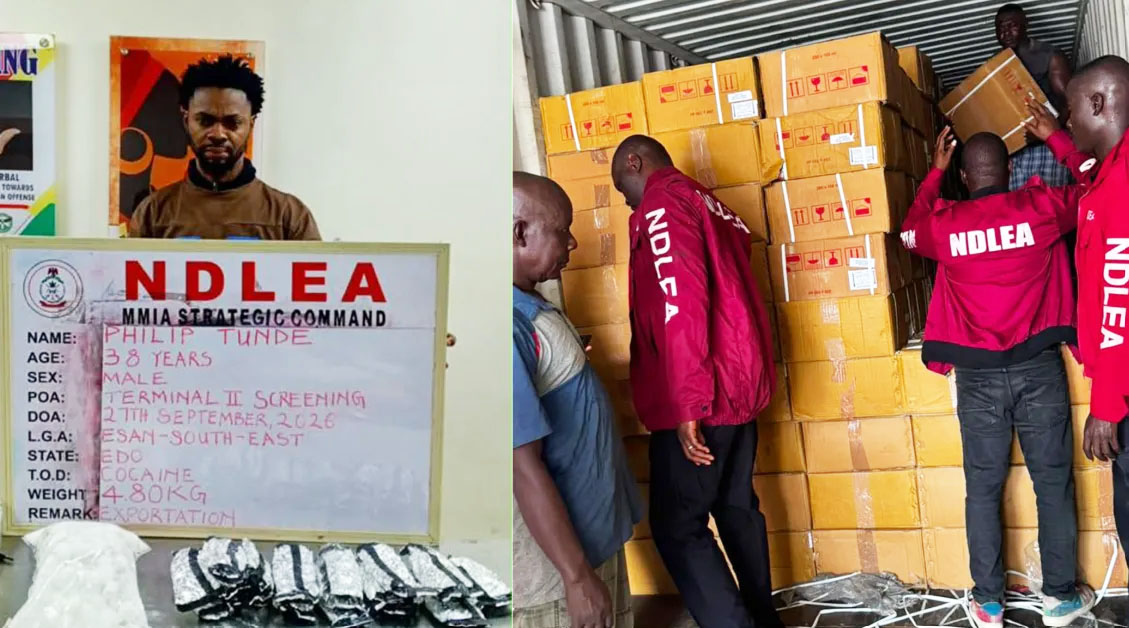
The National Drug Law Enforcement Agency (NDLEA) has intercepted illicit drug consignments worth more than N5 billion at major Nigerian seaports and arrested a businessman allegedly attempting to smuggle 4.8kg of cocaine to Milan, Italy.
The seizures were recorded during separate operations at the Apapa Port and Tin Can Island Port in Lagos, as well as the Onne Port in Rivers State, according to the anti-narcotics agency.
At Apapa Port, NDLEA operatives intercepted a container containing about 3.5 tonnes of skunk, a strain of cannabis. The agency said the consignment had been imported from Canada and was concealed among items declared as used vehicles and household goods.
At Tin Can Island Port, officers discovered another consignment of cocaine concealed in shoe soles during the examination of imported cargo from Canada.
A further seizure was made at Onne Port, where NDLEA operatives intercepted consignments containing cannabis and other illicit substances.
The agency put the combined value of the seized drugs at more than N5 billion.
READ ALSO:
- Madonna University expels final-year nursing student, suspends 14 over dance video
- JUST IN: WAEC appoints Suleiman Kum as new Nigeria National Office head
- Ojudu Reveals How Tinubu, He Narrowly Escaped Death In Third Mainland Bridge Crash
In a separate operation at the Murtala Muhammed International Airport (MMIA), Lagos, NDLEA officers arrested a businessman allegedly preparing to travel to Milan, Italy, with cocaine concealed in the soles of shoes.
The suspect was arrested during an outbound operation after officers discovered 4.80 kilogrammes of cocaine concealed in his luggage.
NDLEA said the suspect was scheduled to travel to Milan when he was stopped for further checks. The agency subsequently took him into custody as investigations continued.
The latest operations highlight the various methods allegedly used by drug trafficking networks to move illicit substances across Nigeria’s borders, including concealing drugs in commercial cargo and everyday items such as footwear.
The NDLEA has continued to strengthen surveillance at Nigeria’s seaports and international airports, with particular attention on consignments and passengers suspected of involvement in drug trafficking.
The agency said the latest interceptions demonstrate its continued efforts to disrupt the supply chain for illicit drugs and prevent Nigeria from being used as a transit point for international drug trafficking.
Investigations into the seizures and arrests are ongoing, with the agency expected to prosecute suspects where sufficient evidence is established.
The businessman and other suspects remain presumed innocent unless proven guilty in court.
NDLEA intercepts N5bn worth of drugs at ports, arrests Milan-bound businessman
-
 Entertainment3 days ago
Phyna Knocks Out Nkechi Blessing in Fourth Round, Wins ₦50m, New Car
-
 metro2 days ago
NYSC Kidnap: Abductors Demand N950m for 19 Prospective Corps Members in Imo
-
 metro3 days ago
2027 Hajj: Nigeria Secures 10,000 Extra Slots, Allocation Hits 60,000
-
 Entertainment3 days ago
Olu Jacobs Laid to Rest in Lagos as Dignitaries, Nollywood Stars Honour Screen Icon
-

 Politics2 days ago
2027: Oshiomhole Dares Opposition Over ₦500 Petrol Promise, Says APC Will Take Argument to Nigerians
-
 International3 days ago
Trump Threatens Iran With ‘Very Hard’ Response Over Flydubai Attack
-
 metro3 days ago
Nigeria Launches 11-Character Digital Postcode System for Every Addressable Building
-
 metro2 days ago
Amaechi: Tinubu’s Policies Made My Mother’s Drugs Unaffordable