

metro
Coup Plot: How conspirators planned to cut power to Aso Rock – Witness tells court
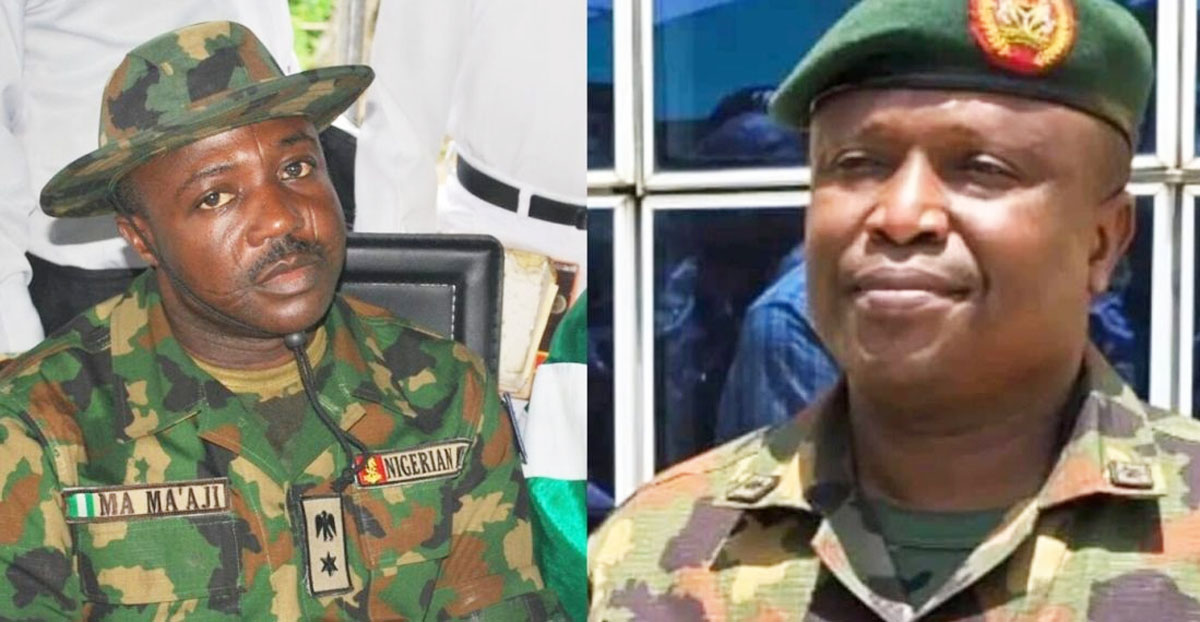
Coup Plot: How conspirators planned to cut power to Aso Rock – Witness tells court
ABUJA — Zekeri Umoru, one of the suspected coup plotters, on Wednesday told a Federal High Court in Abuja that discussions were held on switching off electricity supply to the Presidential Villa, Abuja, to aid the alleged coup against President Bola Tinubu’s administration.
Umoru, a Julius Berger Nigeria Plc employee in the Maintenance Department at the Presidential Villa, spoke in video evidence played before Justice Joyce Abdulmalik of the Federal High Court in Abuja. He said he warned that such an action would immediately trigger investigations and the detention of workers on duty if carried out. The 4th defendant stated this in the video while being questioned by members of the Special Investigative Panel (SIP) that first investigated the case.
Umoru alleged that Colonel Mohammed Ma’aji, the alleged coup mastermind who is currently at large, offered him money through Inspector Ahmed Ibrahim (the 3rd defendant) to recruit between 18 and 19 persons working inside the Villa. Those to be recruited included soldiers, officials of the Department of State Services (DSS) , and fellow Julius Berger staff. He also told investigators that Ma’aji allegedly said he wanted access into the Presidential Villa and could achieve it “with force,” even if those recruited from inside declined to cooperate.
Umoru further claimed that Inspector Ibrahim later demanded N100 million from Ma’aji to facilitate the operation through an ambulance route into the Villa. However, Ma’aji refused on the grounds that the amount was excessive. He said Ma’aji insisted that he could still gain access into the Presidential Villa by force, though “there would be bloodshed.” Umoru said at one point he became uncomfortable with the alleged plan and repeatedly attempted to return the money given to him, adding that he felt accessing the Presidential Villa “was not a child’s play.”
He denied ever having access to the Villa’s solar power plant, despite allegations that he planned to sabotage electricity supply within the complex. On why he failed to immediately report the alleged discussions to authorities, Umoru claimed he was discouraged by Ibrahim, who allegedly asked him to delete messages and avoid contacting Ma’aji due to an ongoing audit in their office.
READ ALSO:
- Otedola Dumps Geregu Stake, Invests $100 Million In Dangote Refinery
- ‘Bad Loser’: APC Chieftain Knocks Desmond Elliot Over Surulere Primary Withdrawal
- Rivers 2027: Fubara Withdraws From APC Guber Race
The alleged coup plot, which was uncovered in September 2025, involved far more elaborate planning than previously reported. A prosecution witness, an army officer from the Nigerian Army Corps of Military Police who was codenamed “AAA” for security reasons, testified before the same court on April 29 about the full scope of the alleged conspiracy. The witness told the court that intelligence reports linked Colonel Ma’aji to an alleged conspiracy involving serving and retired military officers, as well as former Bayelsa State governor and ex-Minister of State for Petroleum Resources, Timipre Sylva. He said the intelligence was assessed, found credible, and formed the basis for the investigation.
According to the witness, when Ma’aji was arrested, a Samsung Galaxy Z series phone was recovered from him. A search of his residence also yielded a jotter containing “operational plans, names and designation of ranking members of the current regime as well as officers that were to assassinate them.” The jotter also allegedly contained “political and structural changes to be made upon execution of the coup.” The witness further testified that meetings were held at Green Land Apartment and Brookville Hotel in Abuja, where participants discussed regime change, identified government officials to be assassinated, and assigned officers to carry out the plan. Hotel receipts and reservation records were recovered as evidence.
The prosecution witness also detailed substantial financial transactions linked to the alleged coup plot. Forensic analysis revealed that Purple Waves Limited was used as a conduit to sponsor the alleged coup. Bank statements showed multiple debit entries running into hundreds of millions of naira between September 19 and October 2, 2025, including N100 million, N80 million, N90 million, N70 million, and N50 million transfers. The witness said these transactions carried different narrations but were traced to funding the coup plot under investigation. He also confirmed financial links between Colonel Ma’aji, Timipre Sylva, and other defendants before the court.
The alleged coup plot first came to public attention when the federal government abruptly cancelled a planned military parade to mark Nigeria’s 65th Independence Anniversary on October 1, 2025. Officials cited security threats, though speculation immediately linked the cancellation to a possible coup attempt. The military initially denied the reports, but in January 2026, it announced that 16 officers would be tried before a military court for attempting to oust the president. Those facing trial at the Federal High Court are civilians or retired military personnel alleged to have been part of the conspiracy.
The charges were filed by Attorney General of the Federation Lateef Fagbemi, and the six defendants were arraigned on April 22, 2026, before Justice Abdulmalik on a 13-count charge marked FHC/ABJ/CR/206/2026. Those named in the charge are: Major General Mohammed Ibrahim Gana (retired) as 1st defendant; Captain Erasmus Ochegobia Victor (retired) as 2nd defendant; Inspector Ahmed Ibrahim as 3rd defendant; Zekeri Umoru as 4th defendant; Bukar Kashim Goni as 5th defendant; and Abdulkadir Sani as 6th defendant, an Islamic cleric based in Zaria, Kaduna State.
READ ALSO:
- How Ojukwu ‘deliberately frustrated’ Nigeria’s last peace chance before Civil War — Gowon
- Sold for ₦18,000 Each, Resold for ₦76,000: Two Minors Rescued After 4 Months
- Oyo Grand Chief Imam Declares Marathon Prayers Over Insecurity, Peace of Oyoland
A former Minister of State for Petroleum Resources and former Governor of Bayelsa State, Timipre Sylva, who is alleged to be part of the plot, is listed as being at large. Court documents suggest he fled the country before the plot was exposed. After the allegations emerged last October, Sylva denied links to a coup plot after his house was ransacked by investigators. An arrest warrant was issued for him the following month in a separate case launched by the anti-corruption agency. At the time, his spokesman said the former minister was in the UK for a medical check-up and that the allegations were politically motivated.
The defendants face charges ranging from treason and terrorism to failure to disclose security intelligence and money laundering linked to terrorism financing. The Federal Government alleged that the defendants, sometime in September 2025, conspired to levy war against the state to overawe President Tinubu, an offence punishable under Section 37(2) of the Criminal Code. It was further alleged that the defendants had prior knowledge of a planned treasonable act involving Colonel Ma’aji and others but failed to alert the appropriate authorities, and also failed to use reasonable endeavours to prevent the commission of the offence. All six defendants pleaded not guilty when the charges were read in court.
Justice Abdulmalik adjourned the matter until May 21 for the continuation of the trial-within-trial being conducted to ascertain the voluntariness or otherwise of the statements made by the six defendants. The trial-within-trial was initiated after the six defendants challenged the voluntariness of their statements, with defence lawyers arguing that their clients made the statements under duress. Defence lawyers also complained of restricted access to their clients, claiming they had been unable to meet them since September 2025, which would mean they were arrested ahead of the Independence Day parade. The prosecution has maintained that the defendants gave confessional statements voluntarily, were calm during interrogation, and were fully aware of their constitutional rights before making their statements.
In a controversial move, Justice Abdulmalik barred journalists from covering the trial on April 26. Although the prosecution made no application for a secret trial, security officers attached to the trial judge escorted journalists out of the courtroom before proceedings began. Journalists who arrived as early as 8 a.m. to secure seats were ordered to vacate them and leave immediately. When reminded that the trial of alleged coup plotters was a matter of public importance, the security officers insisted they were simply following the judge’s orders.
Colonel Mohammed Alhassan Ma’aji, the alleged mastermind of the coup plot, was arrested along with other alleged accomplices and is due to go on trial at a military court along with 16 other serving officers, separate from the civilian defendants appearing before the Federal High Court. The trial is scheduled to continue on May 21, 2026, with the judge expected to rule on the admissibility of the defendants’ statements following the conclusion of the trial-within-trial. If the judge finds that the statements were made voluntarily, they will be admitted as evidence in the main trial. The Federal Government has indicated that it will continue to present witnesses and evidence, including the video testimony of Umoru and the forensic analysis of Ma’aji’s phone and jotter, as it seeks to prove the 13-count charge against the accused persons. For the six defendants who have pleaded not guilty, their legal teams are expected to continue challenging the prosecution’s evidence while seeking bail for their clients, who remain in the custody of the Department of State Services pending the determination of the case.
Coup Plot: How conspirators planned to cut power to Aso Rock – Witness tells court








metro
Tension as Kidnappers Threaten to Kill Abducted Oyo Corps Members

Tension as Kidnappers Threaten to Kill Abducted Oyo Corps Members
The families of 19 prospective corps members from Oyo State abducted in Imo State are facing a ₦950 million ransom demand, with the kidnappers reportedly threatening to kill the victims if the money is not paid.
The victims were travelling from Ibadan to NYSC orientation camps in Abia and Akwa Ibom states when gunmen attacked their vehicles along the Owerri-Onitsha Road in Imo State.
The incident occurred on Thursday, October 1, after the buses reportedly left Ibadan the previous day. The travellers had encountered delays on the journey and spent the night in Anambra State before continuing towards Imo.
According to accounts from relatives and the transport company, the attackers emerged from the bush near Umunoha in Mbaitoli Local Government Area, blocked the vehicles and forced some of the passengers into the surrounding bush.
The kidnappers later contacted some of the victims’ families using the abducted persons’ phones and demanded ₦50 million for each victim, bringing the reported ransom demand to ₦950 million.
READ ALSO:
- Flydubai Co-Pilot Attacked Captain With Axe in Attempted Terrorist Act, UAE Says
- Nigerian-Born Ex-Professor Jailed 78 Months Over $1.3m US Student Aid Fraud
- Police Arrest Man Caught Sexually Assaulting 12-Year-Old Girl in Car
The development has heightened anxiety among the victims’ families, particularly after the abductors allegedly issued threats against the captives.
One relative reportedly said a family member was able to see some of the abducted graduates during a video call initiated by the kidnappers. The victims were allegedly seen sitting on the ground in a bush location.
Another family member said one of the abducted prospective corps members managed to send a brief message to a family WhatsApp group before communication was lost.
The affected families have appealed to the Imo State Government, Oyo State Government, Nigeria Police Force and other security agencies to intensify efforts to rescue the victims.
The parents also reportedly sought the intervention of the Olubadan of Ibadanland, Oba Rashidi Ladoja, after visiting him in Ibadan to seek assistance over the abduction.
The incident has also prompted increased security operations in the area, with security agencies deploying personnel and tactical teams to search for the victims and track the suspected kidnappers.
The Imo State Police Command said 10 people had been rescued following the attack, while efforts were continuing to establish the full number of people still in captivity.
There have been conflicting reports about the number of prospective corps members abducted. While several reports put the figure at 19, some accounts from relatives have referred to 20 victims and a ransom demand of about ₦1 billion. Authorities have continued efforts to establish the precise number of people taken during the attack.
The Inspector-General of Police, Olatunji Disu, has also strengthened the security operation in Imo State, with senior police officers deployed to coordinate efforts aimed at rescuing the remaining victims.
The abduction has renewed concerns over the safety of young Nigerians travelling to NYSC orientation camps, particularly those travelling long distances across states for the mandatory national service programme.
The families are now waiting for the safe return of their relatives as security agencies continue the search for the abducted Oyo corps members.
Tension as Kidnappers Threaten to Kill Abducted Oyo Corps Members
metro
Over 1,000 APM Members Defect to APC in Oyo
Over 1,000 APM Members Defect to APC in Oyo
More than 1,000 members of the Allied Peoples Movement (APM) in Oluyole Local Government Area of Oyo State have defected to the All Progressives Congress (APC), citing dissatisfaction with their political experience in the state.
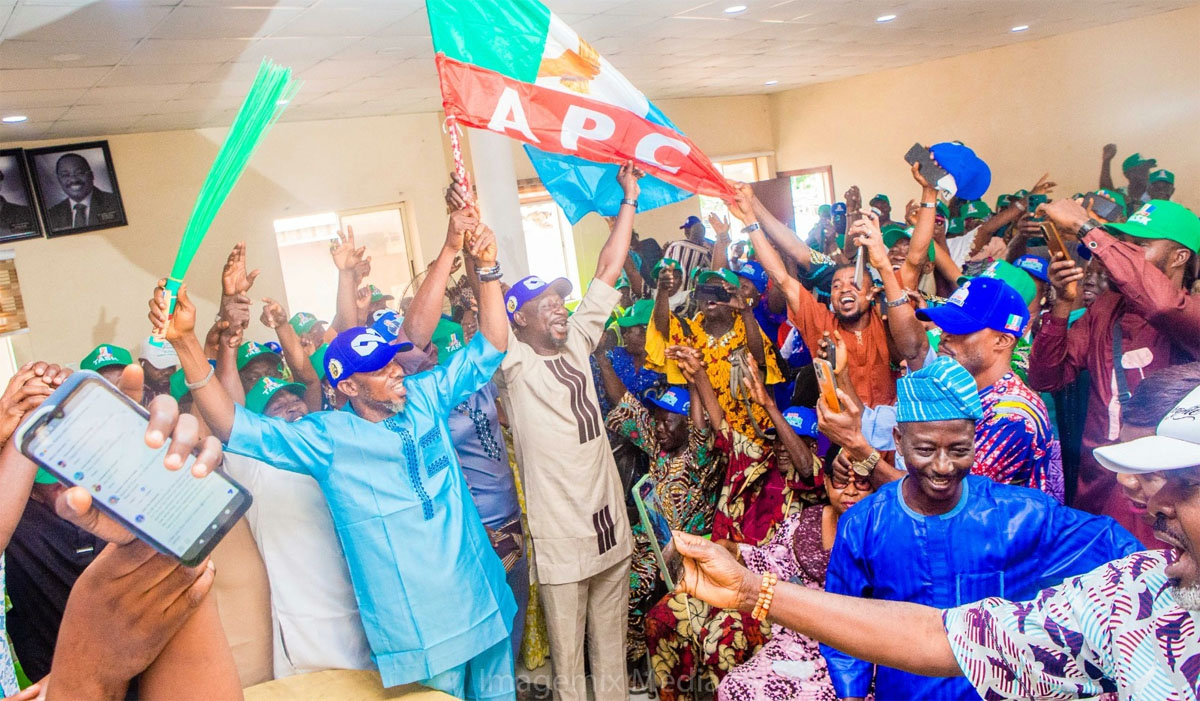
The defectors formally joined the APC at the party’s state secretariat in Oke-Ado, Ibadan, on Friday, October 2, 2026.
They were led by APM chieftain Mustapha Kazeem, popularly known as Oba Oluyole, and received by Oyo State APC Chairman, Otunba Moses Alake Adeyemo, alongside members of the party’s state executive committee. (The Times)
Speaking on behalf of the defectors, Kazeem said their decision followed what he described as a series of experiences while supporting the administration and political structure associated with Governor Seyi Makinde.
He alleged that some supporters had not received adequate recognition for their loyalty and sacrifices, while accusing members of Makinde’s political structure in Oluyole of victimising members of his group.
Kazeem said the situation eventually convinced them to leave the APM and join the Oyo APC, declaring that they had reached a point where they could no longer pretend about their dissatisfaction.
He described the APC as a platform through which the defectors could pursue their political interests and said they were no longer willing to remain within what he described as “deceit and propaganda.”
READ ALSO:
- Wike to Amaechi: What Did You Bring to Rivers After 24 Years in Power?
- Electric Spark Suspected as Fire Destroys 21 Shops at Abuja’s Kugbo Market
- Ebonyi Widow Alleges Death Threats, Ostracisation Over Late Husband’s Property
The allegations against Makinde’s political structure were made by the defectors and were not independently established in the report.
Receiving the new members, the Oyo APC chairman welcomed them into the party and presented brooms to them as a symbol of their formal admission.
Adeyemo urged the defectors to put their previous political differences behind them and participate actively in the activities of the APC in Oyo State.
The defection comes amid increasing political realignments in Oyo State ahead of the 2027 elections, with political parties and their supporters seeking to strengthen their structures and mobilise members across the state.
The latest movement also comes against the backdrop of continuing discussions among opposition politicians over possible cooperation ahead of the 2027 presidential election.
An APM chieftain, Oluwaseun Adeloro, recently argued that opposition parties still had an opportunity to work towards a common presidential candidate.
Speaking on Arise Television’s The Morning Show, Adeloro said opposition politicians could still reach an agreement despite the separate ambitions of major political figures.
He specifically mentioned former Vice-President Atiku Abubakar and Peter Obi while discussing the challenges of reaching a consensus.
Adeloro also expressed support for Governor Seyi Makinde as a possible consensus candidate and defended Makinde’s proposal for a four-year “reset” of Nigeria.
The latest APM-to-APC defection in Oyo adds to the political activity already underway ahead of the 2027 general elections.
For the defectors, the move marks a shift from the APM to the APC, while the allegations they cited concerning their treatment within Makinde’s political structure remain their stated reasons for leaving.
Over 1,000 APM Members Defect to APC in Oyo
metro
Police Arrest Man Caught Sexually Assaulting 12-Year-Old Girl in Car

Police Arrest Man Caught Sexually Assaulting 12-Year-Old Girl in Car
The Federal Capital Territory Police Command has arrested a man identified as Zayyanu Halilu after he was allegedly caught sexually assaulting a 12-year-old girl inside a car in Abuja.
Halilu was arrested on Friday, October 2, 2026, by operatives of the Police Anti-Kidnapping Unit during a routine patrol at the Airport Bridge Taxi Park in Abuja.
According to the police, officers became suspicious after noticing a fully tinted navy-blue Volkswagen parked at the location with its windows wound up. The vehicle was reportedly shaking, prompting the officers to approach and inspect it.
The officers allegedly opened the vehicle and found the suspect with the 12-year-old child, leading to his immediate arrest and the rescue of the girl.
The child was subsequently taken for medical attention, while the suspect was detained for investigation.
The police said preliminary findings indicated that the suspect had allegedly taken the girl to the same location on previous occasions and sexually abused her.
READ ALSO:
- Electric Spark Suspected as Fire Destroys 21 Shops at Abuja’s Kugbo Market
- Ebonyi Widow Alleges Death Threats, Ostracisation Over Late Husband’s Property
- Police Arrest Woman Seen Threatening Officer With Knife Over Cannabis Arrest
The Command further alleged that the suspect had threatened the child with harm if she disclosed the abuse to anyone.
A medical examination, according to the police, subsequently showed that the child was about three months pregnant. She remains under medical care and is undergoing further assessment.
The police said the suspect would be charged to court after the completion of the investigation.
The FCT Police spokesperson, SP Josephine Adeh, confirmed the arrest, while the Commissioner of Police, CP Ahmed Muhammed Sanusi, urged parents and guardians to pay close attention to the safety, welfare and whereabouts of children under their care.
The Command also urged residents to report suspicious activities involving children or other vulnerable persons to the police.
The latest incident has again highlighted concerns about child sexual abuse and the protection of minors in Abuja. Under Nigerian law, allegations involving sexual offences against children are subject to investigation and prosecution, and suspects are presumed innocent until proven guilty by a court.
The identity of the child has not been disclosed in keeping with the need to protect the privacy and welfare of a minor allegedly involved in a sexual-abuse case.
Police Arrest Man Caught Sexually Assaulting 12-Year-Old Girl in Car
-
 metro2 days ago
Workers to Begin Nationwide Warning Strike Over Petrol Price, Wage Award
-
 metro2 days ago
[UPDATED] Imo Highway Attack: 10 Rescued after Gunmen Abducted NYSC Prospective Members
-

 Entertainment2 days ago
Phyna Knocks Out Nkechi Blessing in Fourth Round, Wins ₦50m, New Car
-
 Politics3 days ago
2027: Amaechi Recalls How APC Defeated PDP, Orders ADC Mobilisation
-
 Business3 days ago
Dangote Sets 40-Month Deadline for $16bn East Africa Refinery in Kenya
-
 News3 days ago
Independence Day: Tinubu Unveils Plan to Cut Living Costs, Expand Jobs
-
 metro2 days ago
2027 Hajj: Nigeria Secures 10,000 Extra Slots, Allocation Hits 60,000
-
 Politics3 days ago
2027: Wike Vows to Resign If Tinubu Loses FCT, Rivers