
Politics
How PDP Govs’ Plot to Hijack Presidential Convention Committee was Foiled

More revelations have emerged on how the plot by the governors elected on the platform of the Peoples Democratic Party (PDP) to hijack the Presidential Convention Committee was foiled at the last National Executive Committee (NEC) of the party, THISDAY has learnt.
The intrigues, it was learnt, eventually saw the emergence of the former Senate President, Senator David Mark as the chairman of the Presidential Convention Committee.
A source within PDP’s NEC, who confided in THISDAY, disclosed that the governors had adopted the same strategy they used in the October 30 National Convention where all the major committees of the convention were headed by governors, thus giving the signal that the party has been taken over by the governors.
However, the test of the capacity of the National Working Committee (NWC) to assert its independence came during the constitution of the presidential convention committee.
READ ALSO:
- Corps Member Killed As Security Operatives, Bandits Clash On Kaduna-Abuja Road
- It’s nobody’s business how many wives I marry – Yul Edochie
- How ex-FCMB staff allegedly stole N30m from Bank in one year of employment
In 2018, Delta State Governor, Dr Ifeanyi Okowa was the chairman of the presidential convention committee that took place in Port Harcourt.
Investigation however revealed that to ensure that the serving governors do not hijack the May 28 and 29, 2022 presidential convention, other stakeholders, including former governors restrategised to checkmate the gradual takeover of the party by governors.
THISDAY gathered that the governors had planned to install either the Oyo State governor, Mr Seyi Makinde, or his Enugu State counterpart, Mr Ifeanyi Ugwuanyi as the chairman of the convention committee.
But the stakeholders consisting of the national caucus, the Board of Trustees (BoT), and the forum of former governors as well as the former members of the National Assembly kicked against it.
“The position of the stakeholders is that the governors are some of the main presidential aspirants and that other governors are aligned to the aspirations of their colleagues. They argued that making one of the governors the head of the presidential convention would not guarantee a fair and transparent convention,” the source explained.
According to the source, the stakeholders met at various levels and agreed that the influence of the governors should be whittled down, at least to assure other presidential aspirants that are not governors of fair play at the presidential convention.
“Though we know that some of the governors are not happy about it, that is the only and better way to go,” the NEC member told THISDAY.
“It was for this reason that Senator David Mark was chosen. He was supported in the headship of the presidential convention committee by a former governor of Katsina State, Ibrahim Shema, and the Enugu State Governor, Ugwuanyi.
READ ALSO:
- Police arrest killers of ex-governorship aspirant, 21 others
- Blasphemy: 1 Killed, Many Injured As Protesters Go Berserk In Sokoto
- Just in: Abducted train passengers: Terrorists release pregnant woman
The source said that the composition of the convention committee reflected the three major components of the party’s stakeholders.
“Mark represents the legislative arm as a former Senate president, while Shema represents the former governors and partly the executive committee as he was a former deputy national chairman of the PDP. The Enugu State Governor, Ugwuanyi represents the PDP governors’ forum,” the source added.
According to the source, “It should be observed by all that due to the presidential aspirations of some governors, other governors are no longer comfortable with one other. Take, for instance, the governor of Sokoto State, Aminu Waziri Tambuwal. He is the chairman of the PDP Governors’ Forum and his deputy is the Governor of Abia State, Dr. Okezie Ikpeazu.
“It is expected that in the absence of the chairman, the deputy should act, but the deputy to Tambuwal is the campaign director of the governor of Rivers State, Nyesom Wike, and many governors are not comfortable with a meeting that Ikpeazu will head.
“It is for this reason that the governor of Benue State, Samuel Ortom has become the rallying point of the PDP governors’ meetings and other party stakeholders’ meetings.
“In the run-off to the last NEC meeting, all the party’s important meetings took place in the Benue State Government Lodge,” the source said. Highlighting the division among the PDP governors, the NEC member said, “we are not politically blind. We know where each of our governors belongs. We know that the Adamawa State governor, Ahmad Fintiri is a supporter of the former Vice President, Atiku Abubakar, while Oyo and Abia State governors are with Wike. We know the body language of the Delta State and Taraba State governors. So, we are careful of our actions to avoid any suspicious blame,” he explained.
The PDP governors contesting for the presidential ticket of the party are Bala Mohammed of Bauchi, Tambuwal of Sokoto, Wike of Rivers, and Udom Emmanuel of Akwa Ibom.
Investigations showed that the governors are currently torn between Tambuwal and Wike, with the expectation that Mohammed has a chance to contest for a second term.
The source is privy to the ongoing horse-trading ahead of the party’s primary and said four governors are said to be queuing behind Tambuwal while Wike and Emmanuel, who are from the same zone, also have high chances among the governors.








Politics
2027: Tinubu Knows Opposition Playbook, Always Ahead — Festus Keyamo
2027: Tinubu Knows Opposition Playbook, Always Ahead — Festus Keyamo
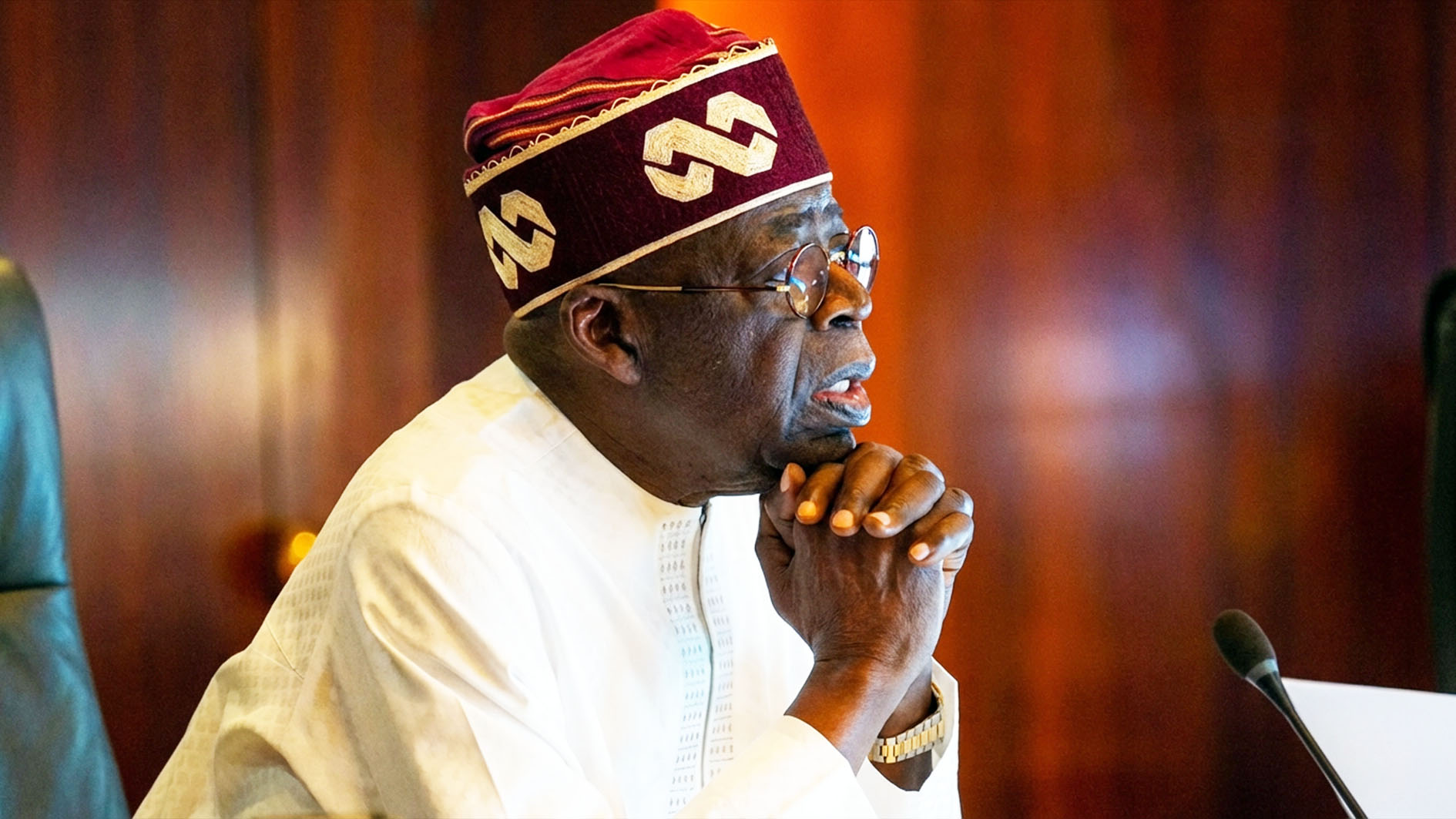
The Minister of Aviation and Aerospace Development, Festus Keyamo, has expressed confidence that President Bola Ahmed Tinubu and the ruling All Progressives Congress (APC) are fully prepared for the 2027 general elections, insisting that the President is “ahead of opposition strategies.”
Keyamo made the remarks in a post on social media on Sunday, where he praised Tinubu’s political resilience and experience, saying the President has consistently outmaneuvered opposition parties throughout his political career.
He said Tinubu’s political journey—from opposition leader to President—has given him deep insight into how rival parties operate, making it difficult for them to surprise him.
According to him, Tinubu successfully navigated Nigeria’s political landscape as a leading opposition figure and later as the only opposition governor in the South-West during the early 2000s, a period he said shaped his strategic approach to politics.
READ ALSO:
- Official, Black Market Rates Diverge as Naira Starts Week on Stable Note
- Kwankwaso Reveals Details of Kwankwasiyya’s ADC Power-Sharing Formula
- ADC Crisis: Supreme Court to Hear David Mark’s Appeal April 14
“The very unique thing about President Asiwaju Bola Ahmed Tinubu is that he fought from the deep end of opposition to become President of Nigeria and today, he has totally flipped the script on the PDP,” Keyamo said.
He added that opposition parties are currently working with strategies that are already familiar to Tinubu, arguing that the President understands and anticipates their moves.
“Every step the opposition takes today and every strategy they adopt is from the playbook of President Bola Ahmed Tinubu. He knows and understands every single step against him before they even conceive it,” he said.
Keyamo further claimed that Tinubu remains “ahead by 100 steps” in political calculations, warning that efforts to unseat him in 2027 would be extremely difficult.
“You cannot beat the master at his own game; you cannot outfox the man who taught almost all of us how to play opposition politics,” he added.
The comments come amid growing political realignments and early coalition talks among opposition parties ahead of the 2027 elections, as Nigeria’s political landscape begins to take shape ahead of the next electoral cycle.
Political observers say such remarks highlight increasing political tension between the ruling party and opposition blocs, who have intensified criticism of the administration’s economic and governance policies.
2027: Tinubu Knows Opposition Playbook, Always Ahead — Festus Keyamo
Politics
Kwankwaso Reveals Details of Kwankwasiyya’s ADC Power-Sharing Formula
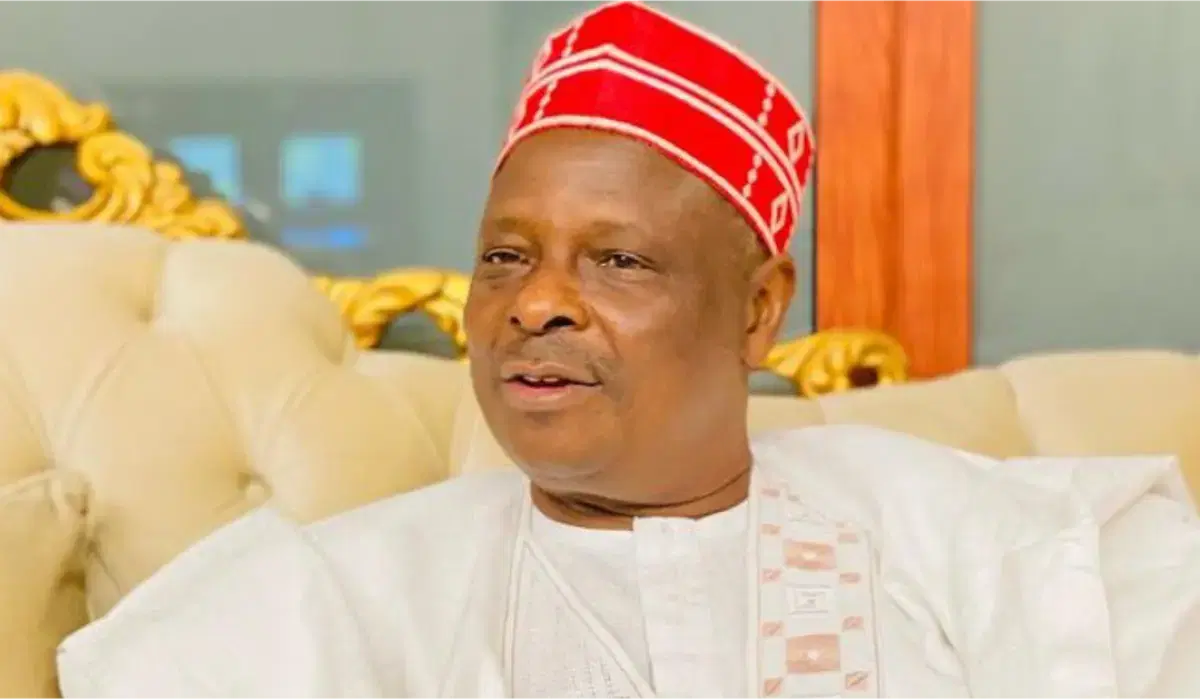
Kwankwaso Reveals Details of Kwankwasiyya’s ADC Power-Sharing Formula
Leader of the Kwankwasiyya Movement and former Kano State governor, Rabiu Musa Kwankwaso, has explained why his group accepted a reduced share in the power-sharing arrangement within the African Democratic Congress (ADC), despite being initially offered a larger portion.
Kwankwaso disclosed this while speaking to supporters of the movement in Kano over the weekend, saying the decision was taken to promote inclusiveness and strengthen internal cohesion within the emerging opposition structure.
According to him, the bloc that transitioned from the New Nigerian Peoples Party (NNPP) into the ADC was initially offered about 80 per cent of positions within the party structure, while the remaining 20 per cent was to go to other stakeholders.
However, he said the group opted to accept a 60–40 arrangement instead.
“They gave us 60 per cent and the old ADC took 40 per cent. In the presence of the national leadership, they offered 80 per cent but we said no and took 60,” Kwankwaso told his supporters.
He explained that the decision was deliberate, stressing that the Kwankwasiyya Movement prioritises unity over dominance.
“We showed them that we want everyone else to come in,” he said.
READ ALSO:
- ADC Crisis: Supreme Court to Hear David Mark’s Appeal April 14
- FG Boosts Power Generation to 4,300MW in Two Weeks — Adelabu
- Stop Blaming Tinubu, Focus on States, LGs — Lagos Lawmaker
Kwankwaso added that the move was consistent with his group’s previous political strategy, recalling a similar arrangement during their political transition from the Peoples Democratic Party (PDP) to the All Progressives Congress (APC), where power-sharing was also structured around compromise.
“When we came from PDP to APC that time, we had government and we did the same—60-40,” he said.
He maintained that political stability and long-term strategy were more important than controlling party structures, especially as opposition groups reposition ahead of the 2027 general elections.
The former governor also revealed that Kwankwasiyya members currently occupy leadership positions across all 44 local government areas of Kano State, including chairmanship roles and other key administrative positions.
However, he noted that some of these positions were later reduced following complaints and negotiations with other stakeholders.
“In every local government, we are the ones who have chairmen and other leaders across the 44, but after an outcry, we have given them 10 out of the 44,” he said.
Kwankwaso urged supporters to remain patient and avoid unnecessary pressure over appointments, stressing that political inclusion must balance competence, eligibility, and broader party harmony.
“I want us to be patient enough. Don’t say you must be everywhere or insist on a particular person when that person may not even be eligible,” he added.
Political observers say the development reflects ongoing negotiations within opposition blocs as they attempt to build a more unified front capable of challenging dominant parties in future elections.
The Kwankwasiyya Movement remains one of the most influential political structures in northern Nigeria, with strong grassroots support and a disciplined mobilisation network.
Kwankwaso Reveals Details of Kwankwasiyya’s ADC Power-Sharing Formula
Politics
ADC Crisis: Supreme Court to Hear David Mark’s Appeal April 14

ADC Crisis: Supreme Court to Hear David Mark’s Appeal April 14
The leadership crisis rocking the African Democratic Congress (ADC) is set for a decisive legal showdown as the Supreme Court prepares to hear an appeal filed by former Senate President, David Mark, on Tuesday, April 14, 2026.
The appeal challenges the March 12 judgment of the Court of Appeal, which has fueled internal disputes within the party over its national leadership structure.
According to official court documents, the case—marked SC/CV/180/2026—was scheduled following a hearing notice issued by the apex court and circulated to all parties through its Litigation Department.
In the suit, Mark is seeking a stay of execution of the appellate court’s ruling, warning that failure to grant the request could render his appeal ineffective. He is also asking the Supreme Court to restrain the Independent National Electoral Commission (INEC) from recognising any leadership outside the current ADC national executives led by him.
The appeal lists Nafiu-Bala Gombe, the ADC, Rauf Aregbesola, INEC, and Ralph Nwosu as respondents in the ongoing legal battle.
Through his counsel, Realwan Okpanachi, Mark argued that the Court of Appeal’s directive for parties to maintain status quo ante bellum has been misinterpreted and used to undermine his leadership.
READ ALSO:
- FG Boosts Power Generation to 4,300MW in Two Weeks — Adelabu
- Stop Blaming Tinubu, Focus on States, LGs — Lagos Lawmaker
- Zulum Defends NAF Airstrike, Says Jilli Market Closed Five Years Ago
He alleged that Gombe has relied on the ruling to pressure INEC into withdrawing recognition of the current party leadership, a move he described as an attempt to enforce the judgment prematurely.
The situation escalated after INEC reportedly removed the names of Mark and Aregbesola from its official portal on April 1, triggering fresh legal actions and intensifying tensions within the party.
In response, Mark approached the Federal High Court in Abuja, seeking an order to compel INEC to restore their names as national chairman and national secretary respectively. The case, assigned to Justice Emeka Nwite, is also scheduled for hearing on April 14.
However, legal experts say proceedings at the lower court may be suspended or adjourned in deference to the Supreme Court, in line with established judicial hierarchy.
The dispute originated from a suit filed by Gombe, a former Deputy National Chairman of the ADC, who is challenging the legality of Mark and Aregbesola’s emergence. He argued that their appointments violated provisions of the party’s constitution and the Electoral Act.
Gombe is seeking a court order restraining both men from parading themselves as national officers of the party.
Earlier, Justice Nwite had declined an ex-parte application to halt the Mark-led leadership, instead directing that all parties be put on notice. The matter later moved to the Court of Appeal after the Mark faction challenged the jurisdiction of the lower court.
The appellate court subsequently ordered all parties to maintain the status quo pending the determination of the dispute—an order that has now become a central issue in the ongoing appeal.
Legal analysts say the Supreme Court’s ruling will be crucial in determining the authentic leadership of the ADC and could significantly influence the party’s internal stability ahead of the 2027 general elections.
With the case now before Nigeria’s highest court, stakeholders within and outside the party are watching closely, as the outcome is expected to shape party leadership legitimacy, electoral positioning, and broader political realignments in the country.
ADC Crisis: Supreme Court to Hear David Mark’s Appeal April 14

-
 metro2 days ago
JUST IN: FG Publishes List of 48 Individuals, Groups Linked to Terrorism Financing in Nigeria
-

 metro19 hours ago
BREAKING: Troops Arrest 15-Year-Old Linked to Killing of Gen Braimah in Borno
-
 metro2 days ago
42-Year-Old Married Woman Declared Missing Found in Hotel with Man
-
 Politics2 days ago
Did Faleke Just Reveal Lagos’ Next Governor? Party Moves Begin
-
 Politics2 days ago
2027: Oyo APC Governorship Aspirant Saheed Oladele Resigns From Party
-
 metro2 days ago
ADC Threatens Civil Disobedience To Force INEC Chairman To Resign
-

 Entertainment2 days ago
EFCC, Police Investigate Blessing CEO Over Alleged ₦300m Cancer Scam
-

 metro20 hours ago
Fayose Warns Makinde May Query Olubadan Over Absence at Ibadan Coronation Event