

Sports
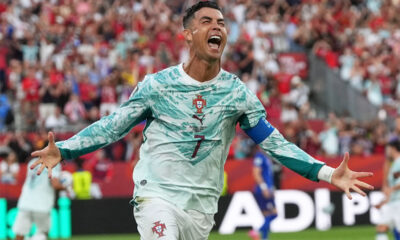
How Ronaldo’s brilliance left 5 great Brazilian strikers in the shadows
How Ronaldo’s brilliance left 5 great Brazilian strikers in the shadows
In the decade that followed Brazil’s 1994 World Cup triumph, the Selecao boasted an unparalleled plethora of attacking talents, yet none shone as brightly as Ronaldo.
O Fenomeno was in a class of his own; a dizzying mix of speed, dribbling, feints and clinical finishing that put him among the beautiful game’s very best.
While he excelled for PSV Eindhoven, Barcelona and Inter Milan and Real Madrid, the fondest memories of Ronaldo are usually tinged in the familiar yellow of Brazil.
World Cup and Copa America titles, along with countless other individual accolades, put him up there with Pele as a Selecao icon.
For some, living alongside that kind greatness came easy – the likes of Romario, Bebeto, Rivaldo, Edmundo and Ronaldinho all shone alongside O Fenomeno.
It’s the players who never got to share the spotlight being celebrated here. World-class talents left forever waiting in the wings for Brazil, born a decade too early and condemned to an international legacy unbefitting of their incredible talents.
Giovane Elber
In 10 seasons – three with Stuttgart and seven at Bayern Munich – Giovane Elber carved out a reputation as one of the Bundesliga’s greatest marksmen.
Elber was a different kind of striker to Ronaldo but no less worthy; a forward equally adept at linking the play and finishing off attacking moves. A heady mix of Brazilian flair and German work ethic.
Brought to Europe by AC Milan, Elber left the Rossoneri without playing for the first team, going on to enjoy prolific spells with Grasshopper Zurich and Stuttgart.
READ ALSO:
- 3 teenagers remanded in prison for causing disturbance around Wike’s house
-
Airport worker caught swallowing $300 stolen from passenger’s wallet + VIDEO
-
Obasanjo is Nigeria’s real problem – Estranged wife
His best years came at Bayern, though, with the Brazilian contributing to a period of success that included four Bundesliga titles, three German Cups and the Champions League.
Club top scorer in six of his seven seasons at Bayern, Elber’s 133 goals in 260 appearances made him the Bundesliga’s all-time top foreign goalscorer until Claudio Pizarro took his crown.
Yet throughout this time, Elber remained on the fringes of the Brazil national team. Like Ronaldo, Elber was a teen prodigy, emerging from the 1991 FIFA World Youth Championship, in which he scored four goals in six matches.
But in spite of this and his subsequent form in Germany, he had to wait until 1998 for a first senior call-up. His absence has long been attributed to his decision to play in Germany, with Brazil managers favouring players abroad drawn from Italy or Spain.
When he did get a chance, it came with a caveat: Luiz Felipe Scolari offered Elber the opportunity to replace the injured Ronaldo in Brazil’s squad for the 2001 Copa America in Colombia. Amid security concerns that had already seen Argentina withdraw entirely, Elber declined. Scolari refused to pick him again, ending any hopes he had of making the 2002 finals.
“The subject is closed,” Elber upon announcing his international retirement. “When the 2006 World Cup comes around, I will be 33 and I will not have the desire or the ability to play.”
He finished with seven goals in 15 games for Brazil.
Mario Jardel
One of Europe’s leading strikers in the late 1990s and early 2000s, the spectre of Ronaldo loomed large over Mario Jardel’s career.
Often inaccurately viewed as an out-and-out poacher, Jardel’s goalscoring repertoire was arguably more varied than even O Fenomeno’s. An exemplary finisher in the box, he was equally comfortable shooting from distance, while his bullet headers became something of a trademark.
Jardel also scored goals by the bucketload – 30 or more in each of his first six seasons in Europe – starting at Porto where he scored 166 goals in 169 appearances from 1997 to 2000. But it could have been even better.
READ ALSO:
-
I don’t know why Mohbad joined Naira Marley, he passed NECO at one sitting – Ex-principal
-
BREAKING: NLC begins nationwide strike indefinitely
-
Presidency retracts claims; says Tinubu not first African leader to ring closing bell at NASDAQ
Linked with the likes of Inter Milan and Barcelona, Jardel never got the chance to follow in Ronaldo’s footsteps at either, twice snubbed and instead signed by Galatasaray and, a year later, Sporting Lisbon.
Jardel scored 34 times for Gala during a single-season stay before moving on to Sporting in 2001, where he fired the club to a first league title in almost 20 years, scoring 42 goals in 30 league games.
That should have been enough to see Jardel at the 2002 World Cup – particularly as Ronaldo managed just seven goals in 16 that season – but his card had already been marked by Scolari.
In the summer of 2001, Jardel accepted the invite turned down by Elber to play for Brazil in place of Ronaldo at the Copa America in Colombia. He endured a torrid time, failing to score as Brazil exited in the quarter-finals to Honduras, confirming Scolari’s belief his stats were inflated in the process.
Omitted from the 2002 squad in favour of lesser names happy to warm the bench while Ronaldo starred, Jardel’s career never recovered. He left Sporting a year later, embarking on an increasingly nomadic career as a pale, bloated imitation of his former self.
Sonny Anderson
How do you replace a player like Ronaldo? For Barcelona, the answer was Sonny Anderson. Or at least, that was how the fans and press saw it.
Anderson had spent three years in France prior to his arrival at Barcelona in 1997. An initial six-month spell with Marseille brought 16 goals in 20 games but it was AS Monaco that the Brazilian truly carved out his reputation, scoring 64 times in 112 games for the Principality club.
The Brazilian was so much more than a goalscorer though. “He could finish with his left and right. Hold the ball up, win it in the air and play passes. He could do the lot. And he did it at lightning pace,” his Monaco team-mate, John Collins, told the BBC.
A league title winner with Monaco in 1997, Anderson was also Ligue 1 Player of the Year and the breakout star in a team featuring Emmanuel Petit, Thierry Henry, and David Trezeguet. That was enough to see Barcelona fork out €17million for his services, but supporters were unconvinced.
READ ALSO:
-
Kaduna refinery gives host communities lots of job slots – MD
-
Olayemi Cardoso, new CBN gov assumes duty as embattled Emefiele resigns
-
17-year-old student commits suicide in Makurdi— Police
“It was a very difficult time because when I arrived, I cost more money than Ronaldo and the fans expected from me a similar performance,” Anderson told Goal.
“Ronaldo was a unique player and the fans didn’t know much about me because I played in France.”
Despite scoring 10 times in La Liga during a double-winning debut campaign Louis van Gaal, the Ronaldo comparisons continued, especially as O Fenomeno bagged 25 for Inter that same season.
Though another title followed, it wasn’t long before Anderson was on his way back to France with Lyon, having become fed up with life under Van Gaal at a club where he was forever in the shadow of another Brazilian who wasn’t even there.
It was a move that curtailed any hopes of an international career. One that amounted to just six caps and, in truth, only began in August 1997 – around the time Anderson was being dubbed Ronaldo’s replacement.
Marcio Amoroso
Tipped to reach the same heights at Ronaldo in his younger years, at one point Amoroso looked on course to do exactly that – only for fate to intervene.
Having impressed in his homeland with Guarani, the Brazilian arrived in Italy in 1997, a year prior to Ronaldo, and quickly set about showing why he was one of Brazil’s most highly-rated youngsters at the time with Udinese.
The 22-year-old Amoroso defied his age to bag 12 goals in the ultra-defensive Serie A. An intelligent, skilful attacker capable of playing as a traditional number nine or 10, Brazil manager Mario Zagallo was among Amoroso’s many admirers and may well have taken him to the 1998 World Cup had he not been injured.
A year later, a fully-fit Amoroso was up and running and, most significantly, outscoring Ronaldo in Serie A, with a return of 22 goals making him the division’s top scorer for the 1998-99 campaign, eight ahead of O Fenomeno.
Picked as part of Vanderlei Luxemburgo’s Brazil squad for the 1999 Copa America, Amoroso shone again, scoring four goals en route to the title, including the opener in Brazil’s 2-1 semi-final win over Mexico.
Part of an attacking quartet that included Rivaldo, Ronaldinho and Ronaldo, he even won praise from the latter, who described him as “an animal” and “great to play with”. He could do no wrong.
It certainly seemed like that over the course of the 2001-02 campaign, with Amoroso making a flying start to life at new club Borussia Dortmund, following a £20million move, with a tally of 26 goals in 46 games helping the club win the Bundesliga. Amoroso finished as the top scorer in the process.
READ ALSO:
-
NFF seeks support for Osimhen’s Ballon D’or bid
-
Pastor arrested for allegedly killing girl in Delta community
-
Troops rescue 6 abducted Gusau varsity female students
Yet as the 2002 World Cup approached, a change of managers saw Amoroso out in the cold under Scolari. The Brazilian coach was unimpressed with European leagues outside of Italy or Spain and wasn’t one for changing his mind – even when Amoroso, fresh from scoring three times against AC MIlan in the UEFA Cup that season, told reporters: “The hat-trick is a message to Scolari.”
Omitted from the 23-man list, Amoroso’s later career was blighted by injury in an away similar to that of Ronaldo. But while O Fenomeno’s knack for timing saw him return at key moments for Brazil, his Copa America compatriot was less lucky.
Had Brazil lost the 2002 World Cup, then more may have been made of his omission. But, as the saying goes, history is written by the victors.
Giovanni
A precursor to Neymar among Santos fans, Giovanni Silva de Oliveira was handed the nickname “Messiah” among fans of the Brazilian club after a return of 37 goals in 36 games over two years.
Giovanni came up against a higher power when he joined Barcelona in 1996 though. Signed to primarily play as an attacking midfielder, he was equally effective in front of goal.
Classy, creative and boasting impressive technique on the ball, Giovanni might have stolen the show in that first season were it not for Ronaldo’s arrival.
Instead, he had to make do playing second fiddle as Barcelona’s second most exciting Brazilian prospect. There were occasional highlights along the way, with Giovanni scoring home and away against Red Star Belgrade in the European Cup Winners’ Cup and netting the winner against Real Madrid in the Copa Del Rey.
But Giovanni cut an increasingly peripheral figure as the season went on, used sparingly by Bobby Robson and forced to watch on as Ronaldo went from strength to strength. He scored 12 times in all competitions but was an unused sub in the European Cup Winners’ Cup final, watching on as you-know-who scored the winner.
With Robson moving upstairs and Ronaldo moving to Inter that summer, Giovanni must have thought he finally had a chance at living up to his Santos reputation. But he didn’t count on the disciplinarian approach of the incoming Louis van Gaal, a manager he claimed was “a Hitler for Brazilians”.
“He is arrogant, haughty and has a mental problem,” he told Folha. “He did not want Brazilians around him.
“He always said that we were not training well. Van Gaal has no idea of football and always comes with the same training sessions. He seems crazy.”
Giovanni soon departed for Olympiakos, where his all-action displays earned him the nickname The Wizard. But despite a fine career in Greece that included five league titles and some impressive goals, his star soon faded in Brazil.
Part of the Selecao squad for the 1997 Copa America and 1998 World Cup, he made little impact at either tournament and was not selected again. Ronaldo did considerably better.
He may have despised Van Gaal but part of The Wizard must have wished he could magic away Ronaldo.
How Ronaldo’s brilliance left 5 great Brazilian strikers in the shadows
Planet Football






Sports
Messi Fires Stunning 75th Career Free-Kick to Reach 930 Goals in Inter Miami Draw
Messi Fires Stunning 75th Career Free-Kick to Reach 930 Goals in Inter Miami Draw
The Argentine maestro bags his 101st goal for the Herons alongside a Luis Suárez strike as San Diego FC snatches a 2-2 result.
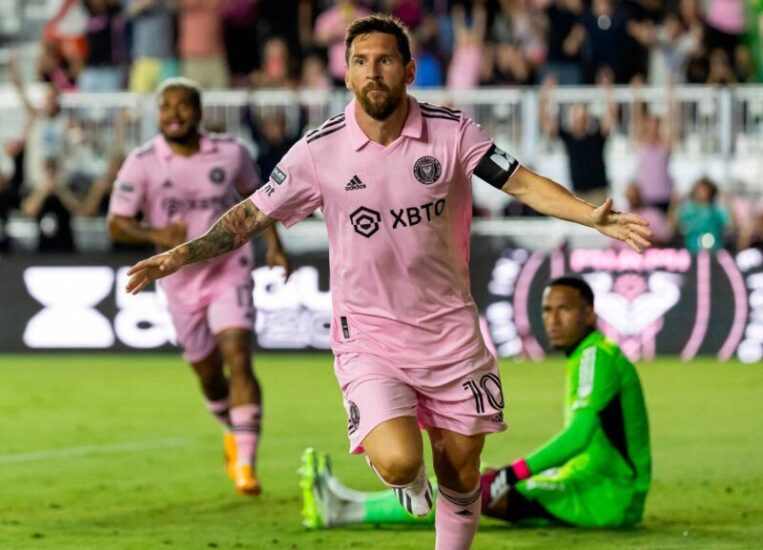
Lionel Messi reached another historic milestone on Sunday night, curling home his 75th career direct free-kick to tally his 930th professional goal during Inter Miami’s pulsating 2-2 draw with San Diego FC.
The 39-year-old Argentine forward stepped up in the 24th minute after drawing a foul outside the penalty area, whipping a trademark left-footed strike off the post past goalkeeper CJ dos Santos to cancel out Anders Dreyer’s early chip for the visitors.
Consequently, the spectacular strike marked Messi’s 101st goal in an Inter Miami shirt, arriving just four days after he surpassed the century mark in a Campeones Cup victory over Mexico’s Cruz Azul and his 20th league goal of the 2026 Major League Soccer campaign.
READ ALSO:
- Lagos Residents Raise Alarm Over Fufu Processing, Preservation Methods
- APC Wins Four of Five By-Elections as APM Takes Bauchi Seat
- Atiku Offers Scholarship to Viral Niger Teen Miner After 37 Miners’ Deaths
Building on that momentum, strike partner Luis Suárez found the net in the 74th minute to hand Miami a 2-1 lead. However, Dreyer struck back for San Diego eight minutes later, capitalizing on defensive space to slot home his second goal of the evening and silence the home crowd.
Ultimately, the late equalizer condemned Inter Miami to their fourth consecutive MLS stalemate, leaving the club on 46 points with a record of 12 wins, four defeats, and 10 draws.
While the shared points frustrated coach and squad alike in the playoff seeding race, Messi continues to defy age, anchoring Miami’s attack and pushing global scoring records to extraordinary heights.
Messi Fires Stunning 75th Career Free-Kick to Reach 930 Goals in Inter Miami Draw
Sports
Enough Is Enough: Muslim Supporters Demand Change of New Man United Owners
Enough Is Enough: Muslim Supporters Demand Change of New Man United Owners
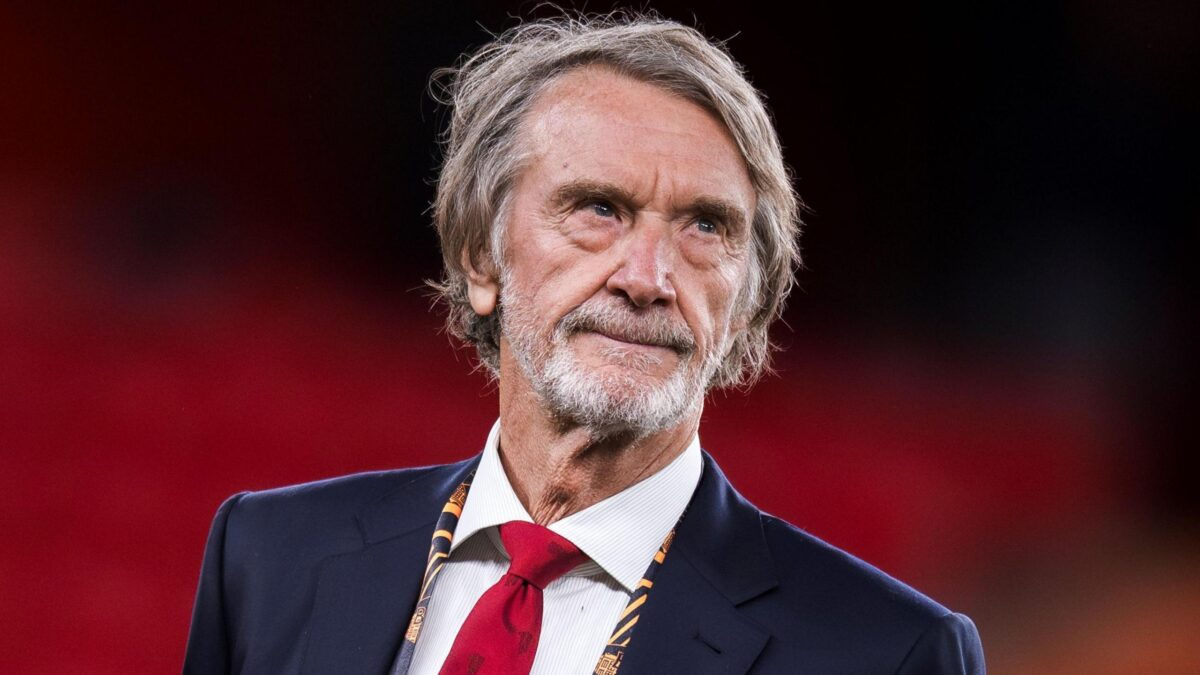
The Manchester United Muslim Supporters’ Club (MUMSC) has called for a change in the ownership of the English Premier League club, demanding that Sir Jim Ratcliffe and the Glazer family leave following fresh comments by the billionaire about immigration, welfare and the state of the United Kingdom.
The supporters’ group issued a strong statement of no confidence in the Manchester United ownership after Ratcliffe, the club’s co-owner and chairman of INEOS, said Britain was “on the slide” and argued that politicians were not being sufficiently tough on immigration and welfare.
Ratcliffe made the comments during a BBC interview in which he discussed Britain’s economic and political challenges. He attributed part of what he sees as the country’s decline to high taxes and immigration and called for politicians to take tougher decisions on immigration and benefits. (The Guardian)
The remarks triggered a fresh response from the Manchester United Muslim Supporters’ Club, which said it had previously hoped Ratcliffe’s apology over earlier immigration comments would mark a change in his approach.
The group said the latest remarks were “deeply disappointing” and “completely unacceptable”, arguing that they were inconsistent with the diverse character of Manchester United.
According to the supporters’ group, the club brings together players, staff, stewards, security personnel and supporters from different countries, cultures, ethnicities, religions and backgrounds.
It said that diversity is not separate from the identity of Manchester United, but is an important part of what the club represents.
The latest dispute follows comments Ratcliffe made earlier in 2026 in which he said Britain had been “colonised by immigrants”. He later apologised for his choice of language and for causing offence.
MUMSC said it had condemned those earlier comments and hoped the apology indicated that a lesson had been learned, but argued that Ratcliffe’s latest remarks showed otherwise.
The supporters’ group also expanded its criticism beyond the billionaire’s comments on immigration, pointing to concerns about Manchester United ticket prices, the condition of Old Trafford, the club’s performances and what it described as repeated unfulfilled promises.
MUMSC said many supporters had initially welcomed Ratcliffe’s arrival because they hoped his investment would bring meaningful change after years under the Glazer family’s ownership.
READ ALSO:
- Stray Bullet Kills 400-Level IBBU Student During Land Dispute in Niger
- Oyo Police: Student Who Died by Suicide Was Charged With Assault, Not ₦8,000 Debt
- Delta Police Intercept Sienna With Military Uniforms, Suspected Drugs
However, the group said its confidence in the current ownership had now been exhausted.
“Enough is enough. It is time for change. The Glazers and Sir Jim Ratcliffe must go,” the group said.
Ratcliffe became a major shareholder in Manchester United in 2024 after his INEOS group acquired a minority stake in the club. The agreement also gave INEOS significant responsibility for football operations, while the Glazer family retained control of the club.
The ownership dispute comes amid a difficult start to the 2026/27 Manchester United season, with results on the pitch adding to the frustration among sections of the supporters.
United were knocked out of the Carabao Cup in the third round after losing 3-2 to Brighton & Hove Albion at Old Trafford despite taking a two-goal lead within the opening 10 minutes.
Teenager Shea Lacey opened the scoring before Mason Mount doubled United’s advantage, but Brighton responded through Charalampos Kostoulas, Pascal Gross and Maxim De Cuyper to complete the comeback.
The defeat ended United’s Carabao Cup campaign at the first hurdle and marked the first time in 50 years that the club had lost at Old Trafford after taking a 2-0 lead. (The Guardian)
Manager Michael Carrick accepted responsibility for the collapse and said the team had to respond quickly by returning to winning football.
The cup defeat followed a 1-0 loss to Manchester City in the Premier League and contributed to a difficult opening period for Carrick’s side. Recent reporting put United 13th in the Premier League after collecting four points from their opening four league matches. (The Guardian)
The football struggles have therefore become another source of tension between sections of the fan base and the club’s leadership, although the MUMSC’s latest statement makes clear that its concerns are broader than results.
The supporters’ group has linked its demand for ownership change at Manchester United to questions about the club’s direction, supporter relations, commercial decisions and its treatment of the diverse community that follows the team.
Ratcliffe’s involvement has already produced significant changes at the club, including restructuring and job cuts, while his decisions on ticketing and other operations have generated criticism from some supporter groups.
His latest comments have now added an additional point of contention, particularly among the Muslim supporters’ group, which says Manchester United’s international and multicultural identity should be reflected in the conduct and public statements of those running the club.
Despite the demand from MUMSC, there has been no indication that Sir Jim Ratcliffe or the Glazer family is preparing to sell their respective interests in Manchester United.
The latest development nevertheless places renewed attention on the relationship between the club’s ownership and its supporters as Manchester United attempts to recover from a difficult start to the new season.
Enough Is Enough: Muslim Supporters Demand Change of New Man United Owners
Sports
Ronaldo Included in Portugal’s Nations League Squad as Jorge Jesus Begins New Era
Ronaldo Included in Portugal’s Nations League Squad as Jorge Jesus Begins New Era
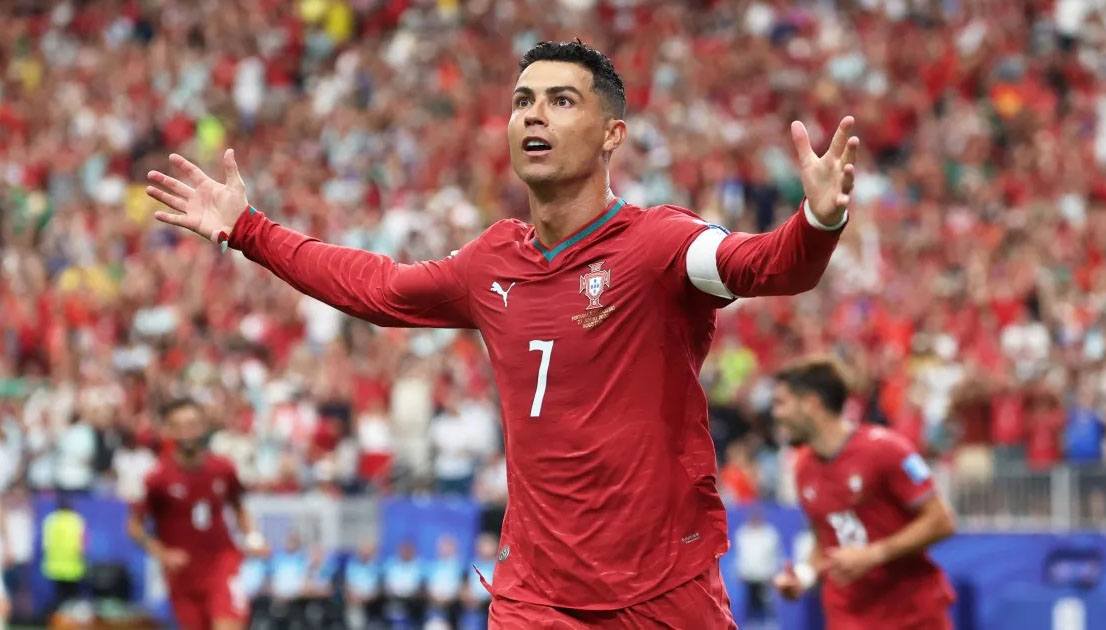
Cristiano Ronaldo has been included in Portugal’s 25-man squad for the opening fixtures of the 2026/27 UEFA Nations League, ending immediate uncertainty over the 41-year-old captain’s continued involvement with the national team.
New Portugal head coach Jorge Jesus named Ronaldo in his first squad on Friday, September 18, as the reigning Nations League champions prepare for four Group A4 matches between September 24 and October 4.
Ronaldo’s selection comes less than three months after the veteran forward confirmed that the 2026 FIFA World Cup would be his final appearance at the tournament.
He has also fuelled wider retirement speculation after saying in August that the coming year would probably be the final season of his professional football career.
However, Ronaldo has not announced his retirement from international football, and his inclusion in Jesus’ first squad confirms that he remains available for Portugal.
The five-time Ballon d’Or winner remains the leading scorer in men’s international football, with 146 goals in 233 appearances for Portugal.
His international career has included victory at Euro 2016 and two UEFA Nations League titles, in 2019 and 2025.
Ronaldo was unable to add the FIFA World Cup trophy to his collection after Portugal were eliminated by Spain in the round of 16 at the 2026 tournament.
The defeat brought his World Cup career to an end after six appearances at the global tournament, but did not immediately mark the end of his Portugal career.
READ ALSO:
- BREAKING: Bloodbath at Pakistan Mosque as Suicide Blast Kills 21, Injures 103
- Xenophobia: FG Brings 33 More Nigerians Home From South Africa
- Falconets Thrash England 3-0, Face Colombia in U-20 World Cup Quarter-Finals
Jesus, who was appointed after Roberto Martinez left the post following Portugal’s World Cup exit, has a previous working relationship with Ronaldo.
The 72-year-old coach managed Ronaldo at Saudi Arabian club Al-Nassr, where they won the Saudi Pro League title during the 2025/26 season.
Jesus, however, has made it clear that Ronaldo’s reputation will not guarantee him a starting place in the new Portugal team.
Discussing the veteran forward’s selection, the coach said performance would determine his decisions.
Jesus said Ronaldo would be treated like the other players when it came to selection, although he acknowledged that the Portugal captain has a different status because of his achievements.
The new coach’s comments underline his intention to maintain competition for places as he begins rebuilding the national team following the World Cup.
Jesus has retained most of the players who featured at the 2026 World Cup, with only a small number of changes to the squad.
Among the players returning to the national team are Joao Palhinha, Nuno Tavares and Fabio Silva, while Benfica goalkeeper Samuel Soares has also been included.
The squad features several of Portugal’s established stars, including Bruno Fernandes, Bernardo Silva, Ruben Dias, Vitinha, Joao Neves, Nuno Mendes, Rafael Leao and Pedro Neto.
Ronaldo is joined in the forward line by Fabio Silva, Francisco Trincao, Francisco Conceicao, Goncalo Ramos, Joao Felix, Pedro Neto and Rafael Leao.
Portugal will begin the new Nations League campaign at home against Wales on September 24 at the Estadio Jose Alvalade in Lisbon.
Jesus will then take his team to Oslo to face Norway on September 27 before Portugal travel to Copenhagen for a meeting with Denmark on October 1.
The four-match sequence will conclude with Portugal hosting Norway at the Estadio do Dragao in Porto on October 4.
The fixtures will provide Jesus with his first competitive tests since replacing Martinez and give him an opportunity to assess his squad ahead of the next phase of Portugal’s international programme.
Portugal enter the competition as the defending UEFA Nations League champions, having defeated Spain on penalties in the 2025 final to win the tournament for the second time.
The team’s previous Nations League triumph came in 2019, when Portugal defeated the Netherlands in the final.
Ronaldo’s selection also keeps alive the possibility of the veteran playing a role in Portugal’s preparations for future competitions, although his long-term international plans remain unclear.
The next major European international tournament will be Euro 2028, by which time Ronaldo will be 43.
For now, however, his immediate focus is the Nations League and the start of the Jorge Jesus era.
Ronaldo is also approaching another major personal milestone.
He has scored 979 official career goals for club and country, leaving him 21 goals short of the 1,000-goal mark.
Jesus was asked about the possibility of Ronaldo reaching the milestone with Portugal but suggested that he expected the forward to achieve it at club level rather than with the national team.
The comment adds another dimension to the relationship between the coach and Portugal’s most prolific international scorer.
Despite Ronaldo’s advancing age and retirement comments, his continued selection means he remains part of Portugal’s plans at the start of the new international cycle.
Jesus has nevertheless stressed that past achievements will not determine who plays, placing the emphasis on current performances.
Portugal’s first test under the new manager will therefore attract considerable attention, with Ronaldo expected to remain one of the central figures as the European champions begin their 2026/27 Nations League defence.
Portugal’s 25-Man Nations League Squad
Goalkeepers: Diogo Costa, Rui Silva, Samuel Soares.
Defenders: Goncalo Inacio, Joao Cancelo, Diogo Dalot, Nuno Tavares, Nuno Mendes, Renato Veiga, Ruben Dias, Tomas Araujo.
Midfielders: Bruno Fernandes, Joao Palhinha, Joao Neves, Ruben Neves, Vitinha, Bernardo Silva.
Forwards: Cristiano Ronaldo, Fabio Silva, Francisco Trincao, Francisco Conceicao, Goncalo Ramos, Joao Felix, Pedro Neto, Rafael Leao.
Ronaldo Included in Portugal’s Nations League Squad as Jorge Jesus Begins New Era
-

 metro2 days ago
Oyo Police: Student Who Died by Suicide Was Charged With Assault, Not ₦8,000 Debt
-

 Entertainment3 days ago
“She Wanted to Stay Single”: Rema Opens Up About Rejection That Inspired Hit Song ‘Oh No’
-

 metro3 days ago
Niger Miners’ Deaths: Families Demand Compensation, Justice for Victims
-

 metro3 days ago
Mambilla: ICC Raises Questions Over $500,000 Payment to Atiku’s Former Wife
-
 International16 hours ago
18 Suspects Transferred to US Over 2021 Killing of Haitian President Moïse
-

 Auto2 days ago
Abuja Demand Rises as Jetour Brings X70 Plus Experience to FCT
-
 Politics2 days ago
2027: NDC Predicts Wider Obi Victory Over Tinubu in Lagos
-
 metro2 days ago
Irreconcilable Developments: Wedding Cancelled 24 Hours Before Ceremony