

Opinion
Farooq Kperogi: Tinubu dramatizes hollowness of Nigeria’s “independence”
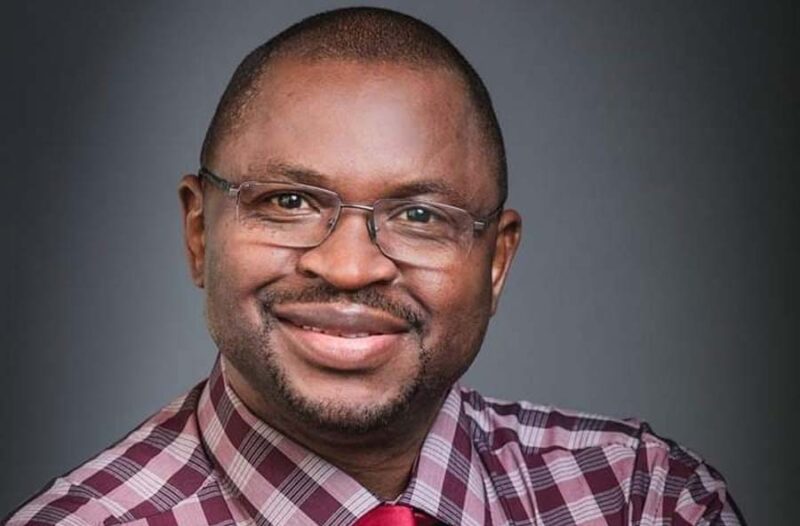
Farooq Kperogi: Tinubu dramatizes hollowness of Nigeria’s “independence”
October 1 is celebrated as Nigeria’s Independence Day. But Nigeria isn’t independent. It is, for all practical purposes, a dependent state, a satellite state, whose political and cultural elites are still tethered to the coattails of colonialism and neocolonialism. Its economy is almost literally run by the World Bank and the IMF, and the older the country gets, the more it seems to tighten the apron strings that tie it to its former colonial overlord.
No one illustrates this contradiction and emotional dissonance more dramatically, not to mention more symbolically, than President Bola Ahmed Tinubu, who chose to depart for the United Kingdom, Nigeria’s former colonizer, for a two-week annual leave just a day after celebrating Nigeria’s so-called 64th independence from British colonialism.
To publicize traveling to rest in a country that colonized you, a day after celebrating freedom from that country’s colonialism is the ultimate national self-ridicule. It’s like a woman throwing a party to celebrate her emancipation from an oppressive relationship with a wild brute, only to show up at her ex-partner’s doorstep the next morning to seek validation.
A president choosing to spend personal time in the country that once colonized his own projects an image of lingering dependence on the former colonial power. It’s an implicit endorsement of the cultural and societal norms of the colonizer over those of the home country and raises questions about national pride and the commitment to fostering domestic tourism and economic growth.
Most world leaders opt to spend their annual leave within their own countries or in neutral locations to support local economies. For instance, former U.S. President Barack Obama often vacationed in the state of Hawaii, his birthplace, while French presidents traditionally spend holidays in French territories. These choices reflect a conscious effort to remain connected with their homeland and to promote its attractions.
Like Muhammadu Buhari before him, Tinubu didn’t find any part of Nigeria worthy of his presidential annual leave. London is worthier of presidential annual leave than any part of Nigeria because these leaders actually disdain Nigeria, which provides the political, social, and cultural basis of their power. That’s such an unrelieved national tragedy.
READ ALSO:
- Obey court order on Rivers LG poll, PDP tells Fubara
- Israeli airstrike cuts off road linking Lebanon, Syria
- Protests: US, UK trying to destroy our relationship with Nigeria – Russia
Nigeria boasts diverse landscapes, rich cultural heritage, and numerous tourist attractions—from the savannahs of the north to the coastal regions of the south, from Yankari Game Reserve in Bauchi to Obudu Ranch Resort in Cross River. By vacationing domestically, the president could spotlight these attractions, boost national tourism and inspire citizens to explore their own country.
It would also send a strong message to potential international tourists (whom this and previous governments seem fixated on attracting) about the safety and appeal of Nigeria as a destination.
But choosing to vacation abroad, particularly in the former colonizing country, redirects personal expenditure away from the domestic economy. While the economic impact of a single individual’s spending might be minimal, the symbolic loss is significant. It suggests a lack of confidence in the nation’s infrastructure, leisure facilities, or security— issues that are within the president’s remit to address and that he claims he is deeply concerned about.
The timing of the trip particularly exacerbates its symbolic dissonance. October 1 is not—or should not be— merely a historical marker; it is—or should be— an annual reaffirmation of Nigeria’s autonomy and identity. Departing for Britain immediately after such a celebration diminishes the day’s significance.
It conveys a message that, despite official rhetoric, the ties to the colonial past remain unsevered on a personal level for the president who should symbolize our national identity and pride.
Leadership everywhere but particularly in transitional, post-colonial countries like Nigeria that are still battling national self-image issues carries the added responsibility of shaping and reinforcing national identity.
The personal choices of presidents often serve as a reflection of their commitment to this role. By engaging in actions that align with national interests and cultural pride, leaders can foster a stronger sense of unity and purpose among the populace.
To be fair to Tinubu, he has signaled from the inchoate stage of his presidency that he wants no truck with national self-pride and that he is a fawning, unapologetic crawler of British colonialism. That was why he pushed the restoration of the discredited, self-humiliating colonial national anthem through the National Assembly with unprecedently breakneck speed.
In my June 1, 2024, column titled “‘New’ National Anthem is National Self-Debasement,” I observed that it’s inexcusable national self-humiliation to discard a home-made national anthem, irrespective of its defects, for one that was made by an imperialist whose influence we’re supposed to be independent of.
READ ALSO:
- FBI seeks EFCC’s assistance to arrest Nigerians over $13m fraud
- 25-year-old man stabs father to death in Lagos
- Amotekun foils 5 kidnap attempts in Ondo, rescues 9 victims
“A country whose symbolic song of independence is inspired, written, and composed by the appendicular remnants of imperialist oppressors of whom the country has supposedly been independent for more than six decades isn’t worthy of its independence. Such a country has lost the moral and philosophical argument for independence and against recolonization,” I wrote.
The national anthem, as an auditory emblem of sovereignty, should carry the weight of our independence and self-fashioning. “Arise, O Compatriots,” whatever its deficiencies, was a product of Nigerian composers who won a national contest in 1978.
The national anthem should be a rallying cry. It should encapsulate the country’s ideals, aspirations, and identity, as espoused by the citizens of the country. Reverting to an anthem with colonial ties is a step backward in Nigeria’s journey toward solidifying its post-colonial identity.
So, it should come as no surprise that a president who so casually and so thoughtlessly discarded a homemade national anthem for one that was composed by a British woman is so enamored of colonial tutelage that he chooses to depart for the country that colonized his country a day after celebrating independence from the colonizer.
I noticed that the usual patriotic fervor that most Nigerians evince on October 1 was noticeably absent this year. Maybe it’s because they can sense the lack of investment in Nigeria’s pride right from the presidency—in addition, of course, to the raging hunger and listlessness in the land.
What’s the point of patriotism and national pride when the president of your country is so ashamed of the country that he is restoring symbols of colonial domination?
I was especially piqued that the official statement announcing his London trip said the president “will use the two weeks as a working vacation and a retreat to reflect on his administration’s economic reforms.” What? Why does he need to go to London to reflect on the death and destruction that his IMF/World Bank economic policies are inflicting on Nigerians?
Nigeria is the theater of destruction. That’s where he should be to reflect on his IMF/World Bank economic policies whose outcome is already foretold—deepening mass poverty, hopelessness, torment, extermination of the middle class, etc.
Maybe Tinubu doesn’t need a vacation anywhere. He only needs to descend from his Olympian presidential height to the streets of Nigeria to see the cries, tears, and blood of everyday folks being crushed by the impossibly ponderous weight of his sadistic economic policies.
Farooq Kperogi: Tinubu dramatizes hollowness of Nigeria’s “independence”
Farooq Kperogi is a renowned columnist and United States-based Professor of Media Studies.









Opinion
2027: Competence, Not Zoning, Should Decide Nigeria’s Next President — Imasuagbon
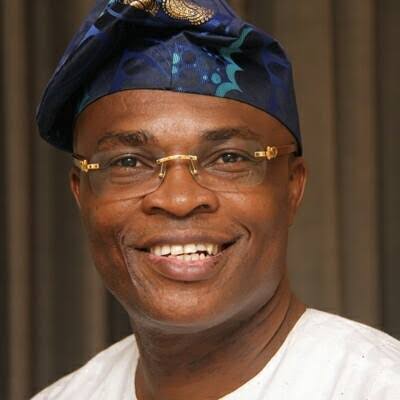
Nigerians should look beyond ethnicity, region and the longstanding debate over rotational presidency when choosing the country’s next leader, according to a chieftain of the African Democratic Congress (ADC), Kenneth Imasuagbon.
The former Edo State governorship aspirant said the priority ahead of the 2027 election should be finding a president with the ability to confront Nigeria’s economic, security and infrastructure challenges.
Speaking to journalists in Benin, Imasuagbon argued that presidential rotation is not a requirement of the Nigerian Constitution and should therefore not outweigh the question of competence.
He said voters should be more concerned about replacing poor schools with better ones, improving healthcare and addressing hardship than debating where the next president comes from.
Imasuagbon specifically appealed to voters in the South to support former Vice President Atiku Abubakar, who is contesting the 2027 presidency on the ADC platform.
According to him, Atiku has demonstrated the experience and determination needed to improve the country, describing the former vice president as someone capable of promoting national unity and fairness.
He also accused the Bola Tinubu administration of worsening economic pressure through policies including the removal of fuel subsidy, while expressing concern about the condition of roads, electricity and other infrastructure.
Imasuagbon argued that the next administration must focus on practical improvements in areas such as power, transportation, employment, security and public services.
The ADC chieftain also dismissed the idea that the ruling All Progressives Congress (APC) would automatically benefit from its incumbency advantage in 2027.
He maintained that the electorate ultimately determines the outcome of an election, arguing that voters could change the political direction of the country if they were determined to do so.
Imasuagbon further criticised what he described as regional and ethnic considerations in the distribution of political appointments and opportunities, insisting that the next president should give Nigerians across different parts of the country a sense of belonging.
His comments come as political parties and their candidates intensify preparations for the 2027 presidential election.
Opinion
Lesson from Dotun Oladipo’s Brave Daughters, by Bamidele Johnson
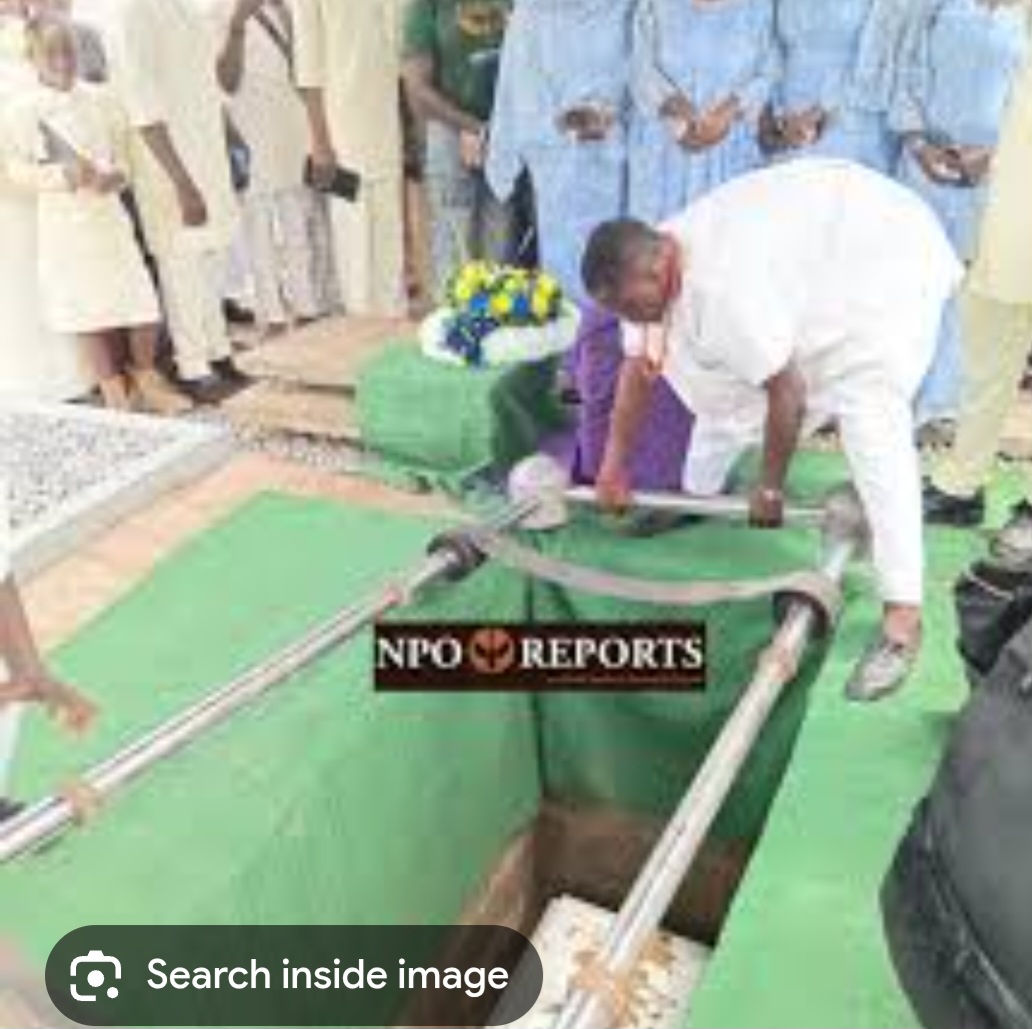
Lesson from Dotun Oladipo’s Brave Daughters, by Bamidele Johnson
I hope to grow old. I want to see my kids become real adults, find their own feet, make mistakes, recover from them, and perhaps one day complain that their own children are giving them grey hairs. I want that plainly stated before anything else, as everything that follows might read as a man agreeing to an early exit rather than a man simply being honest about the odds.
I want the decades. I want to become the grandfather who repeats the same stories until nobody bothers correcting him anymore. But wanting a thing and being granted are different things. The last year has made that difference harder to ignore than I would like. I have lost many friends recently to keep thinking that optimism is my natural resting state. Some of these men had better blood pressure than mine, better habits, better everything that is supposed to count. It did not save them.
There is no formula I know that reliably separates the men who make it to 70 from those who do not. Anyone who says he knows one is selling something. So, I do not assume that old age is an already booked destination. Even if I once did, which I doubt, the last three years have cured me of such an illusion. As such, I treat it as a hope rather than an expectation, and I have found that a more honest way to live.
It is exactly why I want something placed on record now, while I am still able to place things on record, rather than leave it for people to guess what my wishes were in the fog of a funeral week. If I do not make old bones, my children are not to be asked to read tributes at my funeral. Not one line, however short, however lovingly written.
This, for me, was settled today rather than re-opened. At Dotun Oladipo’s funeral service, his three daughters took turns to read their tributes to their dad, and I found myself watching them with awe. There was a kind of strength in them that I do not possess. It is the strength needed to stand in front of a hall brimming with grieving adults and speak about a man they have just lost. Forever. Strength, however, is not the same as ease. I could see plainly what that strength was costing them as they read. Their voices caught. Their composure held and then did not hold and then held again through sheer will.
In front of them, in the pews, men and women considerably older than them came undone in ways the girls themselves were somehow managing to resist. I went mightily close. Some of the sobbing was quiet, the type people try to fold into a handkerchief. Some of it was not quiet at all, the kind that announces itself whether or not you want it.
Those young women honoured their father with a grace that is beyond me. What they did was astonishing. So, what I am attempting is an observation of a custom I have now watched wound people. This was not the first time I had watched this particular ritual extract more than it should from people already running on fumes. I saw an earlier and harder version of it at a friend’s wake back in 2015.
The first son was called forward to read his father’s tribute, and he could not do it. He tried, but the words would not come, and he stood there in front of a crowd of mourners, with his grief simply refusing to organise itself into sentences. The officiating minister, rather than releasing him from the task, urged him to continue. I sat fizzing with sorrow and ire. He could not go on and, eventually, the minister accepted, but not before insisting a while longer than it should have reasonably taken. His younger brother was called up next, presumably on the theory that if one grieving son could not manage it, maybe another one could. He flunked it in the same way. Grief does not distribute itself more conveniently among siblings just because a programme has been printed and needs to be followed.
I have turned that memory over many times since, trying to work out why this part of the rites is treated as mandatory in the first place. I have not found a satisfying answer. Maybe it comes from a belief that a child’s words carry more weight than anyone else’s, which may even be true, but weight is exactly the problem when those carrying it are struggling to hold themselves together with nothing but adrenaline and the fear of dissolving in public.
Maybe it is simply inertia, the reason we still do a hundred things at funerals that nobody can explain the original purpose of. Either way, I have stopped looking for the justification. I no longer think one exists that is good enough to weigh against what I watched happen to that boy in 2015.
So, let this stand as my instruction rather than my preference, the kind of thing I would rather state plainly now than leave for my children to infer later from how uncertain I sound when the subject comes up in passing. If I do not get the old age I am hoping for, my children will not be asked to read a single word over my body. Someone else can speak for me. A friend, a stranger with a steadier voice and a smaller stake in the loss, anyone whose grief will not be quite so total that standing upright becomes almost impossible.
My children, of course, will sit in front and fall apart if that is what the day requires of them, but without the microphone. That, at least, is one small mercy I intend to arrange for them while I am still here to arrange it.
Dotun deserved every bit of the send-off his daughters gave him today, and I suspect he would have been the first to tell them to sit down and let someone else carry the weight for a while. He did not get a say in that, as none of us ever do once we are the ones being spoken of rather than the ones speaking. Rest well, Dotun. You raised three young women whose strength I will not soon forget. That alone says everything worth saying about the man you were.
Opinion
‘Tinubu Will Win Again in 2027’ — Charismatic Bishops’ Secretary
‘Tinubu Will Win Again in 2027’ — Charismatic Bishops’ Secretary
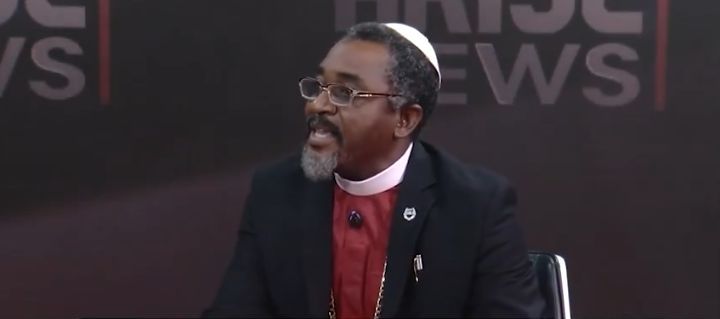
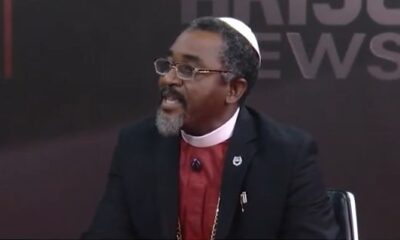
A senior Nigerian cleric, Archbishop Chivir Chianson, has declared that President Bola Tinubu will retain the presidency after the 2027 general election, attributing the prediction to a message he said came from God.
Chianson, who serves as Secretary General of the Charismatic Bishops’ Conference of Nigeria, made the statement while appearing on Arise Television on Saturday.
Rather than basing his prediction on political calculations, the archbishop said his confidence came from what he described as the prophetic role of bishops.
He maintained that the conference had previously spoken about Tinubu’s political future based on what he said was divine revelation and that the President would return for another term.
Chianson also predicted that Tinubu’s performance would improve if he wins the 2027 election.
READ ALSO:
- DSS warns Osun churches, mosques, markets over alleged terrorist attack plot ahead of 2027
- ‘Tinubu Will Win Again in 2027’ — Charismatic Bishops’ Secretary
- Fake miracles, bogus grants: How clerics allegedly fleece Nigerians of millions
Addressing the political opposition, the cleric said the bishops could not be blamed if rival parties failed to unite or organise themselves effectively ahead of the election.
He also sought to clarify the position of the bishops when dealing with government, saying their role in speaking truth to power did not mean they should approach political leaders with hostility or disrespect.
According to him, the Constitution, alongside their religious convictions, should guide how they engage the President and the country.
Chianson said he was sufficiently confident in his prediction to promise that he would return to the Arise TV studio after the 2027 election, when he expects the result to demonstrate that the bishops’ prophecy was correct.
His comments add a religious dimension to the increasingly active political conversation surrounding the 2027 presidential race.
‘Tinubu Will Win Again in 2027’ — Charismatic Bishops’ Secretary
-
 News2 days ago
SERAP Threatens Legal Action Over ₦126bn INEC Electoral Funds
-
 Politics3 days ago
Five Islamic Clerics Abducted After Tinubu Re-Election Prayer At Yari’s Zamfara Residence
-
 Opinion3 days ago
‘Tinubu Will Win Again in 2027’ — Charismatic Bishops’ Secretary
-
 Politics1 day ago
2027: Northern Lecturers Back Tinubu, ASUU Disowns Endorsement
-

 metro2 days ago
Mother ‘sold daughter’s abuse videos for $300’: Nigeria child pornography case shocks nation
-

 Sports3 days ago
‘Unacceptable’ — Arteta Furious Over Sunderland Penalty in Arsenal Win
-

 News2 days ago
Petrol Subsidy: Presidency Rejects Atiku’s Plan, Says No Going Back
-
 News2 days ago
Nwifuru Dismisses Cubana Chief Priest as ‘Attention-Seeker’