
Business
IMF Mission asks FG to remove fuel, electricity subsidies
The International Monetary Fund (IMF) Article IV Staff Mission has advised the President Muhammadu Buhari administration to completely discard with fuel and electricity subsidies in Nigeria.
This formed the highlight of the concluding statement of the Article IV staff Mission to Nigeria, released yesterday.
It said, “The complete removal of regressive fuel and electricity subsidies is a near-term priority, combined with adequate compensatory measures for the poor.
“The mission stressed the need to fully remove fuel subsidies and move to a market-based pricing mechanism in early 2022 as stipulated in the 2021 Petroleum Industry Act.
“In addition, the implementation of cost-reflective electricity tariffs as of January 2022 should not be delayed.”
The staff, however, called for a “Well-targeted social assistance” to cushion negative impacts on the poor particularly in light of still elevated inflation.
While projecting a fiscal deficit of as wide as 6.3 per cent of the Gross Domestic Product (GDP), the mission also advised the federal government to implement revenue-based fiscal consolidation.
READ ALSO:
- Gunmen kidnap ex-Imo deputy governor’s father
- 7 female Maulud celebrants drown as boat capsizes in Jigawa
- EndSARS: Controversy as panel members, govt clash over alleged technicalities, discrepancies in report
“The headline fiscal deficit is projected to worsen in the near term and remain elevated over the medium term.
“Despite much higher oil prices, the general government fiscal deficit is projected to widen in 2021 to 6.3 percent of GDP, reflecting implicit fuel subsidies and higher security spending, and remain at that level in 2022. There are significant downside risks to the near-term fiscal outlook from the ongoing pandemic, weak security situation and spending pressures associated with the electoral cycle.
“Over the medium term, without bold revenue mobilization efforts, fiscal deficits are projected to stay elevated above the pre-pandemic levels with public debt increasing to 43 percent in 2026.
“General government interest payments are expected to remain high as a share of revenues making the fiscal position highly vulnerable to real interest rate shocks and dependent on central bank financing,” the mission warned.
On the foreign exchange situation in the country, the staff observed that continued reliance on administrative measures to address persistent foreign exchange shortages was negatively impacting confidence. “The mission welcomed steps taken toward unification of the exchange rate and stressed the need for further actions. The discontinuation of the official exchange rate is a step in the right direction but continued dependence on administrative measures to address FX shortages sustains uncertainties and increases the risks of a sudden and large adjustment in the exchange rate.
READ ALSO:
- BREAKING: Hilton Hotel owner, Adedoyin, speaks from detention, says ‘I know nothing about OAU student’s death’
- N32bn debt: I’ll soon take over GTB, says Innoson boss
- BREAKING: Boko Haram kidnap 22 girls in Rafi, Niger for marriage
“Taking advantage of the favorable global conditions, improving current account and robust oil prices, the mission advised a move to a unified and market-clearing exchange rate without further delays. To preserve competitiveness, any exchange rate adjustment should be accompanied by clear communications regarding exchange rate policy going forward, macroeconomic policies to contain inflation and structural policies to facilitate new investment”
According to the mission “manufacturing and oil sectors remain weak, reflecting continued foreign exchange shortages, and security and technical challenges.”
The mission warned of significant downside risks to the near-term outlook arising from the uncertain course of the pandemic and the domestic security situation.
It added, “In the medium term, there are upside risks from faster-than-expected reaching of the Dangote refinery’s production capacity along with effective implementation of the 2021 Petroleum Industry Act in terms of higher manufacturing production and investment in the oil sector.”
On debt, the staff said that significant additional domestic revenue mobilization was critical to put the public debt and debt-servicing capacity on a sustainable path.
The mission advised, “The near-term priorities are to implement e-customs reforms including efficient procedures and controls, developing a VAT Compliance Improvement Program, improving compliance across large, medium, and micro/small taxpayers and rationalizing tax incentives and customs duty waivers.
“As the recovery gains strength and compliance improves, Nigeria will have to adopt tax rates comparable to its peers in the Economic Community of West African States (ECOWAS) to raise revenues to levels targeted in the 2021-25 National Development Plan.
READ ALSO:
- Troops kill 11 ISWAP terrorists in Borno
- Breaking: Reprive as railway workers call off strike
- Buhari to Igbo Leaders: I’ll consider your demand for Nnamdi Kanu’s release, but…
“The cumulative net savings from the recommended measures, after making room for additional social assistance to cushion impacts of reforms, could amount to 5.1 percent of GDP over 2022-26. Such a consolidation would keep public debt below 40 percent of GDP and reduce dependence on central bank financing of the deficit.”
The team welcomed the recent passage of the Petroleum Industry Act (PIA) and stressed its timely implementation, while expressing optimism that it would boost investment in the sector.
The Staff Mission Statement position requires management approval which would be presented to the Executive Board and approved before it becomes the position of the IMF.
Vanguard










Business
Naira Strengthens to ₦1,359.31/$ as CBN Data Shows Further Gain in Official Market
Naira Strengthens to ₦1,359.31/$ as CBN Data Shows Further Gain in Official Market
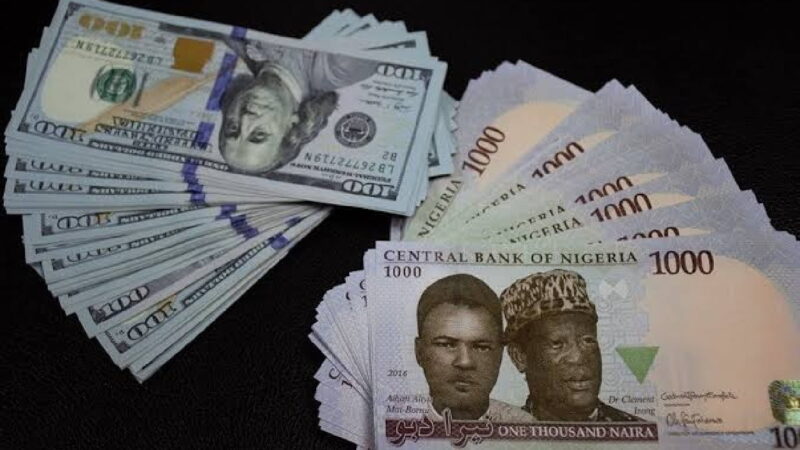
The Naira continued its positive performance on Thursday, appreciating further in the official foreign exchange market to close at ₦1,359.31 per US dollar, according to data published by the Central Bank of Nigeria (CBN).
The latest figure represents an improvement of ₦12.50 compared to the previous trading day, reflecting a 0.9 percent gain from Wednesday’s closing rate of ₦1,371.82/$.
The appreciation highlights continued stability in the official foreign exchange window, where recent policy measures have helped improve liquidity and reduce pressure on the local currency.
Market analysts attribute the naira’s relative strength to ongoing foreign exchange reforms by the CBN, increased dollar supply in official channels, and tighter regulation aimed at narrowing the gap between official and parallel market rates.
READ ALSO:
- Nigeria May Face ₦2,000 Petrol Price Without Intervention, TUC Warns FG
- US Embassy Suspends Abuja Visa Appointments Over Security Concerns
- ADC Crisis: Mark-Led Faction Sues INEC Over Party Leadership Removal
The CBN has in recent months intensified efforts to stabilise the currency through measures such as improved FX market transparency, better coordination with market participants, and steps to attract foreign portfolio inflows.
Despite the gains in the official market, traders note that the parallel market remains more volatile, with rates still influenced by strong demand for foreign currency from importers, travellers, and businesses outside official allocation channels.
Economists say the recent appreciation could help ease short-term inflationary pressure, particularly on imported goods, fuel pricing, and manufacturing inputs, although they caution that sustained stability will depend on broader macroeconomic fundamentals.
These include stronger foreign reserves, improved export earnings—especially from crude oil—and continued investor confidence in Nigeria’s economic policy direction.
The naira’s performance also comes amid renewed attention on Nigeria’s broader economic outlook, with stakeholders closely monitoring the impact of monetary tightening and ongoing fiscal reforms.
As of the latest trading sessions, market participants expect the CBN to maintain its current policy stance in the near term as it works to consolidate recent gains in the foreign exchange market in Nigeria.
Naira Strengthens to ₦1,359.31/$ as CBN Data Shows Further Gain in Official Market
Business
Nigeria May Face ₦2,000 Petrol Price Without Intervention, TUC Warns FG
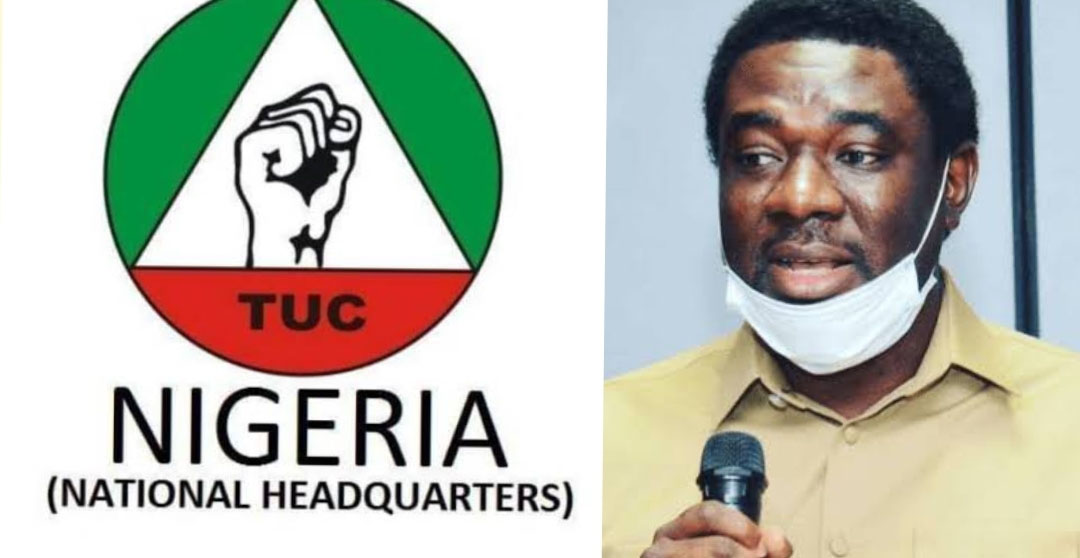
TUC Warns Petrol May Hit ₦2,000/Litre, Proposes Crude Revenue Subsidy Plan to FG
DETAILS:
The Trade Union Congress of Nigeria (TUC) has warned that petrol prices in Nigeria could rise to as high as ₦2,000 per litre if urgent economic measures are not introduced to stabilise the country’s energy and currency markets.
TUC President, Festus Osifo, issued the warning during a press briefing in Abuja, citing the combined impact of rising global crude oil prices and continued depreciation of the naira as major drivers of worsening fuel costs.
Osifo said Nigerian workers are already under severe economic pressure, noting that in some parts of the country, fuel pump prices are already approaching the ₦2,000 threshold due to market volatility and transportation differentials.
He explained that the 2026 national budget benchmarked crude oil at about $64.85 per barrel, while current international prices hover around $100 per barrel, creating what he described as significant “excess revenue” for the government.
The TUC is proposing that the Federal Government allocate about 60% of this excess crude revenue to support local production by subsidising crude supply to domestic refineries, including the Dangote Refinery and other modular refineries.
According to Osifo, this approach would be more transparent and harder to manipulate than the previous fuel subsidy regime, while also helping to reduce the cost of petrol, diesel, and aviation fuel within a short period.
READ ALSO:
- US Embassy Suspends Abuja Visa Appointments Over Security Concerns
- ADC Crisis: Mark-Led Faction Sues INEC Over Party Leadership Removal
- Dangote Sugar Warns Staff Over Chewing Sugarcane, Threatens Arrest
He argued that targeted support at the refinery level could reduce pump prices within two weeks if implemented, stressing that the current cost structure is unsustainable for households and businesses.
The TUC president also criticised the slow expansion of Compressed Natural Gas (CNG) infrastructure, noting that although CNG adoption is being promoted as an alternative to petrol, the absence of refuelling stations along major highways limits its practicality for long-distance transport.
Beyond economic issues, Osifo also raised concerns over worsening insecurity in parts of the country, particularly recent killings in Plateau State, urging the government to strengthen military response capabilities with modern technology and intelligence tools.
He warned that failure to address rising fuel costs could reverse recent gains in inflation control, arguing that high petrol prices directly impact inflation, transport fares, and food costs across Nigeria.
Osifo further suggested that the naira’s fair value should ideally be within the ₦800–₦900 per dollar range to ease pressure on fuel pricing and broader economic stability.
The TUC stated that it will formally present its proposal to the Federal Government ahead of upcoming federation revenue distributions, insisting that urgent intervention is necessary to prevent further economic hardship.
As of the time of filing this report, the Federal Government has not issued an official response to the proposal or the ₦2,000-per-litre warning.
Nigeria May Face ₦2,000 Petrol Price Without Intervention, TUC Warns FG
Business
Dangote Sugar Warns Staff Over Chewing Sugarcane, Threatens Arrest
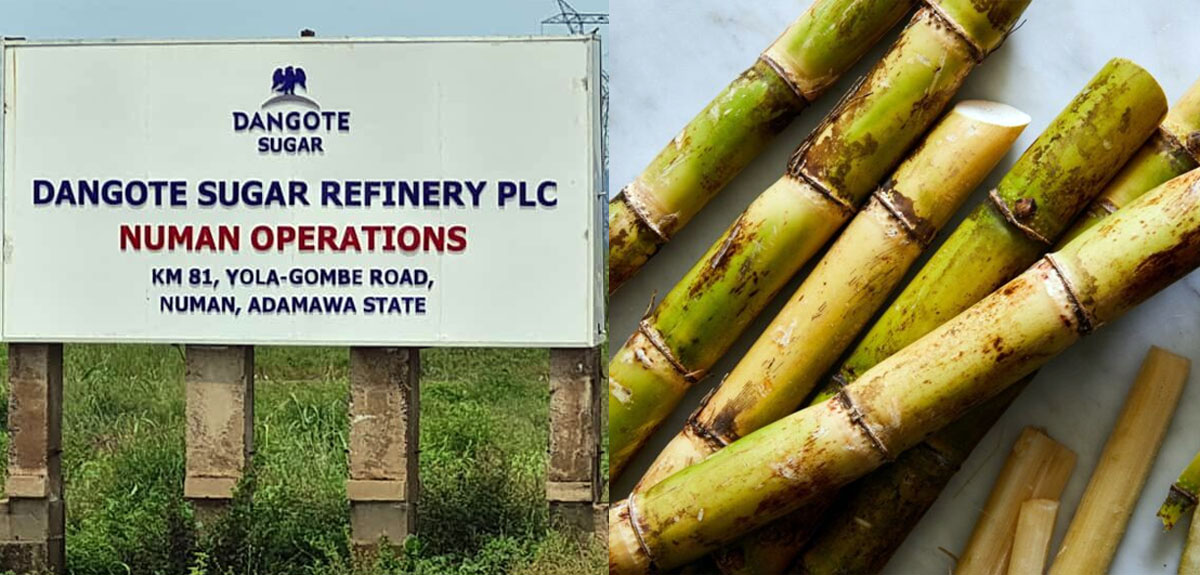
Dangote Sugar Warns Staff Over Chewing Sugarcane, Threatens Arrest
Dangote Sugar Refinery Plc has issued a stern and final warning to employees at its Numan operations in Numan, banning the chewing of company sugarcane within its premises and threatening severe disciplinary actions, including arrest and prosecution, for defaulters.
The directive, contained in an internal memo dated April 7, 2026, and signed by the Head of Human Resources, Ikechukwu Okorie, categorised the act as “gross misconduct”. The company stressed that any staff caught engaging in the practice risks summary disciplinary measures, which may extend to legal consequences.
According to the memo, the sugarcane cultivated and processed at the facility is a valuable company asset, and unauthorised consumption amounts to misuse of resources. Management noted that beyond the economic implications, the habit of chewing cane and discarding chaff indiscriminately undermines hygiene and sanitation standards required in a food processing environment.
The circular further emphasised that maintaining strict housekeeping is critical to operations at the Numan plant, warning that littering the premises with cane residue violates established workplace standards. As part of enforcement, security personnel have been placed on high alert and directed to apprehend any employee found violating the directive, with offenders facing both internal disciplinary action and possible prosecution aimed at recovering losses.
READ ALSO:
- Jetour set to ignite Lagos with four-day automotive experience
- Making Up for Lost Sleep Might Be Healthier Than Experts Once Believed — What Science Says
- Sleeping Positions: How They Affect Your Health and Which Ones to Avoid
The strongly worded memo ended with a clear warning — “BE WARNED FOR THE LAST TIME!!!” — underscoring the company’s zero-tolerance stance on the issue.
The development comes amid ongoing expansion efforts by Dangote Sugar, particularly under its backward integration programme designed to boost local sugar production. The company is scaling up operations through large-scale cultivation and processing projects across multiple states.
As part of its broader financial strategy, Dangote Sugar recently announced a proposed ₦500 billion rights issue to reduce debt, strengthen its balance sheet, and fund expansion projects. These include upgrades at its Numan facility and new developments in Nasarawa State and Taraba State.
Since the memo surfaced online, it has sparked mixed reactions on social media, with some supporting the company’s strict stance on discipline and hygiene, while others consider the threat of arrest excessive for what appears to be a minor infraction. As of the time of filing this report, the company has not released an official public statement addressing the leaked circular.
Dangote Sugar Warns Staff Over Chewing Sugarcane, Threatens Arrest

-

 metro3 days ago
FG Deports US Missionary Alex Barbir Over Alleged Role in Nigeria Insecurity
-

 Entertainment3 days ago
Veteran Nollywood Actor Davis Ofor ‘Clarus’ of New Masquerade Dies at 85
-

 metro2 days ago
2026 NYSC Batch A Stream II: Registration, Swearing-In Dates Announced
-
 Africa19 hours ago
ECOWAS Recruitment 2026: Over 30 Job Vacancies Open for Nigerians (How to Apply)
-
 metro3 days ago
Lagos Announces Partial Road Closures for Project Commissioning
-

 Entertainment2 days ago
Saheed Osupa Defends Juju Use Amid Backlash From Islamic Clerics
-

 Politics24 hours ago
Court Stops ADC Congress, Orders Status Quo in Leadership Row
-
 News3 days ago
Iran Lists Tough Conditions for Peace Talks with US