
Politics
INEC to spend N305b on 2023 polls

The Independent National Electoral Commission (INEC) yesterday disclosed that it has received N100 billion out of the N305 billion it proposed for the conduct of the 2023 general elections.
INEC said President Muhammadu Buhari’s refusal to sign the Electoral Act (amendment) Bill would not hamper its activities as an electoral umpire.
It also said it “will never reward bad behaviour’’ by conducting a by-election in Ekiti East State Constituency before the June 2023 governorship election in the state.
INEC Chairman Mahmood Yakubu defended the agency’s proposed N305 billion budget for the general elections before the Senate Committee on Appropriation in Abuja.
The Chairman of the Senate Committee on Appropriation, Barau Jibrin, assured that the 2022 federal Appropriation Bill will be passed today.
Yakubu attributed his inability to defend the budget proposal last week to an official engagement outside the country.
READ ALSO:
- Presidency replies PDP, defends Buhari’s visit to Lagos
- Love in NYSC camp: Falana’s wife writes army over female soldier’s detention
- Nine hydropower projects to add 2,672MW to national grid – FG
He said: “We thank the committee and by extension, the Senate, for all the proactive measures taken, including some of the provisions in the Electoral Act (amendment) Bill, particularly Section 3, which you have strengthened to grant better financial autonomy for the commission.
“I also thank you for the provision in the bill for ensuring that funds are released to the commission, at least, one year to the elections.
“We made a submission for the sum of N305billion for the 2023 general elections.
“We made the submission on the basis of the N100billion as one line item, N40billion regular budget, and the 2022 Appropriation Bill, and then, there is the outstanding N205billion.
“What we have done is to look at the activities that we have to conduct before the general elections. There are activities that must be concluded.
“For instance, if you are going to replace some of the critical facilities like ballot boxes and voting cubicles, these things must be done before the election.
“Party primaries must be conducted and concluded before the election and names of candidates submitted, registration of voters would have to be concluded before the election.
“Printing of the permanent voter’s card would have to be concluded before the election and then some of the critical election technology for the 2023 general elections must be concluded and procured before the election.
“There are activities that we have to undertake during the elections, for instance, engagement for the transporters for electoral logistics. We can’t engage them in advance, it has to be close to the election.
READ ALSO:
- APC primaries: Andy Uba’ll appeal court judgment — Campaign organisation
- 45 farmers killed, 5,000 displaced in Nasarawa
- Omicron, Delta increase COVID-19 cases in Nigeria by 500% in 2 weeks – NCDC
“Payment of ad hoc staff, we can’t engage ad hoc staff and pay them long after the election, it has to be during the election.”
“In submitting the executive proposal to the National Assembly, the sum of N140billion was made available to INEC as a one-line item in the budget.
“The N140billion was broken into two, we take it that N40billion is our regular budget as an agency of government and N100billion was the first tranche of the 2022 budget and we have gone ahead to make provisions accordingly.
“It may interest the committee to know that we have eight bye-elections pending (three federal constituencies and five state constituencies.
“In fact, the last vacancy occurred only last Wednesday following the death of a member that represented Jiwa West State Constituency in Kaduna State. We have other by-elections pending. We hope that these elections will hold as soon as we resume in the new year.”
*Ekiti, Osun party primaries hold Jan, Feb
Party primaries in Ekiti and Osun states will hold in January and February next year, the Independent National Electoral Commission(INEC) has announced.
The governorship election in Ekiti is scheduled for June and that of Osun will take place in August next year.
READ ALSO:
- Armed thugs attack OAU VC, others in Ile Ife
- NRC releases updated Lagos-Ibadan train schedule, adds more trains for Yuletide
- Amended electoral act: Buhari withholds assent over imposed direct primary
INEC Chairman Mahmood Yakubu, who spoke yesterday in Abuja, also said the Ekiti East State Constituency by-election would hold the same period as the governorship poll.
Yakubu said: “Ekiti governorship election is holding in June. But, in about two weeks, party primaries for the state will commence beginning from January 1 to 29 next year. The primaries for Osun State will be in February.
“Elections are held all year round, there is no longer election season in Nigeria. Elections are held all year round as the need arises.”
He lamented that INEC had tried four times to hold the by-election in Ekiti East State Constituency without success.
He recalled that in the last attempt, voters, security operatives, and electoral officers lost their lives at polling units.
Yakubu added: “INEC will never reward bad behaviour. The election can only be repeated in June next year during the gubernatorial election.”
The Nation








Politics
BREAKING: Tambuwal Quits PDP, Defects to ADC Amid Internal Party Crisis

BREAKING: Tambuwal Quits PDP, Defects to ADC Amid Internal Party Crisis
Senator Aminu Waziri Tambuwal, former Speaker of the House of Representatives and ex‑Governor of Sokoto State, has formally resigned from the Peoples Democratic Party (PDP) and joined the African Democratic Congress (ADC), citing persistent internal crisis, leadership disagreements, and deepening divisions as reasons for his departure.
Tambuwal made the announcement on social media platform X on Thursday, confirming that he had communicated his resignation in writing to his ward chairman before officially enlisting in the ADC along with close associates and supporters. “Today, after deep reflection and consultations, I have formally resigned my membership of the Peoples Democratic Party, and I have communicated my resignation to my ward chairman in writing,” he stated.
While acknowledging the PDP’s historical role in shaping his political career — which includes two terms as Governor of Sokoto State and a tenure as Speaker of the House of Representatives — Tambuwal said the party’s internal deterioration made continued membership untenable. “The persistent internal crisis, leadership disagreements, and growing divisions within the PDP have made it increasingly difficult to continue my membership of the party. These developments have unfortunately weakened the unity and direction that once defined the party and have necessitated this decision,” he added.
READ ALSO:
- UN Condemns Iran’s Attacks on Gulf States, Jordan as Russia, China Abstain
- Iran Warns Oil Could Hit $200, Threatens Strait of Hormuz Blockade
- US Warns Russia, China: ‘You’re Playing With Fire’ Over Iran Support
Explaining his choice of the ADC, Tambuwal expressed confidence in the party as a platform for democratic progress, integrity, accountability, and inclusive governance in Nigeria. “I am convinced that this decision is guided by my belief that Nigeria needs a stronger political platform built on integrity, accountability, inclusiveness, and a clear commitment to national development,” he said, reaffirming his dedication to democracy, justice, and national unity.
Tambuwal’s defection comes amid a series of high-profile defections from the PDP, including lawmakers and political leaders who have left the party over leadership disputes and factional disagreements. Analysts note that his move strengthens the ADC’s position as a credible opposition platform ahead of the 2027 general elections, particularly in northern Nigeria where Tambuwal wields significant influence.
The shift also underscores the deepening crisis within the PDP, which has faced repeated defections and legal battles over party leadership. Political observers say Tambuwal’s exit could influence other politicians and voters dissatisfied with the PDP’s internal divisions, reshaping Nigeria’s political landscape in the run-up to the next elections.
BREAKING: Tambuwal Quits PDP, Defects to ADC Amid Internal Party Crisis
Politics
Four Reps Members Defect from PDP, LP to APC
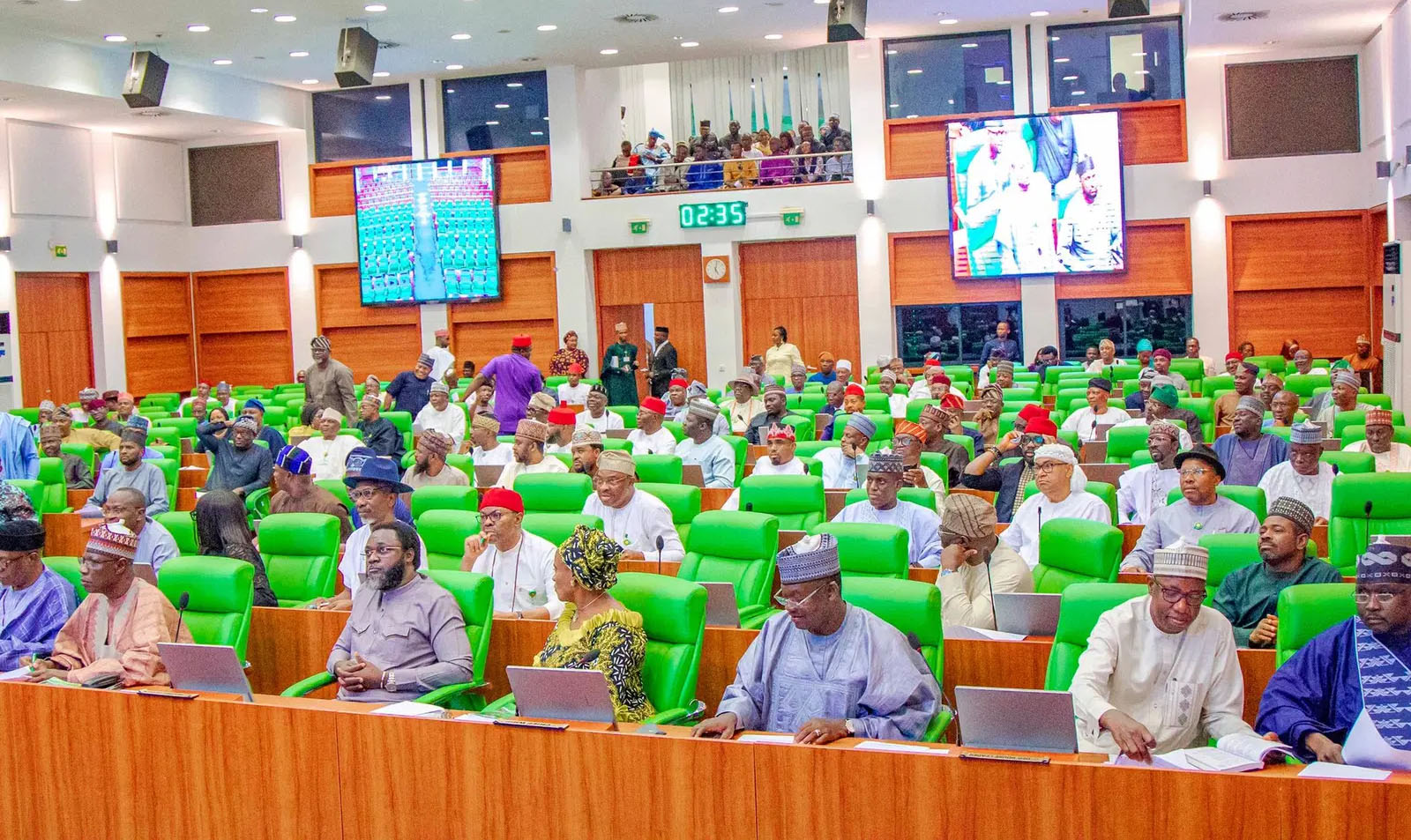
Four Reps Members Defect from PDP, LP to APC
Four members of the House of Representatives have defected from the Peoples Democratic Party (PDP) and the Labour Party (LP) to the ruling All Progressives Congress (APC), in a development that further strengthens the governing party’s presence in the National Assembly.
The lawmakers who announced their defection during plenary are Inuwa Garuba, representing Yamaltu/Deba Federal Constituency of Gombe State; Abdullahi El-Rasheed, who represents Dukku/Nafada Federal Constituency, also in Gombe State; and Mohammed Audu, representing Karim Lamido/Lau/Ardo-Kola Federal Constituency of Taraba State. The three lawmakers were elected on the platform of the PDP but have now aligned with the APC.
A fourth lawmaker elected on the platform of the Labour Party also joined the APC, citing political realignment and the need to better serve constituents, although details of the defection were still emerging at the time of filing this report.
The defections were formally communicated to the House leadership during plenary presided over by the Speaker, Tajudeen Abbas, who read the letters submitted by the affected lawmakers.
In their letters, the lawmakers cited internal crises within their former parties and the need to align politically with developments in their states as key reasons for their decision to move to the APC. They also said joining the ruling party would enable them to attract more federal projects and development initiatives to their constituencies. Political observers note that similar reasons have often been cited by lawmakers who change political parties.
READ ALSO:
- Nigerian Midfielder Daniel Daga Jailed in Norway for Sexual Assault
- Quack Doctor Sentenced to Death for Murder in Ekiti
- Galatasaray Beat Liverpool 1–0 in Champions League Last‑16 First Leg
The defections sparked mixed reactions within the chamber. While APC lawmakers welcomed the new members, some opposition legislators expressed concern over the growing trend of defections in the National Assembly. According to them, frequent cross-carpeting weakens party ideology and undermines the mandate given to political parties by voters during elections. However, supporters of the defecting lawmakers argued that the Nigerian constitution allows lawmakers to change parties, particularly when there are divisions or crises within their original platforms.
The latest defections add to a series of political realignments that have taken place within the National Assembly since the inauguration of the 10th Assembly in 2023. The APC, which controls the executive arm of government under President Bola Ahmed Tinubu, has continued to attract lawmakers from opposition parties. In recent weeks, some senators elected on the PDP platform also defected to the APC, reflecting shifting political alliances ahead of future elections.
Political analysts say the development could further strengthen the APC’s numerical advantage in the National Assembly, making it easier for the ruling party to pass government-backed legislation. However, critics warn that the weakening of opposition parties may reduce the level of debate and oversight expected in a vibrant democratic system. With political activities gradually intensifying ahead of the next electoral cycle, observers believe more defections could occur as politicians reposition themselves within Nigeria’s political landscape.
Four Reps Members Defect from PDP, LP to APC
Politics
BREAKING: Three PDP Senators Defect to APC
BREAKING: Three PDP Senators Defect to APC
Three senators elected on the platform of the Peoples Democratic Party (PDP) on Wednesday announced their defection to the ruling All Progressives Congress (APC).
The lawmakers—Amos Yohanna, Aminu Abbas, and Ikra Bilbis—formally declared their exit from the opposition party during plenary at the Nigerian Senate.
Yohanna represents Adamawa North Senatorial District, Abbas represents Adamawa Central Senatorial District, while Bilbis represents Zamfara North Senatorial District.
READ ALSO:
- Nigerian Midfielder Daniel Daga Jailed in Norway for Sexual Assault
- Quack Doctor Sentenced to Death for Murder in Ekiti
- Galatasaray Beat Liverpool 1–0 in Champions League Last‑16 First Leg
Their defection letters were read on the floor of the Senate by the Senate leadership, informing lawmakers of their decision to join the APC.
Although detailed reasons for the defections were not immediately made public, such political movements in Nigeria are often attributed to internal disputes within parties, political realignments, or strategic positioning ahead of future electoral contests.
The development is expected to further consolidate the numerical strength of the APC in the Senate, where the ruling party already holds a majority.
Observers say the move could also have implications for the political landscape in Adamawa and Zamfara states, where party loyalties and alignments continue to evolve ahead of the next election cycle.
BREAKING: Three PDP Senators Defect to APC

-

 metro19 hours ago
Ikeja Electric Apologises to Customers Over Power Disruptions
-

 Business2 days ago
JUST IN: Dangote Refinery Cuts Petrol, Diesel Ex-Depot Prices Amid Market Relief
-
 News1 day ago
India, Other Countries Reject Tinubu’s Ambassadorial Nominees
-

 Politics3 days ago
BREAKING: Zamfara Governor Dauda Lawal Defects from PDP to APC
-
 News3 days ago
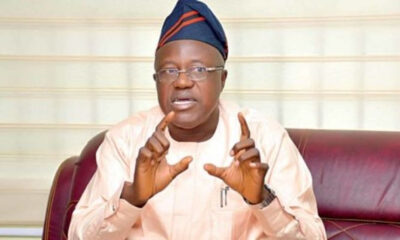
OYOSUBEB Chairman Adeniran Joins 2027 Oyo Governorship Race
-

 Business2 days ago
Middle East Crisis Pushes Petrol Price to N1,300 Per Litre in Nigeria
-

 International1 day ago
Iran Rejects Ceasefire as Explosions Rock Tehran
-

 News19 hours ago
Iran Rules Out Participation in 2026 FIFA World Cup