Politics
We’re not investigating Tinubu, says INEC
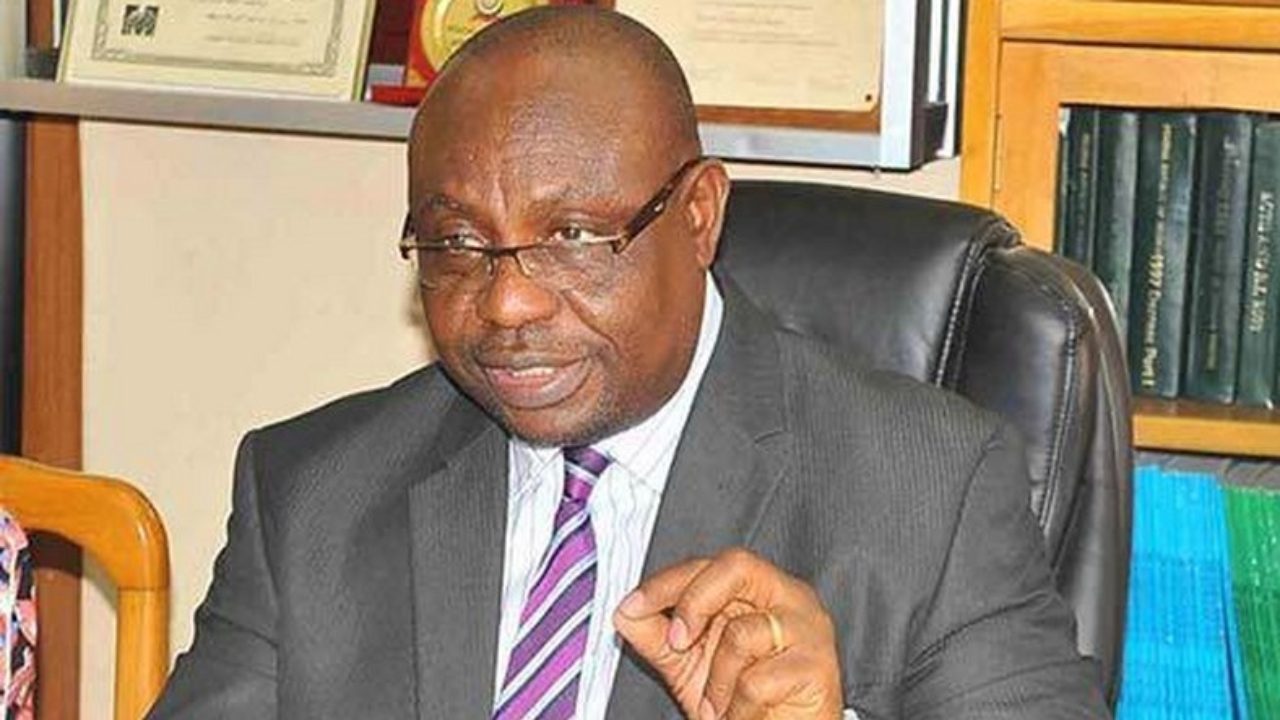
The Independent National Electoral Commission (INEC) has dismissed reports that it is investigating one of the presidential candidates over criminal conviction.
A press release purportedly issued by INEC claimed that the commission was investigating a case of criminal forfeiture against the All Progressives Congress (APC) presidential candidate, Asiwaju Bola Ahmed Tinubu.
But the commission in a statement by the Chairman Information and Voter Education Committee, Festus Okoye, urged the public to ignore the viral press statement.
READ ALSO:
- We Are Not Recruiting, Avoid Fraudsters, WAEC Warns
- UK hails Russian ‘strategic failure’ in Ukraine
- Obi cautions supporters, LP candidates against insulting others
“It claims that the commission has commenced investigation into a case of criminal forfeiture against one of the presidential candidates in the forthcoming general election and is liaising with a court in the United States of America in pursuit of the same to determine possible violation of our guidelines or the Electoral Act 2022.
“We wish to state categorically that the said press release did not emanate from the commission nor is it pursuing the purported course of action. It is the handiwork of mischief makers and utterly fake.
“Press releases from the commission are uploaded to the INEC Press Corps platform and simultaneously disseminated through our website and official social media handles.
“The public is advised to ignore the press release.”
![]()
Politics
Two Logos, One Party: NDC’s Identity Crisis Deepens Ahead of Elections
ABUJA, NIGERIA – A finding conducted by Tribune Online has revealed inconsistencies in the use of the official logo of the Nigerian Democratic Congress (NDC) , with noticeable differences between the version displayed on the Independent National Electoral Commission (INEC) platform and those currently in circulation across media and campaign spaces . The review indicates that while one version of the NDC logo is hosted on INEC’s official platform as the recognised party symbol, a different version continues to appear widely in public-facing materials, including media publications and campaign-related visuals .
The discrepancy raises questions about standardisation of party identity , particularly in an electoral environment where visual symbols play a central role in voter recognition and ballot identification. In electoral practice, party logos often serve as key identifiers for voters, especially for individuals with limited political literacy or those encountering party materials for the first time. Any variation in such symbols, therefore, introduces the possibility of confusion during elections . One of the notable descriptions referenced in the course of the findings captured the concern succinctly: “What’s on the INEC platform is different from what is generally in use. This is where confusion will set in, especially with people who have zero idea about the popular logo in the media,” an X user with the handle @AnazaHerbert wrote . The inconsistency suggests a gap between the officially registered party symbol and its public usage, pointing to the need for closer alignment between both versions to ensure uniform recognition. At present, both versions remain in circulation ahead of future electoral activities, with the disparity yet to be formally addressed .
The NDC, which officially received its certificate of registration from INEC in February 2026 , has had a tortuous journey to registration that dates back to 2017 . According to the party’s National Leader and former Bayelsa State Governor, Senator Seriake Dickson , the NDC was among 171 political organisations that initially applied for registration . However, the process stalled when INEC, under its former chairman Prof. Mahmood Yakubu, suspended the registration of new political parties . When INEC later lifted the embargo, the NDC revived its application and was listed alongside the other associations. However, the party received a letter from INEC stating that its application was declined because its proposed logo—a two-finger sign —was similar to that of the All Progressives Congress (APC) broom . Dickson described the decision as shocking and unjust, noting that the party even offered to change the logo but was denied the opportunity.
READ ALSO:
- Troops Rescue 31 Kidnap Victims, Kill 5 Terrorists in Katsina, Zamfara Operations
- Rescue Oyo Schoolchildren Within 24 Hours or Step Down, HURIWA Tells Tinubu
- ‘He Squeezes My Breasts,’ Wife Tells Court as Judge Dissolves 10-Year Marriage Over Battery
The NDC subsequently approached the Federal High Court to challenge INEC’s decision. According to the party’s National Legal Adviser, Reuben Egwuaba, the court not only upheld that the NDC logo was distinct from that of the APC but also noted that the second association INEC had cited as having a similar logo was not even a registered entity . The court subsequently directed INEC to register the NDC and proclaimed the party registered . Dickson emphasized that INEC did not appeal the judgment and that the period for appeal has elapsed. “No one, except INEC, has the locus standi to appeal the judgement. The judgment has been enforced by INEC and there’s nothing to appeal anymore,” he stated .
However, the controversy surrounding the NDC has refused to die down. The promoter of the Alliance for Democratic Action (ADA) , Dr. Umar Ardo , has consistently opposed the registration of the NDC, alleging that the group failed to comply with due constitutional and electoral procedures . In a recent interview on Arise Television’s Morning Show, Ardo explained that before registering a political party, an association must write a letter of intent to INEC . He claimed that INEC rejected the NDC’s initial request on the grounds that its logo was similar to those of existing political parties. According to Ardo, instead of challenging the decision in court within 14 days as required by law, the NDC wrote back to INEC requesting reconsideration . Ardo further alleged that the NDC eventually went to court using only its initial letter of intent, arguing that this was insufficient to establish compliance with the Electoral Act. He stated that associations seeking registration must complete Form EC15 and upload required documents, including the party constitution, manifesto, list of national executives, and evidence of fee payment, on INEC’s portal. “NDC did not pay. NDC did not fill that form. NDC did not do anything. NDC just took one letter to court,” Ardo stated . He maintained that INEC ought to have resisted and appealed the court judgment that favoured the NDC.
READ ALSO:
- FG Deepens CNG Expansion with 1,100-Vehicle Capacity Gas Station in Abuja
- 16 Feared Dead as Bandits Attack Katsina Village After Friday Prayers
- ‘Negotiate, Don’t Let Them Waste Us’: Abducted Oyo Principal Begs Tinubu, Makinde
In response, Senator Dickson dismissed Ardo’s claims as “misguided and sponsored propaganda” . He provided a detailed timeline, explaining that the NDC’s registration process began in 2017, long before Ardo contemplated registering a political party. Dickson accused INEC of initially declining the party’s application because its proposed two-finger logo was allegedly similar to the APC’s broom, a claim he described as shocking . “We wrote to INEC to assert our right to sue the electoral umpire. The court enforced our rights to freedom of association, deemed us registered, and directed INEC to register us,” Dickson said . He emphasized that INEC did not appeal the judgment and that the period for appeal has elapsed, arguing that no individual or group has the legal standing to challenge the party’s registration . Dickson also noted that the NDC is not the only party registered through a court order, citing the example of the NDP, which was registered under similar circumstances .
Upon receiving its certificate of registration, the NDC gave the mandatory 21-day notice to INEC, which observed the party’s first National Executive Committee (NEC) meeting, confirming its officers and setting dates for congresses and primaries . The party continues to gain momentum, with Dickson noting that Nigerians from across the country and in the diaspora are registering massively . However, with two versions of the party’s logo now in circulation and the disparity yet to be formally addressed by INEC or the party leadership, questions remain about the potential for voter confusion as the country prepares for future electoral activities.
Two Logos, One Party: NDC’s Identity Crisis Deepens Ahead of Elections
Tribune
![]()
Politics
Wike-Backed PDP Tells Jonathan to Reject 2027 Convention Amid Party Crisis
The internal crisis rocking the Peoples Democratic Party (PDP) has escalated, as the faction of the party led by Honourable Abdulrahman Mohammed has called on former President Goodluck Jonathan to publicly dissociate himself from attempts to link his name to a controversial 2027 presidential convention.
The development comes amid growing tensions between two rival leadership blocs within the opposition party, each laying claim to legitimacy ahead of the 2027 general elections.
The Abdulrahman Mohammed-led National Working Committee (NWC), which is currently recognised by the Independent National Electoral Commission (INEC), described the planned ratification of Jonathan by the rival Interim National Working Committee (INWC) headed by Dr Tanimu Turaki as a “charade” designed to create confusion within the polity.
The Turaki-led faction had scheduled a special convention for Saturday in Abuja to formally ratify Goodluck Jonathan as PDP’s 2027 presidential candidate, despite no official declaration from the former president indicating interest in the race.
According to the Mohammed-led faction, there is no public record showing that Jonathan purchased nomination forms, submitted himself for screening, or participated in any official process leading to his emergence as a candidate.
READ ALSO:
- Lagos Tenancy Reform 2026: What Tenants, Landlords Must Know
- Tinubu Marks Third Anniversary, Says Nigeria’s Economy Recovering
- Xenophobia: “South African Men Are Jealous of Us Because We Service Their Women Well in Bed” – Ghanaian Man
Speaking through its National Publicity Secretary, Honourable Jungudo Haruna Mohammed, the faction insisted that the PDP had already concluded all valid primary elections in line with the provisions of the Electoral Act 2026 and INEC guidelines.
The party said the primaries covered governorship, state Houses of Assembly, National Assembly and presidential positions across the 36 states and the Federal Capital Territory (FCT).
The faction had earlier announced former Senator Sandy Ojang Onor as its consensus presidential candidate after concluding what it described as duly conducted primaries.
In a strongly worded statement, the faction urged Jonathan to protect his political legacy by publicly rejecting the move.
It said the former president’s silence had continued to fuel speculation and deepen uncertainty over the leadership crisis within the party.
The statement read: “We respectfully call on former President Goodluck Ebele Jonathan to publicly dissociate himself from this charade in order to protect the integrity of the democratic process and preserve the credibility he earned while serving the nation.”
The dispute follows the April 30 Supreme Court judgment which invalidated the disputed Ibadan convention that produced the Turaki-led leadership structure.
Although the judgment was widely expected to settle the prolonged leadership tussle, both factions have continued to operate parallel structures while insisting they are the authentic leadership of the PDP.
The situation has been further complicated by the intervention of the Minister of the Federal Capital Territory, Nyesom Wike, who warned hotels and event centres in Abuja against hosting political activities organised by groups not officially recognised by INEC.
The warning was communicated through his media aide, Lere Olayinka, who directed facility owners to verify the legitimacy of political organisers before accepting bookings.
Despite the warning, the Turaki-led camp has vowed to proceed with the convention at the A-Class Event Centre in Wuse 2, Abuja.
Its National Publicity Secretary, Ini Ememobong, described any attempt to stop the event as political intimidation and insisted all legal and contractual obligations had been fulfilled.
Political observers say the deepening PDP leadership crisis could significantly weaken the party’s chances of mounting a formidable challenge in the 2027 presidential election, especially as rival factions continue to battle for control.
The silence of Goodluck Jonathan on the matter has remained a major talking point, with many analysts insisting that a public clarification from the former president could help calm the escalating tension within the opposition party.
Wike-Backed PDP Tells Jonathan to Reject 2027 Convention Amid Party Crisis
![]()
Politics
‘Fix Oyo First’ – Presidency Tackles Makinde Over Attack on Tinubu
ABUJA, Nigeria – The Nigerian Presidency has fired back at Oyo State Governor Seyi Makinde following his criticism of President Bola Tinubu’s administration regarding the proposed implementation of state police, telling the governor to “fix Oyo first” before lecturing the federal government on security matters. The presidency’s response was contained in a statement on Friday by the President’s Special Adviser on Social Media, Dada Olusegun, who accused Governor Makinde of using the federal government as a scapegoat to deflect from the rising insecurity and underfunding plaguing his own state. The exchange marks the latest escalation in a war of words between the Tinubu administration and the Oyo governor, who formally declared his intention to contest the 2027 presidential election just one day before his criticism of the President.
Recall that on Thursday, Governor Seyi Makinde urged the federal government to stop deceiving Nigerians over the creation of state police. He insisted that state governments already possess the power to establish their own policing structures through local legislation. Makinde made the assertions during the governorship, senatorial, House of Representatives, and House of Assembly primaries of the Allied Peoples Movement (APM) held at the Watershed Celebration Centre in Ibadan, the Oyo State capital. Addressing party members and delegates at the event, the governor reflected on the establishment of the Western Nigeria Security Network, codenamed Amotekun, across the South-west, describing the outfit as a fallback option after initial efforts to establish state police failed. According to him, the regional security outfit was created by South-west states through laws passed by their respective Houses of Assembly—a legislative process he argued could also be adopted for establishing full state police.
“Some people will know insecurity was one of the major pillars of this administration when we established Omitutun phase one and phase two, and it will remain a major pillar. Before this government’s emergence, there was nothing like Amotekun in Oyo State. We wanted state police. It was because we couldn’t get the state police that we established Amotekun as a stopgap. They should stop wasting Nigerians’ time,” Governor Makinde stated. “We know how we established Amotekun. The Speaker of the Oyo State House of Assembly is here. We passed a common law in the whole of the Southwest. The whole Houses of Assembly in all states in the Southwest passed the law, and that led to the creation of Amotekun. The only state that didn’t create Amotekun is Lagos State, and we know it is because their boss didn’t want Amotekun,” he said.
READ ALSO:
- Tinubu Launches 145 Tricycle Ambulances, Six Boat Ambulances to Save Mothers, Newborns Across Nigeria
- Lagos Tenancy Reform 2026: What Tenants, Landlords Must Know
Governor Makinde’s renewed call for state police comes in the wake of a major security crisis in Oyo State. On May 15, 2026, gunmen invaded three schools in Esiele Community, Oriire Local Government Area, abducting seven teachers and 39 students from Community Grammar School, Baptist Nursery and Primary School, and L.A. Primary School. During the attack, a mathematics teacher was beheaded by the gunmen, while a motorcyclist and a security personnel also lost their lives. The Inspector-General of Police, Tunji Disu, subsequently visited the affected communities and ordered intensified rescue operations.
Replying via a post on his X handle, presidential aide Dada Olusegun accused Governor Makinde of playing politics with the challenges of insecurity, describing his outburst as “a masterclass in deflection.” Olusegun wrote: “Gov. Seyi Makinde’s recent outburst accusing President Tinubu of ‘wasting time’ on State Police and claiming Lagos boycotted Amotekun for political points is just a masterclass in deflection. When a Governor is grappling with rising insecurity in his own state, the instinct to scapegoat the center is predictable.” He denied Makinde’s claim that Lagos boycotted Amotekun due to Tinubu’s influence, stating it is “entirely false,” adding that President Tinubu was himself “one of the voices that clamoured for a local security network to aid the federal efforts on Security.”
The presidential aide then turned his attention to the operational challenges facing Amotekun in Oyo State. “Makinde praises Amotekun as his glorious ‘stop-gap,’ yet the reality in Oyo is tragic underfunding. While Lagos mobilizes billions for the welfare and resources of all security apparatus in Lagos state, Oyo sends brave Amotekun operatives into forests with pump-action rifles to fight AK-47-wielding syndicates. Press conferences don’t buy ballistic vests.” Historical records show that in August 2020, the Oyo State Government approved N59.78 million as a takeoff grant for Amotekun. However, critics argue this initial funding has proven inadequate for sustained operations against heavily armed criminal gangs. In contrast, Lagos State has consistently allocated billions of naira annually to security infrastructure across various agencies.
Olusegun questioned Makinde’s capacity to manage a full-fledged state police given his perceived inability to adequately fund the regional security outfit. “If Gov. Makinde cannot adequately finance, equip, and manage his own regional vigilante group, how does he plan to shoulder the colossal financial burden of a full-fledged State Police? State policing requires forensic labs, armories, pensions, and unassailable funding, not just loud rhetoric.” He further emphasized that President Tinubu understands that constitutional security reform “requires meticulous legality and rigid economic frameworks, not rushed politics to distract from local failures.”
READ ALSO:
- Tinubu Marks Third Anniversary, Says Nigeria’s Economy Recovering
- Xenophobia: “South African Men Are Jealous of Us Because We Service Their Women Well in Bed” – Ghanaian Man
- How to Check WAEC GCE Result Using Your Phone Fast (Step-by-Step Guide)
Olusegun concluded his statement by directly challenging the Oyo governor: “Before lecturing the architect of Nigeria’s most successful security funding model, Gov. Makinde owes the people of Oyo State a duty of care. Elevate Amotekun from a poorly funded political prop into a tactically superior force. Until then, the lectures remain hollow. Fix Oyo first!!! “
The exchange comes against the backdrop of a major security crisis in Oyo State. The abducted principal of Community Grammar School, Alamu Folawe, made a fresh appeal from captivity, urging President Tinubu and Governor Makinde to pursue dialogue over force to secure the release of herself and other abductees. “We are in the cold, we are under the sun, we are under the rain, the children and the adults as well. Please, we are begging you, don’t let them waste our lives,” she said in a video that has since gone viral. President Tinubu had earlier condemned the attack and renewed his call for the establishment of state police, with security agencies stepping up efforts to rescue the victims. In a statement issued by his Special Adviser on Information and Strategy, Bayo Onanuga, the President said security agencies were stepping up efforts to rescue the victims and that the Inspector-General of Police was personally coordinating a technology-driven operation aimed at securing their release.
The latest verbal confrontation between the Presidency and Governor Makinde also carries significant political undertones. On May 14, 2026, just one day before the school abduction and two days before his APM primaries address, Makinde formally declared his intention to contest the 2027 presidential election under an alliance involving the Peoples Democratic Party (PDP) and the Allied Peoples’ Movement (APM). At his declaration rally held at Mapo Hall, Ibadan, he launched the “Reset Nigeria Movement,” describing it as a platform for policy engagement, volunteer registration, grassroots coordination, and diaspora participation. Speaking at the rally, Makinde warned that Nigeria was drifting dangerously towards a one-party state, insisting that democracy itself was under threat if opposition forces failed to unite against what he described as systematic attempts to weaken alternative political voices. He declared, “Today, I, Oluseyi Abiodun Makinde, FNSE, announce my candidacy for the position of the President of the Federal Republic of Nigeria under the PDP/APM alliance.”
The Oyo governor has been actively building opposition alliances, hosting a major opposition summit in Ibadan in April 2026 that brought together former Vice-President Atiku Abubakar, former Anambra State Governor Peter Obi, former Kano State Governor Rabiu Musa Kwankwaso, and several other opposition figures. With his declaration, Makinde joined Atiku Abubakar, Rotimi Amaechi, Peter Obi, and Adewole Adebayo among those expected to challenge President Bola Tinubu in the 2027 presidential election. This political context adds another layer to the ongoing war of words, as Makinde positions himself as a leading opposition figure while the Presidency seeks to portray him as a governor failing to address security challenges in his own state. The battle lines are increasingly drawn ahead of 2027, with security governance emerging as a central theme of the emerging political contest.
‘Fix Oyo First’ – Presidency Tackles Makinde Over Attack on Tinubu
![]()
-
metro23 hours agoLagos Tenancy Reform 2026: What Tenants, Landlords Must Know
-
Africa1 day agoXenophobia: “South African Men Are Jealous of Us Because We Service Their Women Well in Bed” – Ghanaian Man
-
metro23 hours agoTinubu Launches 145 Tricycle Ambulances, Six Boat Ambulances to Save Mothers, Newborns Across Nigeria
-
metro1 day agoTinubu Marks Third Anniversary, Says Nigeria’s Economy Recovering
-
Politics3 days agoOmo-Agege Resigns From APC After Delta Primary Setback
-
metro2 days agoTinubu Deepfake: Presidency Alleges Coordinated Plot to Divide Nigerians
-
Politics2 days agoLagos APC Crisis Deepens as Tinubu’s Daughter Threatens Protest Over Primaries
-
Politics2 days ago‘You’re Not Abandoned,’ Tinubu Assures Abducted Oyo, Borno Schoolchildren