
News
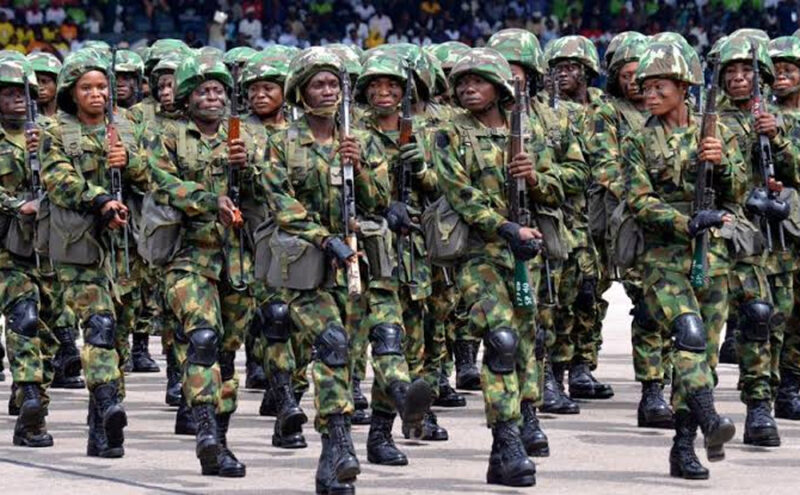
Insecurity: Only Nigerian Forces Can Defeat Terrorists — Ex Army Chief Warns
Insecurity: Only Nigerian Forces Can Defeat Terrorists — Ex Army Chief Warns
A former Director of Operations at the Army Headquarters, Major General Ijioma N. Ijioma (rtd), has cautioned Nigerians against expecting United States troops recently deployed to Nigeria to directly confront bandits and terrorists on the battlefield, stressing that the burden of defeating insurgency rests squarely on Nigeria’s Armed Forces.
The warning follows the arrival of a small US military team in Nigeria to support ongoing efforts against terrorism, banditry, and other security threats. The Head of the US Military’s Africa Command (AFRICOM), General Dagvin R. M. Anderson, had earlier said the deployment was part of enhanced collaboration between Nigeria and the US, aimed at bringing “unique capabilities” to the fight against terrorism.
While details of the team’s size and mandate were not disclosed, findings indicate that the US troops will focus mainly on intelligence gathering, technical assistance, and operational support, rather than direct combat.
Speaking on the development, Gen. Ijioma (rtd) accused Nigeria’s leadership of lacking the political will required to decisively crush insurgency, arguing that foreign involvement would not have been necessary if decisive actions had been taken earlier.
According to him, if the 1967 Biafran insurgency had been handled with the same restraint currently shown toward Boko Haram and armed bandits, Nigeria might not have remained united.
READ ALSO:
- Nollywood Actor Ijoba Lande Alleges Police Brutality, Theft in Lagos
- Ondo Police Arrest Landlady for Allegedly Poisoning Tenant’s 3-Year-Old Child
- Appeal Court Orders CBN to Pay N2.5bn to 110 ABU Workers Sacked in 1996
- Cybercrime Crackdown: Lagos Police Bust Nude Photo Blackmail Ring
“If the Federal Government had treated the Biafran insurgency the way bandits and Boko Haram are treated today, there would have been a Biafra Republic by now,” he said.
The retired general urged Nigerians to demand accountability from their leaders, questioning why terrorists continue to enjoy what he described as leniency, despite ongoing killings across the country.
He also warned that the United States does not deploy its troops without strategic interests, urging Nigerians to ask what form of agreement or compensation exists between both countries.
“The US does not risk the lives of its soldiers for nothing,” he said.
Gen. Ijioma insisted that recent foreign-assisted airstrikes on terrorist camps had not significantly weakened insurgents, noting that Nigerian fighter jets are capable of reaching any location within the country.
“The strike the US carried out in Sokoto and Kwara — is there anywhere our aircraft cannot reach? There is no place within Nigeria that our fighter jets cannot bomb. What we lack is political will,” he argued.
He further questioned why Nigeria could swiftly deploy troops and fighter jets to Benin Republic to quell an attempted coup, while bandits continue to operate freely within Nigeria.
“Fighter jets went to Benin Republic on the President’s order. What does that tell you? It tells you clearly that there is no political will,” he said.
Gen. Ijioma emphasized that the role of US troops would be limited to training, intelligence sharing, and logistical and technical support, adding that they would not engage terrorists directly on Nigerian soil.
He recalled past military cooperation with the US during the first tenure of former President Olusegun Obasanjo, when American personnel reportedly occupied parts of the Defence Headquarters — a move strongly opposed by the late Chief of Army Staff, Gen. Victor Malu, which allegedly led to his removal.
Adding his voice, a retired Deputy Inspector General of Police, DIG Goodwin Nwobodo, warned that the success of the collaboration depends on Nigeria’s willingness to cooperate genuinely, especially in intelligence sharing.
He noted that previous collaborations failed due to lack of trust, stressing that US forces could only provide technical know-how, not fight Nigeria’s war.
“Under international law, they are here to support Nigeria. They cannot operate independently unless there is a full military intervention, which would create serious complications,” he said.
Meanwhile, several security experts welcomed the collaboration but urged the Federal Government to make bold demands for advanced military hardware, modern intelligence technology, and improved training and welfare for frontline troops.
A former ECOMOG officer, Captain Effiong Eyo (rtd), called on Nigeria to leverage its strategic importance to demand heavy military equipment and enhanced intelligence capabilities from the US, arguing that political constraints — not capacity — have hindered Nigeria’s fight against insecurity.
Other stakeholders, including conflict resolution experts, security consultants, and regional leaders, agreed that while foreign assistance is necessary, lasting peace would only come with strong political resolve, adequate equipment, motivated personnel, and transparent leadership.
Insecurity: Only Nigerian Forces Can Defeat Terrorists — Ex Army Chief Warns






News
EFCC Arrests Abuja House Agent Over ₦288 Million Property Fraud
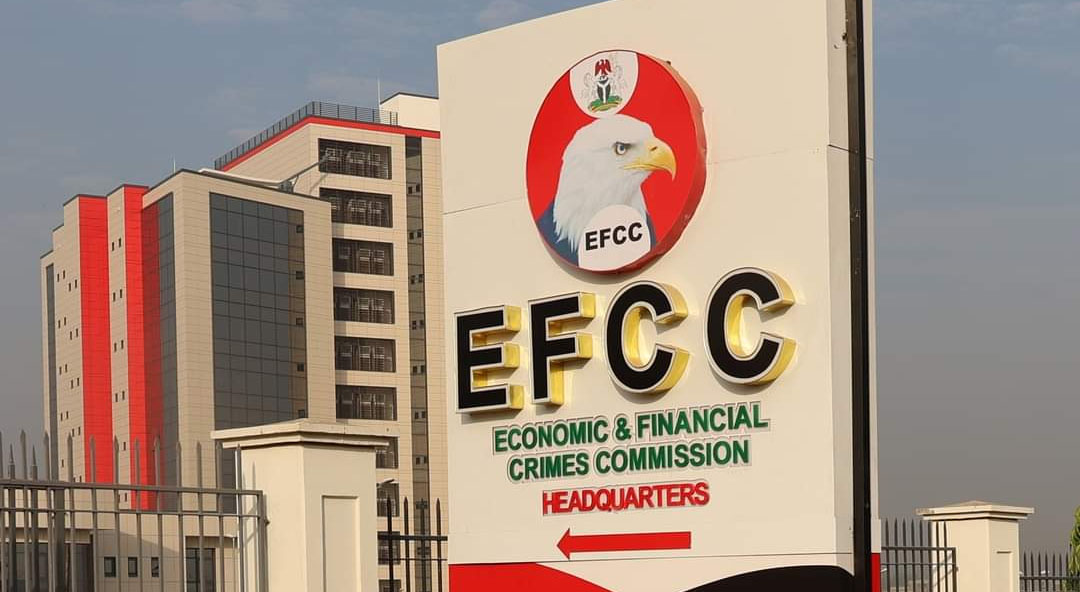
EFCC Arrests Abuja House Agent Over ₦288 Million Property Fraud
The Economic and Financial Crimes Commission (EFCC) has arrested an Abuja-based real estate agent, Hajia Adama Ahmed Adamu, in connection with an alleged ₦288 million property fraud, the agency confirmed on Wednesday.
According to the EFCC, operatives of its Ilorin Zonal Directorate apprehended Adamu following a petition from a complainant, Alhaji Tanko Yawale, who alleged that the agent collected the funds under the pretext of facilitating the purchase of a property at House 31, Haile Selassie Street, Asokoro, Abuja.
READ ALSO:
- Tinubu Govt Unveils National Laureate Prize to Reward Best Theses
- Foreign Intelligence Operations Behind Recent Nigeria Killings – Gumi
- Arise News Anchor Ikokwu Quits Journalism, Joins Politics
“Following the payment, Hajia Adamu allegedly failed to provide valid property documents and became evasive, raising suspicion and prompting a formal petition to the EFCC,” the commission stated on its official X handle.
Property-related fraud continues to be a recurring concern in Nigeria’s real estate sector, particularly in major cities like Abuja, where unsuspecting buyers often fall victim to agents posing as legitimate intermediaries. In response, the EFCC has intensified enforcement against land and housing scams, urging Nigerians to verify ownership and documentation before making payments.
The suspect is currently in EFCC custody as investigations continue. The commission also reiterated a warning to the public to remain vigilant against fraudulent property schemes and to report any suspected cases promptly.
EFCC Arrests Abuja House Agent Over ₦288 Million Property Fraud
News
Alkali resigns as Transport minister to chase Gombe governor’s seat
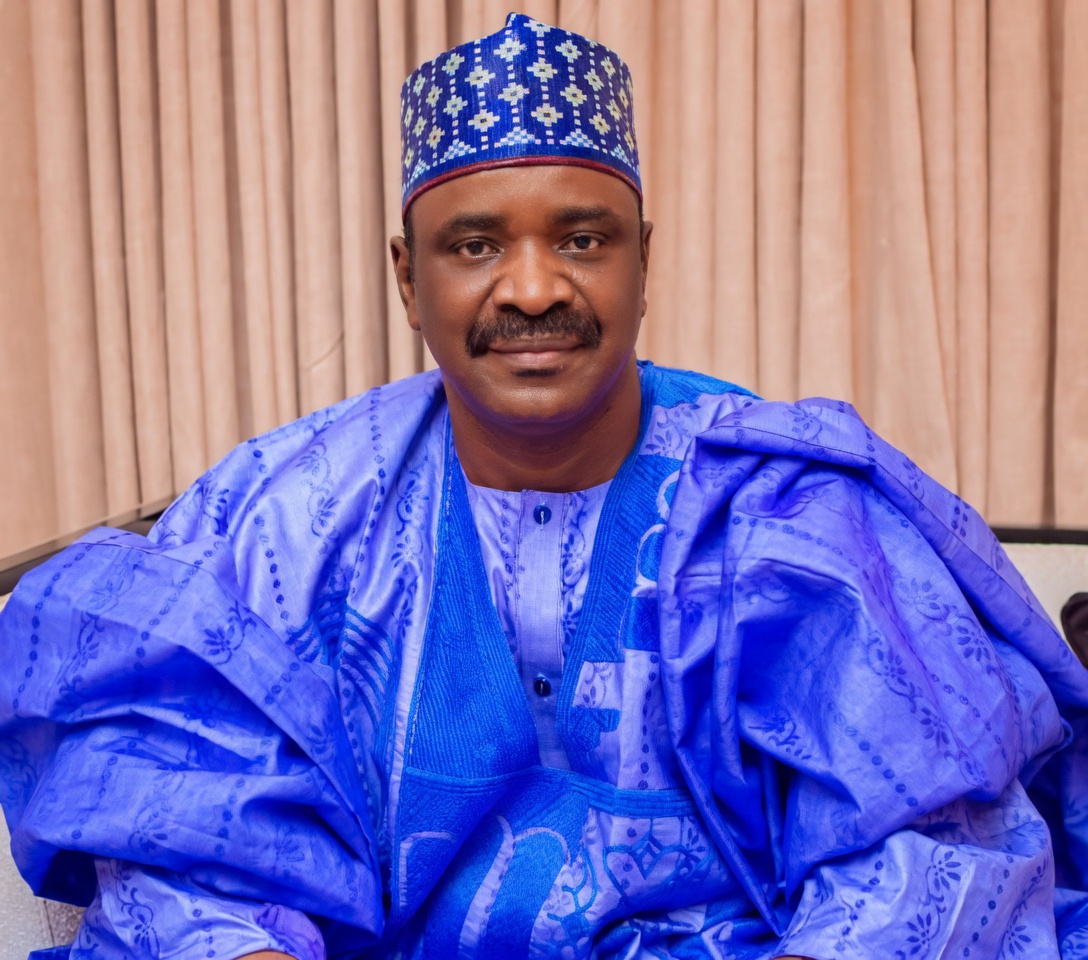
Alkali resigns as Transport minister to chase Gombe governor’s seat
The race for Gombe State’s Government House has officially claimed its latest heavyweight contender. Saidu Ahmed Alkali has stepped down from his role as the Minister of Transportation to focus entirely on his 2027 governorship bid.
Alkali’s exit follows a high-profile meeting with President Bola Tinubu at the Presidential Villa on Tuesday.
His departure was formalized via a circular from the Office of the Secretary to the Government of the Federation (SGF), Senator George Akume.
The move is not just about personal timing; it’s about legal compliance. Alkali is adhering to:
* Section 88(1) of the Electoral Act, 2026: Which mandates officials to vacate office before seeking elective posts.
* The INEC Timetable: With party primaries for the 2027 elections looming, the window for transition is closing.
* Presidential Directive: President Tinubu has been firm that any cabinet member eyeing an elective seat must resign before the primary process begins.
Alkali, a veteran politician and former Senator for Gombe North, is now the third member of the Federal Executive Council (FEC) to trade their ministerial portfolio for a campaign trail.
His resignation leaves a vacancy in the Ministry of Transportation at a critical time for the nation’s infrastructure projects, but signals a tightening of the political battlefield in Gombe.
The circular confirming the development was issued by the Permanent Secretary, General Services Office, Ibrahim Kana.
The circular stated that the directive “followed the provisions of Section 88(1) of the Electoral Act, 2026, as well as the timetable released by the Independent National Electoral Commission (INEC) for party primaries ahead of the 2027 election.”
News
US Senator Ted Cruz Alleges Nigerian Officials Behind Christian Killings
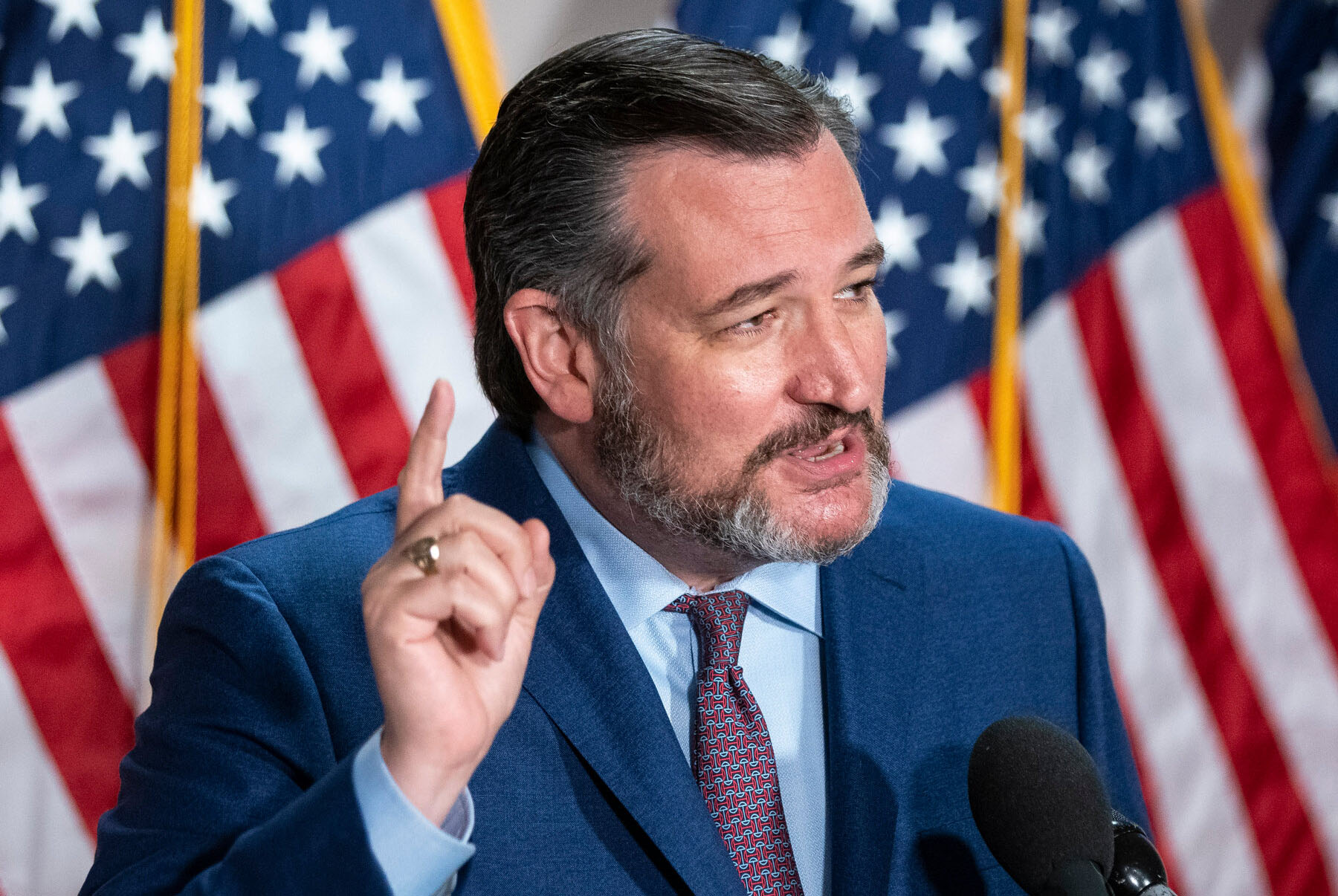
US Senator Ted Cruz Alleges Nigerian Officials Behind Christian Killings
United States Senator Ted Cruz has alleged that some Nigerian officials are complicit in attacks on Christians, warning that the United States could impose sanctions on those found responsible.
Cruz made the claim while reacting to the recent Plateau killings, particularly the deadly attack in Jos North area of Plateau State.
In a post on X, the lawmaker stated that American authorities are aware of those allegedly enabling the violence. He accused certain officials of creating an environment where Christians are “routinely persecuted and slaughtered,” adding that the U.S. has the tools to hold such individuals accountable.
The remarks followed a Palm Sunday attack on Angwan Rukuba, where gunmen invaded the community around 8:30 p.m., killing at least 12 people. Police confirmed the victims included 10 men and two women, with additional bodies later recovered during search operations.
The timing of the attack, coinciding with a major Christian observance, has heightened concerns about religious violence in Nigeria, particularly in the Middle Belt region.
READ ALSO:
- ‘I Have Not Resigned’ – Power Minister Adelabu Debunks Viral Resignation Report
- Benue Declares One-Week Easter Holiday for Civil Servants
- JAMB Releases 2026 UTME Mock Results, Delists Over 20 CBT Centres
Governor Caleb Mutfwang visited the affected community, expressing sympathy to victims’ families and vowing justice.
“Your pain is my pain, and the pain of Plateau State. My administration will pursue justice relentlessly until the perpetrators are brought to book,” he said.
The state government also announced emergency measures, including free medical treatment for the injured and dignified burials for the deceased.
To prevent further breakdown of law and order, authorities imposed a 48-hour curfew in Jos North, which lasted from midnight March 29 to April 1, 2026. Security presence was also reinforced, with additional personnel deployed to stabilise the area.
Security agencies have since intensified operations to track down those responsible for the attack, while residents remain on edge.
Cruz’s comments have reignited international scrutiny over Nigeria’s security situation, especially recurring violence in the Middle Belt.
However, the Federal Government of Nigeria has consistently rejected claims of targeted religious persecution, maintaining that the violence is driven by criminality, insurgency, and communal conflicts rather than a coordinated campaign against Christians.
President Bola Tinubu has also dismissed allegations of religious genocide, stating that Nigeria’s challenges stem from terrorism and extremism, not faith-based targeting.
Similarly, National Security Adviser Nuhu Ribadu has engaged with U.S. officials in past diplomatic efforts to clarify the country’s security realities.
Despite these assurances, incidents like the Plateau attack continue to raise both local and global concerns, with growing calls for stronger action to curb violence and ensure accountability.
US Senator Ted Cruz Alleges Nigerian Officials Behind Christian Killings

-

 Entertainment2 days ago
Funke Akindele, Toyin Abraham Spark Reactions Over Alleged Snub at Iyabo Ojo’s Premiere
-
 metro2 days ago
Jos Attack: Plateau Govt Declares 48-Hour Curfew After Deadly Assault
-

 Education1 day ago
WAEC Releases 2026 WASSCE Timetable for School Candidates
-

 Auto1 day ago
Lagos NURTW Chairman Sego Distributes Exotic Cars, Luxury Items to Cabinet Members (Video)
-

 metro1 day ago
Cars Torched as South Africans Protest Alleged Nigerian ‘Igbo King’ Coronation
-
 News2 days ago
UK Raises Visa Costs, Tightens Immigration Rules From April 8
-

 Auto2 days ago
Motoring World marks 30 years, set to rally industry leaders in Lagos
-
 International3 days ago
Iran Threatens US-Linked Universities in Middle East Amid Escalating Tensions