
metro
IPOB activities caused delay in Niger bridge completion – FG

Works and Housing Minister Babatunde Fashola yesterday blamed the delay in the completion of the Second Niger Bridge on the activities of the Indigenous People of Biafra (IPOB).
The minister said the Monday sit-at-home directive of the separatist group prevented the contractor handling the project to work for days in the past two years.
The former Lagos governor explained that the bridge itself and the road linking it to the Obusi-end on the Anambra side had been completed.
But the interchange is at different levels of completion, while the road linking the bridge to the Asaba side is still under construction.
He said: “These dates keep shifting and people must remember that on the eastern side, our contractors have not been able to work on Mondays for almost two years and that has affected the completion date.”
READ ALSO:
- Obi leads Tinubu, Atiku in fresh pre-election opinion poll
- Obi leads Tinubu, Atiku in fresh pre-election opinion poll
- 27-year-old female kidnapper nabbed in Ogun
According to him, the deployment of workers on Saturdays by the contractor cannot make made up for the 52 days (yearly) they could not work on site.
The minister further asserted that certain other challenges like relocating transmission lines connecting the East to the West across the Niger River contributed to days lost and added to the snag that affected the early completion of the bridge within the time earlier stipulated.
Speaking on finishing the last four-kilometre stretch of the road in four months, Mr. Fashola said the construction is taking place in marshy land and as such, there is a great need for dredging and sand filling, a process which he said cannot be rushed.
He emphasized that the ministry and its contractors have made great progress on the road so far because they use Prefabricated Vertical Drains which accelerate settlement and drainage and as such, workers can start building quicker than would ordinarily have been expected.
The minister said the road which was temporarily opened on December 15 for the Yuletide, will be kept open till January 1st, 2023 for those travelling to the East from the West.
He said on January 2, the traffic on the bridge would be reversed to enable travellers returning from the East to West to make use of the road from January 3 to January 15 when it would be shut again.
The minister added that inevitably, the bridge would be tolled to ensure that it is maintained to serve Nigerians for many years.
Fashola said: “Inevitably, the bridge will be tolled. That is the job of the Nigeria Sovereign Investment Authority (NSIA) because part of what we are looking at is that we have a bridge that is properly maintained.
“So, this is where private sector capacity becomes useful. They may not be able to mobilise the capital to buy the asset but they are able to mobilise the expertise and efficiency to operate it, of course not without some due diligence being done.
“That was my experience in Lagos when we did the Lekki Bridge. The government built the bridge, but we contracted a private sector operator to manage the operation and collection of the toll.
“My responsibility is to deliver the asset. Government as the owner will then decide how it wants it to be concessioned, and under what terms and conditions.”
Fashola also appealed to the public to bear the pains resulting from the inconveniences created by on-going construction on major highways across the country.
He noted that most of the side roads that feed onto the main arterial roads are either state or local government roads.
According to him, one of the things the Federal Executive Council (FEC) will consider is an “old road” to serve as an alternative route.
“Hopefully, if we get there, I think that will be one option. We mean no harm. The last six-kilometre into Lagos on the Lagos-Ibadan Expressway, we deliberately left for the last because we knew it was going to be the most difficult to build because of the traffic, the density, and the human activity there.
“So, whilst places like the Second Niger Bridge and Bodo-Bonny Road, which are virgin projects, seem to be moving quite quickly, building through Abuja-Kano, Lagos-Ibadan, Ikorodu-Sagamu or Kano-Maiduguri that are trafficked every day have different logistic challenges.” The Nation






metro
26 Killed as Bandits Attack Niger Communities, Burn Police Station, Homes
26 Killed as Bandits Attack Niger Communities, Burn Police Station, Homes
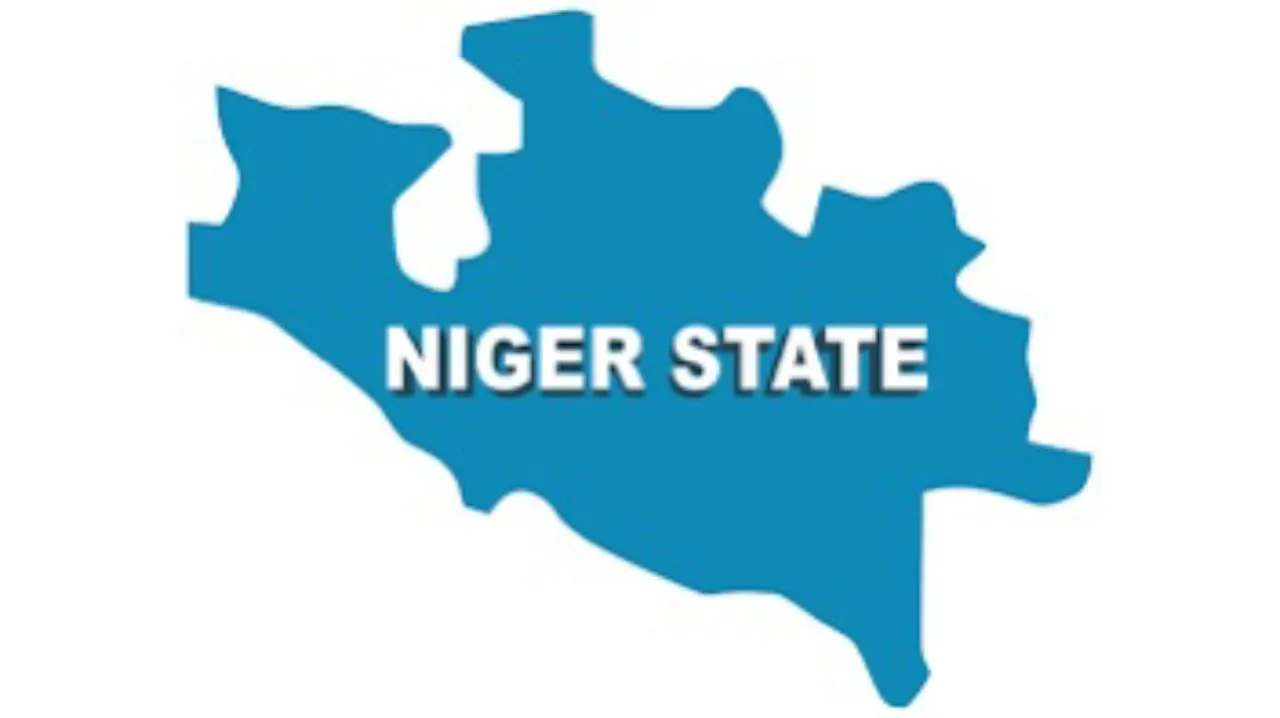
A fresh bandit attack in Borgu Local Government Area, Niger State, has left at least 26 people dead, destroyed homes, looted shops, and burnt down a police station, heightening fears in communities already plagued by insecurity. The raid targeted Tungan Makeri and Nkpaso communities in Konkoso ward during the early hours of Saturday, with gunmen reportedly moving house to house in a coordinated assault.
Eyewitnesses said the attackers, believed to number over 200 heavily armed men, executed some victims after tying their hands behind their backs. Seven of the deceased were reportedly slaughtered outright, while others were shot. Survivors fled in panic, leaving behind belongings, homes, and shops as the assailants razed property in their path.
The bandits also burnt down the police station at Konkoso, forcing officers on duty to flee. Although no weapons were reportedly taken, the destruction of the security post underscores the attackers’ dominance during the raid. Local sources suggest the assault may have been retaliatory, targeting communities that recently petitioned the federal government for a military base to curb escalating attacks.
READ ALSO:
- ‘Anti-Muslim Timetable’: MURIC Slams INEC Over 2027 Elections
- Boko Haram Terrorists Release Video of 176 Abducted Kwara Residents
- Troops Neutralise Scores of Terrorists, Recover Arms in Yobe
A community insider explained that the attackers told residents the government could not protect them and warned of further raids. Those killed were reportedly among the villagers advocating for federal intervention, sending a chilling warning to others.
This attack follows a Save-Our-Soul (SOS) appeal made last week by political and traditional leaders in Borgu and Agwara Local Government Areas, requesting the federal government urgently deploy troops and establish a military base. Leaders described the security situation as “worrisome and scary,” with the entire Borgu Kingdom under siege from bandits and criminals over the past three months.
Most Rev. Dr. Bulus Dauwa Yohanna, the Chairman of the Christian Association of Nigeria (CAN) Niger State chapter and Catholic Bishop of Kontagora Diocese, noted that residents now live in constant fear, unable to farm, trade, or carry out daily activities safely. He called for urgent government intervention to restore peace.
As of the time of reporting, neither the Niger State Government nor the state police command has issued an official response to the attack. Security experts warn that the latest raid underscores the escalating security crisis in Niger State and North-Central Nigeria, calling for swift military reinforcement, better intelligence deployment, and protection of vulnerable communities.
26 Killed as Bandits Attack Niger Communities, Burn Police Station, Homes
metro
‘Anti-Muslim Timetable’: MURIC Slams INEC Over 2027 Elections
‘Anti-Muslim Timetable’: MURIC Slams INEC Over 2027 Elections
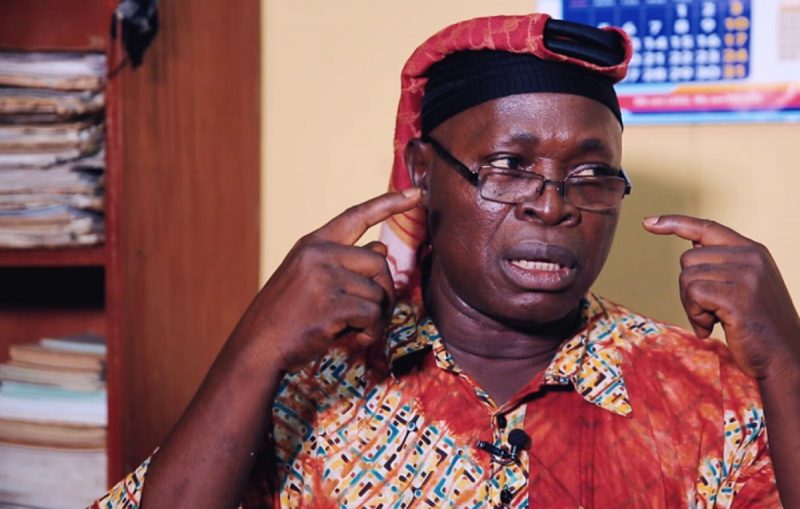
The Muslim Rights Concern (MURIC) has rejected the 2027 election timetable released by the Independent National Electoral Commission (INEC), accusing the commission of acting as if there are no Muslims in Nigeria by fixing major election dates within the holy month of Ramadan.
In a statement issued on 14 February 2026, MURIC’s Executive Director, Professor Ishaq Akintola, described the timetable as exclusive, insensitive and provocative, warning that it could disenfranchise millions of Muslim voters across the country.
According to the schedule announced in Abuja on 13 February 2026 by INEC Chairman, Professor Joash Amupitan, the presidential and National Assembly elections are slated for 20 February 2027, while governorship and state assembly elections are fixed for 6 March 2027. MURIC noted that Ramadan is projected to begin around 8 February and end about 10 March 2027, meaning all major elections would take place during the fasting period.
The organisation argued that holding elections during Ramadan would impose severe hardship on Muslim voters, electoral officials, ad hoc staff and security personnel who would be fasting while participating in a physically demanding national exercise. According to MURIC, this could lead to fatigue, reduced voter turnout and heightened tension at polling units.
READ ALSO:
- Boko Haram Terrorists Release Video of 176 Abducted Kwara Residents
- Troops Neutralise Scores of Terrorists, Recover Arms in Yobe
- Woman Arrested Over Murder of Nigerian E-Hailing Driver in South Africa
MURIC further accused INEC of failing to consider Nigeria’s religious diversity, questioning whether Muslim staff or commissioners were consulted during the drafting of the timetable. The group said proper consultation with past INEC chairmen would have highlighted the need to avoid scheduling elections during major national or religious events.
The group warned that the implications of the timetable go beyond inconvenience, alleging that it amounts to religious discrimination and an attempt to alienate and disenfranchise Nigerian Muslims. It also expressed concern that fasting security personnel and election workers could face excessive stress during early-morning deployments and long election hours.
Professor Akintola added that continued disregard for Muslim concerns could fuel anger among youths, warning that frustration may escalate if the timetable is not reviewed. He maintained that the election calendar gives the impression that Muslim opinions no longer matter in government decision-making.
As of the time of filing this report, INEC has not responded to MURIC’s claims or indicated whether it plans to review the 2027 election timetable. The development has sparked debate nationwide, with growing calls for inclusive and sensitive election planning in a multi-religious society like Nigeria.
‘Anti-Muslim Timetable’: MURIC Slams INEC Over 2027 Elections
metro
Boko Haram Terrorists Release Video of 176 Abducted Kwara Residents

Boko Haram Terrorists Release Video of 176 Abducted Kwara Residents
Suspected members of Boko Haram, formally known as Jama’atu Ahlissunnah Lidda’awati wal-Jihad, have circulated a video showing 176 abducted residents allegedly taken from Woro community in Kaiama Local Government Area of Kwara State.
The disturbing footage, which has since sparked outrage and fear across the state, reportedly shows dozens of women and children seated in rows in an open area, surrounded by armed men. Among them were a nursing mother and several minors. Some of the children appeared half-clothed, while many of the captives looked visibly distressed, suggesting harsh conditions in captivity.
In the video, one of the armed men interrogates the captives, asking where they were abducted. Responding in Hausa, three women — including a nursing mother — stated that they were kidnapped from Woro community in Kaiama LGA.
During the recording, the terrorist accused the Kwara State Government of downplaying the scale of the abduction. According to him, while officials reportedly claimed that between 20 and 30 persons were kidnapped, the group insisted it was holding 176 victims.
“The Kwara State government lied to Nigeria and to the whole world,” the gunman alleged in the footage.
READ ALSO:
- Troops Neutralise Scores of Terrorists, Recover Arms in Yobe
- Woman Arrested Over Murder of Nigerian E-Hailing Driver in South Africa
- Fubara Chooses Peace, Dedicates “Man of the Year” Award to Wike
As of the time of this report, the Kwara State Government has not publicly confirmed the number of persons abducted from Woro community nor officially responded to the claims made in the video.
Background to the Attack
The video emerged weeks after a deadly attack on Woro community on February 4, 2026, when suspected terrorists stormed the area in a coordinated assault. Local sources reported that several residents were killed during the invasion, including family members of the Emir of Woro, the Chief Imam, and education officials.
The traditional ruler, Alhaji Saliu Bio Umar, was reported missing following the attack, fuelling concerns that he may have been abducted during the raid. The assailants reportedly attacked both residents and travellers passing through the community, killing indiscriminately before retreating.
Security analysts have linked the attackers to extremist elements believed to have operational ties across the Sahel region, raising concerns about the possible expansion of insurgent networks into parts of North-Central Nigeria previously considered relatively stable.
Rising Security Concerns in Kwara
The incident has heightened anxiety across Kaiama LGA and surrounding districts, particularly in Kwara North, where residents say rural communities remain vulnerable due to limited security presence and difficult terrain.
While security agencies have reportedly intensified surveillance and deployment in affected areas, there has been no official statement confirming rescue operations or negotiations regarding the abducted victims.
Community leaders have called on the Federal Government and security forces to urgently intervene to secure the safe release of the captives and prevent further attacks.
The emergence of the video has once again drawn national attention to the evolving security challenges in Kwara State and the need for coordinated efforts to curb the spread of extremist violence beyond the North-East region.
Boko Haram Terrorists Release Video of 176 Abducted Kwara Residents

-

 metro2 days ago
IKEDC Sets Feb 20 Deadline for Customers to Submit Valid IDs or Face Disconnection
-
 Education2 days ago
Supreme Court Affirms Muslim Students’ Right to Worship at Rivers State University
-

 metro2 days ago
Lagos Police Launch Manhunt for Suspect in Brutal Ajah Murder
-

 News2 days ago
Aso Rock Goes Solar as Tinubu Orders National Grid Disconnection
-

 Business2 days ago
Naira Could Trade Below ₦1,000/$ With Dangote Refinery at Full Capacity — Otedola
-

 metro2 days ago
Army University Professor Dies in Boko Haram Captivity After Nearly One Year
-

 International2 days ago
Trump Halts Minnesota Immigration Crackdown After Fatal Shootings, Protests
-

 News3 days ago
Tinubu Nominates Ismail Abba Yusuf as NAHCON Chairman, Seeks Senate Confirmation