
International
Iran says no longer bound by nuclear programme restrictions
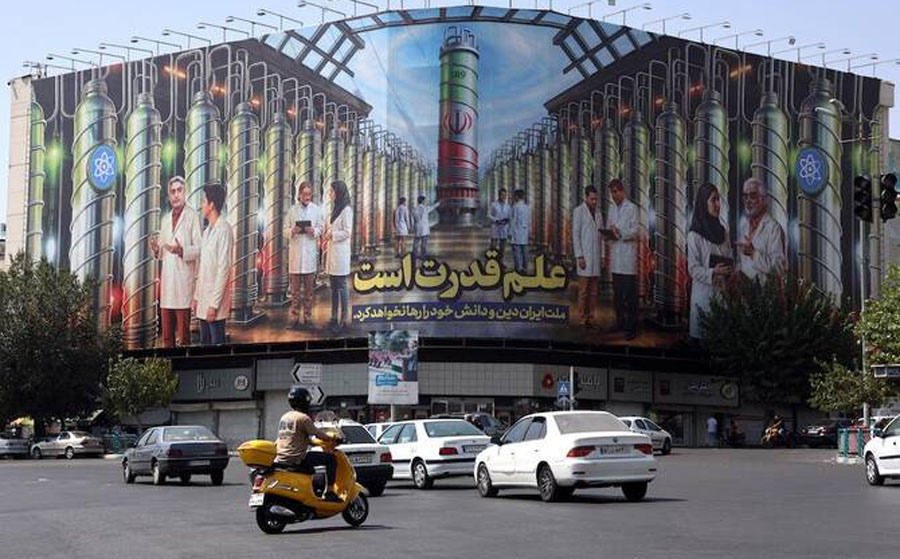
Iran says no longer bound by nuclear programme restrictions
TEHRAN: Iran said on Saturday that it was no longer bound by restrictions on its nuclear program as a landmark 10-year deal between it and world powers expired, though Tehran reiterated its “commitment to diplomacy.”
The 2015 deal — signed in Vienna by Iran, China, Britain, France, Germany, Russia and the United States — saw the lifting of international sanctions against the Islamic republic in exchange for restrictions on its nuclear program.
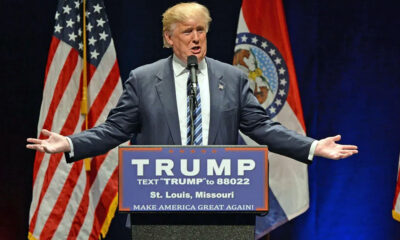
But the pact had already been in tatters after Washington unilaterally withdrew during President Donald Trump’s first term, with Iran later pulling back from its commitments.
The reimposition last month of UN sanctions at the urging of three of the deal’s European signatories rendered the accord effectively moot.
From now on, “all of the provisions (of the deal), including the restrictions on the Iranian nuclear program and the related mechanisms are considered terminated,” Iran’s foreign ministry said in a statement on the day of the pact’s expiration.
READ ALSO:
- Adamawa election commission chairman, Vokna, resigns
- Trump orders prison release of disgraced ex-lawmaker
- Officers shot dead inside Kaduna Police Station
“Iran firmly expresses its commitment to diplomacy,” it added.
Western powers have long accused Iran of secretly seeking nuclear weapons — something it has repeatedly denied, insisting its nuclear program is solely for civilian purposes such as energy production.
The deal’s “termination day” was set for October 18, 2025, exactly 10 years after it was enshrined in the UN’s Security Council resolution 2231.
The accord capped Iran’s uranium enrichment at 3.67 percent in exchange for sanctions relief and provided for strict supervision of its nuclear activities by the UN’s nuclear watchdog, the International Atomic Energy Agency (IAEA).
But Washington left the deal in 2018 and reinstated sanctions, after which Tehran began stepping up its nuclear program.
According to the IAEA, Iran is the only country without a nuclear weapons program to enrich uranium to 60 percent. That is close to the threshold of 90 percent required for a bomb, and well above the level needed for civilian nuclear use.
‘Irresponsible actions’
In July, Iran suspended cooperation with the IAEA following the war with Israel, with Tehran pointing to the agency’s failure to condemn Israeli and US strikes on its nuclear facilities.
The unprecedented bombing campaign by Israel and the retaliation by Iran during the 12-day war derailed ongoing nuclear negotiations between Tehran and Washington.
At the initiative of France, Britain and Germany, widespread UN sanctions against Iran returned into force in late September for the first time in a decade.
Iranian Foreign Minister Abbas Araghchi said in a letter addressed to the United Nations on Saturday that the expiration of the 2015 deal renders the sanctions “null and void.”
Britain, France and Germany accuse Iran of not cooperating with the IAEA and would like it to return to negotiations with the United States.
“Iran’s efforts to revive the exchanges (with the IAEA) that led to the agreement in Cairo were also sabotaged by the irresponsible actions of the three European countries,” the Iranian foreign ministry said in Saturday’s statement, referring to a recent framework to resume cooperation.
Iran says no longer bound by nuclear programme restrictions
ARAB NEWS







International
Thousands Rally Across Iran to Honour Late Supreme Leader Khamenei
Thousands Rally Across Iran to Honour Late Supreme Leader Khamenei
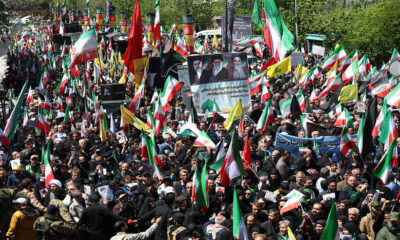
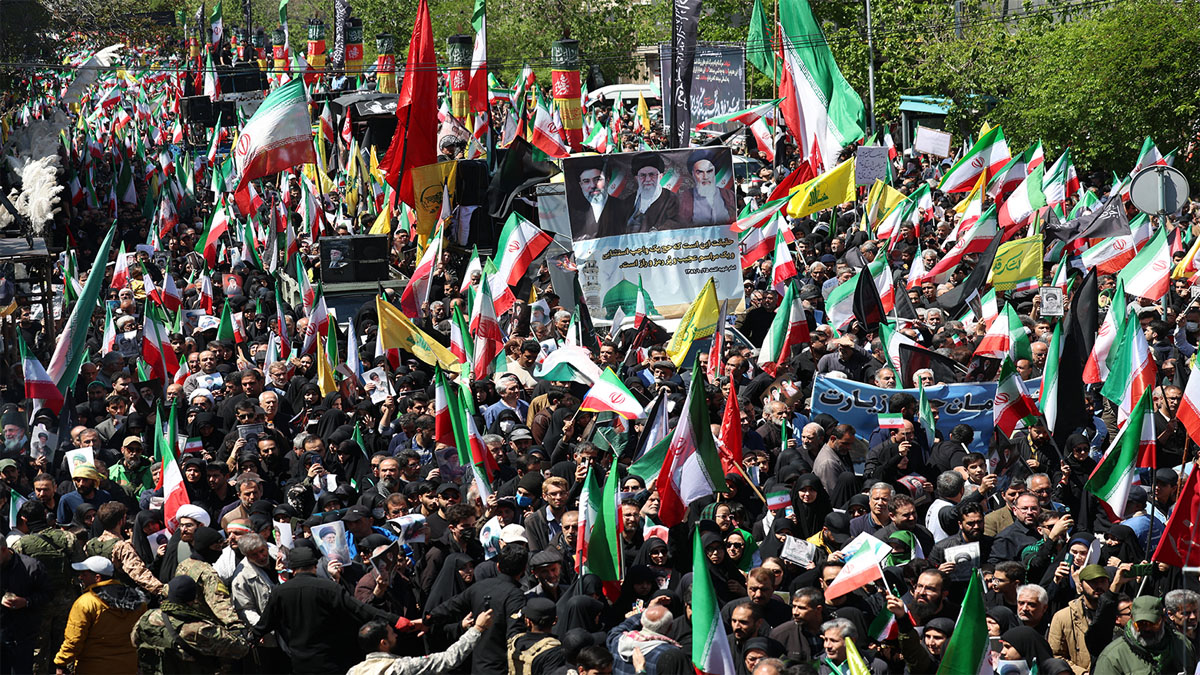
Thousands of Iranians took to the streets across major cities, including Tehran, Urmia, and Gorgan, on Thursday to honour the late Supreme Leader Ayatollah Ali Khamenei. His death has become a pivotal moment in the ongoing Middle East conflict, and the rallies combined mourning, political messaging, and public solidarity.
The nationwide tribute began precisely at 9:40 a.m. local time, the exact moment Khamenei was killed on February 28 at his Tehran residence in what Iranian authorities described as U.S.–Israeli airstrikes. The attack also claimed the lives of several senior Iranian figures and triggered a series of retaliatory actions, escalating tensions across the Gulf and involving multiple regional actors.
Crowds carried portraits of the long-serving leader, who presided over Iran’s political and ideological direction for nearly four decades. Analysts note that the rallies were not only acts of public mourning but also demonstrations of internal cohesion and state continuity during a period of geopolitical strain. The displays served to reinforce loyalty and resilience in the eyes of both domestic audiences and external observers.
READ ALSO:
- UN Chief Condemns Israeli Airstrikes in Lebanon
- Iran Warns of Sea Mines in Strait of Hormuz, Offers Alternative Routes for Ships
- ADC Leadership Crisis Deepens as Rival Faction Protests at INEC Headquarters
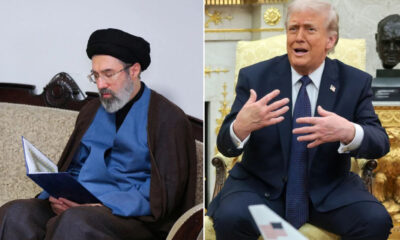
Despite these public displays, there is uncertainty surrounding Iran’s leadership visibility. His successor, Ayatollah Mojtaba Khamenei, has yet to make a public appearance since before the conflict escalated. This absence has raised questions within diplomatic and political circles about the consolidation of authority in Tehran and the future direction of the country’s leadership.
The absence of a formal state funeral further underscores the disruption caused by the war. Security conditions and ongoing military tensions have prevented Iran from organising a centralised burial ceremony, highlighting the impact of the conflict on domestic affairs and governance.
The rallies thus served a dual purpose: beyond mourning the late leader, they acted as a strategic show of unity, signalling resilience to external adversaries while reinforcing internal political continuity. Public mobilisations like these remain a critical indicator of Tehran’s ability to maintain cohesion during times of crisis.
As the conflict continues, Iran’s internal dynamics, leadership visibility, and public mobilisation will be closely watched by analysts as key measures of stability and state authority. The commemorations demonstrate that, even amid uncertainty and regional tension, the government can still orchestrate nationwide expressions of solidarity.
Thousands Rally Across Iran to Honour Late Supreme Leader Khamenei
International
UN Chief Condemns Israeli Airstrikes in Lebanon
UN Chief Condemns Israeli Airstrikes in Lebanon
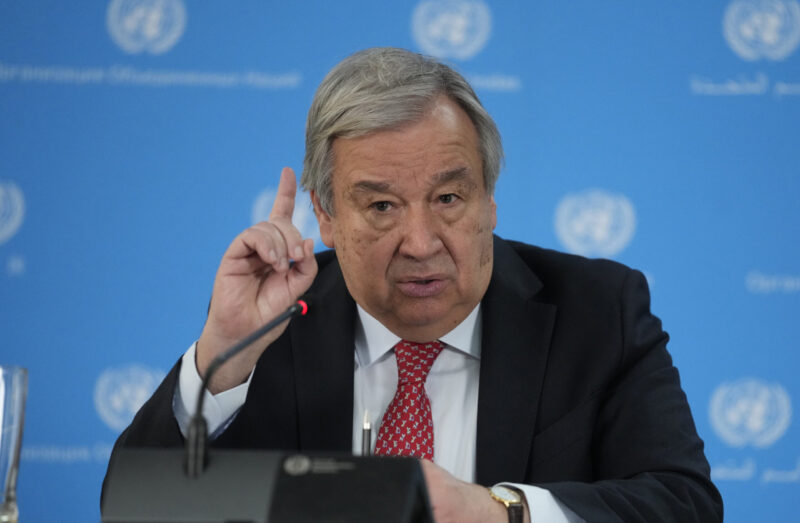
The United Nations has strongly condemned a wave of Israeli airstrikes in Lebanon that killed and injured hundreds, including civilians, amid a fragile ceasefire in the Middle East. UN Secretary‑General António Guterres expressed deep concern over the mounting civilian toll and warned that ongoing military activity threatens efforts to maintain peace and stability in the region.
In a statement released Wednesday, Guterres offered condolences to the people of Lebanon and wished a swift recovery to the injured. He emphasized that international humanitarian law must be respected, urging all parties to halt hostilities and pursue diplomatic solutions. “There is no military solution to the conflict,” he said, stressing the importance of protecting civilians and infrastructure.
The airstrikes on April 8, 2026, marked some of the heaviest bombardments in Lebanon since tensions escalated between Israel and Hezbollah in recent weeks. Lebanese authorities reported hundreds of casualties in Beirut’s southern suburbs, the Bekaa Valley, and southern towns, with significant civilian losses.
READ ALSO:
- Iran Warns of Sea Mines in Strait of Hormuz, Offers Alternative Routes for Ships
- ADC Leadership Crisis Deepens as Rival Faction Protests at INEC Headquarters
- 12-Year-Old Dies After Alleged Bullying at FGC, Ikot Ekpene
The UN High Commissioner for Human Rights, Volker Türk, described the attacks as “nothing short of horrific” and called for independent investigations into potential violations of international law, highlighting the devastating impact on civilians and infrastructure.
The strikes occurred shortly after a US‑Iran ceasefire took effect, which did not formally include the Lebanon theater, raising fears that hostilities could escalate further. International reactions have been swift, with countries such as Spain condemning Israel’s actions and urging adherence to international law.
The UN has called for immediate restraint and stressed that protecting civilian lives and upholding humanitarian standards must remain a priority as tensions continue to simmer in the region.
UN Chief Condemns Israeli Airstrikes in Lebanon
International
Iran Warns of Sea Mines in Strait of Hormuz, Offers Alternative Routes for Ships
Iran Warns of Sea Mines in Strait of Hormuz, Offers Alternative Routes for Ships
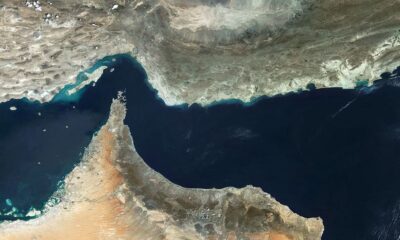
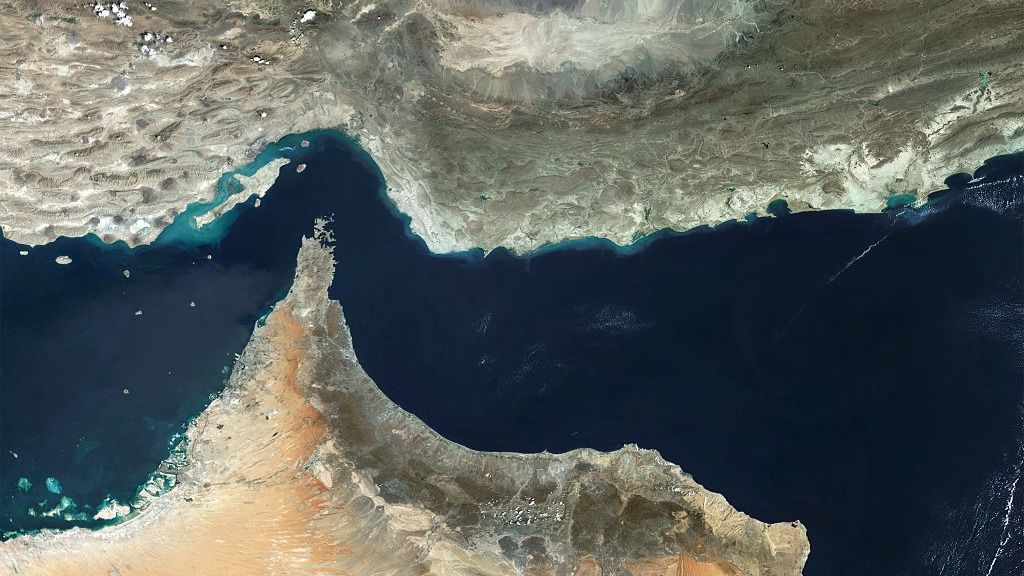
Iran’s Islamic Revolutionary Guard Corps (IRGC) has issued a serious maritime warning, stating that sea mines may be present in the main shipping lanes of the Strait of Hormuz, one of the world’s most critical maritime chokepoints for global oil and gas shipments. The advisory comes even as a fragile ceasefire between Tehran and Washington is being observed.
In a statement released late Wednesday, the IRGC navy warned all vessels intending to transit the strait to avoid the traditional main routes due to the risk of collision with potential sea mines. A designated danger zone has been marked on navigation maps, heightening concerns about maritime safety in the Persian Gulf.
The Iranian authorities recommended an alternative passage running closer to Iran’s southern coast near Larak Island. Ships are advised to coordinate with the IRGC Navy to ensure safe transit through these new routes. This guidance is intended to prevent incidents in the narrow 55‑kilometre-wide corridor, which normally handles a significant portion of global seaborne oil.
READ ALSO:
- ADC Leadership Crisis Deepens as Rival Faction Protests at INEC Headquarters
- 12-Year-Old Dies After Alleged Bullying at FGC, Ikot Ekpene
- JAMB Urges Candidates, Parents to Protest Admission Bias as CAPS Ensures Transparency
The Strait of Hormuz remains a vital energy artery, carrying nearly 30 percent of global seaborne oil supplies. Disruptions in the waterway, whether from mines or other security threats, can have major implications for global energy prices, shipping insurance, and international supply chains.
Since the ceasefire took effect, shipping traffic through the strait remains limited, with maritime tracking data indicating fewer vessels are transiting compared to normal operations. Some reports suggest Iran may also be seeking to impose tolls on vessels using routes close to its coastline, adding another layer of concern for international shipping operators.
Maritime experts warn that, despite the ceasefire, the situation remains highly unstable, with vessels exercising extreme caution. The IRGC’s advisory highlights the ongoing security challenges in one of the world’s most strategically important waterways, even during periods of reduced hostilities.
Iran Warns of Sea Mines in Strait of Hormuz, Offers Alternative Routes for Ships

-

 metro2 days ago
FG Deports US Missionary Alex Barbir Over Alleged Role in Nigeria Insecurity
-

 Entertainment2 days ago
Veteran Nollywood Actor Davis Ofor ‘Clarus’ of New Masquerade Dies at 85
-

 metro1 day ago
2026 NYSC Batch A Stream II: Registration, Swearing-In Dates Announced
-

 metro3 days ago
MURIC Backs Egba Imams’ Call for Inclusive Leadership in Ogun 2027 Governorship Race
-
 metro2 days ago
Lagos Announces Partial Road Closures for Project Commissioning
-

 Entertainment1 day ago
Saheed Osupa Defends Juju Use Amid Backlash From Islamic Clerics
-

 Africa4 hours ago
ECOWAS Recruitment 2026: Over 30 Job Vacancies Open for Nigerians (How to Apply)
-
 News2 days ago
Iran Lists Tough Conditions for Peace Talks with US