

metro
Islamic teacher remanded for defiling 6-year-old Pupil

Islamic teacher remanded for defiling 6-year-old Pupil
A 24-year-old Islamic teacher, Mosediq Toheeb, was on Wednesday remanded by a Yaba Chief Magistrates’ Court for sexually assaulting a six-year-old pupil at a Quranic school.
The court presided over by Magistrate Patrick Nwaka, remanded the defendant who was arraigned on two counts of sexual violation preferred against him by the state police command.
The police prosecutor, Thomas Nurudeen, told the court that the incident happened on May 7, 2023, at the University of Lagos Central Mosque.
According to Nurudeen, that was the second time that the teacher would defile the child.
The victim’s mother told the court that on the day of the incident, the child returned home from school with blood stains on her clothes and when asked what happened, she told her that her class teacher took her to a separate classroom, tied her mouth and hands and defiled her with a stern warning that she should not tell anybody.
READ ALSO:
- Burkina Faso edge out Mali to clinch U17 AFCON bronze
- Direct entry candidates now to sit for UTME –JAMB
- Suspicious items discovered at Seun Kuti’s house – Police
According to the prosecutor, the offences committed are punishable under Sections 261 and 137 of the Criminal Laws of Lagos State 2015.
The charge read in part, “That you, Mosediq Toheeb, on May 7, 2023, around 4pm at UNILAG Central Mosque, in the Yaba Magisterial District, did sexually assault one six-year-old female (name withheld), who lives at No. 26, Femi Adebule Street, Fola Agoro, in the Somolu area of Lagos, by inserting your finger into her vagina and thereby committed an offence contrary to and punishable under Section 261 of the Criminal Laws of Lagos State of Nigeria, 2015.”
Nurudeen prayed the court to remand the defendant for 30 days pending legal advice from the Directorate of Public Prosecution.
Toheeb’s lawyer, Patrick Onochie, pleaded with the court to consider the defendant who he claimed was a final year student of the University of Lagos and would be starting his final examinations in two weeks.
Magistrate Nwaka did not take the plea of the defendant but ordered that he should be remanded.
He said there was no document before the court to show that the defendant was a student and in his final year or about to begin an examination.
He ordered that the case file be duplicated and sent to the Director of Public Prosecution for legal advice and copies of his school documents attached to the case file.
He adjourned the case till June 19, 2023.













metro
EFCC Opens Mambilla Probe as Atiku, Malami, Others Named in ICC Arbitration Award

EFCC Opens Mambilla Probe as Atiku, Malami, Others Named in ICC Arbitration Award
The Economic and Financial Crimes Commission (EFCC) has reportedly constituted a special investigative team to examine alleged questionable transactions and dealings connected to the long-running Mambilla Hydroelectric Power Project, following a major International Chamber of Commerce (ICC) arbitration ruling involving Nigeria and Sunrise Power and Transmission Company Limited.
The development comes days after an ICC tribunal ruled in favour of the Federal Government of Nigeria, rejecting claims brought by Sunrise Power and its promoter, Leno Adesanya, over the controversial power project.
The reported EFCC investigation is expected to examine transactions and allegations arising from the 616-page arbitration award.
Among the individuals named or discussed in the tribunal proceedings are former Vice-President Atiku Abubakar, his former wife Jennifer Douglas Abubakar, former Attorney-General of the Federation Abubakar Malami, former Minister of Power and Steel Olu Agunloye, former National Security Adviser Sambo Dasuki, his son Abubakar Dasuki, former Solicitor-General of the Federation Abdullahi Yola, and former Permanent Secretary in the Ministry of Power Dere Awosika.
The appearance of a person’s name in the arbitration award does not, however, establish criminal liability. The reported EFCC investigation is a separate process through which allegations and financial transactions may be examined under Nigerian law.
The ICC tribunal rejected Sunrise Power’s claims against Nigeria, including a demand linked to an earlier settlement agreement. The tribunal also ordered Sunrise and Adesanya to reimburse Nigeria about $11.8 million in legal fees and expenses.
The arbitration was connected to the disputed Mambilla Power Project in Taraba State, which has been the subject of legal and contractual disagreements for more than two decades.
One of the transactions examined by the tribunal was a $500,000 payment made by Adesanya in January 2003 from an account associated with his offshore company, China Castle Investments Ltd, to a United States bank account belonging to Jennifer Douglas Abubakar.
READ ALSO:
- Jetour T1 Storms Abuja as Automaker Accelerates Nigeria Expansion
- Kidnapped Female Police Officer Found Dead in Ebonyi as Suspect Leads Police to Remains
- CNN, MS NOW, Politico Sue Trump Over White House Access Ban
According to the tribunal findings, Adesanya said the payment was connected to a foreign-exchange transaction undertaken for Atiku through his bureau de change business.
The tribunal, however, said the explanation was not supported by sufficient documentary evidence. It noted that records establishing the underlying naira payment, exchange rate, instructions or other documentation corroborating the explanation were not produced.
The tribunal described the circumstances surrounding the transaction as raising significant questions, particularly because of its timing and Adesanya’s efforts to secure the Mambilla contract.
The tribunal also considered other payments involving individuals connected to the project, including payments allegedly made to former minister Olu Agunloye through an aide and a payment of about $1.74 million made to Abubakar Dasuki.
In relation to Atiku, the tribunal’s findings require particular distinction. While it examined the $500,000 payment and the circumstances surrounding it, the tribunal did not find evidence that Atiku used his position as a government official to secure the Mambilla contract for Sunrise.
That finding is significant because the EFCC‘s reported investigation should not be presented as an established finding of criminal wrongdoing against Atiku or any other individual named in the award.
The arbitration also contained critical findings concerning former Attorney-General Abubakar Malami.
The tribunal criticised Malami’s handling of settlement negotiations with Sunrise and, according to the award, raised serious concerns about his dealings with Adesanya.
The tribunal also concluded that the settlement arrangements at the centre of the dispute were not binding on Nigeria because the required presidential approval had not been obtained.
The findings concerning Malami are part of an arbitration award rather than a criminal conviction. Any criminal consequences would depend on further investigation and, where applicable, prosecution and adjudication by the appropriate Nigerian courts.
The Mambilla Power Project dates back to a 2003 arrangement for the development of a major hydropower facility in Taraba State. The project subsequently became embroiled in disputes over the validity of the contract, settlement agreements and compensation claims.
Sunrise Power later pursued arbitration proceedings against Nigeria, including claims running into hundreds of millions of dollars.
The latest ICC decision rejected the claims before the tribunal and was welcomed by the Federal Government as a major development in the prolonged dispute.
President Bola Ahmed Tinubu welcomed the ruling and said it removed a significant legal obstacle surrounding the project.
Sunrise Power promoter Leno Adesanya, however, said the company’s legal team would review the arbitration decision and consider available lawful options.
The reported EFCC investigation now introduces a separate domestic dimension to the Mambilla controversy.
Investigators are expected to examine the financial transactions, relationships and official decisions highlighted during the arbitration proceedings and determine whether any of the conduct amounts to offences under Nigerian law.
The EFCC has not publicly announced criminal charges against Atiku, Malami or the other individuals whose names appeared in the tribunal proceedings based on the reports surrounding the latest development.
Consequently, being named in the ICC Mambilla arbitration award should not be interpreted as equivalent to being charged with or convicted of a crime.
The latest development nevertheless places the Mambilla Power Project, the disputed financial transactions and the conduct of several former public officials under renewed scrutiny as the reported EFCC investigation progresses.
The focus will now be on what the domestic investigation establishes independently of the ICC proceedings, while the Federal Government continues efforts to advance the long-delayed hydropower project.
EFCC Opens Mambilla Probe as Atiku, Malami, Others Named in ICC Arbitration Award
metro
Kidnapped Female Police Officer Found Dead in Ebonyi as Suspect Leads Police to Remains
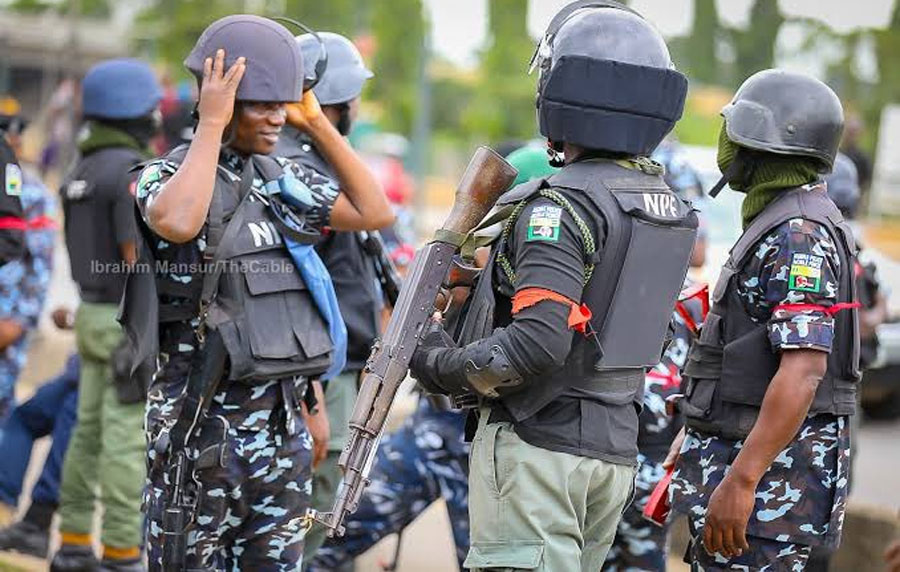
Kidnapped Female Police Officer Found Dead in Ebonyi as Suspect Leads Police to Remains
A female police officer kidnapped in Ebonyi State has been found dead after police arrested a principal suspect in connection with her abduction and recovered her remains from a location allegedly identified by the suspect.
The development was disclosed by the Nigeria Police Force in its latest nationwide operational update, which highlighted arrests, rescue operations and the recovery of weapons and other exhibits across several states.
According to the police, the suspect was arrested following sustained intelligence-driven and technology-based investigations into the abduction of the female officer.
The suspect allegedly led police operatives to the location where the remains of the kidnapped police officer were recovered.
The Force did not, however, disclose the identity of the officer, the circumstances surrounding her abduction or the cause of her death.
It also did not state how long the officer had been missing before her remains were recovered or whether additional suspects had been arrested in connection with the case.
The development represents a major breakthrough in the investigation into the officer’s disappearance, but police said the case remains under investigation.
The suspect is being treated as an alleged member of a kidnapping syndicate pending the conclusion of investigations and any subsequent court proceedings.
Police said the investigation was supported by intelligence gathering and technology, which eventually led operatives to the principal suspect.
Following the arrest, the suspect allegedly provided information that enabled investigators to locate the scene where the officer’s remains were recovered.
The circumstances surrounding the officer’s death are yet to be publicly established. Police have not disclosed whether the remains showed evidence of violence or whether a forensic examination has been conducted to determine the cause of death.
Investigators are expected to examine the recovered remains and other evidence as they work to establish what happened to the officer and determine whether other individuals were involved in her abduction and death.
READ ALSO:
- CNN, MS NOW, Politico Sue Trump Over White House Access Ban
- JAMB Allows Candidates to Change Lost SIM, Email Addresses
- How Nigerians Can Get Federal High Court Affidavit Online Without Visiting Court
The Ebonyi case was included in a wider Nigeria Police Force operational report covering security operations across the country. The Force said its operations resulted in the arrest of 334 suspects and the rescue of kidnapped victims, alongside the recovery of firearms, ammunition and other exhibits in different states.
In another operation reported in Adamawa State, police said two kidnapped victims were rescued from a suspected kidnappers’ hideout in Shako Forest, Toungo Local Government Area, while a suspect was arrested and allegedly provided information implicating five fleeing accomplices. (Primetimes)
The police said the various cases remain under investigation by the relevant State Criminal Investigation Departments (CID) and the CID at Force Headquarters in Abuja.
For the Ebonyi investigation, the immediate focus is expected to be on determining the circumstances of the officer’s abduction, identifying all those allegedly involved and establishing how and when she died.
The recovery also gives investigators an opportunity to gather further physical and forensic evidence that could help link suspects to the crime.
The police have not announced any further arrests in the case or disclosed whether any weapons, vehicles, communication devices or other exhibits were recovered during the operation.
The Force has increasingly emphasised intelligence-led policing, technology-assisted investigations and inter-agency cooperation in its response to kidnapping and other organised crimes.
The latest development in Ebonyi underscores the continuing security challenges faced by police personnel and other residents in areas affected by kidnapping and violent criminal activity.
While the arrest represents progress in the investigation, the police have yet to provide a full account of the circumstances leading to the officer’s death.
Further details are expected as investigators continue questioning the suspect and examining evidence recovered from the scene.
Until the investigation and any court proceedings are concluded, the suspect remains presumed innocent and allegations against him have not been established by a court.
Kidnapped Female Police Officer Found Dead in Ebonyi as Suspect Leads Police to Remains
metro
How Nigerians Can Get Federal High Court Affidavit Online Without Visiting Court

How Nigerians Can Get Federal High Court Affidavit Online Without Visiting Court
Nigerians can now apply for and obtain eligible Federal High Court affidavits online without necessarily visiting a court premises, through the court’s Electronic Court Management System (ECMS) e-Affidavit Portal.
The digital service allows applicants to create an account, complete an affidavit application, upload required documents, make payment and, after the application has been processed, download the completed electronic affidavit.
The Federal High Court of Nigeria introduced the e-Affidavit service as part of its efforts to make access to court services easier and reduce the need for physical visits for eligible affidavit applications.
The service covers several common affidavit needs, including change of name, correction of name, declaration of age, correction of date of birth, loss of documents, change of signature, next of kin, marriage-related declarations, banking matters and general-purpose affidavits.
However, applicants should note that the exact requirements and oath-taking procedure can vary depending on the type of affidavit and the relevant Federal High Court division.
How to Get a Federal High Court Affidavit Online
Applicants can follow these steps:
1. Create an account
Visit the official Federal High Court e-Affidavit portal and create an account.
Applicants will be required to provide basic personal information, including their name, telephone number, date of birth and email address, and create a password.
The email address and other details supplied should be accurate because they may be used for communication about the application.
2. Log in and complete your profile
After registration, log into the portal and complete the required applicant profile.
The system may request information including residential address, occupation, town, state and country of origin, gender, religion and date of birth.
Applicants should ensure that the information supplied is accurate and consistent with their identification documents.
3. Select the type of affidavit
Select the e-Affidavit option and choose the type of affidavit required.
Depending on the available categories, applicants may apply for documents relating to change of name, declaration of age, correction of date of birth, loss of documents, change of signature, next of kin, marriage, banking and other general declarations.
4. Select the Federal High Court division
Choose the appropriate Federal High Court division for the application.
READ ALSO:
- Plateau Violence: Several Killed as Fresh Attacks Trigger Mass Exodus
- Lagos Mechanic Lured With Mercedes Repair Job, Hacked to Death in Bush
- Working People United Celebrates Oluremi Tinubu at 66, Commends Her Humanitarian Efforts
Applicants should take care when selecting the division because the relevant court location may affect how the application is processed and whether additional steps are required.
5. Complete the affidavit form
Fill in the electronic form with the information required for the particular affidavit.
For example, someone applying for an affidavit concerning correction of date of birth may be asked to provide the incorrect date, the correct date and the reason for the correction.
Applicants should ensure that names, dates and other details are correctly entered before moving to the next stage.
6. Upload the required documents
Upload the documents requested by the portal.
These may include a recent passport photograph, valid means of identification and signature, depending on the type of affidavit.
Acceptable identification may include documents such as a National Identification Number (NIN) document, international passport, driver’s licence or voter’s card, subject to the requirements displayed on the portal.
Applicants should ensure that uploaded files meet the portal’s size and format requirements.
7. Preview and check the application
Before submitting the application, use the preview function to carefully review all the information supplied.
Check the spelling of names, dates of birth, addresses, identification details, selected affidavit type and court division.
This stage is important because an error submitted on an affidavit application could affect the final document.
8. Accept the terms and submit
After reviewing the application, accept the relevant terms and conditions and provide the required consent for processing of personal information.
The application can then be submitted through the portal.
9. Pay the applicable fee
Proceed to payment after submitting the application.
The portal provides electronic payment options, including Paystack and Remita.
The applicable fee depends on the affidavit or service selected. Applicants should therefore rely on the amount displayed on the official portal at the time of application rather than unofficial fee figures circulating online.
The court’s portal states that payments are final, non-refundable and non-transferable.
10. Complete the oath-taking requirement
After payment, the application goes through the court’s processing and verification procedure.
Depending on the affidavit and the relevant court division, the applicant may be required to complete an oath-taking process.
READ ALSO:
- ‘Join the Hunt’ — Soludo Urges Igbos to Strategically Align Ahead of 2027
- 18 Suspects Transferred to US Over 2021 Killing of Haitian President Moïse
- My Heart Has Always Been Home With You — Tinubu’s Powerful Message to Oluremi at 66
The Federal High Court’s information on the e-Affidavit system indicates that oath-taking arrangements can vary by division and may involve a virtual or physical process.
Applicants should therefore follow any specific instruction issued for their application rather than assume that every affidavit can be completed entirely online.
11. Monitor the application
Applicants should regularly check their account and registered email address for updates.
The court may query an application and request additional information or documents.
Where an application is queried, applicants are required to respond within the stipulated period. The portal indicates a 72-hour period for responding to queries.
Failure to respond or complete a required payment within the prescribed period may result in the application being deleted, requiring the applicant to start the process again.
12. Download the completed affidavit
Once the application has been approved and the affidavit completed, the applicant can download the electronic affidavit through the portal.
A copy is also sent to the applicant’s registered email address.
The electronically issued affidavit contains verification features, including a unique barcode and reference number, which can be used to confirm its authenticity.
Important Things Applicants Should Know
Applicants should carefully check their information before making payment because the court states that payments are not refundable or transferable.
They should also keep their application reference details and the electronic copy of the completed affidavit in a secure location.
An affidavit should not be altered after it has been issued. The court warns that falsifying, altering or misusing an affidavit is a criminal offence and may have legal consequences.
Applicants should also understand that an e-Affidavit does not automatically replace every affidavit required in a legal proceeding. Where an affidavit is being prepared for a specific court case or legal transaction, the applicant may need additional legal guidance.
Anyone uncertain about the appropriate affidavit, wording, supporting documents or court division should consider consulting a qualified legal practitioner before submitting the application.
The Federal High Court’s e-Affidavit platform is designed to make the process of obtaining eligible affidavits more convenient by allowing applicants to complete significant parts of the process electronically.
For applicants whose particular affidavit qualifies for the online service, the process can therefore be handled through the portal from registration and application to payment, processing and electronic retrieval, subject to any oath-taking or other requirement imposed by the relevant court division.
How Nigerians Can Get Federal High Court Affidavit Online Without Visiting Court
-

 International3 days ago
BREAKING: Bloodbath at Pakistan Mosque as Suicide Blast Kills 21, Injures 103
-

 Sports3 days ago
Falconets Thrash England 3-0, Face Colombia in U-20 World Cup Quarter-Finals
-

 Politics3 days ago
Yayi Ancestry Row: Stepmother Sets Record Straight as Legal Battle Looms
-

 metro3 days ago
Tinubu Orders Full Probe Into 37 Miners’ Deaths in NSCDC Custody
-

 metro2 days ago
Niger Miners’ Deaths: Families Demand Compensation, Justice for Victims
-

 metro2 days ago
Mambilla: ICC Raises Questions Over $500,000 Payment to Atiku’s Former Wife
-

 Entertainment2 days ago
“She Wanted to Stay Single”: Rema Opens Up About Rejection That Inspired Hit Song ‘Oh No’
-

 metro3 days ago
Xenophobia: FG Brings 33 More Nigerians Home From South Africa