

International
Israel bombards Gaza, southern Lebanon ahead of October 7 anniversary

Israel bombards Gaza, southern Lebanon ahead of October 7 anniversary
DEIR AL-BALAH, Gaza Strip: A new round of airstrikes hit Beirut suburbs late Sunday as Israel intensified its bombardment of northern Gaza and southern Lebanon in a widening war with Iran-allied militant groups across the region. Palestinian officials said a strike on a mosque killed at least 19 people.
A year after Hamas’ Oct. 7 attack, Israel has opened a new front in Lebanon against Hezbollah, which has traded fire with Israel since the war in Gaza began.
Israel’s military confirmed a Hezbollah attack on the northern city of Haifa, though it was not immediately clear whether shrapnel from “fallen projectiles” was from rockets or interceptors. Hezbollah said it tried to hit a nearby naval base. The Magen David Adom ambulance service said it treated 10 people, most of them hurt by shrapnel.
Israel also has vowed to strike Iran after a ballistic missile attack on Israel last week. The widening conflict risks further drawing in the United States, which has provided crucial military and diplomatic support to Israel. Iran-allied militant groups in Syria, Iraq and Yemen have joined in with long-distance strikes on Israel.
Israel is on high alert ahead of memorial events for the Oct. 7 attack, while rallies continue around the world marking the anniversary.
Israel bombards southern Beirut
Beirut’s skyline lit up again late Sunday with new airstrikes, a day after Israel’s heaviest bombardment of the southern suburbs known as the Dahiyeh since it escalated its air campaign on Sept. 23. It was not immediately clear if there were casualties.
Israel confirmed the strikes and says it targets Hezbollah. The militant group, the strongest armed force in Lebanon, has called its months of firing rockets into Israel a show of support for the Palestinians.
A separate Israeli strike earlier Sunday in the town of Qamatiyeh southeast of Beirut killed six people, including three children, Lebanon’s Health Ministry said.
Lebanon’s state-run National News Agency reported more than 30 strikes overnight into Sunday, while Israel’s military said about 130 projectiles had crossed from Lebanon into Israeli territory.
READ ALSO:
- Bandits kill one person in Kebbi, abduct district head, others
- Russian opposition activist killed fighting for Ukraine
- Tinubu will win Kano in 2027 – Senator Barau aide
“It was very difficult. All of us in Beirut could hear everything,” resident Haytham Al-Darazi said. Another resident, Maxime Jawad, called it “a night of terror.”
One strike killed three sisters and their aunt in the coastal village of Jiyyeh. “This is a civilian home, and the biggest evidence is those martyred are four women,” said a neighbor, Ali Al Hajj.
Last week, Israel launched what it called a limited ground operation into southern Lebanon after a series of attacks killed longtime Hezbollah leader Hassan Nasrallah and most of his top commanders. The fighting is the worst since Israel and Hezbollah fought a month-long war in 2006.
At least 1,400 Lebanese, including civilians, medics and Hezbollah fighters, have been killed and 1.2 million driven from their homes. Israel says it aims to drive the militant group from its border so tens of thousands of Israeli citizens can return home.
The Israeli military is now setting up a forward operating base close to a UN peacekeeping mission on the border in southern Lebanon, a UN official told The Associated Press. The base puts peacekeepers at risk, said the official, who spoke on condition of anonymity due to the sensitivity of the situation.
UNIFIL, created to oversee the withdrawal of Israeli troops from southern Lebanon after Israel’s 1978 invasion, refused the Israeli military’s request to vacate some of its positions ahead of the ground incursion.
New evacuation orders in northern Gaza
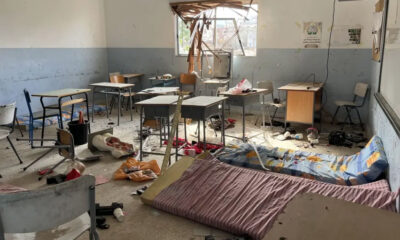
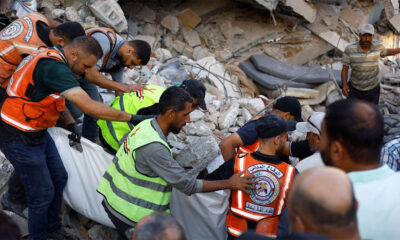
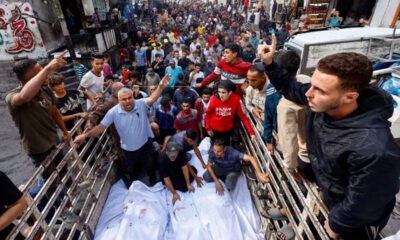
An Israeli strike hit a mosque where displaced people sheltered near the main hospital in the central Gaza town of Deir Al-Balah. Another four were killed in a strike on a school-turned-shelter near the town. The military said both strikes targeted militants. An Associated Press journalist counted the bodies at the Al-Aqsa Martyrs Hospital morgue.
Israel’s military announced a new air and ground offensive in Jabaliya in northern Gaza, home to a refugee camp dating to the 1948 war surrounding Israel’s creation. Israel has carried out several operations there only to see militants regroup. The military said three soldiers were severely wounded in Sunday’s fighting in northern Gaza.
Israel reiterated its call for the complete evacuation of heavily destroyed northern Gaza, where up to 300,000 people are estimated to have remained.
“We are in a new phase of the war,” the military said in leaflets dropped over the area. “These areas are considered dangerous combat zones.” A later statement said three projectiles were identified crossing from northern Gaza into Israeli territory, with no injuries reported.
READ ALSO:
- Pastor slumps, dies during child dedication in Maiduguri church
- Police kill three suspects involved in attempt to kidnap Delta lawmaker’s wife
- FG presents CNG-buses to Ekiti govt, unveils conversion centres
Frantic residents fled again. “Since Oct. 7 to the present day, this is the 12th time that I and my children, eight individuals, have been homeless and thrown into the streets and do not know where to go,” said one, Samia Khader.
The Civil Defense — first responders operating under the Hamas-run government — said it recovered three bodies, including a woman and a child, after a strike hit a home in the Shati refugee camp.
Residents mourned. Imad Alarabid said on Facebook an airstrike on his Jabaliya home killed a dozen family members, including his parents. Hassan Hamd, a freelance TV journalist whose footage had aired on Al Jazeera, was killed in shelling on his home in Jabaliya. Al Jazeera reporter Anas Al-Sharif confirmed his death.
Nearly 42,000 Palestinians have been killed in Gaza since the war began, according to the Gaza Health Ministry. It does not say how many were fighters, but says a little over half were women and children.
Hamas-led militants killed some 1,200 people in the Oct. 7 attack and took another 250 hostage. They still hold around 100 captives, a third of whom are believed to be dead.
UK advises against travel while France seeks partial arms embargo on Israel
The United Kingdom on Sunday advised its citizens against non-essential travel to Israel due to the violent clashes in the Mideast. The Foreign, Commonwealth and Development Office also advised against all travel in parts of northern and southern Israel, most of the West Bank, and the Gaza Strip.
Last week the UK advised its citizens against all travel to Lebanon.
French President Emmanuel Macron on Sunday reiterated his call for a partial arms embargo on Israel, which had prompted an angry response from Israeli Prime Minister Benjamin Netanyahu.
Netanyahu had described such calls by Macron as a “disgrace.” Macron’s office insisted that “France is Israel’s unfailing friend” and called Netanyahu’s remarks “excessive.”
Later on Sunday, Netanyahu’s office said the two leaders had spoken and agreed to promote “a dialogue” on the matter. Macron’s office called the discussion “frank” and said both leaders “accepted their divergence of views.”
Israel bombards Gaza, southern Lebanon ahead of October 7 anniversary








International
Trump’s White House Press Secretary Quits After Just Five Days as Credentials Storm Erupts

WASHINGTON, DC — US President Donald Trump’s new White House press secretary, Katie Zacharia, has left her position after just five days on the job, following criticism of her first press briefing and questions about her professional credentials.
Zacharia’s departure was reported on Friday, October 16, 2026, after Trump disclosed that he had advised her to reconsider remaining in the high-profile position. A White House official subsequently confirmed that she was leaving the role.
The departure came just days after Trump announced her appointment to succeed Karoline Leavitt on Friday, October 9. Zacharia began work on Monday, October 12, and held her first White House press briefing the following day, Tuesday, October 13.
The brief tenure quickly became controversial after Zacharia’s first interaction with journalists attracted criticism. The briefing lasted approximately 14 minutes, during which she took questions from only three reporters, prompting scrutiny of her performance as the administration’s principal spokesperson.
The controversy deepened on Thursday, October 15, when questions emerged about her professional credentials. During an interview with Fox News host Sean Hannity, Zacharia acknowledged that she had not passed the bar examination, despite holding a law degree from Pepperdine University.
READ ALSO:
- Imodi-Ijebu Muslim Community Bets on 20 Chiefs to Drive Education, Economic Growth
- Suspended Archbishop Ibezim Drags Anglican Primate to Court, Challenges Six-Month Leave
- Toyin Abraham Breaks Silence as Leaked Audio Sparks Fresh Nollywood Feud
In the United States, obtaining a law degree does not automatically qualify a graduate to practise as a licensed attorney. Admission to practise generally requires passing the relevant bar examination and satisfying other requirements set by the jurisdiction.
The revelation intensified scrutiny of how Zacharia’s legal background had been presented before her appointment, further complicating her early days in the White House role.
Zacharia defended her handling of the first briefing, explaining that she had limited time to prepare. She also indicated that the session was intentionally brief because Trump was expected to speak to reporters later that morning.
Trump, meanwhile, said he had encouraged her to consider whether the position was right for her, arguing that the media scrutiny surrounding the job could make it difficult to remain in the role.
The White House press secretary is responsible for communicating the president’s positions, explaining administration policies and responding to questions from journalists. The position frequently involves contentious exchanges with the media and intense public scrutiny.
Before joining the White House, Zacharia worked in communications for Trump Media, the company behind the president’s Truth Social platform. She had also held a position at the Department of Homeland Security and worked as a conservative political commentator.
Her exit leaves the Trump administration needing to determine who will handle daily press briefings and serve as its principal spokesperson. As of Friday, October 16, the White House had not publicly announced a successor.
Zacharia’s departure followed a compressed timeline: Trump announced her appointment on October 9, she began work on October 12, delivered her first briefing on October 13 and left the position on October 16. The five-day description refers to her working tenure rather than five full days from the date her appointment was announced.
Trump’s White House Press Secretary Quits After Just Five Days as Credentials Storm Erupts
International
School Turns Death Trap as Roof Collapse Claims 22 Lives
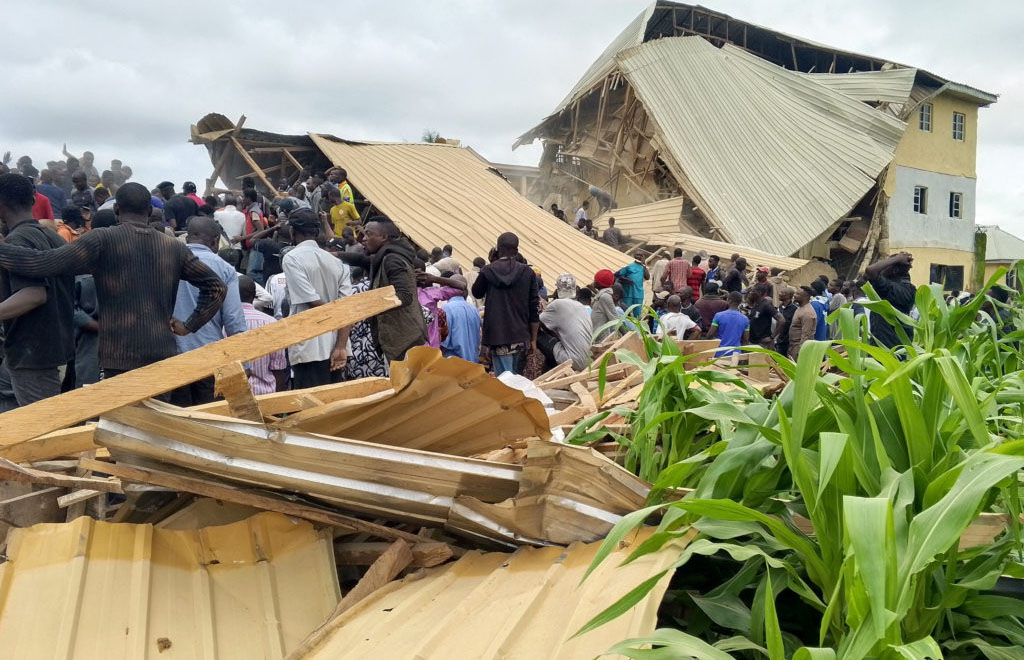
School Turns Death Trap as Roof Collapse Claims 22 Lives
At least 21 children and a teacher have been killed after the roof of a private school collapsed in Peshawar, north-western Pakistan, triggering an emergency rescue operation as authorities searched for people feared trapped beneath the rubble.
The incident occurred on Thursday, October 15, 2026, in the Dir Colony area of Peshawar, the capital of Khyber Pakhtunkhwa province. The victims were pupils attending the school when the roof gave way, according to reports citing local officials and hospital authorities.
More than 40 people were reportedly injured in the collapse, with several taken to hospital for treatment. Some of the injured were said to be in critical condition, raising concerns that the death toll could increase as rescue efforts continued.
Mohammad Asim, a spokesperson for Lady Reading Hospital, confirmed that children and a teacher were brought to the facility after the incident. Early reports said the children killed were all aged 13 or younger.
Emergency responders, including personnel from Rescue 1122, were deployed to the scene to remove debris, search for survivors and transport injured pupils to medical facilities. Rescue workers continued to check the wreckage for anyone who might still be trapped beneath the collapsed structure.
READ ALSO:
- Outrage as Residents Scoop Groundnut Oil From Lagos Tanker Crash Scene
- Shettima Attacks Atiku Over Tinubu Remarks, Questions Subsidy Plan
- 2027: We Know How to Stop Tinubu From Getting Second Term – Momodu
The cause of the collapse had not been established at the time of reporting. Authorities are expected to investigate the circumstances surrounding the incident, including the condition of the school building and whether construction and safety standards were observed.
Pakistan’s Prime Minister, Shehbaz Sharif, expressed sorrow over the loss of lives and extended condolences to the bereaved families. He also prayed for the strength of the families affected by the tragedy.
The disaster has renewed concerns about building safety and construction standards in Pakistan, where structural collapses have repeatedly caused deaths and injuries. Poor construction materials and weak enforcement of safety regulations have been cited in reports on previous incidents, although the cause of the Peshawar collapse remains unconfirmed.
In June 2026, a roof collapse at a tutoring centre in Lahore killed at least 14 children. The recurring incidents have intensified calls for stricter inspections of educational facilities and stronger enforcement of building regulations to protect pupils and school staff.
Authorities are expected to establish what caused the latest collapse and determine whether any safety breaches contributed to the tragedy.
School Turns Death Trap as Roof Collapse Claims 22 Lives
International
Nigeria Secures UN Human Rights Council Seat With 172 Votes
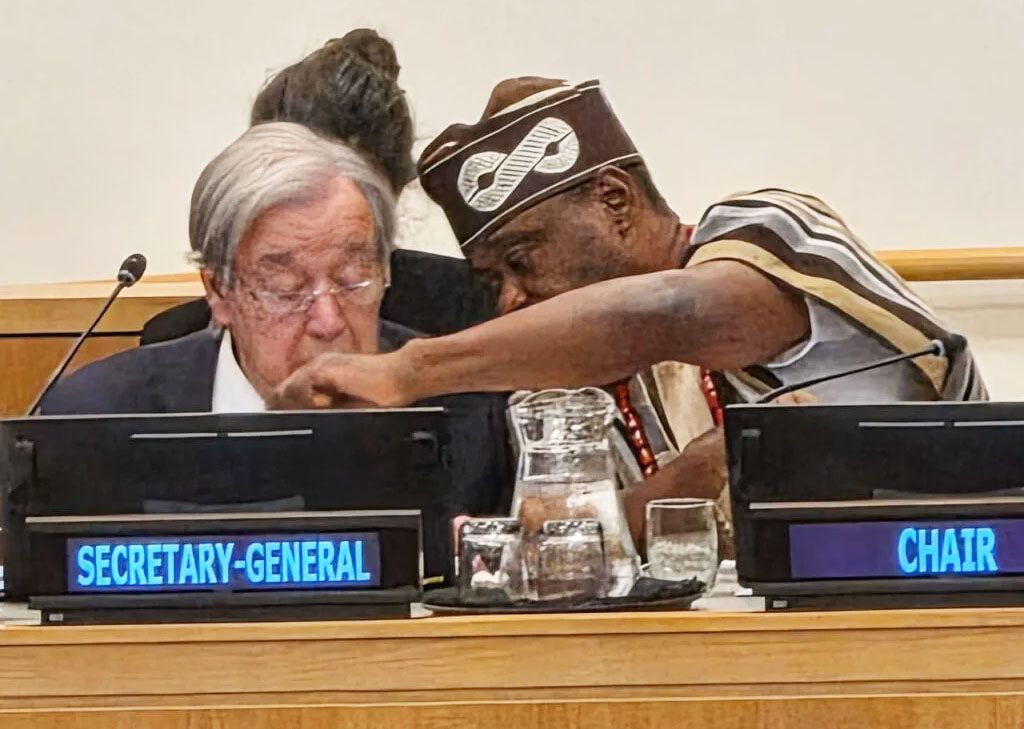
Nigeria has secured a seat on the United Nations Human Rights Council (UNHRC) after receiving 172 votes in an election by the UN General Assembly, earning the country a three-year term on the international body responsible for promoting and protecting human rights worldwide.
The election was held on Tuesday, October 13, 2026, at the United Nations headquarters in New York. Nigeria will serve on the 47-member council from January 1, 2027, to December 31, 2029.
Nigeria was among 15 countries elected to the council for the new term. The other successful candidates included Zambia, Ghana, Burundi, Brazil, the Dominican Republic, Uruguay, Germany, Ireland, Japan, Jordan, Kuwait, Nepal, Moldova and Ukraine.
Among the African candidates, Zambia received 177 votes, Ghana secured 173, Nigeria obtained 172, while Burundi received 160 votes.
The election gives Nigeria an opportunity to participate in international deliberations on human rights standards, alleged violations and measures aimed at improving the protection of fundamental freedoms across the world.
However, the process has attracted criticism from human rights organisations because the election was uncontested. Regional groups nominated exactly as many candidates as there were available seats, meaning there was no competitive ballot among rival candidates within the respective groups.
The UN Human Rights Council is an intergovernmental body based in Geneva, Switzerland. Established in 2006, it is mandated to address human rights violations, promote respect for fundamental freedoms and make recommendations to governments and the international community.
READ ALSO:
- Houthi Missile Targeting Riyadh Shot Down as Debris Injures Four, Damages 15 Homes
- Outrage as Israeli Settlers Torch Mosque, Burn Vehicle in Occupied West Bank
- Attempted Suicide: ‘If You Survive, We’ll Jail You’ – Akpabio
The council comprises 47 member states elected by the UN General Assembly through a secret ballot. Its seats are allocated among five regional groups to ensure geographical representation, and members serve staggered three-year terms.
The body examines human rights situations in individual countries, conducts its Universal Periodic Review of UN member states and considers complaints and reports concerning alleged abuses. It can also appoint independent experts, establish commissions of inquiry and authorise fact-finding missions to investigate serious allegations.
Although the council plays an important role in international human rights oversight, it does not operate as a criminal court and cannot independently impose criminal sentences on individuals accused of abuses.
Nigeria’s election comes amid continuing international scrutiny of human rights conditions in several countries, including concerns about police conduct, accountability, freedom of expression and the treatment of vulnerable groups.
The selection of countries with contested human rights records has been criticised by advocacy organisations, which argue that uncontested elections can weaken accountability and reduce pressure on candidates to demonstrate their commitment to protecting fundamental rights.
The criticism has also raised questions about how elected countries will use their positions on the council to address allegations of abuses and support international human rights standards.
For Nigeria, membership offers a platform to contribute to debates on issues such as unlawful killings, torture, discrimination, the rights of women and children, freedom of expression and the protection of civilians during armed conflicts.
The country will also be expected to participate in council sessions, consider resolutions and engage with other member states on international human rights concerns.
Nigeria’s three-year membership begins in January 2027. Its performance on the council will be watched alongside its domestic human rights record, including how authorities address allegations of misconduct and strengthen accountability and protection for citizens.
The election is therefore both a diplomatic achievement for Nigeria and an opportunity for the country to demonstrate its commitment to the principles the council was established to uphold.
Nigeria Secures UN Human Rights Council Seat With 172 Votes
-

 metro3 days ago
FG Begins Rollout of 3,700 Telecom Towers to Connect 20m Nigerians
-
 Education3 days ago
Tinubu Scraps Recruitment Waiver Requirement for Federal Universities
-
 metro3 days ago
Oyo Baby Trafficking Scandal: Mother, Doctor Arrested Over Alleged ₦2m Sale of Infant
-
 News3 days ago
Akpabio Under Fire as Senators Move to Secure His Return as Senate President in 2027
-

 Sports3 days ago
Lamine Yamal Shines as Barcelona Thrash Real Betis 5-2
-
 metro3 days ago
Kano: Soldiers Kill Two Kidnappers, Rescue Victim, Recover ₦10m
-

 metro2 days ago
NAFDAC Probes Corps Member’s Death at Enugu Camp as Fake Drug Claims Emerge
-

 Africa3 days ago
Nairobi Mother Says Husband Abandoned Her During Childbirth, Paid Dowry for Another Woman