

International
Israel marks one year of Hamas attack as fighting rages
Israel marks one year of Hamas attack as fighting rages
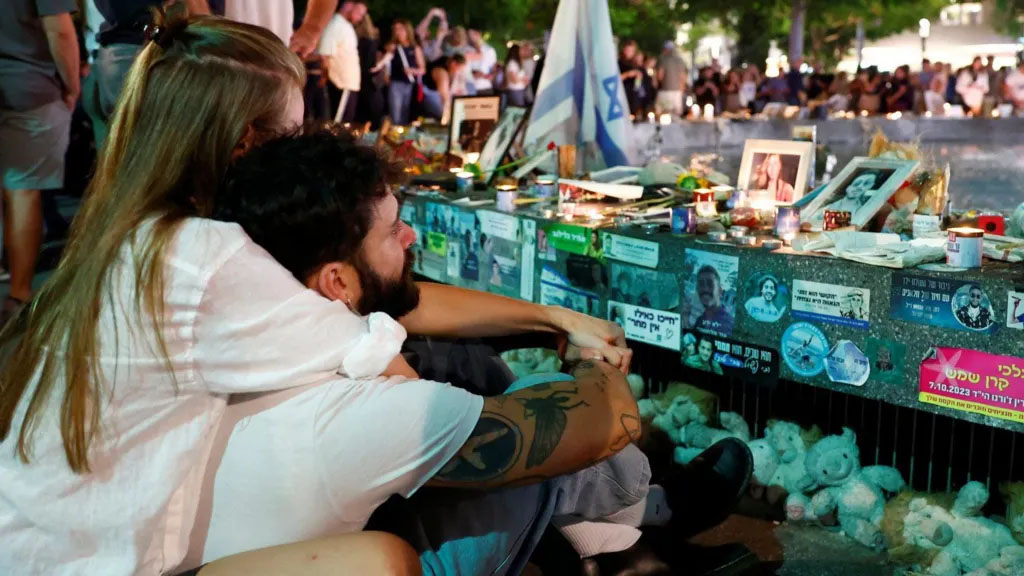
Israel has held ceremonies to remember the victims of the mass killings and abductions carried out by Hamas on 7 October 2023, against a backdrop of continuing fighting in the Gaza Strip and Lebanon.
A year on from the attack – that saw some 1,200 people killed and 251 taken hostage – Israeli PM Benjamin Netanyahu vowed to stop such an assault happening again, saying Israel’s armed forces were “changing the security reality” of the region.
Since 7 October, nearly 42,000 people have been killed during Israel’s offensive in Gaza, according to the Hamas-run health ministry.
As the day of commemorations unfolded, Israel said it had intercepted more than 100 rockets fired by Hezbollah in Lebanon as well as projectiles launched by Yemen’s Houthis and from Hamas in Gaza.
Overnight, rocket warning sirens continued to sound in northern Israel, and several more town were declared closed military zones, as Israel looks set to expand its ground offensive across the Lebanon border.
On Tuesday morning, the Israel Defense Forces (IDF) said Suhail Hussein Husseini, Hezbollah’s logistics commander, was killed in a “precise, intelligence-based strike in the area of Beirut” on Monday. Hezbollah has not commented.
Husseini was responsible for the budgeting and logistical management of Hezbollah’s most sensitive projects, including its war plans and other special operations, the IDF said.
The US has indicated that it supports targeting Hezbollah in Lebanon – but fears that what has been described as a limited operation by Israel could quickly turn into a larger-scale, prolonged conflict.
And as American and Israeli officials discuss Israel’s response to last week’s unprecedented Iranian missile attack, CIA director William Burns has warned that there is a “very real danger of a further regional escalation”.
Last October, gunmen from Hamas in Gaza broke through the border fence and rampaged through nearby Israeli villages, Kibbutzim, military posts and the Nova music festival.
READ ALSO:
- Gov Ododo approves N72,500 minimum wage for Kogi workers
- I’ve done everything possible for peace to reign in Rivers – Fubara
- Fishermen kill Hippopotamus in Kebbi river after attack
On Monday, families of the hundreds killed and dozens of people taken hostage at the festival gathered at the site early for the first memorial event of the day.
Holding pictures of loved ones they listened to the last track played at the festival before Israeli President Isaac Herzog led a minute’s silence at 06:29, the moment that the attack began.
In nearby communities also attacked by Hamas gunmen, smaller events were held.
Elsewhere, Netanyahu visited the Iron Sword memorial in Jerusalem for victims of the Hamas attacks, lighting a candle to “remember our fallen, our hostages”.
In Tel Aviv’s biggest park, Israeli families gathered for an event billed as the Bereaved Families Memorial Ceremony, which served as an alternative to the official government memorial ceremony.
Some of Israel’s most popular singers gave emotional performances, while images of victims flashed on the screens.
The stage was adorned with items symbolising the attacks including burnt and broken cars from the Nova music festival, and a child’s bicycle and swing set from the Be’eri kibbutz.
Outside Israel, US President Joe Biden joined other world leaders in condemning what the “unspeakable brutality” of the Hamas attacks a year ago.
He also expressed horror at the subsequent war, saying “far too many civilians had suffered, far too much”.
Mourners also gathered at vigils around the world including in Australia, South Africa, Germany and the US.
In the UK, Sir Keir Starmer told the House of Commons he supported Israel’s right to defend itself. But Britain’s prime minister insisted there was no military solution to the current crisis and appealed for all sides to “step back”.
However as the memorial services took place, the wider conflict in the region raged.
The Israeli military said Hezbollah had fired more than 130 rockets across the border from Lebanon. Most were shot down, but some hit the cities of Haifa and Tiberius.
Earlier Hamas also launched rockets at Tel Aviv from Gaza. The army said ballistic missiles had been fired at Israel from Yemen but had been intercepted.
Through the day, Israel carried out multiple air strikes and several ground incursions in Lebanon.
The Israeli military said it was expanding operations against Hezbollah, warning residents in southern Lebanon to avoid using boats in the sea or rivers south of the Awali river.
Three weeks of intense Israeli strikes and other attacks in Lebanon have killed more than 1,400 people, and displaced another 1.2 million, according to Lebanese authorities.
Hezbollah – a Shia Islamist political, military and social organisation that wields considerable power in Lebanon – has remained defiant despite suffering a series of devastating blows in recent weeks, including the killing of its leader and most of its top military commanders.
On Monday, the group insisted it was “confident… in the ability of our resistance to oppose the Israeli aggression”.
Israel’s government – which designates Hezbollah as a terrorist organisation – has pledged to make it safe for tens of thousands of displaced residents to return to their homes near the Lebanese border after a year of cross-border fighting sparked by the Gaza war.
The hostilities have escalated steadily since Hezbollah began firing rockets into northern Israel on 8 October 2023, the day after its ally Hamas’s deadly attack on southern Israel.
Israel marks one year of Hamas attack as fighting rages
BBC






International
US Allows Iran’s Core UN Delegation, Denies Visas to Some Officials
US Allows Iran’s Core UN Delegation, Denies Visas to Some Officials
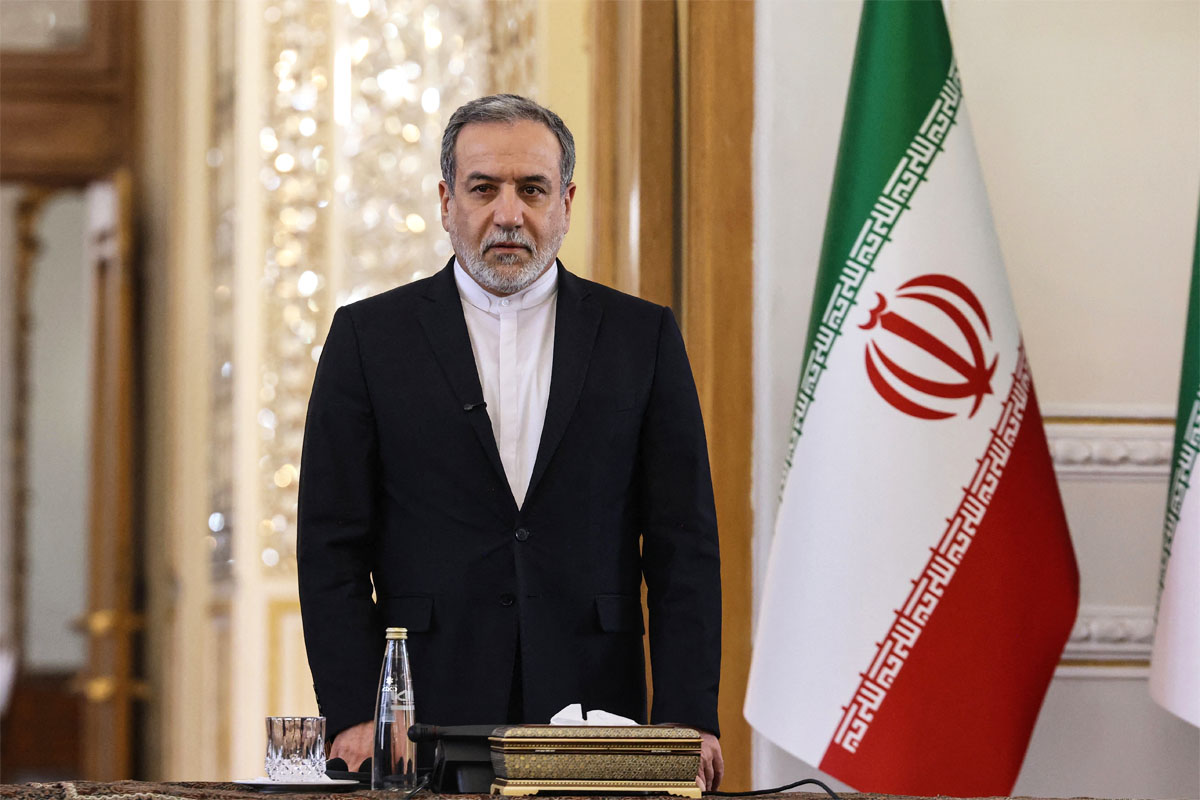
The United States has refused to issue visas to some members of Iranian President Masoud Pezeshkian’s delegation, including members of his communications team, ahead of his planned appearance at the United Nations General Assembly (UNGA) in New York.
Iranian state media reported the visa refusals on Monday, September 21, 2026, while confirming that the United States has authorised the core Iranian delegation to travel to New York for the high-level UN gathering.
Pezeshkian is expected to address the 81st UN General Assembly on Wednesday, making his planned visit the highest-level Iranian presence in the United States since the conflict involving Iran, Israel and the US escalated earlier this year.
Iran’s state news agency, IRNA, reported that the Trump administration had denied visas to certain members of Pezeshkian’s high-level delegation, including personnel responsible for communications.
The Mehr news agency also reported the visa denials, citing a spokesperson for the Iranian presidency.
The decision does not amount to a blanket refusal of entry to the Iranian delegation. The United States has authorised the core delegation, which includes President Pezeshkian and Foreign Minister Abbas Araghchi, to attend the UN General Assembly.
The distinction is significant because the annual UN gathering brings together representatives of member states at the headquarters of the United Nations in New York, which is hosted by the United States.
The current arrangement follows restrictions imposed by Washington on the Iranian delegation during last year’s General Assembly. UN records show that Iran previously raised concerns over visa delays and denials affecting members of its delegation and argued that such restrictions hindered its participation in UN activities.
For this year’s meeting, Washington has also imposed restrictions on the movement and activities of the Iranian delegation while it is in the United States.
READ ALSO:
- Jetour T1 Storms Abuja as Automaker Accelerates Nigeria Expansion
- Kidnapped Female Police Officer Found Dead in Ebonyi as Suspect Leads Police to Remains
- CNN, MS NOW, Politico Sue Trump Over White House Access Ban
The State Department has said the delegation will face restrictions on its movements and on the purchase of certain luxury goods and other items. The measures come amid the absence of normal diplomatic relations between Iran and the United States and the continuing conflict between the two countries.
Iranian Foreign Minister Abbas Araghchi left Iran on Sunday for the United States, travelling through Qatar.
The Iranian government has also used Qatar as an intermediary in communicating with Washington over the Strait of Hormuz, a crucial route for global oil and gas shipments.
Tehran has conveyed conditions for reopening the waterway, according to Iranian officials, while the United States has imposed measures against Iranian ports.
The Strait of Hormuz has become a major issue in the wider conflict because of its importance to international energy supplies.
Pezeshkian’s expected appearance at the UN General Assembly comes at a particularly sensitive moment in relations between Tehran and Washington.
The conflict has also become a major issue for this year’s UN gathering, with world leaders expected to discuss the Middle East, the war involving Iran, the conflict in Ukraine, the situation in Gaza and other international crises.
The Iranian president’s presence in New York could provide an opportunity for diplomatic contacts on the sidelines of the General Assembly, although the two governments remain sharply divided over the conflict and other issues.
US President Donald Trump is also attending the UN General Assembly this week and is expected to address the gathering.
Trump has indicated that he remains open to discussions involving Iran, while Tehran has continued to communicate through intermediaries.
The visa dispute therefore adds another layer to already strained US-Iran relations, but it has not prevented Iran’s president and foreign minister from attending the UN meeting.
For now, Pezeshkian’s scheduled appearance means Iran will have senior-level representation at the 81st UN General Assembly, despite Washington’s refusal to issue visas to some members of his wider delegation.
The immediate focus will be on Pezeshkian’s address, Iran’s position on the ongoing conflict and whether the UN gathering creates opportunities for further diplomatic engagement between Tehran and Washington.
US Allows Iran’s Core UN Delegation, Denies Visas to Some Officials
International
CNN, MS NOW, Politico Sue Trump Over White House Access Ban
CNN, MS NOW, Politico Sue Trump Over White House Access Ban
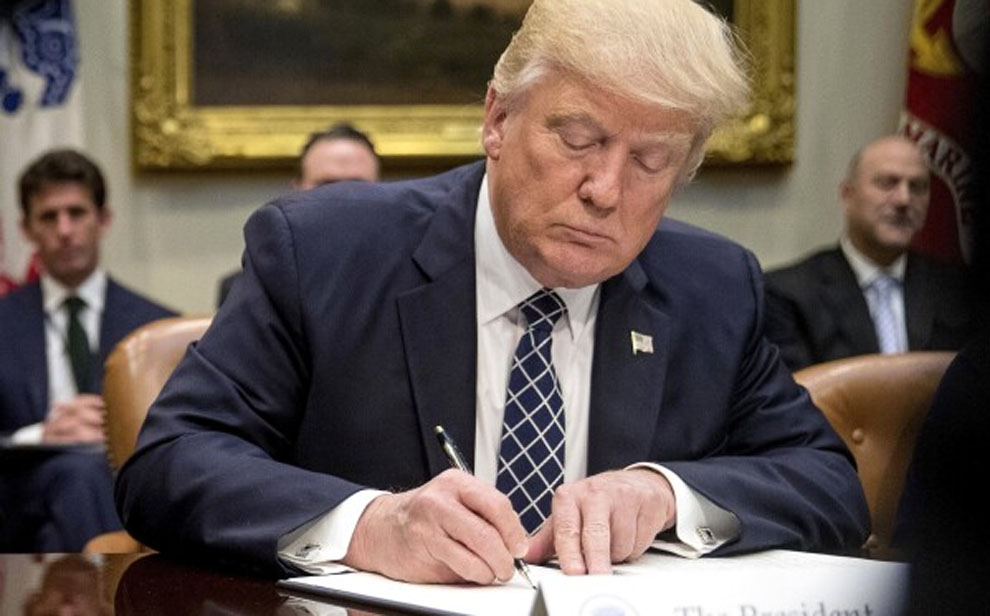
CNN, MS NOW and Politico have filed a federal lawsuit against the administration of US President Donald Trump, challenging the decision to revoke their journalists’ access to the White House.
The three major news organisations are asking a federal court in Washington, DC, to intervene after the Trump administration barred their reporters from the White House grounds and deactivated or confiscated their press credentials.
The organisations argue that the administration’s action violated their First Amendment press rights and the Fifth Amendment’s due process protections, alleging that their access was withdrawn because of dissatisfaction with their reporting.
The case was filed in the US District Court for the District of Columbia, with the media organisations seeking expedited consideration of their challenge and an order restoring their access to the White House.
The lawsuit names President Donald Trump, White House Chief of Staff Susie Wiles, White House spokesperson Steven Cheung and Secret Service Director Sean Curran as defendants.
The legal action followed Trump’s decision to exclude the three organisations from the White House after he accused them of publishing what he described as “fake news” about his administration.
Trump has argued that journalists remain free to report on him but that the administration is not required to provide White House access to every news organisation.
The president also defended the decision on social media, where he characterised the affected outlets as a threat to national security. The reports on the lawsuit did not indicate that the administration had presented evidence publicly establishing such a threat.
The dispute escalated on Saturday, September 19, when reporters working for CNN, MS NOW and Politico were turned away from the White House complex.
Their press access was reportedly deactivated or their credentials confiscated, preventing them from covering activities inside the presidential complex in the usual manner.
The organisations subsequently warned that the White House decision raised broader questions about whether a presidential administration could deny access to journalists because of disagreement with their reporting.
READ ALSO:
- JAMB Allows Candidates to Change Lost SIM, Email Addresses
- How Nigerians Can Get Federal High Court Affidavit Online Without Visiting Court
- Plateau Violence: Several Killed as Fresh Attacks Trigger Mass Exodus
In their court challenge, the outlets are expected to argue that the government cannot use access to public officials and government facilities as a means of punishing or influencing the content of news coverage.
The case comes as the Trump administration has significantly changed the way White House press access is managed.
The administration has increasingly exercised greater control over which journalists attend certain presidential events, while also expanding access for reporters from organisations it considers more favourable or less represented in traditional White House press coverage.
The latest dispute, however, concerns the removal of access from three established national news organisations at the same time.
The White House Correspondents’ Association (WHCA) has criticised the exclusion of the outlets and raised concerns about the implications for press access and government transparency.
Other media organisations and press-freedom groups have also expressed concern over the decision, arguing that government officials should not determine access based on whether they approve of particular news coverage.
The White House, on the other hand, has maintained that the administration has authority to determine access to the White House and has repeatedly accused some mainstream news organisations of inaccurate or unfair reporting.
The legal battle also has implications beyond the three organisations involved because federal courts have previously considered disputes between the executive branch and news organisations over access to the president.
One prominent case involved CNN reporter Jim Acosta during Trump’s first administration.
In 2018, the White House revoked Acosta’s press credentials following a confrontation during a presidential news conference. CNN challenged the decision in court, and a federal judge ordered the temporary restoration of his access.
The Trump administration has also been involved in a more recent dispute with the Associated Press.
The administration restricted AP’s access after the news agency declined to adopt Trump’s preferred terminology for the Gulf of Mexico. A federal judge later ordered the administration to restore the AP’s access in certain circumstances, although subsequent litigation resulted in distinctions between generally accessible areas and more restricted presidential events.
The current lawsuit involving CNN, MS NOW and Politico raises related but distinct questions about the government’s authority to control press access.
A central issue is expected to be whether the administration can exclude news organisations from access that is otherwise made available to members of the White House press corps because of disagreement with their reporting.
Another issue is the extent to which the First Amendment limits government decisions affecting journalists’ access, particularly when the alleged reason for exclusion is connected to the content or viewpoint of their reporting.
The media organisations are also challenging the process used to revoke their access, arguing that they were not given adequate notice or an opportunity to contest the decision before their credentials were withdrawn.
The case has already affected White House media arrangements beyond routine presidential coverage.
CNN had been scheduled to provide the television pool feed for Trump’s Monday trip to New York for the United Nations General Assembly, but the assignment was removed from the White House press schedule following the access dispute.
The White House press pool is important because participating organisations provide shared coverage, photographs, video and other material that can be used by news organisations that cannot send their own journalists to every presidential event.
The lawsuit therefore places questions of press freedom, government transparency and presidential control over media access at the centre of another federal court dispute involving the Trump administration.
For the three organisations, the immediate objective is restoration of access to the White House and the ability of their journalists to resume reporting from the presidential complex.
For the administration, the dispute involves its stated authority to determine who receives access to the White House and how that access is organised.
The court’s handling of the case could provide further guidance on the constitutional limits surrounding White House press credentials, particularly where access decisions are alleged to be connected to the content of journalists’ reporting.
Until the court rules, the competing claims remain disputed. The lawsuit itself does not establish that the administration violated the Constitution, while the White House’s allegations against the news organisations remain the administration’s stated position rather than findings by a court.
CNN, MS NOW, Politico Sue Trump Over White House Access Ban
International
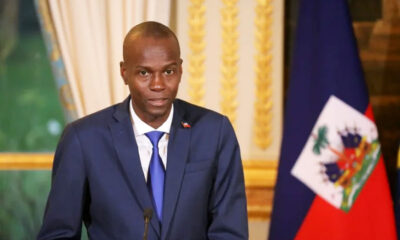
18 Suspects Transferred to US Over 2021 Killing of Haitian President Moïse
18 Suspects Transferred to US Over 2021 Killing of Haitian President Moïse
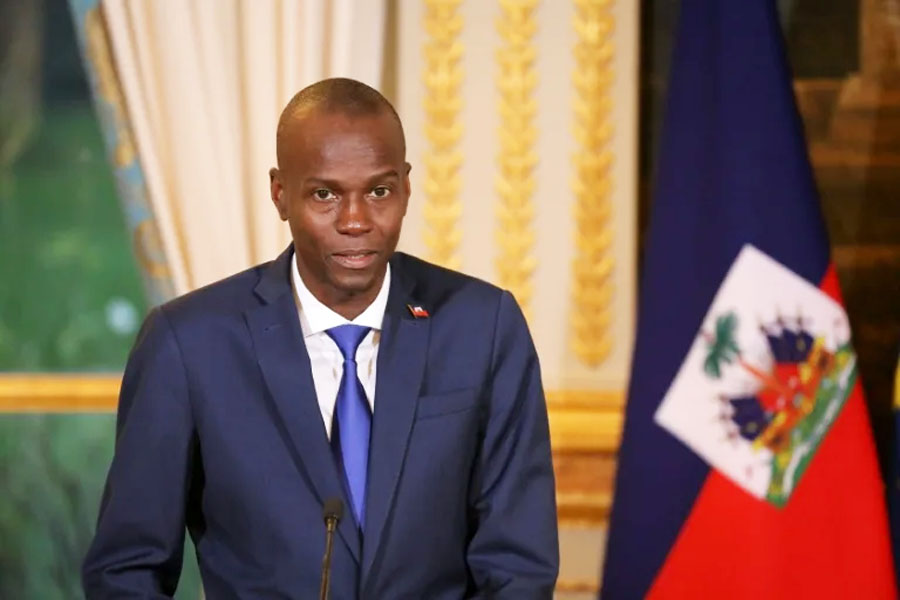
Eighteen suspects accused of involvement in the 2021 assassination of former Haitian President Jovenel Moise have been transferred from Haiti to the United States to face trial.
US officials said the suspects were transported to Florida on Sunday, as American authorities continue their prosecution of people allegedly connected to the plot.
Federal prosecutor Jason Reding Quinones said the suspects were flown from Haiti on a military aircraft to face proceedings in the Southern District of Florida.
He said US authorities had so far indicted 30 people in connection with the assassination and warned that the prosecutions were not over.
Among those transferred was Joseph Felix Badio, a former anti-corruption official with Haiti’s Ministry of Justice who has been identified as a major suspect in the investigation.
Haitian government and police sources said the other suspects included Colombian nationals who were allegedly part of the group involved in the operation.
READ ALSO:
- My Heart Has Always Been Home With You — Tinubu’s Powerful Message to Oluremi at 66
- Tinubu’s UNGA Absence Fuels Questions Over Planned Trump Meeting
- Messi Fires Stunning 75th Career Free-Kick to Reach 930 Goals in Inter Miami Draw
Colombian Nationals Among Suspects
Colombia’s Foreign Ministry confirmed that 17 of its citizens had been transferred from Haiti to the United States.
The ministry said the Colombian government was monitoring the development but had not participated in the decision or process that led to the transfer.
Moise was killed at his private residence in Port-au-Prince on July 7, 2021. Investigators said a group of about 20 Colombian military-trained mercenaries had been hired in connection with the operation.
The president’s security detail came under scrutiny after failing to prevent the attack.
In May, four men were convicted in a Miami federal court over charges connected to the plot, including conspiracy to kill or kidnap Moise and providing material support for the operation. They could face life imprisonment.
US prosecutors said the men were linked to CTU Security, a Florida-based private security company, and had allegedly been attracted by the prospect of lucrative contracts after Moise was removed from power.
The assassination plunged Haiti further into political and security turmoil. The country has since struggled with gang violence and remains without a president, while preparations continue for elections scheduled for December, subject to security conditions.
18 Suspects Transferred to US Over 2021 Killing of Haitian President Moïse
-

 metro2 days ago
Oyo Police: Student Who Died by Suicide Was Charged With Assault, Not ₦8,000 Debt
-

 metro3 days ago
Niger Miners’ Deaths: Families Demand Compensation, Justice for Victims
-

 metro3 days ago
Mambilla: ICC Raises Questions Over $500,000 Payment to Atiku’s Former Wife
-

 Entertainment3 days ago
“She Wanted to Stay Single”: Rema Opens Up About Rejection That Inspired Hit Song ‘Oh No’
-
 International18 hours ago
18 Suspects Transferred to US Over 2021 Killing of Haitian President Moïse
-

 Auto2 days ago
Abuja Demand Rises as Jetour Brings X70 Plus Experience to FCT
-

 metro2 days ago
Irreconcilable Developments: Wedding Cancelled 24 Hours Before Ceremony
-

 metro3 days ago
Niger Miners’ Deaths: Survivor Alleges Substance Was Sprayed in Cell as Probe Intensifies