
International
Israel will be ultimate loser in war with Hezbollah – Iran
Israel will be ultimate loser in war with Hezbollah – Iran
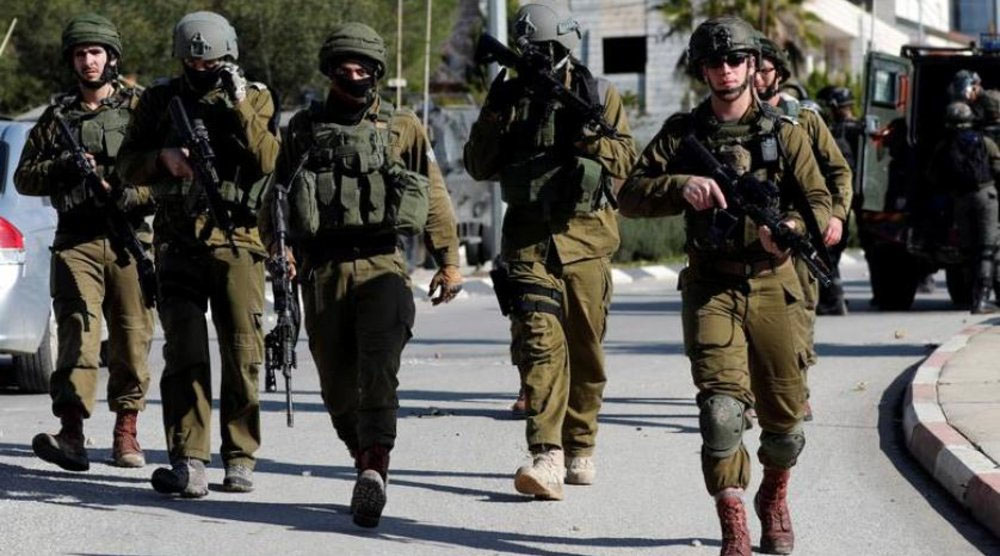
Iran says Hezbollah is capable of defending itself and Lebanon, warning Israel that it would be the “ultimate loser” in an all-out war with the Lebanese armed group.
Tehran’s statement on Friday came as fears of a major Israeli offensive in Lebanon continued to mount.
“Any imprudent decision by the occupying Israeli regime to save itself could plunge the region into a new war, the consequence of which would be the destruction of Lebanon’s infrastructure as well as that of the 1948 occupied territories,” Iran’s mission to the United Nations said in a social media post.
“Undoubtedly, this war will have one ultimate loser, which is the Zionist regime. The Lebanese Resistance Movement, Hezbollah, has the capability to defend itself and Lebanon – perhaps the time for the self-annihilation of this illegitimate regime has come.”
Israel also issued a threat to Iran-aligned Hezbollah on Friday with Foreign Minister Israel Katz saying “soon we will make the necessary decisions” about confronting the Lebanese group.
“The free world must unconditionally stand with Israel in its war against the axis of evil led by Iran and extremist Islam. Our war is also your war,” Katz said.
Hezbollah chief Hassan Nasrallah said this week that if the Israeli military goes to war in Lebanon, his group will use its rockets and drones to hit targets across the entire territory of Israel. He warned Hezbollah would wage a war with “no restraint and no rules and no ceilings”.
READ ALSO:
- Israeli bombing kills dozens in Gaza in ‘difficult and brutal day’
- Court orders Anambra cleric to pay bank manager N10m for human rights abuse
- Super Eagles: Marc Brys emerges as top candidate to replace Finidi George





International
Iran Threatens Strikes on US, Israeli Banks, Tech Giants
Iran Threatens Strikes on US, Israeli Banks, Tech Giants
Iran has vowed to launch strikes against economic and banking targets linked to the United States and Israel, while also identifying major technology companies as potential future targets, in a sharp escalation of the ongoing Middle East conflict. The warnings follow a reported strike on an Iranian bank in Tehran, which Iranian officials say was hit by US and Israeli forces, killing an unspecified number of employees.
According to Iran’s Khatam al‑Anbiya military command, the attacks give the country “free rein to target economic centres and banks belonging to the United States and the Zionist regime.” The military urged civilians in the region to avoid going within one kilometre of bank buildings, warning of the heightened risk of strikes.
READ ALSO:
- BREAKING: Tambuwal Quits PDP, Defects to ADC Amid Internal Party Crisis
- UN Condemns Iran’s Attacks on Gulf States, Jordan as Russia, China Abstain
- Iran Warns Oil Could Hit $200, Threatens Strait of Hormuz Blockade
Iranian Foreign Minister Abbas Araghchi stated that the bank strike was a serious provocation, adding, “Our powerful armed forces will exact retribution for this crime.” Iranian state media, including the Tasnim News Agency, also published a list of potential future targets in the Gulf and Israel, naming offices and data centres of tech giants such as Amazon, Google, Microsoft, Nvidia, IBM, Oracle, and Palantir.
The escalation comes after Amazon Web Services data centres in the UAE were reportedly struck by Iranian drones last week, disrupting cloud services across the region. Tasnim described the situation as an “infrastructure war”, signalling Iran’s intent to expand the conflict beyond conventional military targets to economic and technological infrastructure.
Analysts say this development could have far-reaching consequences for regional security, global financial stability, and digital networks, though the current threats remain largely warnings rather than confirmed attacks on US or Israeli economic interests. The situation highlights the increasing vulnerability of critical economic and tech infrastructure amid escalating tensions in the Middle East.
Iran Threatens Strikes on US, Israeli Banks, Tech Giants
International
UN Condemns Iran’s Attacks on Gulf States, Jordan as Russia, China Abstain
UN Condemns Iran’s Attacks on Gulf States, Jordan as Russia, China Abstain
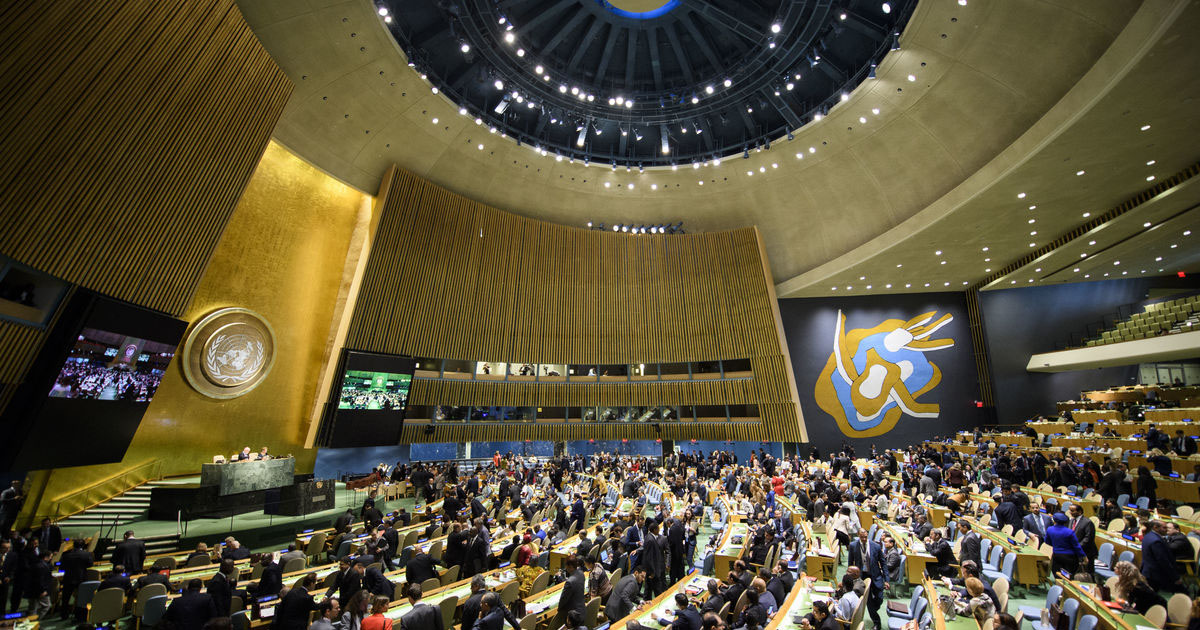
The United Nations Security Council (UNSC) on Wednesday adopted a resolution condemning Iran’s missile and drone attacks on Gulf Cooperation Council (GCC) states and Jordan, amid growing international concern over escalating tensions in the Middle East. The resolution, presented by Bahrain and co‑sponsored by 135 UN member countries, passed with 13 votes in favor, while Russia and China abstained, allowing the measure to move forward without a veto.
The resolution emphasises “strong support for the territorial integrity, sovereignty and political independence” of the GCC states and Jordan. It declares that Iran’s attacks “constitute a breach of international law and a serious threat to international peace and security.” It also specifically condemns attacks on civilian infrastructure, noting that these strikes resulted in civilian casualties and damage to civilian buildings, highlighting the humanitarian consequences of the conflict.
Bahrain’s UN envoy, Jamal Fares Alrowaiei, welcomed the resolution, saying it demonstrates the Security Council’s commitment to maintaining international peace and security. “It proved that the Council is committed to maintaining international peace and security. We express our deep gratitude to all member states of the United Nations that co‑sponsored this resolution. Their number amounted to 135 countries,” he said. He noted that the overwhelming international support reflects a collective recognition of the threat posed by Iran’s attacks against the Gulf states and Jordan.
READ ALSO:
- Iran Warns Oil Could Hit $200, Threatens Strait of Hormuz Blockade
- US Warns Russia, China: ‘You’re Playing With Fire’ Over Iran Support
- ADC Urges FG to Cap Petrol Prices as Global Oil Market Volatility Bites
While the resolution received broad backing, both Russia and China abstained. Analysts suggest their decision reflects geopolitical caution, balancing diplomatic ties with Tehran against the need to avoid appearing to endorse actions condemned by the international community. Neither country formally opposed the resolution, allowing it to pass without exercising veto power.
The UNSC action follows a surge of Iranian missile and drone attacks on GCC states, including Saudi Arabia, UAE, Kuwait, Qatar, and Oman, as well as Jordan, targeting military and civilian infrastructure. These attacks have raised global security concerns, disrupted critical services, and affected energy markets, particularly with threats to shipping through the Strait of Hormuz, a strategic oil transit route. The escalating situation has prompted calls for diplomatic engagement from leaders in the European Union, the G7, and other international bodies to prevent further conflict and stabilise the region.
Experts warn that continued hostilities could further destabilise the Middle East, disrupt global oil exports, and threaten maritime security in one of the world’s most vital energy corridors. The resolution reflects strong international condemnation of Iran’s actions and underscores the importance of coordinated diplomatic efforts to reduce tensions while ensuring compliance with international law.
UN Condemns Iran’s Attacks on Gulf States, Jordan as Russia, China Abstain
International
Iran Warns Oil Could Hit $200, Threatens Strait of Hormuz Blockade
Iran Warns Oil Could Hit $200, Threatens Strait of Hormuz Blockade
Iran has warned that it will not allow “a single litre of oil” to pass through the Strait of Hormuz for the benefit of the United States, Israel and their allies, raising fears of a major disruption to global energy supplies and a potential surge in global oil prices to $200 per barrel.
The warning was issued by Ebrahim Zolfaqari, spokesperson for Iran’s Khatam al‑Anbiya Central Headquarters, who said Tehran could target any vessels carrying oil destined for countries it considers hostile if tensions in the region continue to escalate.
“Let us firmly reiterate that we will never allow even a single litre of oil to pass through the Strait of Hormuz for the benefit of the US, the Zionists and their partners,” Zolfaqari said.
“Any vessel or oil shipment intended for America, the Zionist regime or their hostile allies will be a legitimate target for us.”
The comments come amid escalating tensions between Iran and the United States following warnings from Donald Trump, the President of the United States, who threatened that Iran would face “death, fire and fury” if it attempted to disrupt international shipping through the critical maritime corridor.
Zolfaqari warned that the expansion of the conflict could send crude oil prices soaring, noting that instability in the region directly affects global energy markets.
READ ALSO:
- US Warns Russia, China: ‘You’re Playing With Fire’ Over Iran Support
- ADC Urges FG to Cap Petrol Prices as Global Oil Market Volatility Bites
- French automakers return to Nigeria, team up with Dangote, Coscharis for 44,000-vehicle production
“With the expansion of war in the region, you should prepare for $200 per barrel because the price of oil depends on security in the region, and you are the source of insecurity,” he said.
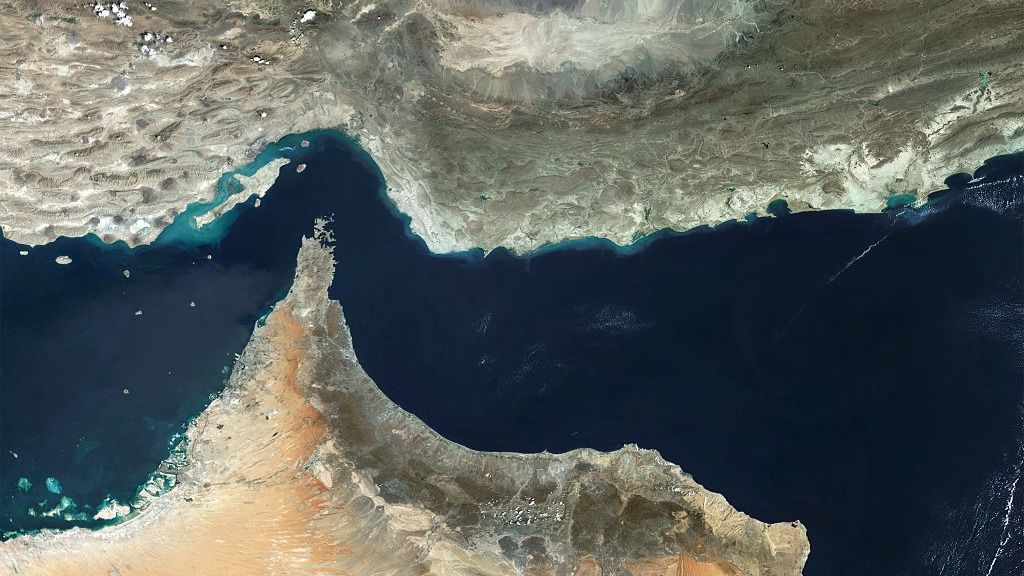
The Strait of Hormuz, located between Iran and Oman, connects the Persian Gulf to the Gulf of Oman and the Arabian Sea and serves as one of the most strategic chokepoints in global energy trade.
An estimated 20 percent of the world’s oil supply—around 18 to 20 million barrels per day—passes through the narrow waterway, making any disruption a major concern for global markets.
A blockade or prolonged disruption could significantly impact exports from major Gulf producers including Saudi Arabia, Iraq, Kuwait, Qatar and the United Arab Emirates.
Energy markets have already reacted to the rising tensions, with Brent crude oil prices briefly crossing $100 per barrel, the highest level in several months, as traders respond to fears of supply disruptions.
Maritime security agencies have also reported increased attacks on commercial vessels transiting the region, raising concerns over the safety of shipping routes in the Gulf.
Amid the growing crisis, the International Energy Agency (IEA) announced that its 32 member countries will release 400 million barrels of oil from emergency reserves in an effort to stabilise markets and prevent severe supply shortages.
According to Fatih Birol, Executive Director of the IEA, the coordinated action represents the largest emergency oil release in the organisation’s history.
The move surpasses the 182 million barrels released in 2022 following the Russian invasion of Ukraine, highlighting the scale of concern over the current Middle East crisis.
Energy analysts warn that while emergency reserves could temporarily ease pressure on markets, the most important factor for stabilising prices remains the restoration of safe passage through the Strait of Hormuz.
Meanwhile, concerns are growing in Nigeria over the potential impact of the crisis on domestic fuel prices.
The African Democratic Congress (ADC) has called on the Federal Government to introduce a temporary cap on petrol prices to protect Nigerians from rising fuel costs driven by global oil market volatility.
In a statement signed by its National Publicity Secretary, Bolaji Abdullahi, the party warned that the Middle East crisis could worsen Nigeria’s already severe cost-of-living crisis.
“ADC calls on the Federal Government to immediately introduce a temporary and time-bound cap on petrol prices to prevent further increases that continue to push the cost of living beyond the reach of millions of Nigerians,” Abdullahi said.
The party also criticised the government’s plan to distribute 100,000 compressed natural gas (CNG) conversion kits, arguing that the figure represents less than one percent of Nigeria’s more than 11 million vehicles.
According to the party, the programme is further constrained by the limited number of CNG refuelling stations across the country, making the transition away from petrol difficult for many motorists.
ADC warned that while global oil market volatility may be triggered by external shocks, it should not be used to justify unchecked fuel price increases in Nigeria’s already fragile economy.
Analysts say any prolonged disruption to shipping in the Strait of Hormuz could trigger one of the biggest energy shocks in decades, with global consequences including higher fuel prices, rising inflation and increased transport costs.
Iran Warns Oil Could Hit $200, Threatens Strait of Hormuz Blockade

-

 metro3 days ago
Tragedy in Ibadan as Woman, 26, Dies at Boyfriend’s Residence
-

 metro12 hours ago
Ikeja Electric Apologises to Customers Over Power Disruptions
-

 Business2 days ago
JUST IN: Dangote Refinery Cuts Petrol, Diesel Ex-Depot Prices Amid Market Relief
-

 metro3 days ago
Students Escape as Four-Storey School Building Collapses in Lagos
-

 News1 day ago
India, Other Countries Reject Tinubu’s Ambassadorial Nominees
-

 Politics3 days ago
BREAKING: Zamfara Governor Dauda Lawal Defects from PDP to APC
-

 News3 days ago
OYOSUBEB Chairman Adeniran Joins 2027 Oyo Governorship Race
-
 International3 days ago
Beijing Warns Against Threats to Iran’s New Leader Mojtaba Khamenei