

International
Israeli air strikes target Palestinian refugee camp, Hezbollah TV studios in Beirut
Israeli air strikes target Palestinian refugee camp, Hezbollah TV studios in Beirut
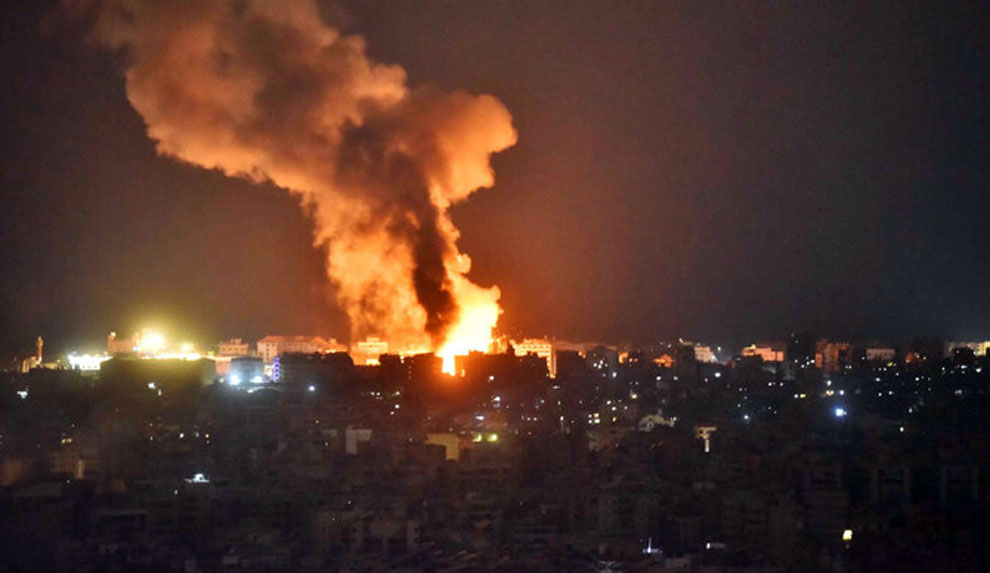
BEIRUT: Powerful new explosions rocked Beirut’s southern suburbs late Saturday as Israel expanded its bombardment in Lebanon, striking a Palestinian refugee camp deep in the north for the first time as it targeted both Hezbollah and Hamas fighters.
A series of strong explosions were reported near midnight after Israel’s military called on residents to evacuate areas in Beirut’s Haret Hreik and Choueifat neighborhoods. Residents were also told to evacuate buildings in the areas of Al-Kafaat, Al-Laylaki, and the Madi neighborhood.
Blasts illuminated the skyline of the densely populated southern suburbs, where Hezbollah has a strong presence. They followed a day of sporadic strikes and the nearly continuous buzz of reconnaissance drones.
The strong explosions began near midnight and continued into Sunday after Israel’s military urged residents to evacuate areas in Dahiyeh, the predominantly Shiite collection of suburbs on Beirut’s southern edge.
A building near a road leading to the Rarik Hariri International Airport was among those hit, triggering violent explosions followed by a massive fire. Social media reports claimed that one of the strikes hit an oxygen tank storage facility, but this was later denied by the owner of the company Khaled Kaddouha.
A building known to house studios of Hezbollah’s Al-Manar TV channel was also targeted in the strikes.
Thousands of people in Lebanon, including Palestinian refugees from the Sabra and Shatila camps, continued to flee the widening conflict in the region, while rallies were held around the world marking the approaching anniversary of the start of the war in Gaza.
A video clip posted by LBCI Lebanon News on the X platform showed chaos and confusion along the streets as people rushed for their safety.
Israel’s military confirmed it was striking targets near Beirut and said about 30 projectiles had crossed from Lebanon into Israeli territory, with some intercepted.
READ ALSO:
- 29-year-old rapist, serial killer arrested in Ogun
- Anger, grief in south Lebanon city, almost deserted after Israeli strikes
- Netanyahu: Macron’s call for arms embargo ‘a disgrace’
Shortly thereafter, Hezbollah claimed in a statement that it successfully targeted a group of Israeli soldiers near the Manara settlement in northern Israel “with a large rocket salvo, hitting them accurately.”
On Saturday, Israel’s attack on the northern Beddawi camp killed an official with Hamas’ military wing along with his wife and two young daughters, the Palestinian militant group said. Hamas later said another military wing member was killed in Israeli strikes in Lebanon’s eastern Bekaa Valley. The aftermath showed smashed buildings, scattered bricks and stairways to nowhere.
Israel has killed several Hamas officials in Lebanon since the Israel-Hamas war began , in addition to most of the top leadership of the Lebanon-based Hezbollah as fighting has sharply escalated.
At least 1,400 Lebanese, including civilians, medics and Hezbollah fighters, have been killed and 1.2 million driven from their homes in less than two weeks. Israel says it aims to drive the militant group away from shared borders so displaced Israelis can return to their homes.
Iranian-backed Hezbollah, the strongest armed force in Lebanon, began firing rockets into Israel almost immediately after Hamas’ Oct. 7 attack, calling it a show of support for the Palestinians. Hezbollah and Israel’s military have traded fire almost daily.
Last week, Israel launched what it called a limited ground operation into southern Lebanon after a series of attacks killed longtime Hezbollah leader Hassan Nasrallah and others. The fighting is the worst since Israel and Hezbollah fought a brief war in 2006. Nine Israeli soldiers have been killed in the ground clashes that Israel says have killed 440 Hezbollah fighters.
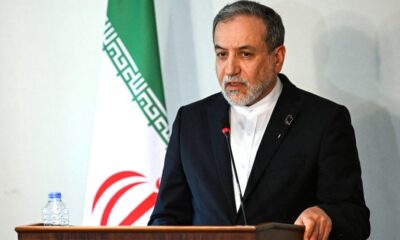
Iran’s foreign minister, Abbas Araghchi, told reporters in Damascus that “we are trying to reach a ceasefire in Gaza and in Lebanon.” The minister said the unnamed countries putting forward initiatives include regional states and some outside the Middle East.
Araghchi spoke a day after the supreme leader of Iran praised its recent missile strikes on Israel and said it was ready to do it again if necessary.
On Saturday evening, Israeli Prime Minister Benjamin Netanyahu said “Israel has the duty and the right to defend itself and respond to these attacks, and it will do so.” On Lebanon, he said ”we are not done yet.”
Fleeing Lebanon on foot
Israel’s military earlier Saturday said about 90 projectiles were fired from Lebanon into Israeli territory. Most were intercepted, but several fell in the northern Arab town of Deir Al-Asad, where police said three people were lightly injured.
READ ALSO:
- Terrorists storm Geidam (Yobe), kill resident, destroy properties
- Lagos man stabs pregnant wife to death over alleged affair with younger brother
- 23 states, FCT implement new teachers retirement age
At least six people in Lebanon were killed in more than a dozen Israeli airstrikes overnight and into Saturday, according to the Lebanese state-run National News Agency.
Nearly 375,000 people have fled from Lebanon into Syria in less than two weeks, according to a Lebanese government committee.
Associated Press journalists saw hundreds continuing to cross the Masnaa Border Crossing on foot, crunching over the rubble after Israeli airstrikes left huge craters in the road leading to it on Thursday. Much of Hezbollah’s weaponry is believed to come from Iran through Syria.
“We were on the road for two days,” said Issa Hilal, one of many Syrian refugees in Lebanon who are now heading back. “The roads were very crowded … it was very difficult. We almost died getting here.” Some children whimpered or cried.
Other displaced families now shelter alongside Beirut’s famous seaside Corniche, their wind-flapped tents just steps from luxury homes. “We don’t care if we die, but we don’t want to die at the hands of Netanyahu,” said Om Ali Mcheik.
The Israeli military said special forces were carrying out ground raids against Hezbollah infrastructure in southern Lebanon. It said troops dismantled tunnel shafts that Hezbollah used to approach the Israeli border.
More evacuation orders in Gaza
Almost 42,000 Palestinians have been killed in Gaza during the war, according to the Health Ministry there, which does not differentiate between civilian and militant deaths. Almost 90 percent of Gaza’s residents are displaced, amid widespread destruction.
Palestinian medical officials said Israeli strikes in northern and central Gaza on Saturday killed at least nine people. One in the northern town of Beit Hanoun killed at least five, including two children, according to Gaza’s Health Ministry. Another hit a house in the Nuseirat refugee camp, killing at least four, Awda hospital said.
Israel’s military did not have any immediate comment but has long accused Hamas of operating from within civilian areas.
An Israeli airstrike killed two children in Gaza City’s Zaytoun neighborhood, according to the civil defense first responders’ group that operates under the Hamas-run government.
Israel’s military warned Palestinians to evacuate along the strategic Netzarim corridor in central Gaza that was at the heart of obstacles to a ceasefire deal. The military told people in parts of the Nuseirat and Bureij refugee camps to evacuate to Muwasi, a coastal area it has designated a humanitarian zone.
It’s unclear how many Palestinians are in those areas. Israeli forces have often returned to areas in Gaza to target Hamas fighters as they regroup.
Israeli air strikes target Palestinian refugee camp, Hezbollah TV studios in Beirut
ARAB NEWS








International
Truly Depraved Rapist Jailed for 17 Years After Violent Attack on Woman
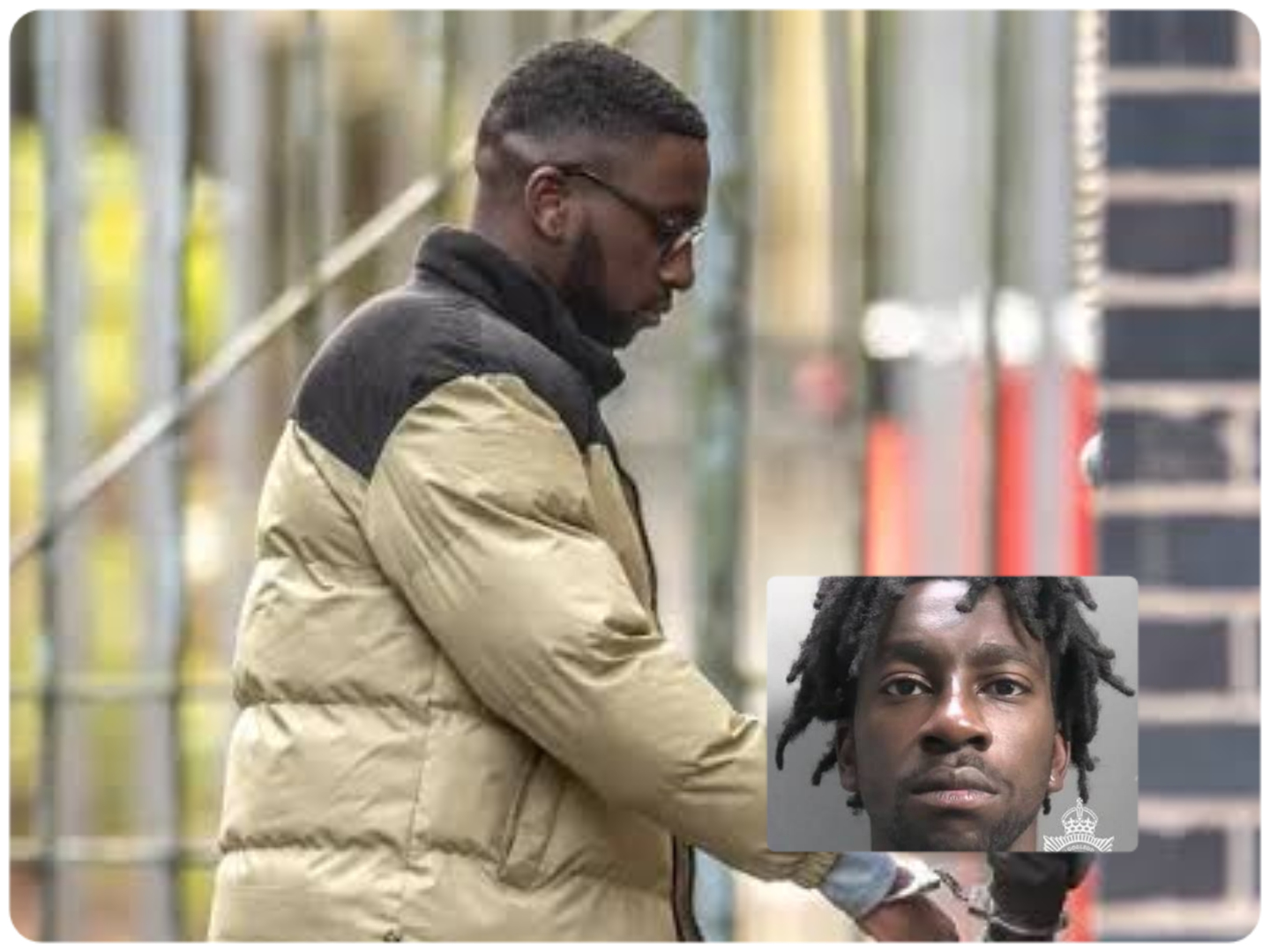
A 24-year-old Nigerian national, Gift Oladele, dragged a young woman into woodland and violently raped her has been jailed for 17 years after a judge described his actions as “truly depraved”.
Gift Oladele carried out the attack in Wrexham, North Wales, in September last year after approaching the victim, who was 19 at the time, as she walked home from a night out.
Oladele was convicted of rape and sexual assault at Mold Crown Court in March. He was sentenced on Thursday.
How the Attack Happened
The court heard that Oladele approached the woman and her friends outside a takeaway in Wrexham city centre. He initially appeared friendly and flirtatious before offering to walk home with her.
According to prosecutor James Coutts, Oladele accompanied the woman until they reached an isolated area, where he grabbed her by the mouth and forced her into the woods.
He then carried out a violent rape.
“She described being terrified,” Coutts told the court. “She did what she thought she needed to do to get through the attack.”
Oladele threatened to find and harm the victim if she reported the rape. He also threatened to take photographs of her and post them online.
Despite the threats, the woman returned home and immediately told her parents, who contacted the police.
Oladele was arrested the following day at his cousin’s home in Wrexham. Officers said he had attempted to hide a mobile phone, which contained searches relating to sexual attacks.
The court heard that Oladele had a “fascination in forced sexual abuse and rape” and that he appeared to be acting out a fantasy shown in the videos he had searched for.
Victim Describes Lasting Trauma
In a victim impact statement, the woman told the court that she continued to wake up from nightmares in which Oladele had tracked her down.
“I’m petrified,” she said.
She also described taking medication to prevent HIV infection after the assault and suffering long-term emotional and psychological effects.
“I feel ashamed, and somehow damaged, since what he did to me,” she said.
“The emotional impact has been very significant.
“I can’t go anywhere on my own anymore.
“I feel unsafe.”
Judge Simon Mills praised the woman for her courage during and after the attack.
“You showed exceptional courage during the incident and afterwards,” he told her.
Previous Conviction and Deportation Appeal
At the time of the Wrexham attack, Oladele was already on bail over another rape allegation in Manchester dating from November 2024.
He had also been jailed in 2022 for a sexually motivated attack.
The court heard that Oladele was later due to be deported to Nigeria but successfully challenged the decision on human rights grounds.
An immigration tribunal judge described the deportation case as “finely balanced”, acknowledging the seriousness of Oladele’s previous offence and the public interest in deporting foreign criminals.
However, the tribunal also considered his ties to the United Kingdom, where he had grown up, and the consequences of relocating to Nigeria.
The Home Office made two attempts to appeal the decision, but both appeals were rejected.
Judge Calls Defendant Dangerous
During sentencing, The Judge described Oladele’s actions as “truly depraved”.
“You subjected her to a terrible violation,” he said.
“You are a dangerous offender.”
The judge said Oladele posed an exceptionally high risk of harm to young women and had shown “absolutely no remorse whatsoever”.
The Home Office described the case as horrific and said Oladele’s imprisonment was the right outcome.
The victim’s account has highlighted not only the brutality of the attack but also the lasting fear and emotional damage that sexual violence can cause long after the offender has been convicted.
International
More Than 1,000 Migrants Rescued Off West Africa in One Week
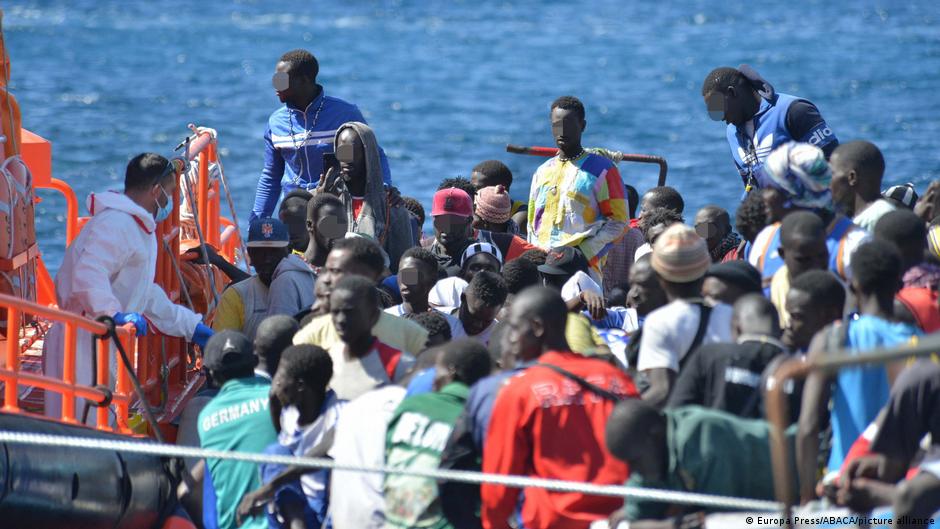
More than 1,000 migrants attempting to reach Spain’s Canary Islands have been rescued from the Atlantic Ocean after seven boats reportedly broke down during the dangerous journey from West Africa.
International
UN Adopts New World Map Showing Africa Bigger, US Smaller in Landmark 2026 Vote
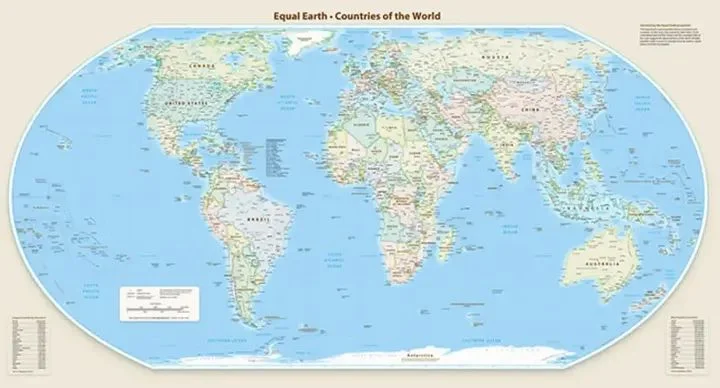
UN Adopts New World Map Showing Africa Bigger, US Smaller in Landmark 2026 Vote
The United Nations General Assembly has approved a historic resolution encouraging countries to adopt a new world map that more accurately reflects the true size of continents — a move that makes Africa appear significantly larger while shrinking North America and Europe. The United States was the only nation to vote against it.
On September 4, 2026, the UN General Assembly passed the resolution with 164 votes in favour, 6 abstentions, and just one opposed — the United States. The six countries that abstained were Ukraine, Moldova, Georgia, Serbia, Lithuania, and Estonia. The resolution, spearheaded by the West African nation of Togo and backed by the African Union, encourages governments, schools, and technology companies to phase out the centuries-old Mercator projection in favour of the Equal Earth projection developed in 2018. Togo’s Foreign Minister Robert Dussey, who presented the resolution, declared: “A fair world begins with a fair map.”
The resolution seeks to correct a distortion that has shaped global perceptions for over 450 years. The Mercator projection was created in 1569 by Flemish cartographer Gerardus Mercator specifically for maritime navigation. While it preserves accurate angles and directions, it severely distorts land area proportions: regions near the poles appear much larger than they actually are, while equatorial regions appear smaller. The most glaring example of this distortion is the comparison between Africa and Greenland. On a standard Mercator map, the two landmasses appear roughly the same size. In reality, Africa is 14 times larger than Greenland — Africa covers about 30.3 million square kilometres, while Greenland covers just 2.1 million. Advocacy groups point out that Africa could contain the United States, China, India, Japan, Mexico, and most of Europe within its area and still have space left.
READ ALSO:
- Kneeling to Propose Is Why Western Marriages Fail — Pete Edochie Sparks Fresh Debate
- US Strikes Three Iranian Oil Tankers in Retaliation for Missile Attack on Navy Ships
- Ondo Tragedy: 3 Siblings, Including Twins, Found Dead Near River on Family Farm
The Equal Earth projection, developed by cartographers Bojan Savric, Bernhard Jenny, and Tom Patterson in 2018, preserves the relative surface areas of continents while maintaining recognisable shapes. Under this new projection, Africa appears in its true massive scale — dramatically larger than in the familiar Mercator map. North America and Europe, by contrast, appear noticeably smaller. “Equal Earth preserves the relative surface areas of continents and, as much as possible, shows their shapes as they appear on a globe,” cartographer Bojan Savric told AFP in 2025. “Correcting the map means restoring to continents in the minds of people the reality of the true dimensions,” said Togo’s Foreign Minister Robert Dussey. He stressed that the campaign is “not directed against any nation, region, or civilization” but serves a “universal goal: to promote knowledge based on scientific rigour, respect for truth, and the equal dignity of peoples.”
American representatives dismissed the resolution as a distraction from pressing global issues. Speaking before the vote, US representative Yaryna Ferencevych argued that “such resolutions and the ideological agenda they promote hinder the work of this institution and lead to a decline in its credibility.” She urged member states to reject the text and focus instead on “genuine issues of international peace, prosperity, or good relations between nations.” Despite the US objection, the resolution passed overwhelmingly. It carries no legal force and does not mandate the replacement of existing maps — rather, it encourages institutions to educate the public on the limitations of flat maps and to adopt more accurate representations. The resolution “in no way challenges the use of the Mercator projection for maritime and aerial navigation, for which it remains fully suited,” the Togolese ministry said in a statement.
African leaders hailed the vote as a significant victory for continental representation. The African Union Mission to the UN welcomed the resolution as a “significant step towards ensuring that the map of the world reflects Africa’s true scale and place in the world.” Togo’s Dussey announced that Togo would become the first country to replace its geography textbooks with the new maps by the end of 2026, and the nation plans to engage with African Union members and other supporters to promote adoption globally. France, a co-sponsor of the resolution, expressed strong support. Foreign Minister Jean-Noël Barrot said in a speech at the Sorbonne: “Changing the map obviously won’t change the world… but correcting a distorted representation is itself an act of truth.” The advocacy group “Unfiltered Africa,” which promotes the Equal Earth map, welcomed the UN decision, stating: “We hope to see accurate maps in schools, textbooks, newsrooms, businesses, and the digital platforms used by billions of people every day.”
UN Adopts New World Map Showing Africa Bigger, US Smaller in Landmark 2026 Vote
-

 Auto2 days ago
Kaduna to Lead Govt Patronage of Local Vehicles as Sani Unveils Peugeot 5008
-
 metro1 day ago
El-Rufai Demands ₦10bn from Defence Minister Over Southern Kaduna Killings Allegation
-
 metro1 day ago
Catholic priest leaves priesthood, weds Kenyan woman after 12 years in Kenya
-

 metro2 days ago
Socialite Igho ‘Tiny’ Ubiribo Dies After Penis Enlargement Surgery
-
 Politics3 days ago
Demystifying the Political Monolith: Wike’s ‘See Finish’ Doctrine and Nigeria’s New Political Calculus
-

 Politics1 day ago
Why Did Peter Obi Attend Seyi Makinde’s Campaign Launch? Here’s What He Said
-

 metro1 day ago
No US Case Against Tinubu, Family Enjoy Unimpeded Transit for UNGA — Ambassador Ibrahim
-

 News1 day ago
Lagos Moves to Slash Agency Fees, Curb Rent Hikes With New Tenancy Bill