

International
US warned Iran over alleged Israeli plot to kill negotiators – NYT
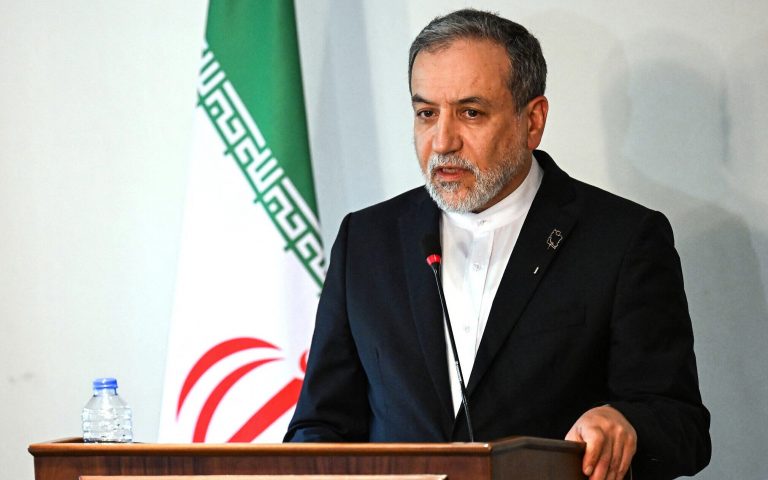
US warned Iran over alleged Israeli plot to kill negotiators – NYT
The United States reportedly warned Iran of an alleged Israeli plan to assassinate two of its top officials during Pakistan-mediated negotiations, The New York Times reported on Friday.
According to the newspaper, which cited current and former U.S. officials, the alleged plot targeted Iran’s Foreign Minister, Abbas Araghchi, and the Speaker of Parliament, Mohammad Bagher Ghalibaf.
The report said officials in the administration of U.S. President Donald Trump feared the alleged operation could derail diplomatic efforts and trigger a fresh military confrontation between Washington and Tehran.
It added that the U.S. quietly conveyed its concerns to Iranian authorities through regional intermediaries in an effort to prevent further escalation.
The newspaper also reported that Ghalibaf’s aircraft was forced to make an emergency diversion after Iranian intelligence allegedly received information suggesting Israeli fighter jets were preparing to target the plane.
However, the report noted that no public evidence has been released to substantiate the alleged assassination plot.
Israeli authorities have denied the allegations, describing the report as false and rejecting claims that they planned to target the Iranian officials.
The development comes amid lingering tensions between Israel and Iran despite renewed diplomatic efforts aimed at reducing hostilities in the region.
Neither the White House nor the Iranian government had issued an official statement on the report as of the time of filing this report.
US warned Iran over alleged Israeli plot to kill negotiators – NYT













International
Flydubai Co-Pilot Attacked Captain With Axe in Attempted Terrorist Act, UAE Says

Flydubai Co-Pilot Attacked Captain With Axe in Attempted Terrorist Act, UAE Says
The United Arab Emirates has said the co-pilot of a Flydubai passenger aircraft attacked the captain with a cockpit crash axe and attempted to take control of the plane in what investigators have described as an attempted terrorist act.
The incident occurred aboard Flydubai Flight FZ1073, which was travelling from Dubai to Tel Aviv on September 30 when the aircraft was forced to make an emergency diversion to Saudi Arabia.
According to the UAE Attorney General, Hamad Saif Al Shamsi, an investigation into the incident established that the co-pilot attacked the captain inside the flight deck with a crash axe before attempting to seize control of the aircraft.
The Boeing 737 reportedly plunged thousands of feet during the struggle, creating a potentially catastrophic situation for the 172 passengers and crew members on board.
The injured captain, identified as Smit Machchhar, managed to open the cockpit door and call for assistance despite sustaining injuries in the attack. Passengers and crew members then intervened, helping to overpower the co-pilot.
A reserve pilot who was travelling on the aircraft also assisted in stabilising the plane before it was diverted to Tabuk Airport in northwestern Saudi Arabia, where it landed safely.
READ ALSO:
- Nigerian-Born Ex-Professor Jailed 78 Months Over $1.3m US Student Aid Fraud
- Police Arrest Man Caught Sexually Assaulting 12-Year-Old Girl in Car
- Wike to Amaechi: What Did You Bring to Rivers After 24 Years in Power?
The captain was subsequently taken to hospital in the UAE for treatment. His condition has been described as stable and improving.
The UAE Attorney General said investigators were continuing to establish the full circumstances surrounding the incident, including the motive, possible links and whether there were other people involved. Authorities are also examining physical and digital evidence as part of the investigation.
The co-pilot has been identified by international media as Hammam al-Hammami, an Omani national, although UAE authorities have not officially confirmed all details concerning his identity.
Earlier reports had raised questions about his aviation background and alleged previous concerns over extremist views. However, investigators have not publicly established the full circumstances behind those reports or confirmed any wider organisational link.
The incident has also prompted renewed scrutiny of pilot recruitment, aviation security and background checks, particularly after reports emerged about the co-pilot’s previous aviation history.
Flydubai has said a full official investigation is under way and that it is cooperating with the relevant authorities.
The airline’s chief executive, Ghaith Al Ghaith, praised the crew and passengers for their actions during the emergency and thanked Saudi authorities for their response after the aircraft diverted to Tabuk.
The UAE authorities have urged caution over unverified reports while the investigation continues, saying the final findings will be announced after the necessary procedures and examinations are completed.
The incident has been formally described by the UAE as an attempted terrorist act, but investigators are still working to establish the motive and whether the co-pilot acted alone or had any external connections. (The National)
Flydubai Co-Pilot Attacked Captain With Axe in Attempted Terrorist Act, UAE Says
International
Nigerian-Born Ex-Professor Jailed 78 Months Over $1.3m US Student Aid Fraud
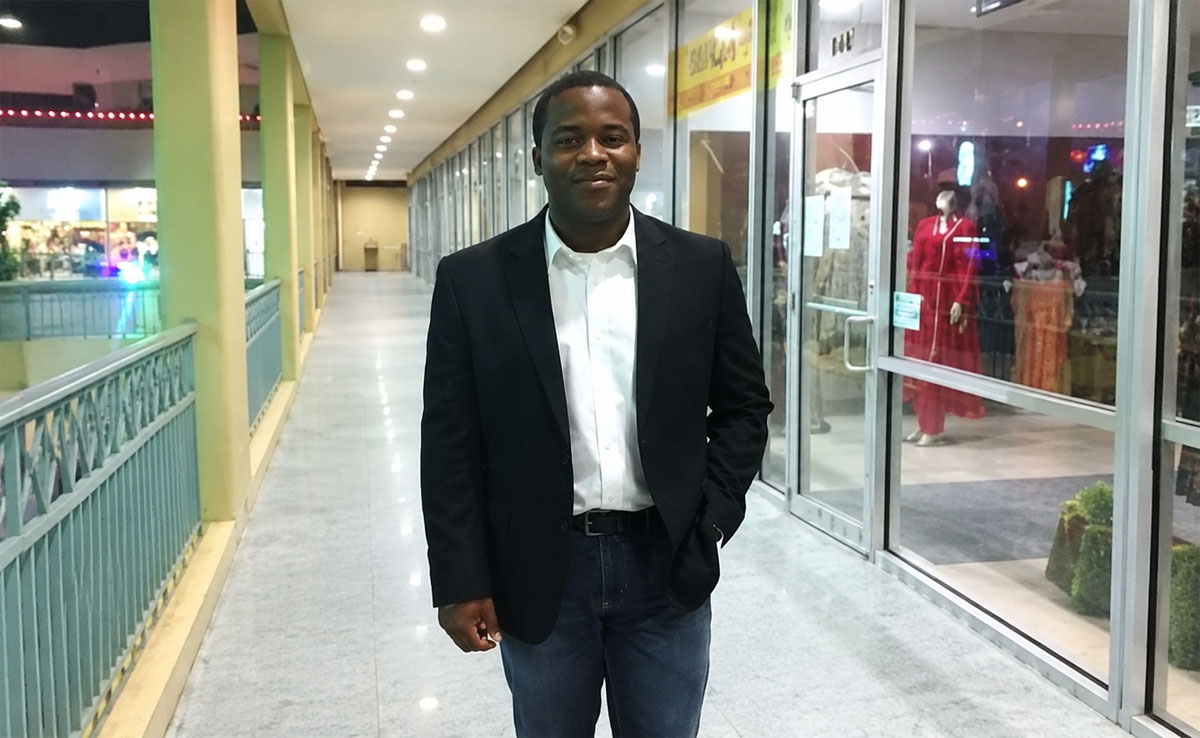
Nigerian-Born Ex-Professor Jailed 78 Months Over $1.3m US Student Aid Fraud
A Nigerian-born former university professor, Emmanuel Olugbaike Finnih, has been sentenced to 78 months in a United States federal prison for orchestrating a five-year scheme involving student financial aid fraud and identity theft.
Finnih, 43, a naturalised U.S. citizen from Nigeria living in Richmond, Texas, was also ordered to serve three years of supervised release after completing his prison term.
The former adjunct professor at Texas Southern University pleaded guilty to charges including theft of government funds, fraud, unlawful use or transfer of identity documents and aggravated identity theft. U.S. District Judge Andrew Hanen imposed the sentence.
Finnih operated the scheme for approximately five years and submitted more than 100 fraudulent financial aid applications using the identities of people presented as students at colleges and universities across Texas.
The fraudulent applications sought more than $1.3 million in federal grants and student loans, of which $921,189.08 was actually disbursed.
Finnih used the personal information of other people to prepare, submit and sign financial aid applications and master promissory notes in their names.
He also allegedly controlled mailing addresses, telephone numbers and email accounts used in the applications, enabling him to receive communications from the U.S. Department of Education and the schools involved.
READ ALSO:
- Police Arrest Man Caught Sexually Assaulting 12-Year-Old Girl in Car
- Wike to Amaechi: What Did You Bring to Rivers After 24 Years in Power?
- Electric Spark Suspected as Fire Destroys 21 Shops at Abuja’s Kugbo Market
The financial aid refunds were subsequently obtained through electronic transfers, cheques and prepaid debit cards sent to addresses or bank accounts controlled by Finnih.
The scheme had consequences for people whose identities were used. Some victims were left with tens of thousands of dollars in student loan debt that had been fraudulently placed in their names, affecting their credit and making it more difficult for them to enrol in legitimate educational programmes.
As part of his guilty plea, Finnih admitted repeatedly using the personal identifying information of two victims over several years to fraudulently obtain federal financial aid.
Authorities also discovered that he possessed false identity documents, including temporary driving permits and identification cards, which prosecutors said were intended for unlawful use or transfer as part of the scheme.
The court further heard that Finnih sometimes altered the names of female “straw students” to make them appear male while retaining their correct Social Security numbers and dates of birth. Prosecutors said this enabled him to pose as the individuals whose identities were being used.
In one instance, Finnih contacted a community college and attempted to have financial aid payments unfrozen after the institution detected fraudulent transcripts connected to one of the supposed students.
The investigation involved the U.S. Department of Education Office of Inspector General, alongside the Lone Star College Police Department, U.S. Marshals Service and U.S. Postal Inspection Service.
Finnih will serve three years of supervised release following his prison sentence. He was allowed to remain on bond and is expected to voluntarily surrender to a Federal Bureau of Prisons facility to begin his sentence.
The case began with an investigation into fraudulent student aid and later revealed a broader scheme involving more than 100 fraudulent applications and more than $1.3 million in requested financial aid.
The sentencing concludes the federal criminal proceedings against Finnih over the student aid fraud scheme and highlights the financial and credit consequences that identity theft can have on victims.
Nigerian-Born Ex-Professor Jailed 78 Months Over $1.3m US Student Aid Fraud
International
400 French Schools Shut as Students Protest Teacher Shortages, Poor Facilities
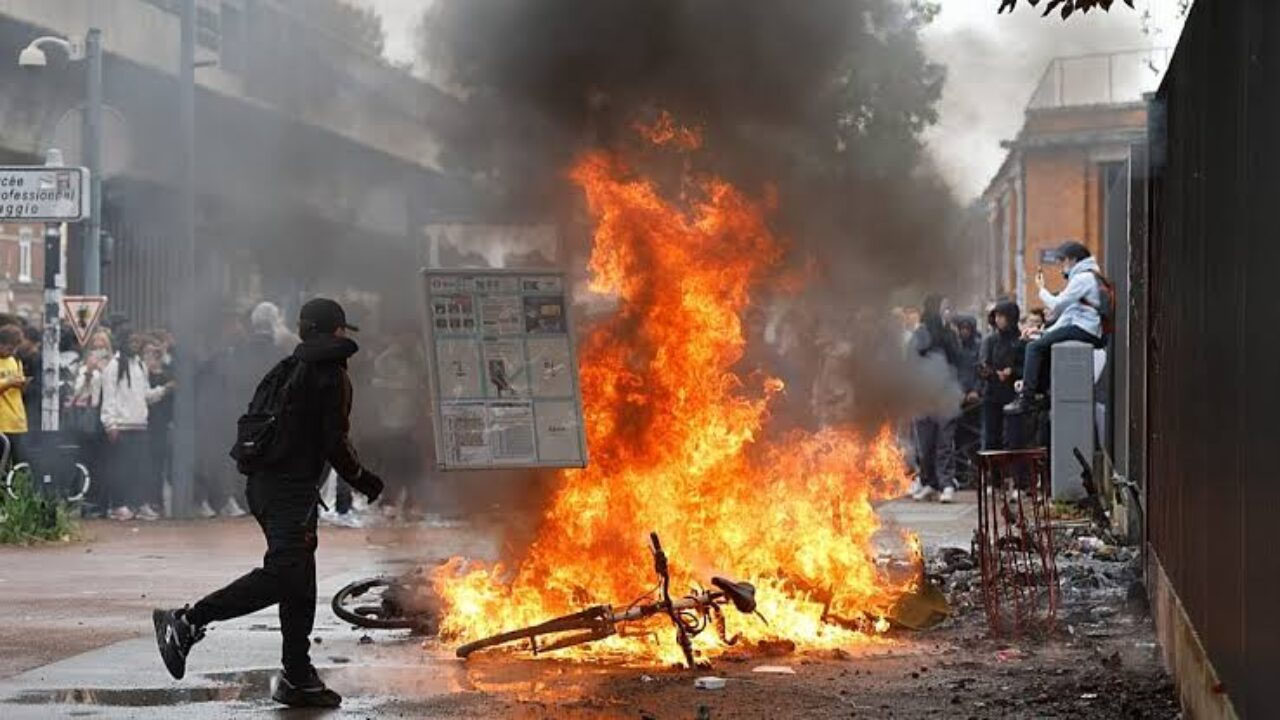
400 French Schools Shut as Students Protest Teacher Shortages, Poor Facilities
Students across France have staged demonstrations over what they describe as deteriorating conditions in the country’s public schools, including overcrowded classrooms, teacher shortages, poor facilities and inadequate funding.
The protests, which began in the Paris region, have spread to several cities, including Marseille, Strasbourg, Lyon, Lille, Rennes and Toulouse, disrupting activities in hundreds of schools.
Students have blocked school entrances and staged demonstrations outside their schools, while some protests have escalated into clashes with police, vandalism and fires.
Authorities said the unrest had affected more than 1,000 high schools, with about 400 schools expected to remain closed because of blockades or damage.
The students’ complaints centre on several issues affecting their daily learning experience. They have reported classrooms with as many as 35 to 40 students, shortages of teachers and other school staff, damaged buildings and inadequate classroom facilities.
Some students have also complained about long school days, staff absences and periods without teachers for particular subjects.
At some schools, students and parents have raised concerns about the condition of buildings, including leaks and other maintenance problems. Complaints have also been made about uncomfortable classroom temperatures during periods of hot weather.
READ ALSO:
- 10 Things to Know About Amos Dangut, Nigerian Appointed WAEC Registrar
- Olu Jacobs Laid to Rest in Lagos as Dignitaries, Nollywood Stars Honour Screen Icon
- Court Remands Man Accused of Impersonating JAMB Registrar in Kuje Prison
The demonstrations have, however, been accompanied by incidents of violence and vandalism in some locations. Police have reported confrontations with protesters, while some school entrances and surrounding property have been damaged.
France’s Education Ministry said 65 education workers, including 40 school heads, had been injured during the unrest. Police officers have also sustained injuries in some clashes.
French authorities said more than 2,000 people had been arrested since the protests began, with most of those detained reported to be teenagers.
The government has acknowledged concerns about school conditions and education resources, while condemning acts of violence and destruction. Officials have also warned that violent groups could exploit the demonstrations.
Education Minister Édouard Geffray has announced plans for discussions involving students, teachers’ unions and parents to address concerns raised during the protests.
The unrest has also brought attention to France’s proposed 2027 education budget. The planned allocation is expected to increase by 1.7 per cent to about €65.53 billion, excluding teacher pensions, although the increase is below the current inflation rate.
Teachers’ unions have separately announced a nationwide strike, adding pressure on the government to address concerns over staffing, working conditions and education funding.
While students have continued to demand improvements in their schools, the authorities are working to restore normal operations in affected institutions and prevent further violence.
The protests have placed France’s education system under renewed scrutiny, with the availability of teachers, classroom sizes, school infrastructure and education funding emerging as central issues in the dispute.
400 French Schools Shut as Students Protest Teacher Shortages, Poor Facilities
-

 metro2 days ago
Workers to Begin Nationwide Warning Strike Over Petrol Price, Wage Award
-

 metro2 days ago
[UPDATED] Imo Highway Attack: 10 Rescued after Gunmen Abducted NYSC Prospective Members
-

 Entertainment2 days ago
Phyna Knocks Out Nkechi Blessing in Fourth Round, Wins ₦50m, New Car
-

 Politics3 days ago
2027: Amaechi Recalls How APC Defeated PDP, Orders ADC Mobilisation
-

 Business3 days ago
Dangote Sets 40-Month Deadline for $16bn East Africa Refinery in Kenya
-

 News3 days ago
Independence Day: Tinubu Unveils Plan to Cut Living Costs, Expand Jobs
-

 metro2 days ago
2027 Hajj: Nigeria Secures 10,000 Extra Slots, Allocation Hits 60,000
-

 Politics3 days ago
2027: Wike Vows to Resign If Tinubu Loses FCT, Rivers