

International
Israeli missile strike kills three sons, four grandchildren of Hamas political leader

Israeli missile strike kills three sons, four grandchildren of Hamas political leader
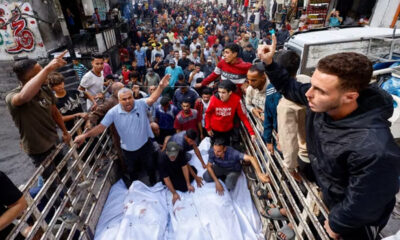
Hamas leader Ismail Haniyeh’s three sons and three grandchildren were murdered in an Israeli airstrike on a Gaza refugee camp, according to the Hamas-affiliated news agency Shehab.
Haniyeh told Al Jazeera that his children were targeted while visiting relatives for Eid at the Shati refugee camp in northern Gaza.
The Hamas president condemned what he called Israel’s savagery, but he emphasized that Palestinian leaders will not back down if their families and homes are harmed.
“There is no doubt that this criminal enemy is driven by the spirit of revenge and the spirit of murder and bloodshed, and it does not observe any standards or laws,” Haniyeh said, adding that 60 members of his family have been killed since the start of the war.
READ ALSO:
- Actors Guild of Nigeria confirms Junior Pope’s death, says ‘We finally lost him’
- We’ve reduced diesel price to bring down inflation – Dangote
- We’ve reduced diesel price to bring down inflation – Dangote
“We’ve seen it violate everything on the land of Gaza. There is a war of ethnic cleansing and genocide. There is mass displacement.”
Also, Gaza’s media office confirmed that Haniyeh’s children and grandchildren were killed by Israeli fighter jets when a “civilian vehicle” was targeted on the first day of Eid el-Fitr.
Several of his children and grandchildren were riding in the vehicle, it said.
“We strongly condemn Israel’s ongoing attacks against our Palestinian people,” the office said, adding that at least 125 bodies of slain Palestinians arrived at various hospitals in the past 24 hours alone.
“We hold the US administration, the international community responsible, and the Israeli occupation responsible for these massacres and crimes that are still taking place in this ongoing genocide,” it added.
Israeli missile strike kills three sons, four grandchildren of Hamas political leader










International
Fraud, Drugs, Money Laundering: US Targets 157 Nigerians for Deportation
Fraud, Drugs, Money Laundering: US Targets 157 Nigerians for Deportation
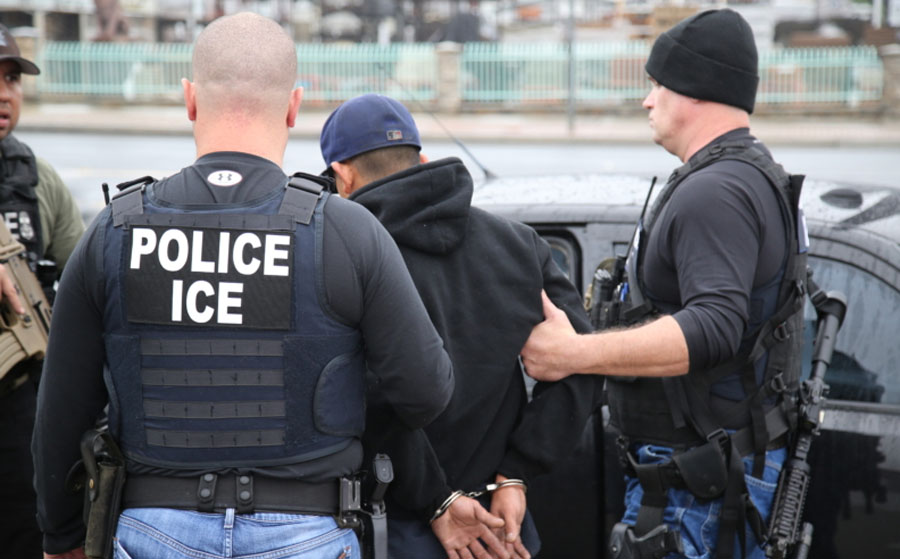
The United States government has listed 157 Nigerians on its immigration enforcement register for possible deportation over various alleged criminal offences, including fraud, money laundering, drug-related crimes, identity theft, assault and offences involving children.
The latest update by the US Department of Homeland Security (DHS) added 24 Nigerians to its controversial Worst of the Worst register, bringing the total number of Nigerians featured on the list to 157.
The development was reported on Tuesday, November 24, 2026, following an update to the DHS website, which features foreign nationals arrested by the US Immigration and Customs Enforcement (ICE) over serious criminal allegations.
According to information published by the department, the newly listed Nigerians were arrested in different locations across the United States over offences ranging from financial crimes and drug-related violations to weapons offences and child cruelty.
Among those named is Emmanuel Omowaiye, arrested in Richmond, Texas, over alleged mail fraud, while Laurene Onwuka was arrested in Chantilly, Virginia, over fraud by impersonation.
Olusegun Shonekan, arrested in Newark, New Jersey, was listed over wire fraud, while Olusegun Olaseni was arrested in Greencastle, Indiana, over the alleged sale of amphetamine.
Others include Peter Ude, arrested in Atlanta, Georgia, over wire fraud, and Newton Jemide, arrested in Fort Dix, New Jersey, over alleged wire fraud, conspiracy and mail fraud.
The register also features Shedrack Umukoro, arrested in Yazoo City, Mississippi, over money laundering; Olasoji Akinbode, arrested in Kearny, New Jersey, over fraud by impersonation; and Oluwatosin Afolabi, arrested in Conroe, Texas, over fraud.
READ ALSO:
- Uduere Killings: Ughelli Chairman Accuses Omo-Agege’s Camp of Triggering Deadly Clash, Demands IGP Probe
- ‘Shame on You’: Fayose Blasts Nigerian Youths Over Poor Protest Turnout
- KWAM 1 Warns Tinubu Over Economic Hardship, Says Nigerians Should Not Suffer to Death
Alameen Adetunji Tokosi, arrested in Chicago, Illinois, was listed over heroin possession, while Joshua Ipoade, arrested in Atlanta, Georgia, was named over wire fraud.
Another Nigerian, Michael Orji, arrested in Oxford, Wisconsin, was listed over several alleged offences, including weapons-related violations, fraud, identity theft, wire fraud, falsely claiming US citizenship and money laundering.
Other Nigerians on the updated register include Ahmadu Apooyin, arrested in Baltimore, Maryland, over a cocaine-related offence; Teslim Kiriji, arrested in Yazoo City, Mississippi, over money laundering; and Onomen Uduebor, arrested in Seattle, Washington, over identity theft.
Charles Ochi and Daniel Eta, both arrested in White Deer, Pennsylvania, were listed over money laundering and wire fraud, respectively.
The list further includes Ifeanyi Ibennah, arrested in Tampa, Florida, over alleged cruelty towards a child; Kazeem Runsewe, arrested in Thomson, Illinois, over wire fraud; and Fatiu Lawal, arrested in Lompoc, California, also over wire fraud.
Others are Justin Akubueze, arrested in Orem, Utah, over money laundering; Moyinoluwaseun Okeowo, arrested in Orlando, Florida, over larceny, forgery and concealing stolen property; Babajide Oluwaseun Faseyi, arrested in Alden, New York, over assault; and Bright Eigbedion, arrested in Lompoc, California, over money laundering.
The DHS said the register was part of President Donald Trump’s administration’s efforts to remove foreign nationals involved in serious criminal activities from the United States.
In its description of the initiative, the department said it was fulfilling Trump’s promise to remove what it described as the “worst of the worst criminal aliens” from the country.
The agency explained that the register highlights foreign nationals arrested by ICE over serious criminal activities, including drug and weapons offences, violent crimes, fraud and the misuse or theft of public benefits.
The number of Nigerians featured on the register has increased significantly in recent months. Reports indicated that 124 Nigerians were listed in July, while the figure rose to 134 in September before the latest additions brought it to 157.
However, the DHS has not disclosed specific deportation dates for the Nigerians listed or provided detailed information about the immigration status of each individual.
Importantly, inclusion on the register should not automatically be interpreted as proof of conviction for every offence listed. The descriptions reflect information published by US immigration authorities, while the criminal and immigration proceedings involving the individuals may differ.
The latest development comes amid the Trump administration’s intensified immigration enforcement and efforts to remove foreign nationals it considers to pose serious criminal or public safety concerns.
Fraud, Drugs, Money Laundering: US Targets 157 Nigerians for Deportation
International
Iran Unveils Twin-Missile Launcher, Sends Fresh Warning To US
Iran Unveils Twin-Missile Launcher, Sends Fresh Warning To US
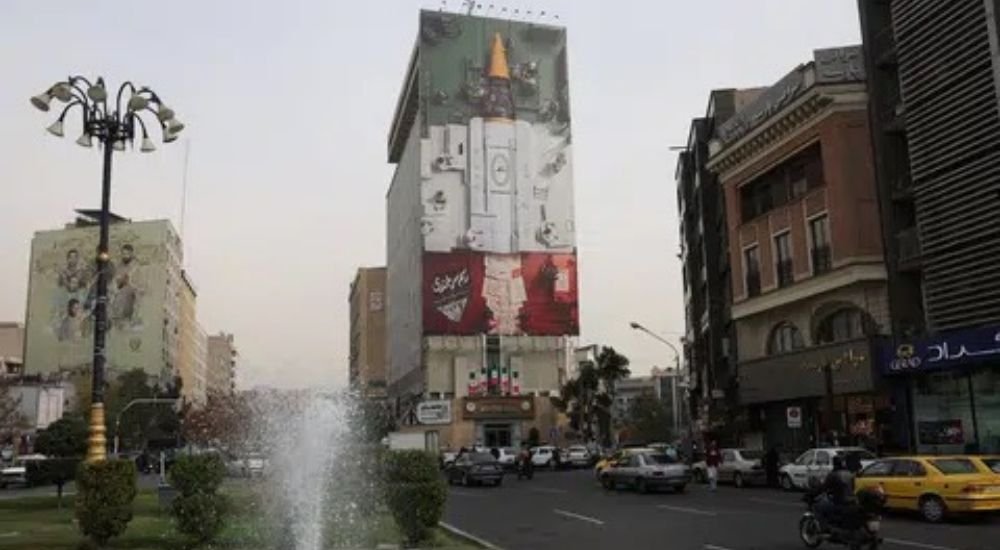
Iran has showcased a new dual-missile launcher capable of firing two missiles simultaneously, while its military commanders issued fresh warnings to the United States amid escalating tensions and concerns over a possible renewal of hostilities.
The newly displayed weapon, reportedly designed to launch two liquid-fuelled missiles at the same time, was unveiled during an inspection of an underground missile facility by senior commanders of Iran’s Islamic Revolutionary Guard Corps (IRGC).
Iranian state television broadcast footage of IRGC Commander-in-Chief Ahmad Vahidi and Aerospace Force commander Seyed Majid Mousavi touring the underground installation, where several missile systems, launchers and other military equipment were displayed.
The unveiling is seen as part of Tehran’s efforts to demonstrate that its military capabilities and missile infrastructure remain operational despite previous attacks targeting its weapons facilities.
During the visit, Vahidi issued a defiant warning to Iran’s adversaries, suggesting that the consequences of confronting the country were only beginning.
Mousavi also claimed that Iran had significantly expanded its military capabilities between recent periods of conflict, with the development of new weapons and systems designed to strengthen its defence and deterrence capabilities.
READ ALSO:
- Gombe: Three Killed, 13 Injured as Alleged Military Shooting Sparks Outcry
- Jimmy Odukoya Sues Sister, Church Trustees Over Removal as Senior Pastor
- UNILAG Gets 10 CNG Buses as FG Expands Campus Transport Scheme to 60 Institutions
The commanders’ remarks accompanied footage of missile launchers, military equipment and extensive underground tunnels, highlighting Iran’s efforts to protect its weapons infrastructure from potential airstrikes.
Iranian state media described the newly displayed launcher as an advancement in the country’s missile development programme, although detailed technical information about its range, accuracy and operational capabilities was not independently established.
Reports surrounding the unveiling also highlighted improvements in Iranian missile guidance technology, including systems designed to operate without relying entirely on the United States-developed Global Positioning System (GPS).
The latest demonstration comes amid continuing tensions between Iran and the United States, particularly over Tehran’s military activities, nuclear programme and regional influence.
Iran has repeatedly warned that any renewed military attack against its territory would attract retaliation, while the United States has maintained pressure on Tehran over issues relating to regional security and nuclear proliferation.
The unveiling also follows previous Iranian announcements showcasing underground missile installations containing ballistic and cruise missile systems.
Tehran has increasingly presented these underground facilities as an important component of its military strategy, arguing that they provide protection for weapons stockpiles and launch systems against aerial attacks.
The latest display appears intended to reinforce Iran’s message that it retains the military capacity to respond to external threats, even after previous attacks on its defence infrastructure.
However, the actual performance and combat effectiveness of the newly displayed dual-missile launcher remain unclear, as the technical claims made by Iranian authorities have yet to receive independent verification.
The development is likely to attract further international attention as Washington and Tehran continue to navigate a tense relationship, with concerns that another military confrontation could have wider consequences for security across the Middle East.
Iran Unveils Twin-Missile Launcher, Sends Fresh Warning To US
International
FBI Investigates Apparent Hack of Criminal Database Containing Sensitive Law Enforcement Records
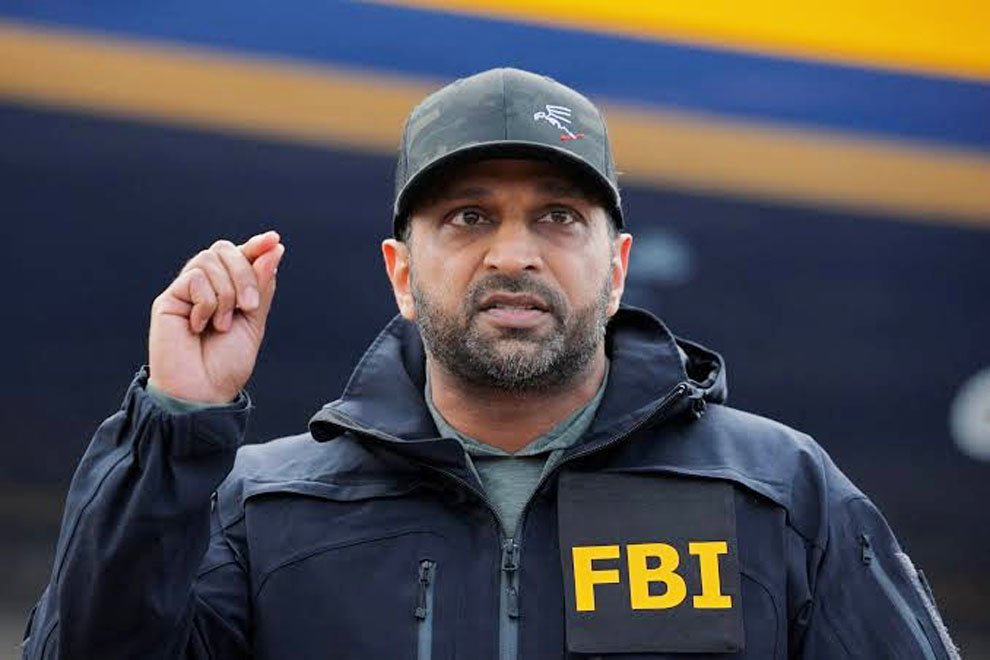
FBI Investigates Apparent Hack of Criminal Database Containing Sensitive Law Enforcement Records
The United States Federal Bureau of Investigation (FBI) is investigating an apparent cyberattack on its National Crime Information Center (NCIC), a nationwide database used by federal, state and local law enforcement agencies to share sensitive criminal justice information.
The suspected intrusion, reportedly discovered in recent days, has raised concerns about the security of confidential law enforcement records, including information relating to arrest warrants, criminal histories and background checks.
According to a report by CNN, citing two people briefed on the investigation, the FBI is examining the apparent breach of the database, which serves as a major information-sharing platform for law enforcement agencies across the United States.
The FBI had not publicly commented on the latest incident as of Friday, November 20, when the reports emerged.
The NCIC database plays a critical role in criminal investigations and routine police operations by enabling authorised law enforcement personnel to access information about wanted fugitives, outstanding warrants and other criminal justice records.
Its nationwide reach means that any unauthorised access could potentially have implications for multiple law enforcement agencies and their investigations.
However, investigators have not publicly established the identity of those responsible for the suspected intrusion or disclosed whether confidential information was stolen, altered or exposed.
The latest incident represents another cybersecurity challenge for the FBI, following a separate breach involving its recruitment website in September 2026.
READ ALSO:
- Nigerian Student Lures Canadian Teen on TikTok, Demands $2,000 Over Nude Photos
- UNIABUJA Used Just 12% of Land in 38 Years, Wike’s Aide Fires Back at Unions
- Tinubu’s Chicago University Row Deepens as Fresh Findings Cast Doubt on Pearse’s Lecturer Claims
That earlier attack was linked to a digital extortion group known as ShinyHunters, which reportedly accessed sensitive personal information belonging to current and former FBI employees.
A Canadian cybersecurity researcher and author was subsequently arrested and charged in connection with the September breach.
The latest suspected intrusion is also drawing attention because of the importance of the NCIC database to public safety and the administration of criminal justice across the country.
A former FBI official who led investigations into cybercriminal groups warned CNN that compromising the accuracy of information contained in the database could pose serious risks to law enforcement officers and members of the public.
The concern goes beyond the possible exposure of confidential records. Any unauthorised alteration of information about outstanding warrants, wanted individuals or criminal histories could potentially affect decisions made by officers during investigations and routine police checks.
The suspected breach comes amid growing concerns about cybersecurity vulnerabilities affecting critical American institutions and infrastructure.
Recent disruptions have affected several public and private sector systems, including banking services, air travel and national security infrastructure, although authorities have not established that all the incidents were connected to cyberattacks.
FBI Director Kash Patel appeared on Fox News on Thursday, where he discussed the bureau’s cybersecurity efforts and an initiative known as Operation Winter Shield, which encourages organisations to strengthen their digital security systems and prevent cyber intrusions.
Patel did not publicly address the suspected NCIC breach during the appearance.
The FBI’s investigation is expected to establish the extent of the suspected intrusion, the systems potentially affected and whether sensitive information was compromised.
The incident has renewed questions about the protection of government databases, particularly those containing information that could expose individuals, compromise investigations or undermine public confidence in law enforcement institutions.
FBI Investigates Apparent Hack of Criminal Database Containing Sensitive Law Enforcement Records
-

 metro2 days ago
Chibok Girl Escapes After Eight Years in Boko Haram Captivity, Reveals 20 Classmates Still Held
-

 metro1 day ago
‘I Paid My Ex-Husband Before He Slept With Me’ – Islamic Preacher Kaola Makes Shocking Revelation
-

 Politics2 days ago
Kwankwaso Made Me Swear on Qur’an to Join APC After Election Victory — Gov Yusuf Reveals Tinubu Deal
-

 Politics2 days ago
‘Makinde Should Call Wike Uncle, Not Me’ – Ogun Fires Back
-

 News2 days ago
How I Linked Wike With Tinubu After His Son’s Death – Donu Kogbara Reveals
-

 Education1 day ago
South-West Leaders Challenged to Emulate Kwankwaso, Invest in Education of Poor Children
-
 Politics1 day ago
2027: Makinde Invokes 1966 Coup, Questions Obi-Kwankwaso Ticket
-

 Politics2 days ago
Shehu Sani Warns Northerners Against Celebrating Abuja Attack on Tinubu, Fears Ethnic Reprisals