
International
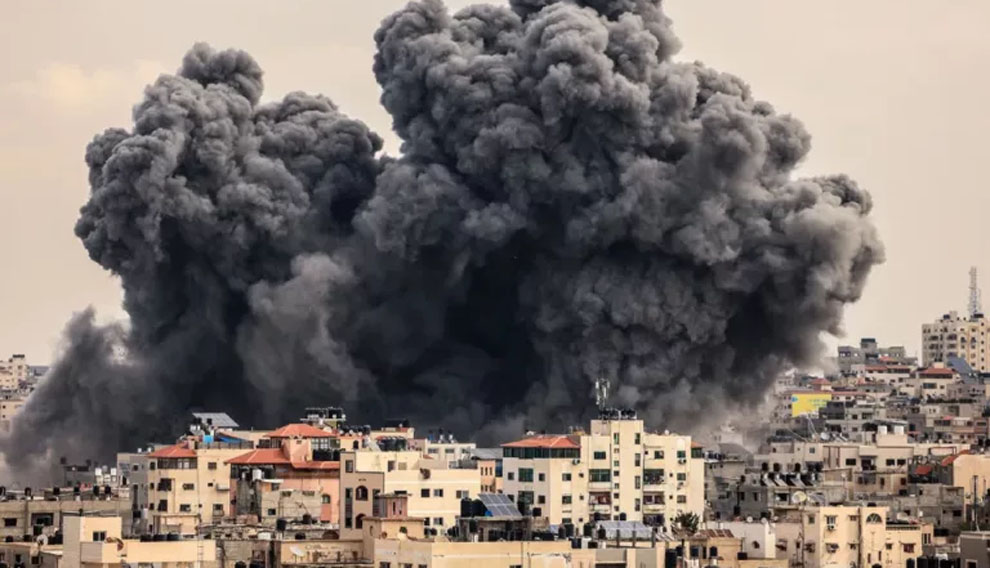
Israeli raids destroy neighborhoods in Tyre
Israeli raids destroy neighborhoods in Tyre
BEIRUT: Intense Israeli raids targeted the southern coastal city of Tyre on Wednesday following evacuation warnings by the Israeli army.
Although the number of people in the city had decreased, panic gripped the remaining residents, prompting them to flee.
Half an hour after the warnings by Israeli army spokesperson Avichay Adraee, the city was targeted, with plumes of black smoke filling the sky.
The raids destroyed several neighborhoods, including hotels, restaurants and commercial institutions.
Tyre often hosts UN peacekeepers on their first break from deployments along the border region.
It comprises rich Phoenician, Byzantine and Roman remains recorded on the World Heritage List 1984.
A portion of the city, formerly known as “the onshore Tyre,” also includes Qana, Sarafand and the surroundings of Naqoura.
Maha Al-Khalil Chalabi, chief of the International Association to Save Tyre, described what was happening as “brutal.”
The destructive Israeli bombing, she said, besieged Tyre and the old town specifically.
UNESCO has warned of the need to take immediate measures to protect Tyre and Baalbek from the dangers of bombing and destruction to protect its population.
The Israeli army says that it is targeting Hezbollah’s infrastructure, while simultaneously invading several border villages to bulldoze them after bombing houses and facilities.
These villages include Aita Al-Shaab, notably the old town, as well as other villages in Bint Jbeil, which was subject to artillery shelling.
Israeli raids also targeted more than 20 villages, including Khiam, Taybeh, Chakra, Ainata, Sarbin, Mayfadoun, Habboush, Maarakeh, Kfarsir, Aaichiyeh, Jibchit, Harouf, Blat, Kfar Reman, Arab Salim and Yohmor Chkeif, killing and injuring dozens of people.
One of the fleeing residents in the south, who wished to remain anonymous, said that after remaining in his village for 22 days, what he saw “is black hell I’ve never seen in my life.”
He added: “They left us to our fate and let us down. If you see the magnitude of the destruction, you will not believe your eyes.”
READ ALSO:
- Lagos govt incurs ₦114.5b from 6,047 court cases
- US Justice Dept warns Elon Musk over $1m vote-buying
- Emir Sanusi to turban first son as Ciroma Kano
He said that “many Hezbollah members are shaving their beards and fleeing the country to Iraq.”
Hezbollah announced the execution of a series of military operations, some of which targeted “a gathering of soldiers at the eastern outskirts of the Lebanese town of Taybeh, as well as two gatherings at the Misgav Am site and at the borders of the Lebanese town of Rab El-Thalathine.”
The clashes remain intense at the triangle of Taybeh-Rab El-Thalathine-Adaisseh between Hezbollah and the Israeli army, aimed at preventing any incursion into Lebanese territory.
On Tuesday night, Israeli airstrikes hit the southern suburbs of Beirut with about eight raids targeting residential buildings that had been evacuated in the neighborhoods of Al-Laylaki and Haret Hreik, the vicinity of Al-Rayah Stadium, Al-Qaim Mosque, the Atwi complex in Al-Marija and Burj Al-Barajneh, and a building opposite Bahman Hospital, causing massive damage to the hospital.
The Israeli army reported that it intercepted “four drones on Wednesday that were attempting to approach the border, and detected the launch of 25 projectiles from Lebanon toward Haifa Bay and Upper Galilee.”
Israeli media reported “the interception of a missile in the airspace over the city of Petah Tikva, located northeast of Tel Aviv, as well as two missiles in the airspace above the Ramat David military airport in the Jezreel Valley, east of Haifa.”
The Israeli army announced that “22 soldiers were injured in battles in southern Lebanon over the past 24 hours.”
Hezbollah is mourning the head of the party’s executive council, Hashem Safieddine, who was killed in Israeli raids that targeted buildings in Al-Marija in the southern suburbs of Beirut early this October.
The Israeli raids prevented any efforts to approach the targeted site to retrieve his body to confirm his death.
Safieddine was the likely successor to the party’s secretary-general, Hassan Nasrallah, who was killed by Israel in raids that targeted his underground residence in Haret Hreik on Sept. 27.
The Israeli army announced on Tuesday evening the “elimination of Safieddine” after receiving intelligence in Beirut about the recovery of his body and the bodies of about 20 leaders.
The conflict between Israel and Hezbollah appears to be far from resolution, despite diplomatic efforts, and has entered a phase of attrition.
READ ALSO:
- Naira slumps further trading N1,654.09/$1 at official window
- 19.4% of Nigerian households using cooking gas – NBS
- Qatar Airways launches world’s first Boeing 777 Starlink-equipped flight
German Foreign Minister Annalena Baerbock, who arrived in Beirut, said: “Israel has significantly weakened Hezbollah, and the current task is to achieve an effective diplomatic solution.”
MP Ibrahim Mneimneh predicted that the conflict will be long.
“Israel has confirmed that it will not cease its operations against Lebanon until it has completely dismantled Hezbollah’s military capabilities, disarmed the group, and returned the residents of the north to their settlements.
“Conversely, Hezbollah asserts that it will continue to resist Israel until the last fighter.
“Therefore, it is unlikely that the fronts of combat will calm down in the near future, especially given that the US administration is preoccupied with the election campaigns for the presidential race.”
Mneimneh said: “This situation is accompanied by the Lebanese government’s inability to exert pressure to halt the war, and the ruling system that has led the country to this disaster remains determined to dismantle what is left of the state.
“Iran is stepping forward to negotiate on our behalf as if its previous interventions have not already brought devastation and ruin to all of Lebanon.”
Meanwhile, a meeting was held on Wednesday between the two former presidents, Amin Gemayel and Michel Suleiman, and former prime minister, Fouad Siniora, at Gemayel’s residence in Bikfaya.
The meeting praised Prime Minister Najib Mikati’s “stance against Iranian guardianship and hegemony and his affirmation of the sovereignty of the Lebanese state and its full control of its free decision.”
The attendees said that “efforts should now focus on saving Lebanon without any delay to stop the horrifying and open massacre of the Lebanese people at the hands of the Israeli aggression, through an immediate ceasefire and the implementation of Resolution 1701 under the exclusive authority of the state strictly and completely.”
The meeting called for supporting the parliament’s speaker, prime minister and Arab parties in these efforts.
The process of electing a president for the republic should be freed from any preconditions, and the elected president should have the confidence of parliament, they said.
“A national salvation government should be formed, and work should commence on preparing and implementing a plan for state-building that ensures economic recovery in all its forms, including efforts to rebuild what the Israeli aggression has destroyed, in cooperation with friendly institutions and nations,” a statement released after the meeting said.
The attendees called for “the need to re-establish the authority of the state over all Lebanese territories, in compliance with international and Arab legitimate resolutions.”
They also urged “adopting and implementing the financial, economic, administrative and institutional reform plan in the country.”
Siniora said: “From the first day after the 2006 July war, there was a failure to implement Resolution 1701 by Israel and Hezbollah. It is true that the state sent a large number of army personnel to the south, but at that time, we witnessed a laxity in implementation.”
Meanwhile, the 11th relief plane in the Saudi air bridge, operated by the King Salman Humanitarian Aid and Relief Center, arrived at Beirut Rafic Hariri International Airport, carrying food, tents and medical aid.
Israeli raids destroy neighborhoods in Tyre
ARAB NEWS


International
Putin Offers Iran Diplomatic Support After Collapse of US–Iran Talks

Putin Offers Iran Diplomatic Support After Collapse of US–Iran Talks
Russian President Vladimir Putin has offered diplomatic support to Iran following the collapse of high-level negotiations between Tehran and the United States, as tensions continue to escalate across the Middle East.
According to a Kremlin readout reported by AFP, Putin held a phone conversation on Sunday with Iranian President Masoud Pezeshkian, during which he expressed Russia’s readiness to help facilitate a political and diplomatic settlement to the crisis.
The Kremlin said Putin emphasized Moscow’s willingness to support efforts aimed at achieving what he described as a “just and lasting peace” in the region, including acting as a mediator if required.
The call came shortly after the breakdown of US–Iran talks, which had been aimed at resolving long-standing disputes over Iran’s nuclear programme and wider regional security issues but ended without agreement.
US–Iran Negotiations Collapse After Months of Tension
The negotiations reportedly involved senior US officials, including lead negotiators Steve Witkoff and Jared Kushner, but collapsed after prolonged discussions failed to produce meaningful progress.
READ ALSO:
- BREAKING: Military Intensifies Offensive, Destroys ISWAP Enclave in North-East
- NDLEA Smashes Drug Networks, Arrests Nonagenarian, Doctor in Nationwide Raids
- 17-Year-Old Student Allegedly Hacks Celebrity WhatsApp Accounts, Sells Explicit Content in School
A US official said the delegation withdrew following what it described as unproductive talks, while confirming that no immediate follow-up meeting had been scheduled.
Iranian Parliament Speaker Mohammad Bagher Ghalibaf blamed Washington for the breakdown, saying US negotiators failed to build trust during the discussions. He added that Iranian proposals were constructive but were not properly considered.
Diplomatic Breakdown Raises Regional Tensions
The collapse of the talks has further deepened uncertainty in the Middle East, where tensions have already been heightened by recent military and political disputes involving Iran, the United States, and Israel.
Analysts warn that continued failure to reach diplomatic compromise could worsen instability in the region and increase pressure on global energy markets, particularly oil and gas supply routes.
Russia Seeks Greater Role in Mediation Efforts
Putin’s engagement with Iran is being viewed as part of Russia’s broader effort to position itself as a key diplomatic actor in the crisis.
The Kremlin said Russia remains open to supporting dialogue between all sides, suggesting Moscow could play a more active role in future mediation efforts if both parties agree.
For now, no new date has been announced for the resumption of US–Iran negotiations, leaving diplomatic efforts at a standstill as international calls for restraint continue.
Putin Offers Iran Diplomatic Support After Collapse of US–Iran Talks
International
Trump Orders US Navy to Blockade Strait of Hormuz After Iran Talks Collapse

Trump Orders US Navy to Blockade Strait of Hormuz After Iran Talks Collapse
Donald Trump has ordered the United States Navy to begin an immediate blockade of the Strait of Hormuz, escalating tensions with Iran after the collapse of critical peace talks in Islamabad.
The directive, announced Sunday via Truth Social, signals a major shift from diplomacy to military pressure in one of the world’s most sensitive geopolitical flashpoints. Trump said U.S. naval forces would intercept all vessels attempting to enter or leave the Strait of Hormuz, particularly those suspected of paying transit tolls to Iran, which he described as “extortion.”
The move follows the breakdown of high-level negotiations between Washington and Tehran, widely seen as a rare attempt to de-escalate tensions. Although Trump acknowledged that discussions were partly productive, he insisted that the core issue—Iran’s nuclear programme—remained unresolved.
Sources familiar with the talks revealed that the مذاکرات collapsed over Iran’s refusal to give up its enriched uranium stockpile and its insistence on maintaining control over shipping activities in the strategic waterway. The Iranian delegation, led by Mohammad Baqer Ghalibaf, blamed the United States for failing to build trust during the negotiations.
The Strait of Hormuz blockade carries enormous global implications. The narrow waterway handles roughly 20% of global oil and liquefied natural gas shipments, making it one of the most critical energy chokepoints in the world. Any disruption threatens to send shockwaves through global markets.
READ ALSO:
- Elon Musk Slams South Africa Over Starlink Ban, Calls Policy ‘Racist’
- Court Orders Forfeiture of Pastor Ebonyi’s Hotel, School, Factory Over Alleged N1.39bn Fraud
- Lagos 2027: APC Succession War Intensifies as Tinubu Reportedly Backs Hamzat
Indeed, oil prices have already surged amid the crisis, with Brent crude and WTI climbing above $115 per barrel at peak levels. Analysts warn that the blockade could push prices even higher, worsening inflation and straining economies heavily dependent on energy imports.
The escalation comes just a day after the U.S. military intensified operations in the region. The United States Central Command confirmed that American forces had begun mine-clearing operations in the Strait of Hormuz, amid allegations that Iran’s Islamic Revolutionary Guard Corps deployed naval mines to restrict shipping.
Two U.S. Navy destroyers, USS Frank E. Peterson and USS Michael Murphy, were spotted transiting the strait as part of efforts to secure maritime routes and ensure safe passage for commercial vessels.
Trump framed the blockade as a defence of global shipping freedom, warning that any Iranian attack on U.S. or allied vessels would be met with overwhelming force. However, the Pentagon has yet to release full operational details, leaving uncertainty around how the blockade will be enforced.
The situation is further complicated by developments involving Israel. Prime Minister Benjamin Netanyahu recently signalled that Israeli military operations against Iran are ongoing, despite ceasefire discussions. He stressed that Israel would act independently to protect its national interests.
Experts warn that the U.S.-Iran conflict escalation could rapidly spiral into direct military confrontation, with far-reaching consequences for global security. Shipping companies have already begun rerouting vessels, while insurers are raising premiums due to heightened risks in the Gulf.
As of now, Iranian authorities have not issued an official response to the blockade order. Meanwhile, global markets are bracing for volatility as trading resumes, with investors closely monitoring developments in the region.
The unfolding crisis highlights the fragile state of U.S.-Iran relations and underscores the strategic importance of the Strait of Hormuz to global energy supply and economic stability.
Trump Orders US Navy to Blockade Strait of Hormuz After Iran Talks Collapse
International
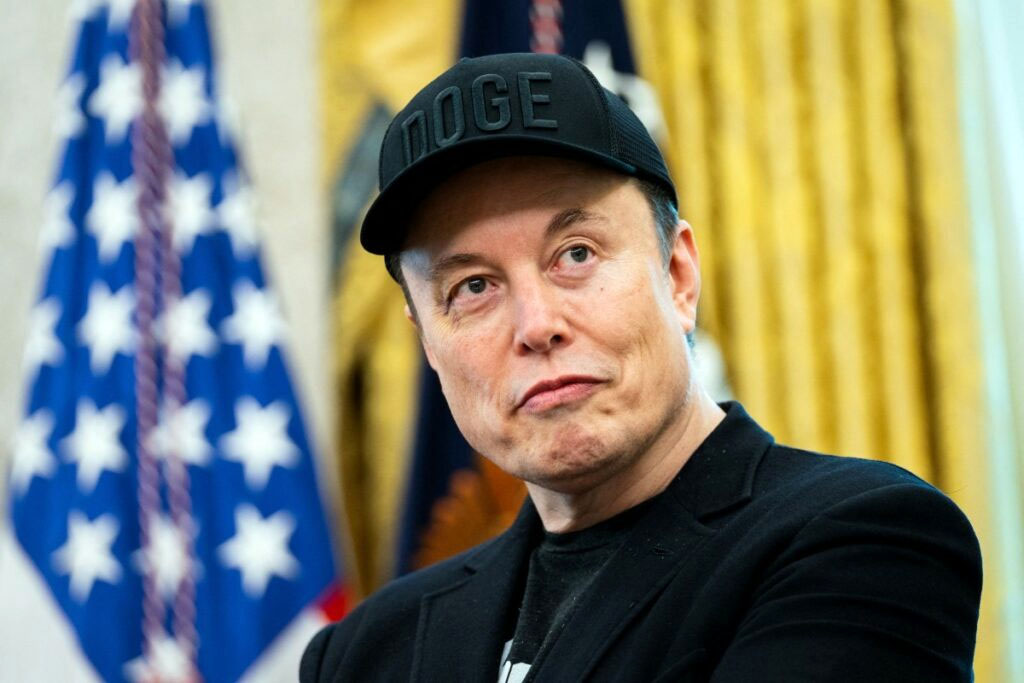
Elon Musk Slams South Africa Over Starlink Ban, Calls Policy ‘Racist’
Elon Musk Slams South Africa Over Starlink Ban, Calls Policy ‘Racist’
Elon Musk has escalated his criticism of South Africa, accusing the government of racial discrimination following the continued refusal to grant an operating licence to his satellite internet service, Starlink.
In a strongly worded post on X (formerly Twitter) on Sunday, the SpaceX founder claimed that Starlink’s application had been blocked because he is not Black, despite being born in South Africa. The billionaire further alleged that the company was informally offered a workaround involving the appointment of a Black executive to satisfy ownership requirements, a move he said he rejected on principle.
The controversy centres on South Africa’s Broad-Based Black Economic Empowerment (B-BBEE) policy, which requires companies operating in sectors like telecommunications to meet equity thresholds, typically mandating at least 30 percent Black ownership. The policy was introduced to correct deep economic imbalances created during apartheid, but it has increasingly become a point of friction for foreign investors.
South African regulators, including the Independent Communications Authority of South Africa, have consistently maintained that the rules apply uniformly to all operators and are a legal requirement for licensing. Authorities have pushed back against claims of discrimination, insisting that the policy is aimed at economic redress rather than racial exclusion.
READ ALSO:
- Court Orders Forfeiture of Pastor Ebonyi’s Hotel, School, Factory Over Alleged N1.39bn Fraud
- Lagos 2027: APC Succession War Intensifies as Tinubu Reportedly Backs Hamzat
- Machete-Wielding Man Shot Dead After Injuring Three in New York
Musk has repeatedly criticised the framework, describing it as “unashamedly racist” and claiming that such policies contradict the legacy of Nelson Mandela. He has also alleged that numerous laws in the country unfairly disadvantage non-Black citizens, further fuelling the ongoing debate.
Despite the standoff, Starlink has continued its rapid expansion across Africa, now operating in nearly two dozen countries where it provides high-speed internet access to underserved communities, including schools and healthcare centres. South Africa, however, remains one of the few major economies on the continent where the service is unavailable.
Musk had previously proposed initiatives to support connectivity in rural South African communities, including offers to provide internet access to thousands of schools, but those plans have stalled due to regulatory hurdles tied to ownership compliance.
As of now, the South African government has not issued an official response to Musk’s latest remarks. However, previous statements suggest that there is unlikely to be any regulatory concession without full adherence to B-BBEE requirements.
The dispute highlights a broader tension between South Africa’s post-apartheid transformation policies and the expectations of global technology investors. Analysts say the outcome could shape future investment decisions and influence how African nations balance economic redress with the need to attract international business.
Elon Musk Slams South Africa Over Starlink Ban, Calls Policy ‘Racist’

-
 metro1 day ago
JUST IN: FG Publishes List of 48 Individuals, Groups Linked to Terrorism Financing in Nigeria
-

 metro1 day ago
42-Year-Old Married Woman Declared Missing Found in Hotel with Man
-
 Politics2 days ago
Did Faleke Just Reveal Lagos’ Next Governor? Party Moves Begin
-

 Education2 days ago
Germany Opens Fully Funded Scholarships for Nigerians, Africans
-

 Politics1 day ago
2027: Oyo APC Governorship Aspirant Saheed Oladele Resigns From Party
-
 metro1 day ago
ADC Threatens Civil Disobedience To Force INEC Chairman To Resign
-
 Business3 days ago
Nigeria May Face ₦2,000 Petrol Price Without Intervention, TUC Warns FG
-
 Business3 days ago
Naira Strengthens to ₦1,359.31/$ as CBN Data Shows Further Gain in Official Market