

Auto
Lanre Shittu Motors rolls out LSM-branded full CNG buses, plans mobile refilling facilities
Lanre Shittu Motors rolls out LSM-branded full CNG buses, plans mobile refilling facilities
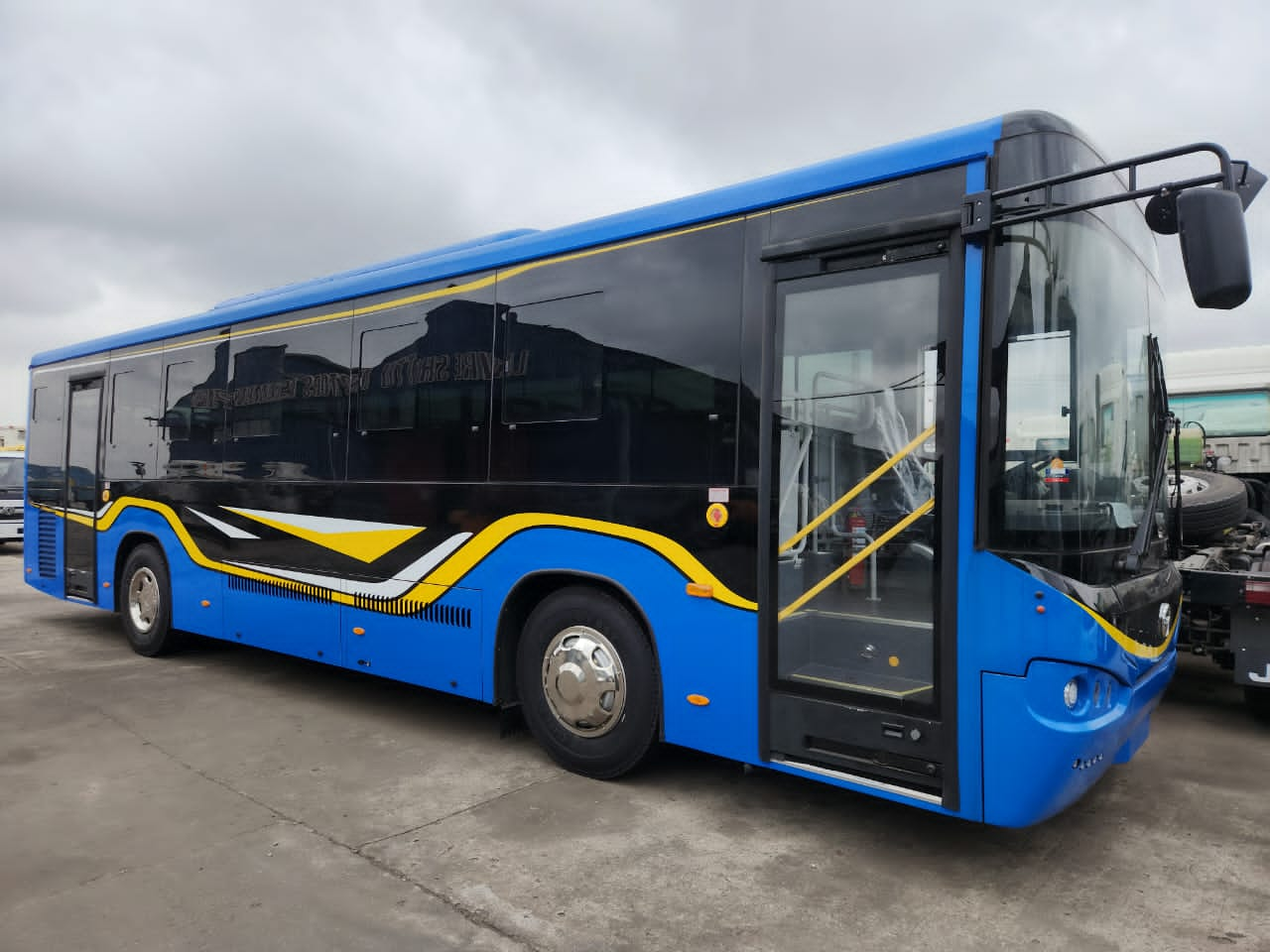
Frontline indigenous automaker, Lanre Shittu Motors, has taken the campaign for Nigerians to embrace compressed natural gas-powered vehicles to a new level with the unveiling of full CNG-powered buses in Nigeria.
The company also says it is willing to support those buying a large fleet including state governments with the installation of mobile CNG stations across different locations.
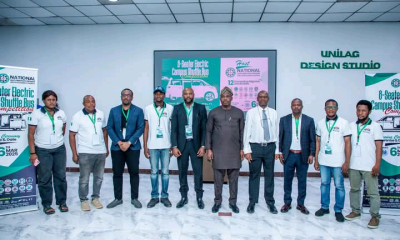
Speaking with some journalists in Lagos on Monday at a media launch of the buses, Managing Director of Lanre Shittu Motors, Mr. Taiwo Shittu, said the CNG vehicles are being assembled at the Amuwo Odofin assembly plant, Lagos.
The LSM MD who spoke along with the Deputy Managing Director of the company, Lukman Shittu, said 100 units of the buses coming in two specifications would be introduced in the first phase to support the President Bola Tinubu’s CNG initiative of easing public transportation and cushioning the effects of fuel subsidy removal.
Director General of the National Automotive Design and Development Council, Mr. Joseph Osanipin, said he was excited about the initiative, adding, “Now that LSM has taken the bold step which l hope others will key into; no need to bother about the cost of conversion because the vehicles are already factory-fitted.
Speaking further on the new CNG vehicles, the LSM MD said while the first bus, a 31-seater, would be deployed for intra-airport shuttle, the second spec, a 54-seater also accommodating 25 persons standing, would serve as mass transit city bus.
The MD said, “Now we have the real CNG new buses on the ground. We are the first to have full CNG vehicles for sale, others are converted engines or hybrid.
“Any state that is really interested in saving cost should be talking to us.
“We have two specifications, one for airport shuttle, and the other for mass transit city bus.”
Taiwo Shittu also said the city bus was built with seven cylinders and could travel for 450-500 kilometres before recharge.
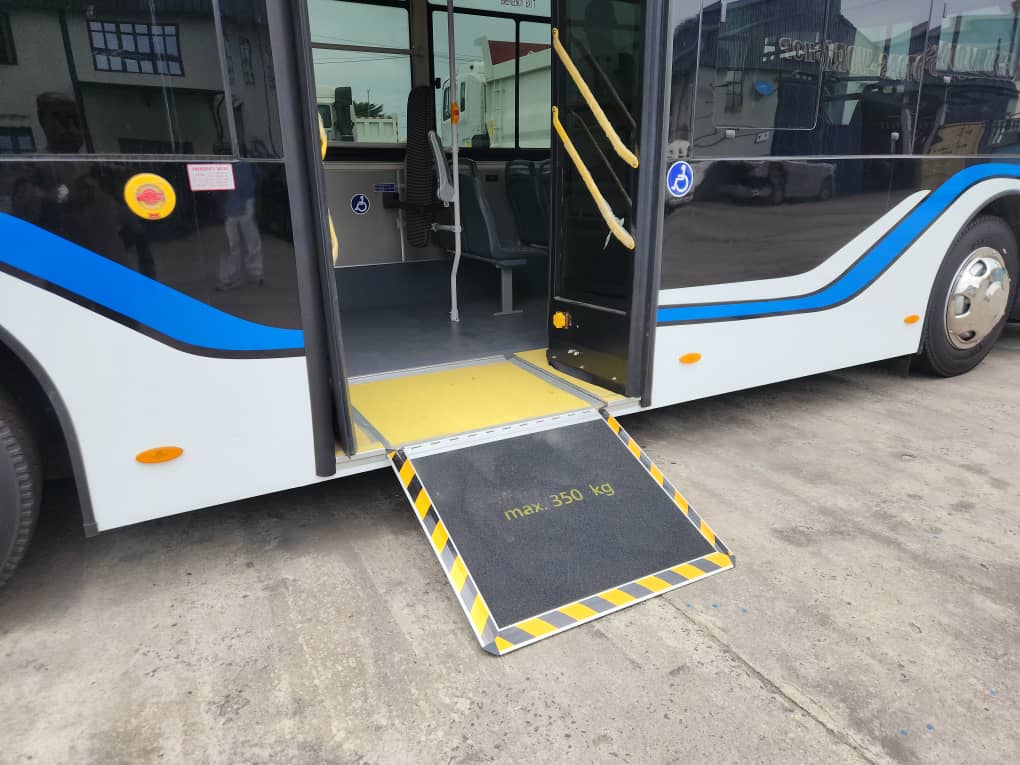
According to him, the airport bus, also built with seven CNG cylinders, has a lot of space for boxes and two wheel chairs like the city bus.

“They all have charging stations. While on the move, you can charge your phones. The bus is air-conditioned, durable and installed with viewing screens,” he added.
He declared that the LSM-branded CNG bus would guarantee complete 70 per cent reduction in operation costs.
He said, “For instance, while the CNG costs N200-N230/kg, diesel is sold from N1,200 to N1,400/litre, depending on the state you are buying from.
“While some drivers have the habit of siphoning fuel from a vehicle for the purposes of selling or using it elsewhere, this cannot happen with CNG.
“The money saved could be utilised to solve other vital problems including paying workers’ increased salary based on approved new minimum wage.”
Deputy Managing Director of the company, Mr Lukman Shittu, said the company was willing to install mobile CNG stations across different locations, especially for large fleet buyers.
He said, “We can deploy mobile CNG stations across different locations; we can install for people around their locations.”
He explained that the company had also embarked on the training of its workers in the CNG technology using its technical partners.
He said, “We have technical partners. They have trained our workers. We have the expertise; we are going to Ekiti State with the National Automotive Design and Development Council (NADDC) to train people in the CNG technology. We are also going to other states.
“We have the parts. We are not only concerned about our buses, we are also interested in helping the government in any way we can to make this CNG initiative a reality.
“The important thing is how to save cost on transportation in Nigeria.”
The DG of the NADDC, Osanipin, commended Lanre Shittu Motors for assembling full CNG buses locally.
“Those that need this type of pure 100% CNG buses are mainly the commercial transporters. We at the NADDC are working with LSM to test run it.
“LSM will provide the expertise while Pi-CNG (Presidential CNG Initiative) will provide the necessary support and NADDC will ensure the training of people that will handle it.”







Auto
Jetour Targets Abuja Market with X70 PHEV as Nationwide Expansion Gathers Pace
Jetour Targets Abuja Market with X70 PHEV as Nationwide Expansion Gathers Pace
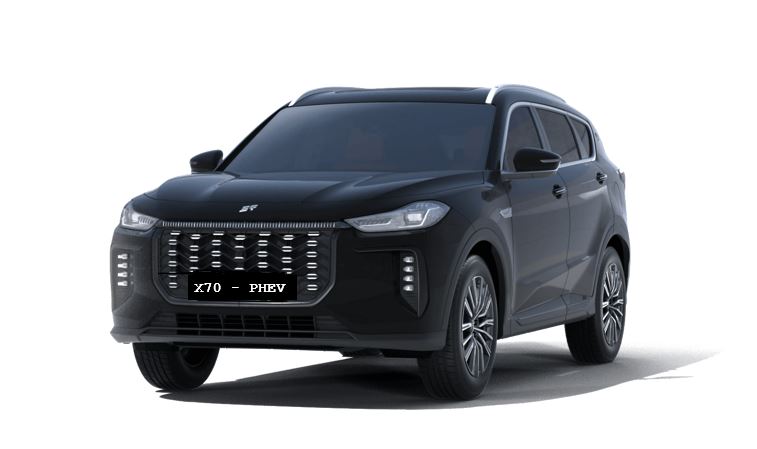
Jetour Nigeria is taking its hybrid SUV offensive to Abuja, with the X70 Plug-in Hybrid Electric Vehicle (PHEV) set to headline the three-day Jetour Experience from September 22 to 24 as the automaker accelerates its drive to expand its footprint and capture a larger share of Nigeria’s fast-evolving mobility market.
The Abuja showcase, coming on the heels of a strong Lagos edition that generated significant consumer interest, test drives and sales enquiries, is designed to bring Jetour’s latest technologies closer to customers in the Federal Capital Territory and neighbouring states.
The event at Maha Event Centre, Area 8, will give prospective buyers and auto enthusiasts the opportunity to test-drive the X70 PHEV and other Jetour models while interacting with product specialists and experiencing their technology, safety features, performance and comfort firsthand.
According to the company, expanding the showcase to the Federal Capital Territory was a direct response to rising demand from residents in Abuja and neighbouring states.
READ ALSO:
- ASUU Crisis Deepens: Lagos Universities Join UNIBEN, Taraba on Indefinite Strike
- Lagos Power Outage: Ikeja Electric Blames TCN as Businesses, Homes Groan
- US Court Blocks Trump Visa Rule Limiting Stay of Foreign Students, Journalists
To bolster buyer confidence, Jetour Nigeria—the country’s sole authorised distributor—backs the X70 PHEV with a five-year or 150,000-kilometre warranty.
The distributor operates through an accredited nationwide dealer network, including: Elizade Nigeria Limited,
New Era Auto Vehicle Services Limited, Kojo Motors, Germaine Auto Centre, Tab Autos Limited, R.T. Briscoe Motors, and Mandilas Autos.
The X70 PHEV pairs a 1.5-litre turbocharged engine with a 19.43kWh battery and a dedicated hybrid transmission. Designed to balance performance with fuel efficiency, the vehicle supports fast, slow, engine, and regenerative braking charging options—reducing reliance on external charging infrastructure.
Jetour’s rapid growth in the Nigerian market has earned both private and corporate patronage, driven by competitive pricing, high specification levels, and an expanding service footprint. The brand was named “Fastest Growing Auto Brand of the Year” at the 2024 Nigeria Auto Journalists Association (NAJA) Awards.
With the X70 PHEV leading the Abuja showcase, Jetour aims to deepen customer engagement and consolidate its position in the local automotive market.
Jetour Targets Abuja Market with X70 PHEV as Nationwide Expansion Gathers Pace
Auto
X90 Plus Leads Jetour’s Abuja Drive for Bigger SUV Market Share
X90 Plus Leads Jetour’s Abuja Drive for Bigger SUV Market Share
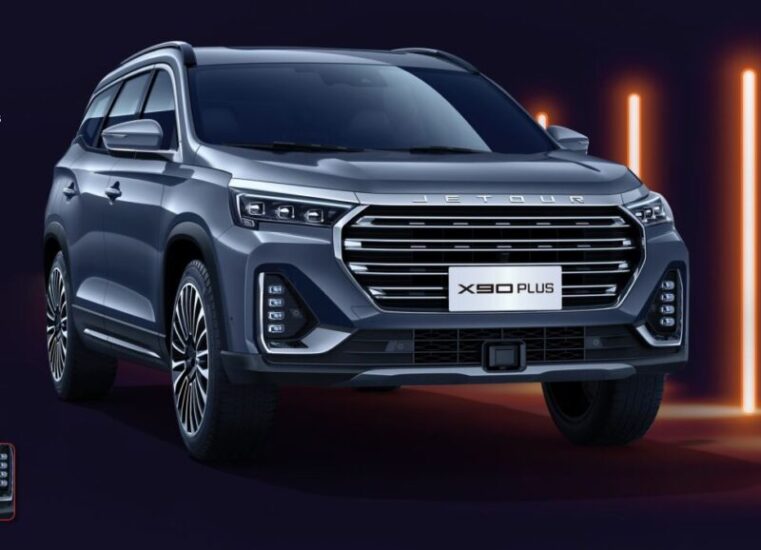
Jetour Nigeria is taking its premium SUV battle to Abuja, with the seven-seater X90 Plus set to headline the Jetour Experience Abuja from September 22 to 24, as the automaker moves to capture a larger share of Nigeria’s fast-growing high-end family SUV market.
The three-day motoring showcase will give prospective buyers, families and auto enthusiasts in the Federal Capital Territory and neighbouring states an opportunity to experience the X90 Plus and other models in the Jetour range through test drives and hands-on demonstrations.
The Abuja showcase follows the success of the brand’s earlier Jetour Experience in Lagos, where strong customer interest, inquiries and sales momentum reportedly encouraged the company to take the initiative to the Federal Capital Territory.
Jetour Nigeria said growing demand from customers in Abuja and neighbouring states was a major factor behind the decision to expand the experience to the northern market.
Positioned as a full-sized family SUV, the X90 Plus is designed for executives and families seeking a combination of space, technology, performance and comfort without the price tag associated with some luxury SUVs.
The model is offered with 1.6-litre and 2.0-litre turbocharged engines paired with a seven-speed dual-clutch transmission. The powertrain produces up to 254 horsepower and 390Nm of torque.
Inside the cabin, the X90 Plus features a 12.3-inch LCD touchscreen infotainment system, panoramic sunroof, Sony premium audio system and wireless charging.
Its safety and driver-assistance features include a 360-degree panoramic camera, Forward Collision Warning, Lane Departure Warning and electronic stability systems.
Jetour’s growing profile in Nigeria has also earned the brand recognition from the Nigeria Auto Journalists Association (NAJA), which named it Fastest Growing Auto Brand, while it was also recognised as Auto Brand of the Year at the Nigeria Transport Lecture.
To support its expanding customer base, Jetour Nigeria, the sole authorised distributor, operates through seven accredited dealer partners across the country: Elizade Nigeria Limited, Mandilas Autos, R.T. Briscoe Motors, Germaine Auto Centre, Kojo Motors, Tab Autos Limited and New Era Auto Vehicle Services Limited.
The Abuja Experience is expected to provide Jetour with another platform to engage potential customers and reinforce its position in Nigeria’s increasingly competitive SUV market.
Auto
Jetour Takes Award-Winning Dashing, Other SUVs to Abuja
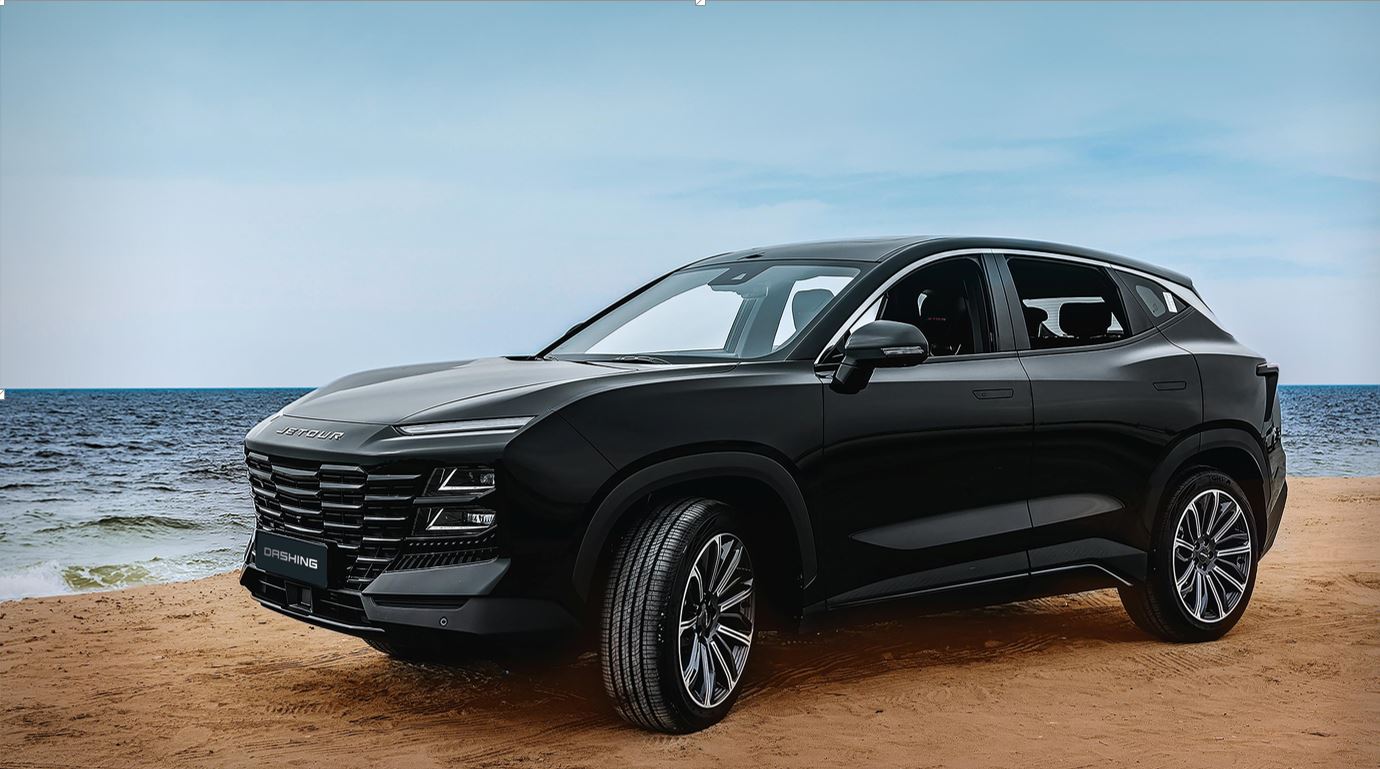
Jetour Takes Award-Winning Dashing, Other SUVs to Abuja
Motorists in Abuja are set for a close encounter with Jetour’s award-winning Dashing and other models as Jetour Nigeria moves to deepen its foothold in the nation’s capital with the Jetour Experience Abuja, beginning September 22.
The three-day motoring event, which runs until September 24, is expected to draw prospective buyers and automobile enthusiasts to a hands-on experience featuring test drives, product demonstrations and direct engagement with Jetour’s seven authorised dealers and product specialists.
The participating dealer network comprises Elizade Nigeria Limited, Kojo Motors, Mandilas Autos, Germaine Auto Centre, R.T. Briscoe, Tab Autos and New Era Auto Vehicle Services Limited.
READ ALSO:
- Police Arrest Woman Over Alleged Drug Trafficking in Delta
- Dangote raises petrol price 6.7% to N1,350/litre
- Anambra Police Arrest Woman Over Alleged Sexual Abuse of Child, Rescue Four
The Abuja Experience follows the success of the Lagos edition, which attracted thousands of visitors for test drives and direct engagement with product specialists. According to the organisers, strong demand and inquiries from motorists in Abuja and neighbouring states prompted the expansion of the event to the Federal Capital Territory.
The Dashing has gained attention in Nigeria’s competitive compact SUV segment for its combination of modern styling, technology, performance and competitive pricing.
The SUV is available with 1.5-litre and 1.6-litre turbocharged engines, producing up to 145kW of power and 290Nm of torque, paired with six- or seven-speed dual-clutch transmissions.
Its features include a 15.6-inch central touchscreen infotainment system, panoramic sunroof, wireless charging and smartphone integration.
For safety, the vehicle comes with a 360-degree surround-view camera, automatic emergency braking, lane departure warning, blind-spot detection and multiple airbags.
Beyond vehicle sales, the authorised dealers provide warranty, genuine spare parts and after-sales support to Jetour customers across their respective locations.
The Abuja Experience is expected to strengthen customer engagement and give motorists in the FCT a closer look at Jetour’s growing range of vehicles, while further expanding the brand’s footprint in the northern market.
Jetour Takes Award-Winning Dashing, Other SUVs to Abuja
-
 Politics2 days ago
2027: Northern Lecturers Back Tinubu, ASUU Disowns Endorsement
-

 metro2 days ago
Police Arrest Mother Over Alleged Brutal Abuse of 7-Year-Old Girl in Anambra
-

 Sports2 days ago
‘I Was Never the Chosen One’ — Dembele Responds to Mbappe
-
 News3 days ago
Nwifuru Dismisses Cubana Chief Priest as ‘Attention-Seeker’
-
 Politics3 days ago
2027: Sowore Promises ₦500,000 Minimum Wage, Free Education, 24-Hour Electricity
-

 Education2 days ago
JAMB Moves 2027 UTME Time — Here’s What Candidates Need To Know
-
 metro3 days ago
Grand Chief Imam calls for professional communication structure for Rabitoh 1964
-
 Politics2 days ago
2027: APC Governors Reject Wike’s Rainbow Coalition, Insist on Party Loyalty