
International
Maharashtra Deputy Chief Minister Ajit Pawar Dies in Baramati Plane Crash

Maharashtra Deputy Chief Minister Ajit Pawar Dies in Baramati Plane Crash
Maharashtra Deputy Chief Minister Ajit Pawar tragically died in a plane crash along with five others on Wednesday, January 28, 2026, while attempting to land at Baramati Airport in Pune district, India. The crash has sent shockwaves across the state and the nation, with political leaders and citizens mourning the loss of a senior leader.
The chartered Learjet 45 (VT‑SSK), operated by VSR Aviation, was en route from Mumbai to Baramati for local election campaigning ahead of Zilla Parishad polls. Preliminary reports indicate that the aircraft veered off the runway and caught fire upon landing, killing all occupants, including Pawar, a personal security officer, attendants, and two crew members. (Times of India)
Circumstances of the Crash
Eyewitness accounts suggest that the jet lost control near the runway threshold, leading to a catastrophic impact. The Directorate General of Civil Aviation (DGCA) has confirmed the crash and stated that a full investigation will be launched to determine technical, mechanical, or environmental causes. Aviation safety teams are expected to examine the wreckage in detail to prevent future incidents. (Economic Times)
READ ALSO:
- Tinubu Recommends 110 Court of Appeal Justices in Landmark Judicial Reform
- UK-Based Daniel Odubanjo Sentenced to Six Years in Prison for Sexual Assault
- Akpabio Hails Tinubu’s Administration as Most Christian-Friendly Since Nigeria’s Creation
Political Impact and Tributes
Pawar, a veteran Nationalist Congress Party (NCP) leader, was a central figure in Maharashtra politics. Nephew of Sharad Pawar, he served multiple tenures as Deputy Chief Minister and played a crucial role in shaping state policy, budgets, and rural development initiatives. (Outlook India)
Political leaders across India have expressed grief. President Droupadi Murmu described Pawar’s death as an “irreparable loss”, while Prime Minister Narendra Modi offered condolences to the families of all victims. Leaders highlighted Pawar’s contributions to state governance, cooperative sectors, and rural development.
State Mourning and Legacy
In response to the tragedy, Maharashtra has declared a three-day state mourning, with flags flown at half-mast. Public offices, educational institutions, and government buildings observed the mourning period, reflecting the profound impact of the loss on the state’s governance and political community.
Ajit Pawar’s death has sparked discussions on aviation safety for VIP travel, the political future of Maharashtra, and the importance of ensuring secure and reliable air transport for public officials. Authorities have pledged full cooperation in the DGCA-led investigation to determine the cause of the crash and prevent similar incidents in the future.
Maharashtra Deputy Chief Minister Ajit Pawar Dies in Baramati Plane Crash







International
Trump Claims Iran Sent Oil Shipments Amid Backchannel Talks
Trump Claims Iran Sent Oil Shipments Amid Backchannel Talks
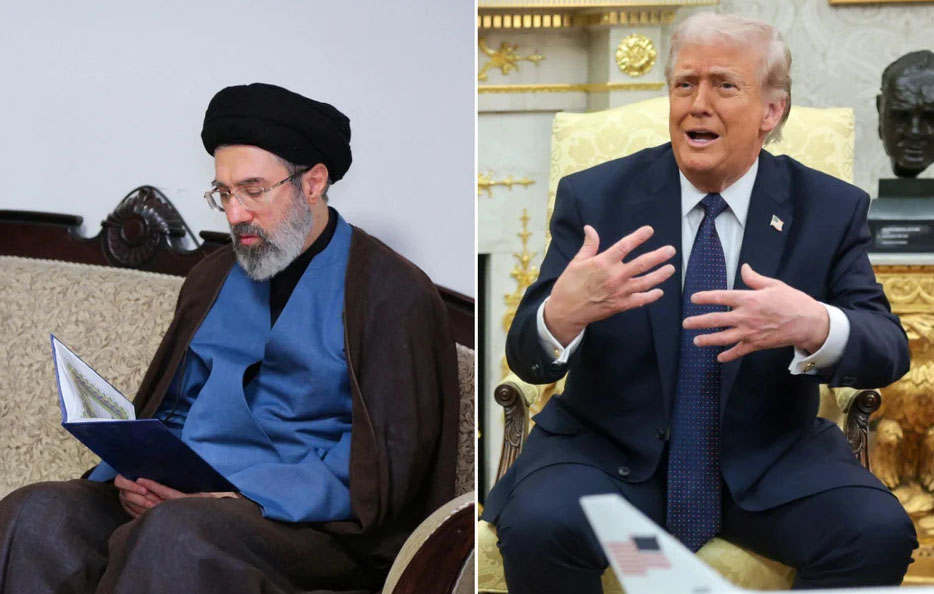
U.S. President Donald Trump has claimed that Iran dispatched ten oil tankers to the United States as part of indirect negotiations aimed at easing ongoing tensions between the two nations.
According to a report by Sky News on Friday, March 27, 2026, Trump made the assertion while speaking at the Future Investment Initiative in Miami. He suggested that the shipments were a gesture of goodwill, possibly intended as an acknowledgment of ongoing diplomatic engagements.
“It turned out I was right,” Trump said, referring to earlier claims that talks were underway between Washington and Tehran—claims initially denied by Iranian authorities. “They were negotiating, which they admitted two days later.”
Providing further details, Trump stated that Iran had first proposed sending eight oil ships before increasing the number to ten. “They said, ‘we’re going to send you eight ships of oil.’ They actually said, ‘we’re going to add an extra two,’ and they added an extra two,” he said. “So we had ten ships, and then people realized we were actually negotiating.”
Trump also struck a confident tone regarding developments in the Middle East, declaring that the region was “closer than ever” to being free from what he described as Iranian “terror, aggression and nuclear blackmail.”
However, Iranian officials have firmly rejected the claims of formal negotiations. Authorities in Iran insist that no direct talks are taking place with the United States, maintaining that any communication occurs strictly through third-party intermediaries, including Pakistan.
Tehran’s continued denial underscores the sensitive nature of any potential engagement with Washington, particularly amid domestic political pressures and broader regional dynamics.
The contrasting narratives highlight the uncertainty surrounding U.S.-Iran relations, with both sides presenting differing accounts of ongoing diplomatic efforts.
Trump Claims Iran Sent Oil Shipments Amid Backchannel Talks
International
Iranian Strike on Saudi Base Damages US Spy Plane, Injures 12 Troops
Iranian Strike on Saudi Base Damages US Spy Plane, Injures 12 Troops
Tensions in the Middle East have intensified following a major strike by Iranian forces on a United States military installation in Saudi Arabia, leaving several American personnel injured and damaging high-value military assets.
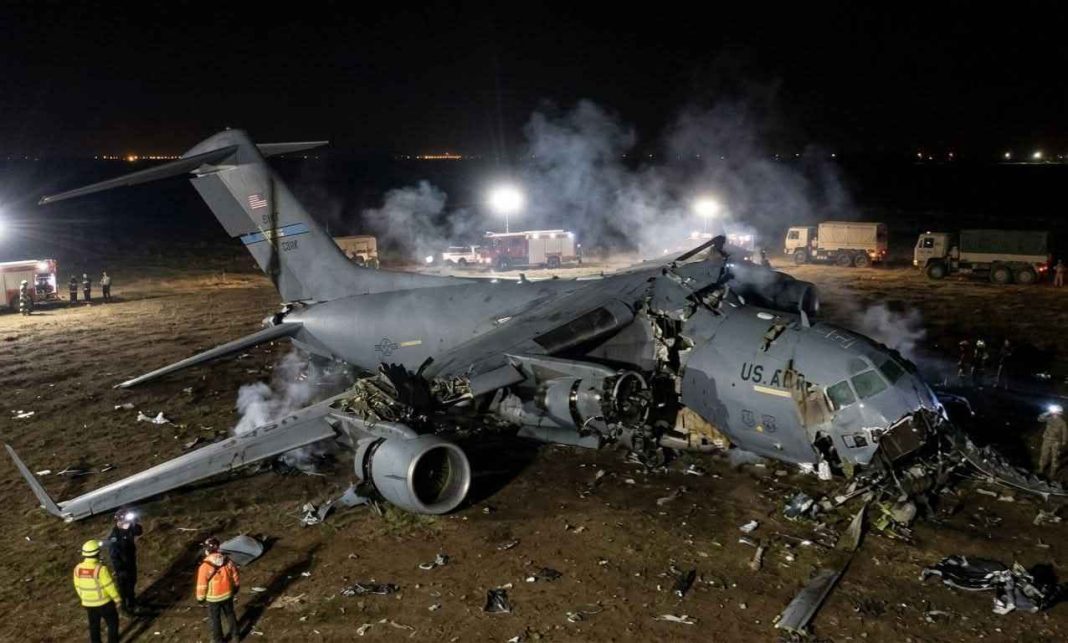
Iran reportedly launched a coordinated attack involving ballistic missiles and drones on the Prince Sultan Air Base on Saturday, targeting U.S. Air Force equipment stationed at the facility.
Initial reports from outlets including Daily Post Nigeria and Fox News indicated that a U.S. E-3 Airborne Warning and Control System (AWACS) aircraft—estimated to be worth about $700 million—was destroyed in the strike. The aircraft serves as a critical airborne radar and command center, capable of detecting threats and coordinating air operations over vast distances.
However, more recent and verified accounts suggest that the aircraft, identified as the Boeing E-3 Sentry, was damaged but not confirmed destroyed, raising questions about the accuracy of early claims surrounding the extent of the losses.
In addition to the AWACS aircraft, at least one KC-135 Stratotanker was reportedly struck during the ആക്രമation and caught fire, further compounding the scale of the incident.
U.S. officials confirmed that 12 American service members were injured in the attack. According to Fox News, two of the wounded personnel were listed in serious condition, while the remaining casualties sustained lighter injuries.
Military analysts note that the strike demonstrates Iran’s growing capability to conduct coordinated long-range attacks using a combination of drones and precision-guided missiles, posing a significant threat to U.S. assets in the region.
The latest escalation comes amid an ongoing conflict between the United States and Iran, which has persisted for approximately one month. The war has already led to significant casualties and heightened geopolitical tensions across the Middle East, particularly following reports of high-profile killings involving senior Iranian figures.
As of press time, there has been no official confirmation from the U.S. Department of Defense regarding the total extent of damage to the aircraft or whether any assets were completely destroyed.
Security experts warn that the attack could trigger further retaliation, raising fears of a broader regional confrontation involving key global powers and strategic allies in the Gulf.
Iranian Strike on Saudi Base Damages US Spy Plane, Injures 12 Troops
International
Iran Crisis: German Chancellor Advocates Dialogue, Questions Long-Term Military Strategy

Iran Crisis: German Chancellor Advocates Dialogue, Questions Long-Term Military Strategy
German Chancellor Friedrich Merz has called for a swift political resolution to the ongoing conflict involving Iran, cautioning against further military escalation and expressing doubts over the effectiveness of a purely military approach.
In remarks that reflect growing concern among European leaders, Merz emphasized that the crisis cannot be resolved through force alone, urging all parties to prioritize diplomacy. He warned that prolonged hostilities risk deepening instability in the region and could lead to unintended consequences beyond the Middle East.
The German leader also questioned the viability of regime change strategies, referencing past international interventions that failed to deliver lasting stability. His comments underscore a broader European position advocating restraint and dialogue rather than extended military engagement.
Merz, however, stopped short of directly labeling the conflict as illegal, maintaining a more measured stance while highlighting the urgent need for de-escalation.
Meanwhile, former U.S. President Donald Trump has continued to defend the military campaign, projecting confidence in its success and insisting it aligns with American interests. His position has sparked mixed reactions within his political base, with some supporters backing the action while others question its consistency with earlier pledges to avoid new foreign wars.
Analysts note that the divergence in tone between European leaders and segments of the U.S. political establishment reflects a widening transatlantic debate over how best to address the Iran crisis.
As tensions persist, international observers warn that the path forward will likely depend on renewed diplomatic efforts aimed at preventing further escalation and securing a sustainable resolution.
Iran Crisis: German Chancellor Advocates Dialogue, Questions Long-Term Military Strategy

-

 metro3 days ago
“We Pay Men to Sleep With Us in Germany” — Nigerian Woman Laments Loneliness Abroad
-

 metro1 day ago
Tragedy in Aramoko: Trailer Rams Residential Building, Kills 300‑Level Student
-

 Entertainment3 days ago
Tragedy in Music Industry as ‘Show Your Style’ Singer Sabinus Dies
-

 News1 day ago
Final Notice: FG Orders Civil Servants to Complete PASGA Verification by March 31
-

 metro2 days ago
El-Rufai’s Mother, Hajiya Umma, Dies Amid Son’s Legal Battle
-

 Entertainment1 day ago
Nollywood Actress Declares Love for Ibrahim Chatta, Offers to Pay Her Own Dowry
-

 Business3 days ago
Relief in Sight as Dangote Refinery Lowers Petrol Price
-

 Entertainment2 days ago
Gospel Singer Onos Brisibi Dies at 55 After Prolonged Illness