

News
Malabu oil probe: EFCC sacks prosecutor accused of taking bribes
Malabu oil probe: EFCC sacks prosecutor accused of taking bribes
The Economic and Financial Crimes Commission has parted ways with one of its top prosecutors amid a sprawling probe into how a high-profile case was bungled last month.
The anti-corruption office received a severe reprimand from a federal judge last week during a verdict on the criminal bribery case involving former attorney-general Bello Adoke, the proprietors of Malabu Oil & Gas Ltd, and multinational giants Eni and Shell. Justice Abubakar Kutigi threw out the case, which the EFCC first filed in 2020 before the High Court of the Federal Capital Territory, Abuja, saying the agency wasted four years yet was still unable to prove key elements of its indictment.
The case was the last serious attempt by the Nigerian government to impose accountability on organisations and individuals with suspected ties to the vast corruption that has for years plagued the possession of Nigeria’s deepwater OPL 245 oil block. The new Tinubu administration had already abandoned the civil liability strand of the controversial deal in favour of a lucrative business deal with the oil firms, Peoples Gazette previously reported.
Officials managing the situation told The Gazette the EFCC brass moved quickly to castigate Offem Uket as the wellspring of untold humiliation the agency suffered in court after he suddenly said there was no inculpatory evidence to send Mr Adoke and another suspect Abubakar Aliyu to jail or foist criminal liability on Eni and Shell.
Mr Uket, one of the agency’s prolific prosecutors who earlier handled cases involving Stella Oduah, Peter Nwaoboshi and Sambo Dasuki, was terminated because the agency’s chairman, Ola Olukoyede, was particularly incensed by the prosecutor’s alleged misconduct, according to multiple officials briefed on the matter.
READ ALSO:
- BREAKING: Armed herders attack Kogi community, kill many
- EFCC to arraign Bobrisky today over N180.7m laundering, naira abuse
- U.S. policy on Gaza will change if Israel fails to protect civilians, Biden warns Netanyahu
“He was sacked because extensive internal investigation revealed he compromised the case,” an official familiar told The Gazette. “But this may not be the end of the matter.”
The official said the EFCC planned to fight to resuscitate the case through an appeal process because there was enough evidence against the suspects and Mr Uket went rogue in his submission declaring otherwise before the court.
The agency initially tried to save the case in Mr Kutigi’s courtroom, but Mr Adoke and Wole Olanipekun — defence attorney for Mr Abubakar — filed opposing motions and the judge said it was already too late.
Prior to his controversial submission that led to the granting of the defendants’ motion to dismiss, Mr Uket had told some of his office that he was under pressure to accept bribes from Messrs Adoke and Olanipekun, officials said under anonymity to discuss an active investigation.
“He reported to the office that he was under pressure of financial inducement from Bello Adoke and Wole Olanipekun over the case,” another official said. “But we thought he was just following internal ethical compliance by informing the office, we didn’t know this would happen.”
The Gazette was not immediately able to ascertain the steepness of Mr Uket’s ties to the suspects. He did not return a request seeking comment, but some of his colleagues said his action came as a shock because he had displayed his mettle as some of the agency’s best hands.
One of the officials said Mr Uket’s contract was not renewed as part of the fallout from the botched trial, adding that he departed on a good note with the agency’s executives.
“His contract expired around the time he was accused of sabotaging the Malabu case,” one official said. “That’s why it was amicably decided that he should not be granted a renewal.”
Officials did not immediately convey whether or not the probe would remain limited to Mr Uket or be expanded to include those suspected of having offered bribes to the ousted prosecutor.
READ ALSO:
- We gave it away, says devastated Bruno Fernandes after Man Utd shocking 3-4 late loss to Chelsea
- BREAKING: Plateau Speaker swears in nine out of 16 APC lawmakers
- Wasiu Ayinde, Bobrisky and the Nigerian Army (1)
The 1991 graduate of the University of Nigeria Nsukka joined the police shortly after completing school, from where he moved to the EFCC as a contractor in the aughts. His ouster may leave a vacuum in the agency’s pool of prosecutors and marked only the latest in charges bordering on prosecutorial sabotage. For several years, attorney Festus Keyamo was bruised from charges that he sabotaged cases while serving as a contractor prosecuting cases for the EFCC during the Goodluck Jonathan administration.
Mr Keyamo later teamed up with some of the politicians he was purportedly prosecuting in the All Progressives Congress and went on to clinch ministerial position twice, including now as aviation minister under President Bola Tinubu.
Mr Olanipekun declined comments over two days. But Mr Adoke, who stepped down a criminal case against Mr Tinubu in 2011, said he did not offer bribes to the official, accusing the EFCC of being out to further besmirch his reputation after beating the agency’s charges in several courts in and out of Nigeria.
“Not in this world would I offer Uket bribe or anyone for that matter,” the former attorney-general said in a statement to The Gazette. “It is unfortunate that anyone would come up with such a lame excuse. I have no reason to offer Uket or anyone bribe.”
“Don’t forget that they lost their cases in London and Milan, and the U.S. Department of Justice and SEC found nothing wrong with the transaction, and ditto the Dutch government. The claim is utterly ridiculous cynical, and irresponsible,” he said.
While the cases against Eni and Shell in Italy were resolved in favour of the multinational giants, they did not necessarily suggest Mr Adoke’s innocence of the bribery allegations because he was not a party in the lawsuits. Moreover, the Italian court said evidence submitted at trial indicated Mr Adoke received $2 million in suspicious payment as part of the 2011 deal.
The Nigerian politician, however, continued to maintain his innocence and has touted the recent judgement in Abuja as his most resounding vindication yet. The EFCC, however, vowed to make the suspects’ victory lap short-term because the case would be handled by a different prosecutor who would effectively itemise evidence on appeal.
Malabu oil probe: EFCC sacks prosecutor accused of taking bribes










Community
Monarch Dies Shortly After Being Rescued From Kwara Kidnappers
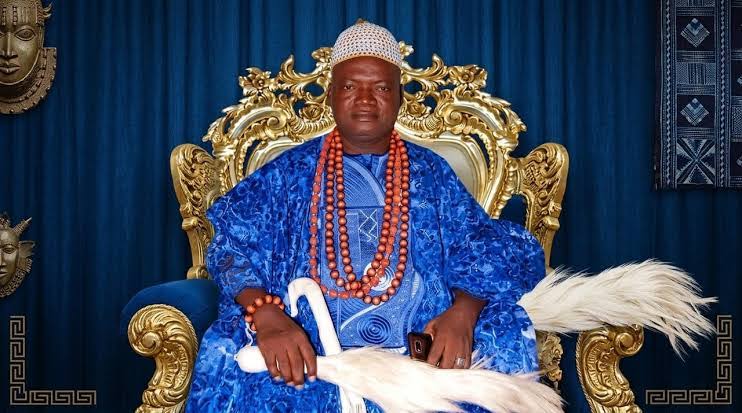
The Onigbesi of Igbesi Land in Kwara State, Oba Moses Oyinloye Iwedunmoye I, has died days after he was rescued from kidnappers.
The monarch passed away in the early hours of Saturday at a hospital, according to his son, Prince Olasunkanmi, who said his father had been receiving treatment following a brief illness.
“Yes, the news is true. He died after a brief illness following his release. We took him to the hospital, hoping he would survive, but he died there very early this morning,” Olasunkanmi said.
Oba Iwedunmoye was abducted on August 22 when armed men invaded Igbesi community in Isin Local Government Area.
He regained his freedom five days later after security forces launched an operation around the Elerin/Ijomu-Oro area, where three kidnapped victims were found.
The rescue followed a report received at the Oro Police Station from a vigilante member, who alerted authorities after one of his colleagues was shot while operating in the bush.
A combined team of police officers, soldiers and vigilantes was subsequently deployed to the area.
Police said the suspected kidnappers engaged the team in a gun battle after spotting the advancing operatives. One alleged kidnapper was killed during the exchange, while others escaped into the surrounding area.
The security team continued the search and eventually located the three victims, who were evacuated for medical treatment.
News of the monarch’s death was announced by Bisi Fakayode, National President of Omo Ibile Igbomina, who mourned the traditional ruler and prayed for the repose of his soul.
The circumstances surrounding the monarch’s illness and death have not been publicly disclosed beyond his family’s account that he fell ill after his release.
News
Police Arrest Woman Over Alleged Drug Trafficking in Delta
Police Arrest Woman Over Alleged Drug Trafficking in Delta
A 40-year-old woman, Joy Anthony, has been arrested by the Delta State Police Command over alleged involvement in the illegal drug trade.
Police said operatives attached to the Special Anti-Kidnapping Unit carried out the arrest in Agbor, Ika South Local Government Area, following intelligence received about suspected drug-related activities.
According to the command’s spokesperson, Bright Edafe, officers subsequently obtained and executed a search warrant at Anthony’s residence in Agbor-Obi.
READ ALSO:
- Dangote raises petrol price 6.7% to N1,350/litre
- Anambra Police Arrest Woman Over Alleged Sexual Abuse of Child, Rescue Four
- MURIC fires back at Peter Obi: Forget Sallah ceremony, free Nigerian Muslims
The search reportedly resulted in the recovery of several suspected illicit substances, including tramadol, codeine, swinol, Canadian loud and weeds suspected to be Indian hemp.
The suspect and the recovered exhibits have been taken into police custody as investigators continue to establish the circumstances surrounding the alleged offence.
Edafe said Anthony would be prosecuted after the investigation is completed.
Police have not disclosed the exact quantities of the substances recovered.
Police Arrest Woman Over Alleged Drug Trafficking in Delta
News
AI on the Roads: LASTMA Turns to China to Fix Lagos Traffic


AI on the Roads: LASTMA Turns to China to Fix Lagos Traffic
-

 metro2 days ago
Police Arrest Woman Over Fake OPay Shutdown Notice
-

 metro23 hours ago
Woman disguises as Muslim woman in Niqab to steal in Ado-Ekiti market, video sparks outrage
-

 Politics2 days ago
Amaechi will be caged politically, Wike shouldn’t bother about Ikwerre votes — Wihioka
-

 metro2 days ago
Residents Cry Out Over Poorly Constructed Entrance of Ademola Abiola Street, Demand Urgent Intervention
-
 Politics2 days ago
Remi Tinubu Appeals To South-East Voters, Says She Wants To ‘Enjoy Nigeria’ In Old Age
-

 Politics2 days ago
Breaking the Cycle of Collective Guilt: When a Ruling Party Voice Backs Peter Obi
-

 News1 day ago
AI on the Roads: LASTMA Turns to China to Fix Lagos Traffic
-
 Business9 hours ago
Dangote: ₦525 Refinery Shares Could Rise to ₦10,000