
Business
Meta threatens to cut off Facebook in Nigeria

Meta threatens to cut off Facebook in Nigeria
People in Nigeria may lose access to Facebook and Instagram after their parent company, Meta said it faced large fines and “unrealistic” regulatory demands from the Nigerian authorities.
Last year, three Nigerian oversight agencies imposed fines on the US-based social media giant, totalling more $290 million (£218m) for violating various laws and regulations.
Meta was unsuccessful in a recent attempt to challenge the decisions in the Federal High Court in Abuja.
“The applicant may be forced to effectively shut down the Facebook and Instagram services in Nigeria in order to mitigate the risk of enforcement measures,” the company noted in the court papers.
Meta also owns WhatsApp, but it did not mention the messaging service in its statement.
The High Court has given the company until the end of June to pay the fines.
The BBC has asked Meta to outline what its next steps will be but has not yet received a response.
Facebook is by far the most popular social media platform in Nigeria and is used by tens of millions in the country for daily communication and sharing news. It is also a vital tool for many of Nigeria’s small online businesses.
READ ALSO:
- Poverty biggest threat to peace in Nigeria – Tinubu
- FIFA orders relegation of Kenyan club for match fixing
- Suspect steals money from fellow detainee in Lagos
In July last year, Meta was asked to pay three fines: The Federal Competition and Consumer Protection Commission (FCCPC) imposed a $220 million fine for alleged anti-competitive practices, the advertising regulator fined the company $37.5 million over unapproved advertising, while the Nigerian Data Protection Commission (NDPC) alleged that Meta had violated data privacy laws and fined it $32.8 million.
The chief executive officer of the FCCPC, Adamu Abdullahi, said investigations carried out in conjunction with the data commission between May 2021 and December 2023 revealed “invasive practices against data subjects/consumers in Nigeria” but was not specific about what these were.
In its court submission, Meta said its “primary concern” was with the data commission, which it accused of “misinterpreting” data privacy laws.
Specifically, the commission demanded that Meta should seek prior approval before transferring any personal data out of Nigeria – a condition the company called “unrealistic.”
The data commission also imposed other demands.
Meta was told it must provide an icon linking to educational videos about data privacy risks. This would be content created, in collaboration with government-approved educational institutions and non-profit organisations.
The NDPC insisted that these videos highlighted the dangers of “manipulative and unfair data processing” that could expose Nigerian users to health and financial risks.
Meta described NDPC’s demands as unfeasible, saying the agency has failed to “properly interpret the laws guiding data privacy.”
Meta threatens to cut off Facebook in Nigeria
(BBC)






Railway
Easter train: NRC increases Lagos-Ibadan trips, offers free Osun holiday transit
Easter train: NRC increases Lagos-Ibadan trips, offers free Osun holiday transit
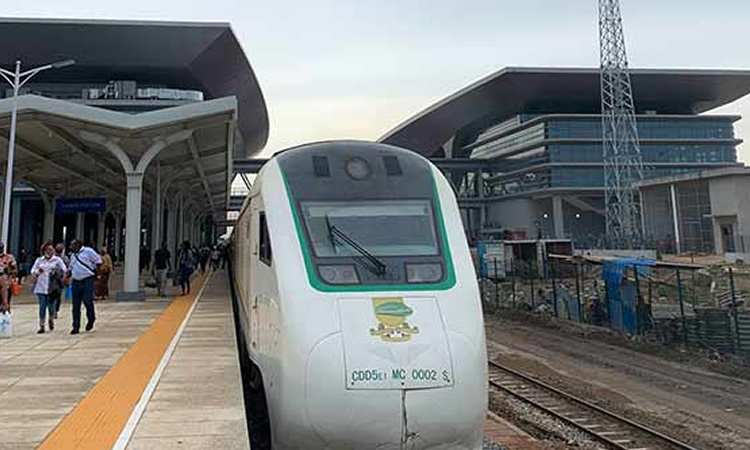
With the 2026 Easter celebrations just around the length of a rail track away, the Nigerian Railway Corporation (NRC) has moved to prevent holiday travel gridlock by significantly boosting its service capacity.
In a move to accommodate the seasonal influx of travellers, the corporation announced a strategic mix of increased trip frequencies and a unique government-backed free transit programme.
The centrepiece of this holiday rollout is the Lagos-Ibadan Train Service (LITS). Anticipating a massive exodus from the coastal hub on Thursday, April 2, the NRC has added a third daily trip to its schedule. Commuters departing from the Mobolaji Johnson Station in Ebute Metta can now choose between 7:45am, 1:40pm, and 4pm slots.
Those returning from the Obafemi Awolowo Station in Ibadan have similar flexibility, with departures staggered at 8:00 a.m., 10:50am, and 4:30pm.
Adding a layer of relief for budget-conscious travellers, the NRC is collaborating with the Osun State Government to provide a fully funded narrow gauge service. This initiative allows passengers to travel from Lagos to Osogbo at no cost.
According to the corporation, the “free train” is scheduled to leave Iddo Station on Friday, April 3, at 10am, with the return leg bringing holidaymakers back to Lagos on Monday, April 6, at the same hour.
It also noted that while the South-West corridors see these specific boosts, the rest of the national network remains steady, the Northern Corridor (Abuja–Kaduna service) will maintain its robust schedule, offering up to three daily trips over the weekend to keep the Idu and Rigasa link fluid.
The Delta-Kogi Link (Warri–Itakpe line) continues its daily operations, though it will pause this Thursday for its standard safety maintenance window.
Also, the Eastern Line (The Port Harcourt–Aba service) remains on its morning-departure and afternoon-return cycle.
NRC management stressed that while capacity has increased, security and ticketing protocols remain a top priority. They are urging the public to arrive at stations early and cooperate with security personnel to ensure the holiday remains peaceful.
As the corporation looks toward a busy weekend, they continue to pitch rail travel as the safest and most dependable alternative for Nigerians traversing the country this Easter.
Business
Dangote Refinery Secures $4 Billion Syndicated Loan with $2.5 Billion Backing from Afreximbank
Dangote Refinery Secures $4 Billion Syndicated Loan with $2.5 Billion Backing from Afreximbank
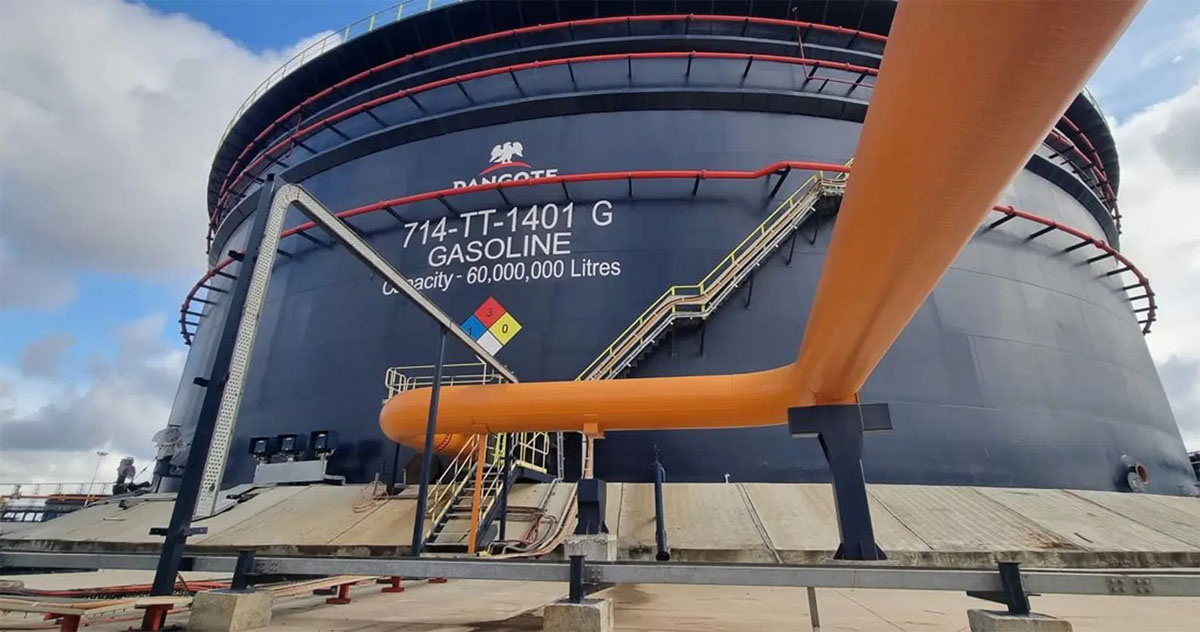
The African Export‑Import Bank (Afreximbank) has underwritten $2.5 billion of a $4 billion senior syndicated term loan for the Dangote Petroleum Refinery and Petrochemicals (DPRP), one of the continent’s most transformative industrial projects.
In a statement confirming the financing, Afreximbank said it and Access Bank Plc have been appointed co‑mandated lead arrangers for the five‑year facility, designed to enhance the refinery’s financial position and support its long‑term growth ambitions.
The syndicated loan — a financing structure involving a group of lenders jointly providing a large credit facility — marks a pivotal milestone for DPRP, which has a processing capacity of 650,000 barrels per day, making it one of the world’s largest single‑train refineries. The facility is expected to improve balance‑sheet flexibility, strengthen financing structures, and support DPRP’s role as a strategic supplier of refined petroleum products across Africa and global markets.
Since its commissioning in February 2024, the refinery has significantly reduced Nigeria’s dependence on imported refined products and opened opportunities for refined fuel exports, bolstering Africa’s energy security. Afreximbank noted that its involvement with the project goes beyond the latest credit facility:
- It provided a $1 billion working capital facility to support refinery operations.
- It acted as financial adviser on the Naira‑for‑Crude Initiative, a programme aimed at enabling crude oil purchases and refined product sales in Naira, thus reducing exposure to foreign exchange volatility.
READ ALSO:
- Tinubu Holds Urgent Meetings with Ganduje, Badaru as APC Defections Surge
- EFCC Re-Arraigns Nadabo Energy Boss Over ₦1.4bn Oil Fraud
- US Senator Ted Cruz Alleges Nigerian Officials Behind Christian Killings
In his remarks, Dr. George Elombi, President and Chairman of Afreximbank’s Board of Directors, said the bank takes pride in being the largest financier of the Dangote Group, with cumulative commitments of about $15 billion across its businesses since 2015.
“We do so primarily because Dangote is African,” Elombi said. “When we invest in ourselves, we do more than create jobs, wealth, or expand government revenues; we build a secure and resilient future for our continent.”
He added that Afreximbank remains committed to supporting transformative indigenous industrial projects that strengthen regional value chains and accelerate economic development across Africa.
Elombi described the Dangote Refinery as a “bold symbol of African ambition, African capital, and African execution.” According to him, beyond expanding refining capacity, the project will help reduce dependence on imported fuel, support intra‑African trade, and catalyse industrial growth.
Dangote Industries Limited also expressed appreciation for Afreximbank’s continued confidence and strategic support. The company emphasised that the syndicated loan package, backed by strong participation from a consortium of African and global financial institutions, reflects sustained investor confidence in the refinery’s long‑term viability and in Africa’s broader industrialisation agenda.
Industry analysts say the $4 billion financing will not only strengthen DPRP’s financial foundation but also enhance Nigeria’s role as a regional energy hub, potentially increasing refined product exports to neighbouring countries and beyond. (Sources: Afreximbank statement; Western Post; ProShare; Nigerian Bulletin)
Dangote Refinery Secures $4 Billion Syndicated Loan with $2.5 Billion Backing from Afreximbank
Business
Lagos LIRS Extends 2026 Individual Tax Return Deadline

Lagos LIRS Extends 2026 Individual Tax Return Deadline
The Lagos State Internal Revenue Service (LIRS) has extended the deadline for filing individual annual income tax returns to April 14, 2026, giving taxpayers in Lagos State extra time to comply with the 2026 year of assessment. The original filing deadline was March 31, but the extension aims to ensure residents can submit accurate tax returns without errors.
LIRS Executive Chairman, Dr. Ayodele Subair, emphasized that tax compliance is a civic duty, urging residents to submit their returns promptly even with the extended deadline. “The extension is meant to make filing easier and ensure accuracy, but taxpayers should not delay unnecessarily,” he said.
READ ALSO:
- Israeli Fire Kills Three UN Peacekeepers in Southern Lebanon
- Iyabo Ojo Quits Mediation Between Funke Akindele, Toyin Abraham
- 2027: Badagry elders rally Tinubu to back zone’s first Lagos governor
The authority reiterated that electronic filing via the LIRS eTax portal is now the only approved method, as manual submissions have been fully phased out. The platform is secure, user-friendly, and accessible 24/7, allowing taxpayers to file their returns conveniently from anywhere.
Taxpayers are also advised to enter their Tax Identification Number (TaxID) correctly during submission to avoid processing delays or errors. LIRS further encouraged individuals who require assistance to visit any of its offices or reach out through official communication channels, including their customer care hotline and social media platforms.
This extension follows LIRS’ ongoing efforts to strengthen digital tax compliance and make filing processes more efficient, reflecting broader reforms aimed at improving revenue collection while easing administrative burdens on taxpayers.
Authorities warned that missing the April 14 deadline could attract penalties and interest on late filings, reinforcing the importance of meeting the revised timeline.
Lagos LIRS Extends 2026 Individual Tax Return Deadline

-

 Entertainment2 days ago
Funke Akindele, Toyin Abraham Spark Reactions Over Alleged Snub at Iyabo Ojo’s Premiere
-
 metro3 days ago
Jos Attack: Plateau Govt Declares 48-Hour Curfew After Deadly Assault
-
 Education2 days ago
WAEC Releases 2026 WASSCE Timetable for School Candidates
-

 Auto2 days ago
Lagos NURTW Chairman Sego Distributes Exotic Cars, Luxury Items to Cabinet Members (Video)
-

 metro2 days ago
Cars Torched as South Africans Protest Alleged Nigerian ‘Igbo King’ Coronation
-
 News2 days ago
UK Raises Visa Costs, Tightens Immigration Rules From April 8
-

 Auto3 days ago
Motoring World marks 30 years, set to rally industry leaders in Lagos
-

 metro3 days ago
Debate as OPM Pastor Marries Autistic Man to Older Woman