EFCC arrests 3 ex-NNPC MDs, finds N80bn in one personal account - Newstrends
Connect with us

Business

EFCC arrests 3 ex-NNPC MDs, finds N80bn in one personal account
Published

on

Updated: EFCC arrests 3 MDs of govt refineries, finds N80bn in one personal account
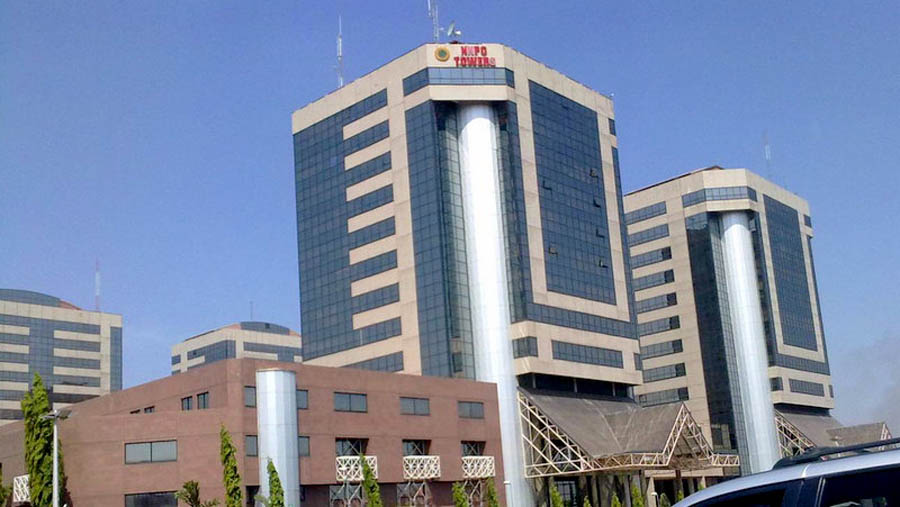
The Economic and Financial Crimes Commission (EFCC) has arrested former managing directors and senior officials of the Port Harcourt Refining Company, Warri Refining and Petrochemical Company, and Kaduna Refining and Petrochemical Company over alleged financial mismanagement linked to the multi-billion dollar rehabilitation of the refineries.

Investigations are centred on $2,956,872,622.36 allocated for refurbishment projects: $1,559,239,084.36 for the Port Harcourt facility, $740,669,600 for Kaduna, and $656,963,938 for Warri.

Sources within the Nigerian National Petroleum Company Limited revealed that investigators traced N80 billion to accounts belonging to one of the dismissed MDs.

Sector experts and operators have criticized NNPCL for misleading the public about the state of the refineries, citing persistent underperformance since the Port Harcourt and Warri plants restarted in November and December 2024.

NNPCL, responsible for managing the nation’s three state-owned refineries, had reactivated operations at Port Harcourt and Warri late last year following prolonged shutdowns. Yet, within weeks, the Warri refinery halted again due to safety issues, while Port Harcourt has been running below 40% capacity since its relaunch.

On Tuesday,  the dismissal of the MDs overseeing the three refineries alongside several other senior officials, including Bala Wunti, former chief of the National Petroleum Investment Management Services, was reported.

A senior EFCC official confirmed  that the arrests are part of a probe into the massive funds allocated for the plants’ quick rehabilitation.

“We are investigating the money that was released for the rehabilitation of all three refineries—money disbursed in recent times. All the principal officers within that time frame are being invited. Some have been arrested already, and we are still on the lookout for others. Nigerians are interested in seeing our refineries work. We are asking: where is the money, and what has happened to the refineries?” the official stated.

READ ALSO:

Another EFCC source disclosed that one of the former MDs had been in custody for nearly a week, with approximately N80 billion uncovered in his accounts. “Large amounts have been discovered in his accounts. About N80bn has so far been discovered in his various accounts. The way things are going, it may be bigger than Emefielegate,” the source said.

Documents obtained by our correspondent show the EFCC’s investigation extends to Mele Kyari, immediate past Group Chief Executive Officer of NNPCL, and 13 other ex-top executives. The commission’s letter requested certified records of salaries and benefits for these officials.

NNPCL spokesperson Olufemi Soneye did not respond to multiple enquiries regarding the allegations.

Industry insiders have raised fresh concerns about the refineries’ viability, pointing to longstanding structural issues and a lack of transparency in the rehabilitation process. On Tuesday, The PUNCH reported the Warri refinery’s shutdown following a $897 million revamp, while the $1.5 billion Port Harcourt plant struggles at under 40% production.

Energy analyst Kelvin Emmanuel criticized the government’s handling of the situation, describing the televised recommissioning of the facilities as “a charade.”

“For months, I had said that Warri, Port-Harcourt, and Kaduna were never going to come back into operation and that what Nigerians saw on television as the commissioning was just a charade,” Emmanuel said.

He questioned the rationale behind the multi-billion dollar rehabilitation efforts, arguing that the funds could have been used to build a new refinery instead.

READ ALSO:

Similarly, another expert, Dan Kunle, decried the handling of the projects, alleging the government bypassed the original Japanese contractors over security concerns, leading to inflated costs and poor outcomes.

“Why did we avoid Japan? Why did we go around when a sovereign authority like Nigeria could not convince Japan to come and fix the refinery? And the same Japanese company is in NLNG doing contracts,” Kunle said.

Meanwhile, the Independent Petroleum Marketers Association of Nigeria expressed frustration over the inability to lift products from the Warri refinery months after its inauguration.

IPMAN Delta chairman, Harry Okenini, lamented: “Since the inauguration of the rehabilitated Warri refinery on January 5, 2025, there has been no green light for IPMAN to lift petroleum products from the facility.”

Adding to the refinery’s challenges, support staff at the Warri plant have threatened to commence an indefinite strike on May 5, protesting poor pay and employment conditions.

Support staff leader, Dafe Ighomitedo, stated: “Workers were promised an improved salary structure upon the refinery’s restart, but that promise has not been fulfilled.”

Calls for a full probe into the refineries have grown louder, with the Petroleum Products Retail Outlet Owners Association of Nigeria signaling plans to reassess the plants’ operations.

PETROAN president, Billy Gillis-Harry, said: “We went home with the fact that we saw the refineries working and the furnaces were lighting up. But if today they are not working, then, of course, PETROAN probably needs to revisit and check what happened and what didn’t happen, which we are going to do.”

Updated: EFCC arrests 3 MDs of govt refineries, finds N80bn in one personal account

(PUNCH)

Loading

Business

DAPPMAN Reacts As Dangote Refinery Challenges Fuel Import Licences In Court

Published

on

DAPPMAN Reacts As Dangote Refinery Challenges Fuel Import Licences In Court

DAPPMAN Reacts As Dangote Refinery Challenges Fuel Import Licences In Court

The Depot and Petroleum Products Marketers Association of Nigeria (DAPPMAN) has warned that the lawsuit filed by the Dangote Petroleum Refinery seeking to invalidate fuel import licences issued to marketers and the Nigerian National Petroleum Company (NNPC) Limited could destabilise Nigeria’s downstream petroleum sector.

The dispute marks the latest confrontation in the country’s oil industry over the future of fuel importation in Nigeria amid increasing local refining capacity from the $20 billion Dangote refinery in Lekki, Lagos.

On March 25, the Nigerian Midstream and Downstream Petroleum Regulatory Authority (NMDPRA) reportedly relaxed petrol import restrictions by approving a fresh batch of import licences for oil marketers. The approvals covered several companies, including NIPCO, Matrix Energy, AA Rano, Pinnacle Oil and Gas, Bono Energy and Shafa Energy. Reports indicated that the licences involved hundreds of thousands of metric tonnes of Premium Motor Spirit (PMS).

However, two months later, the Dangote refinery approached the Federal High Court in Lagos, challenging the legality of the import permits granted by the NMDPRA.

The refinery argued that the approvals violated an earlier court order maintaining the status quo and also contravened provisions of the Petroleum Industry Act (PIA), which it said permits fuel imports only when domestic production cannot meet national demand.

According to court documents, Dangote Refinery maintained that continued large-scale importation of petrol undermines local refining investments and weakens efforts aimed at achieving energy independence for Nigeria.

The refinery reportedly insisted that its current refining capacity is sufficient to meet a significant portion of Nigeria’s daily petrol demand, reducing the need for fresh import licences.

Industry data released earlier by the NMDPRA indicated that the Dangote refinery currently supplies more than 90 per cent of petrol consumed daily in Nigeria, contributing to a sharp decline in fuel imports in recent months.

Reacting to the lawsuit in a statement issued on Sunday, DAPPMAN defended the regulator’s decision and warned that cancelling the licences could disrupt the country’s fuel distribution network.

READ ALSO:

“The import licences at the centre of this lawsuit are not administrative courtesies. They are the legal instruments through which Nigeria’s fuel supply chain functions,” the association stated.

DAPPMAN said the licences were issued legally under the framework of the Petroleum Industry Act by a regulator empowered to safeguard national fuel supply.

“The NMDPRA has consistently maintained, correctly, that these licences exist to protect supply security, not to disadvantage any single producer, however large,” the marketers added.

The association said its members had committed billions of naira to depot infrastructure, fuel storage facilities, distribution logistics and compliance systems based on the validity of the import approvals granted by the regulator.

According to DAPPMAN, any legal attempt to retroactively void the licences would create uncertainty within the downstream petroleum industry at a sensitive time for Nigeria’s energy market.

“A legal action designed to retroactively void those licences does not just affect individual businesses, it introduces uncertainty into the entire downstream supply chain at a moment when Nigeria can least afford it,” the statement said.

The marketers also argued that while Dangote Refinery has the constitutional right to seek legal redress, no single private refinery should override the statutory responsibilities of regulators charged with ensuring fuel availability for Nigerians.

“What we do not accept is the premise that a private refinery’s commercial interests should override a regulatory authority’s mandate to ensure adequate supply to Nigerian consumers,” DAPPMAN said.

The association further maintained that Nigeria’s downstream oil sector was intentionally designed as a competitive market involving multiple operators rather than a monopoly structure dominated by one supplier.

“The downstream sector works because multiple players operate within it. A lawsuit that seeks to reduce that field of players is ultimately a lawsuit against Nigerian consumers,” the association added.

The legal battle has renewed concerns among industry stakeholders over possible market dominance and pricing control in the downstream petroleum sector if fuel imports are significantly restricted.

While some analysts believe Nigeria should gradually reduce petrol importation to encourage local refining and conserve foreign exchange, others argue that maintaining multiple supply channels remains necessary to prevent fuel scarcity and price instability.

The NMDPRA has repeatedly stated that import licences are issued based on prevailing market realities and supply requirements under the Petroleum Industry Act.

Meanwhile, the Nigerian National Petroleum Company Limited (NNPCL) and the NMDPRA are yet to publicly respond in detail to the latest court action filed by Dangote Refinery.

The case is expected to test the interpretation of key provisions of the Petroleum Industry Act regarding fuel importation and local refining obligations in Nigeria’s evolving oil and gas sector.

DAPPMAN Reacts As Dangote Refinery Challenges Fuel Import Licences In Court

Loading

Continue Reading

Business

24-Hour Electricity Supply: Lagos Unveils Ambitious Plan To End Blackouts

Published

on

24-Hour Electricity Supply: Lagos Unveils Ambitious Plan To End Blackouts
Lagos State Commissioner for Energy and Mineral Resources, Mr. Biodun Ogunleye

24-Hour Electricity Supply: Lagos Unveils Ambitious Plan To End Blackouts

The Lagos State Government has unveiled an ambitious and far-reaching strategy aimed at delivering 24-hour electricity supply in Lagos, ending persistent blackouts and transforming the state into Africa’s leading subnational electricity market.

The comprehensive electricity reform plan, announced on Monday, is expected to drive industrial growth, improve living standards, attract investors and support the state’s vision of building a round-the-clock economy powered by reliable and sustainable energy.

Speaking during the 2026 Ministerial Press Briefing held at Alausa, Ikeja, the Commissioner for Energy and Mineral Resources, Mr. Biodun Ogunleye, disclosed that the reforms are being driven by the implementation of the Lagos State Electricity Law 2024 signed by Governor Babajide Sanwo-Olu.

According to Ogunleye, the new electricity law gives Lagos the legal framework to regulate, generate and distribute electricity independently while creating opportunities for massive private sector participation in the energy sector.

The commissioner described the law as a major turning point in the state’s efforts to solve decades-long electricity challenges and reduce dependence on Nigeria’s unstable national grid.

He said the government is targeting between 95 and 100 per cent electricity availability across Lagos by 2030, alongside universal metering coverage and a significant reduction in energy losses.

According to him, the state’s strategy to eliminate power outages will focus on independent power generation, embedded energy systems, smart infrastructure, strong regulation, investor-friendly policies and full metering of electricity consumers.

As part of the reforms, the Lagos State Electricity Regulatory Commission (LASERC) has commenced licensing electricity operators and enforcing standards within the state’s emerging electricity market. Ogunleye disclosed that 14 licences and permits have already been issued to operators involved in off-grid generation, mini-grid systems, embedded power supply, electricity distribution and metering services.

READ ALSO:

The commissioner explained that the move is expected to attract more local and foreign investors into the Lagos electricity market while improving power reliability for homes, industries and businesses. He added that the state government would commence a 100 per cent metering initiative in Lagos from July 2026 in a bid to eliminate estimated billing and improve transparency in electricity billing across the state.

According to him, the government is also developing an artificial intelligence-powered electricity monitoring platform tagged the “Electric Eye of Lagos” to provide real-time monitoring of electricity generation, trading and distribution activities.

The commissioner further disclosed that Lagos is finalising electricity market rules, grid interface regulations and consumer supply codes to strengthen investor confidence and improve consumer protection.

Ogunleye stated that Lagos currently regulates 12 Independent Power Producers (IPPs), seven of which are already fully operational within the state. Energy analysts believe the expansion of independent power projects could significantly reduce pressure on the national grid and improve electricity access across residential and industrial communities.

The commissioner said the government was also advancing several major infrastructure projects designed to improve energy reliability and support industrial development. One of the flagship projects is the 37.7-kilometre Badagry electricity infrastructure corridor, which includes the construction of three high-voltage transmission towers across the Gbaji Lagoon and rehabilitation of 33kV electricity lines connecting Gbaji, Seme, Owode and Apa communities.

He added that the government is developing the Lekki–Epe Integrated Energy Corridor, which will feature a 132kV transmission line extending from Ajah to Alaro City alongside a gas pipeline network to support industries and commercial hubs within the Lekki economic zone.

On public lighting infrastructure, Ogunleye revealed that the state had deployed over 42,000 smart solar-powered streetlights across major highways and roads in Lagos. According to him, about 22,000 conventional streetlights have already been replaced with solar-powered systems along strategic corridors including the Gbagada–Oshodi Expressway, Lekki–Epe Expressway, Ikorodu Road and Lagos Island routes.

The commissioner said nearly 40,000 solar streetlights are currently operational statewide as part of efforts to improve security, reduce energy costs and promote renewable energy adoption.

Highlighting interventions in public institutions, Ogunleye disclosed that Gbagada General Hospital now enjoys between 21 and 22 hours of electricity daily following the installation of 2MVA and 1MVA transformers.

He added that renewable energy upgrades had also been completed in 52 secondary schools and 11 primary healthcare centres through lithium-ion battery replacement projects aimed at improving electricity supply in critical public institutions.

The commissioner also disclosed that Lagos is positioning itself as a major hub for cleaner transportation through investments in compressed natural gas (CNG) infrastructure and electric vehicle support systems.

According to him, 244 vehicles have already been converted to CNG, while 17 CNG stations are expected to become operational before the end of 2026. He added that more than 80,000 households now have access to cleaner cooking energy under the state’s LPG expansion programme.

Ogunleye further revealed that the government is developing the Oshodi Energy Hub, a multi-purpose facility expected to provide LPG, PMS, AGO, CNG, electric vehicle charging and vehicle conversion services.

In the mineral resources sector, the commissioner disclosed that the ministry had intensified enforcement against illegal dredging, sand overloading and unauthorised land reclamation activities across the state. He added that designated mining sites had been approved at Ilamija, Kajola, Orimedu and Akodo to support construction activities linked to the Lagos–Calabar Coastal Highway project.

The commissioner reaffirmed the Sanwo-Olu administration’s commitment to building a resilient and sustainable energy sector capable of supporting economic growth, industrial expansion and uninterrupted commercial activities across Lagos.

Industry experts say the reforms could transform Lagos into one of Africa’s most competitive electricity markets if fully implemented, particularly with plans to introduce dedicated 24-hour electricity franchise zones in Lagos later in 2026.

24-Hour Electricity Supply: Lagos Unveils Ambitious Plan To End Blackouts

Loading

Continue Reading

Aviation

From N6,000 to N50,000: How Bi-Courtney’s Overnight Airport Parking Fee Sparked Nationwide Fury

Published

on

From N6,000 to N50,000: How Bi-Courtney's Overnight Airport Parking Fee Sparked Nationwide Fury

From N6,000 to N50,000: How Bi-Courtney’s Overnight Airport Parking Fee Sparked Nationwide Fury

LAGOS— Passengers and visitors to the Murtala Muhammed Airport Terminal 2 (MMA2) have continued to fume over a 150 per cent hike in parking fees, describing the increase as excessive and frustrating. Despite growing complaints and calls for a downward review, the facility operator, Bi-Courtney Aviation Services Limited (BASL) , has insisted there are no plans to reduce the current tariff structure.

In April 2026, Bi-Courtney Aviation Services Limited, the company which manages the terminal, took the tariff to stratospheric heights. Under the revised pricing structure, saloon cars now pay N3,500 for the first 60 minutes and N2,500 for each subsequent hour, while Sports Utility Vehicles (SUVs) pay N4,000 for the first 60 minutes and N2,500 for subsequent hours. For 18-seater buses and above, the flat rate is N20,000, while overnight parking costs N50,000 —a staggering increase from the previous N6,000 rate. Additionally, anyone who loses his or her ticket will pay a penalty fee of N25,000.

The public outcry has been amplified by high-profile complaints. BBNaija star Whitemoney (Hazel Oyeze Onou) recently took to social media to lament a N206,000 parking bill after leaving his car at the Lagos airport for four days, from Friday to Monday. In a viral video, he expressed shock at discovering the new overnight rate and questioned whether the government and the Minister of Aviation, Festus Keyamo, are aware of these charges.

In another incident that sparked outrage, a female traveller alleged she was charged N11,500 for just two hours of parking at MMA2. In a video that went viral on social media, the visibly distressed woman accused operators of exploiting motorists, saying, “From 8 o’clock to 10, they are charging me N11,500. Look at their cash points. They are charging people, stealing from people. For just 30 minutes, they will collect N3,500.”

One of the visitors, Joe Agbo, who had not known about the fee increase in April, told Daily Sun that he drove to the airport this past week to pick up a family member and was shocked at how much he was expected to pay. He said he drove an SUV and stayed for not less than 20 minutes, and was told he had to pay N4,000. “It is outrageous that this is happening and is not sustainable. Where else are we supposed to park? Why should the company managing this airport make parking so difficult for people?” he queried.

READ ALSO:

Agbo further argued that the justification for the hike was insufficient. “From the inquiries I made, I was told that the fees were increased because people were parking overnight. But just because you want to control traffic or maintain decorum does not justify this hike. Already, passengers sometimes pay as much as N200,000 for flight tickets. Many are practically squeezing themselves just to afford a flight ticket. They struggle to afford a flight ticket and also struggle to afford parking. Please, we want a downward review of this fee. It is too high and we cannot afford it. That is a fact,” the airport user said.

Another visitor, Jide Babs, also told the Daily Sun that he had to pick his mother up from the airport but because of a flight delay, he ended up waiting an hour and 10 minutes. When he went to pay the fee, he was told he had to pay N6,500 just for parking and felt it was outrageous. “Many Nigerians are already going through extremely difficult times and it’s not fair that airport managers are still burdening them the most. There are ways to handle the issue of those who park indiscriminately. You can tow their vehicles or impound them. Instead of doing that, the airport managers have chosen to increase the fee by over N150,000. That is not good at all,” he said.

In defence of the new tariffs, Ajoke Yinka-Olawuyi (also identified as Ajoke Olawoyin), Head of Corporate Communications at BASL, has insisted that the hike is not revenue-driven but rather a “demand-management measure” aimed at restoring the car park to its original short-stay purpose. She explained that the facility, which has a limited capacity of approximately 800 vehicles, had been overwhelmed by long-term parking abuse, with some vehicles left for months and even years.

“We have discovered a misuse of the facility. The facility was designed for short stay parking—come, drop off, pick up and leave—not long-term parking,” Yinka-Olawuyi said. She cited extreme cases where vehicles were abandoned for “three weeks, a week, in some instances six months. In fact in some cases one year.” She noted that prior to the tariff review, the terminal’s car park regularly recorded as many as 300 vehicles parked overnight.

READ ALSO:


Regarding the controversial N50,000 overnight fee, she stated that management had considered eliminating overnight parking entirely but found that applying the hourly rate over a 24-hour period would result in charges “significantly higher than 50,000 Naira.” She maintained that the current rate is actually “a more considerate and moderated option.” Crucially, she declared that the tariff would not be reversed, stating: “So will it go down? No, it won’t. Because the moment you take it down, then we’ll go back to where we’re coming from. The problem we’re trying to solve will come back.”

Daily Sun reached out to BASL to know if there are any plans for a downward review of the parking fares, and the Public Relations Officer, Ajoke Olawoyin, said there are no such plans at the moment. She said that adjustments of this nature often generate public reactions, especially initially, and that the parking tariff review was part of a broader operational and infrastructure sustainability initiative aimed at improving traffic efficiency managementparking space turnoversecurity monitoring, maintenance of the multi-level facility, and overall passenger experience within the terminal environment. The review, she said, also reflected prevailing economic realities and rising operational costs.

“The objective of the review was not revenue-driven. It was designed to address operational concerns, including traffic congestion within the terminal vicinity and the increasing cost of maintaining the facility and related services. Management continues to monitor the impact across these areas. The overall impact of the review is being assessed holistically, including operational efficiency, traffic flow, parking turnover, and customer experience,” she said.

However, critics have slammed the rationale. An editorial in The Guardian described the hike as “punitive and indefensible,” arguing that Bi-Courtney’s approach amounts to “punishing all customers to address the fallout from its poor planning, systemic inefficiencies, and weak regulation.” The newspaper noted that the car park was “shoehorned into a space far less than what a modern airport service facility requires,” and that no motorist is allowed to pick up passengers outside the terminal—everyone is compelled to use the car park, where even a minute’s stay attracts the minimum N3,500 charge.

The editorial has called for the Federal Competition and Consumer Protection Commission (FCCPC) to intervene, arguing that the “obnoxious review” highlights broader implications for consumer protection and regulatory oversight. It also criticised the Nigeria Civil Aviation Authority (NCAA) for failing to effectively implement Part 19 of the Nigeria Civil Aviation Regulations, which deals with consumer protection, tariffs, pricing, and economic oversight.

Meanwhile, the Federal Airports Authority of Nigeria (FAAN) has also implemented its own fee adjustments, raising toll fees for sedans from N300 to N500 and for SUVs from N500 to N1,000 as part of a broader cashless policy initiative that took effect on March 1, 2026. However, analysts have pointed out that FAAN’s price adjustment “almost peters out into insignificance” compared to Bi-Courtney’s increases.

Despite the backlash, Yinka-Olawuyi claimed that the changes have already yielded positive results, reducing congestion and improving accessibility within the terminal. “We don’t have that congestion anymore. People come in and park… you’re able to find a parking spot easily,” she said. She also apologised to occasional travellers who may have been caught off guard by the sudden change, acknowledging that “if you’re not a frequent flyer, you might not know.”

As outrage continues to grow, including calls for government intervention from celebrities like Whitemoney and ordinary travellers alike, the standoff between airport operators and the travelling public shows no sign of resolution, with BASL firm that the N50,000 overnight parking fee is here to stay.

From N6,000 to N50,000: How Bi-Courtney’s Overnight Airport Parking Fee Sparked Nationwide Fury

Loading

Continue Reading

Trending