

Auto
Multi-billion naira NADDC land, imported equipment rot away, says ex-agency boss

Nigeria may have lost multi-billion naira invested in massive landed property and imported equipment acquired by the National Automotive Design and Development Council for auto industry projects in some parts of the country.
A former acting Director-General of the agency, Mr Luqman Mamudu, gave this indication on Thursday, saying the millions of dollars facilities imported for the projects were no longer functioning.
He stated this in Abuja, where chief executive officers of auto companies and other stakeholders called for a review of Finance Act making it difficult for for local auto assemblers to compete with sellers of fully built imported vehicles.
They spoke at Auto CEOs Forum, an interactive session involving major players, Ministry of Industry Trade and Investment, heads of relevant government agencies such as Nigeria Customs Service, Bureau of Public Procurement and National Drug Law Enforcement Agency, National Bureau of Statistics and National Automotive Design and Development Council.
Mamudu said the FG invested billions of naira to acquire the huge land and import needed equipment for industrial clusters in six major cities across the country to give the auto policy a sound footing.
For instance, he said in Ikorodu, Lagos State, while about N1bn was spent to bring in test equipment for a facility to test vehicles emission level, the government paid N300m for the land housing the test centre.
Mamudu however lamented that nothing was currently happening the Lagos centre and other places.
He debunked the insinuation the NADDC did not consult widely before the auto policy was put together, adding that for about six months the agency held meetings and with other agencies, relevant groups and auto players on the matter.
He gave an overview of the policy, its objectives using a global template and the requirements to actualise the project such as incentives to attract investors/OEMs, acceptable credit facility for vehicle assemblers and buyers and anti-smuggling programme.
He said, “There is no need to change the NAIDP. We only need. We need to review time taken for renewal of yearly licence. It doesn’t have to take five months.
The Comptroller General of NCS, Col. Hameed Ali, represented by Controller Musa Mba, said the agency was carried along in formulating the policy.
According to him, they only implement the duty as passed onto the agency.
He said the auto policy is a long-term project, which would take time to mature, just as he stressed that it should be private sector-driven.
Chairman of National Drug Law Enforcement Agency, Brig Gen Buba Marwa, who spoke through Mr. Gadzama Bashir, accused some auto importers of bringing in hard drugs.
Indeed, he said some import cars from Canada concealed with Colorado, a variant of cannabis sativa (Indian hemp).
He called for the cooperation of auto players to rid the country of banned substance.
Auto CEOs who spoke through Olutobi Ajayi of Nord Motors, Taiwo Shittu of Lanre Shittu Motors, and Deputy Managing Director, CFAO Motors, Kunke Jaiyesimi, the current import duty of 10 per cent import duty for fully built units (vehicles) and 10 per cent for Semi-Knocked Down vehicles was discouraging local assembly of vehicles.
There is no way local assembly plants can compete with FBU vehicle importers at 10 per cent duty. We buy diesel, pay workers, among other running cost but they don’t do,” said Ajayi.
They called for a review of the Finance Act.









Auto
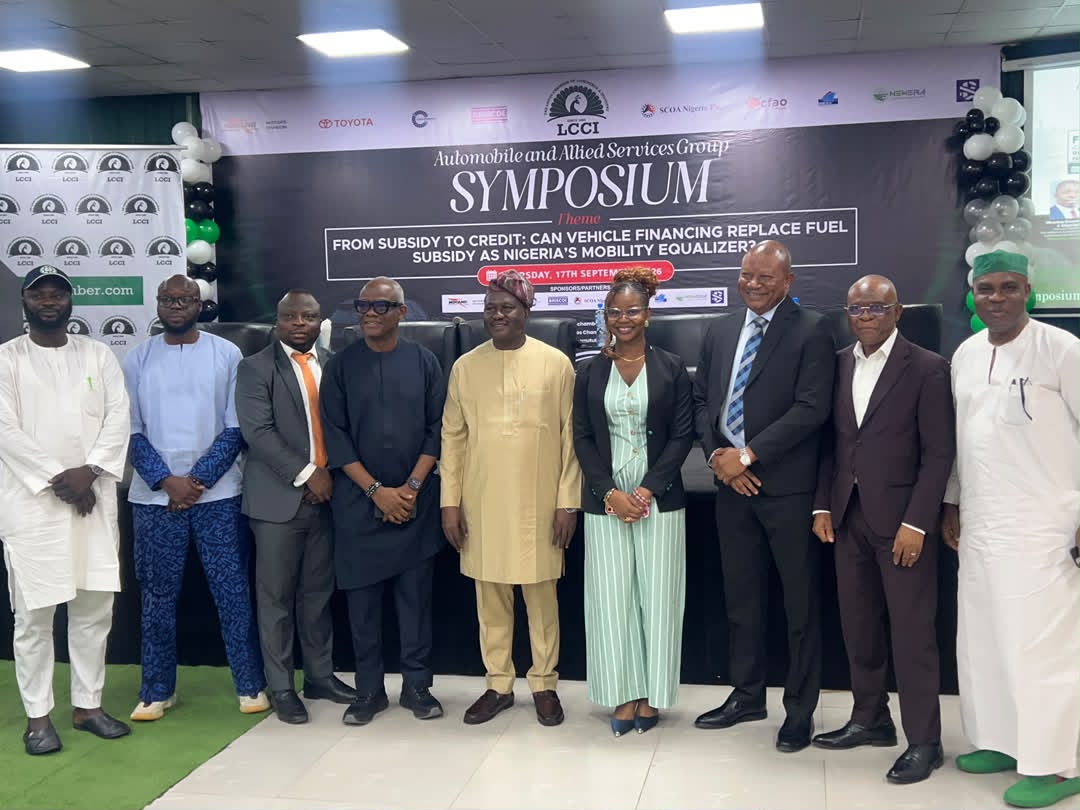
Replace Fuel Subsidy With Vehicle Credit to Drive Mobility, Jobs,LCCI, Ilekuba tell FG
Replace Fuel Subsidy With Vehicle Credit to Drive Mobility, Jobs,LCCI, Ilekuba tell FG
Nigeria’s automotive stakeholders have called for an urgent shift from fuel subsidy to affordable vehicle financing, saying the new model could make vehicle ownership accessible to more Nigerians while driving local production, creating jobs and reducing dependence on imported automobiles.
The call was made on Thursday at the LCCI/National Automotive Design and Development Council Automobile Symposium, themed, “From Subsidy to Credit: Can Vehicle Financing Replace Fuel Subsidy as Nigeria’s Mobility Equalizer?”
Chairman of the LCCI Auto and Allied Sector Group, Dr Femi Eguaikhide, said affordable vehicle credit could restore access to mobility, improve productivity and create a stronger market for Nigeria’s automotive industry.
He said fuel subsidy had for decades effectively functioned as Nigeria’s mobility policy by helping to keep transportation relatively affordable for millions of Nigerians, including commercial drivers, teachers and small-business operators.
However, following its removal in May 2023, Eguaikhide said mobility costs had risen sharply, resulting in higher transport fares and increased prices of goods and services, with knock-on effects on productivity.
“Subsidy made fuel cheap, but cars remained expensive. So only the rich owned productive assets,” he said, arguing that vehicle credit could enable more Nigerians to acquire income-generating vehicles and repay loans from the proceeds.
Eguaikhide called for affordable, preferably single-digit interest rates and longer-tenor lease-to-own schemes for commercial operators using buses, tricycles and motorcycles.
“Can we create a ₦50,000/month plan for a keke driver?” he asked, urging financial institutions to develop financing products around borrowers’ earning capacity rather than conventional lending models.
He also advocated the use of vehicle telematics, tracking systems and cash-flow data to develop “mobility credit scores” that could help lenders assess the repayment capacity of commercial transport operators.
But Eguaikhide warned that vehicle financing must not become a fresh channel for importing used vehicles.
“If we use credit to import more Tokunbo, we’ve solved nothing,” he said, advocating financing for CNG conversions, locally assembled electric and hybrid vehicles, as well as mass-transit buses.
He summed up the proposed policy shift: “Subsidy gave us consumption. Credit can give us production.”
In a special address, Chairman and Chief Executive Officer of Cedric Masters Group, Chief (Sir) Anselm Ilekuba, also canvassed a fundamental shift towards vehicle financing, stressing that such a policy must simultaneously promote Nigeria’s automotive industrialisation.
Ilekuba, who was represented at the event by his Chief Finance Officer and Head of Accounts and Strategy, Christabel Mmesoma Ilekuba, decried the impact of high financing costs, short repayment periods and pressure on household incomes on vehicle ownership, despite strong demand for automobiles.
He urged the Federal Government to seriously consider the proposed National Automotive Bank being championed by NADDC, describing it as a specialised financing institution that could support consumers, vehicle assemblers and component manufacturers.
Ilekuba proposed longer-tenor financing for qualifying locally assembled vehicles, alongside industrial credit for manufacturers and funding for machinery, technology, certification and capacity expansion by component producers.
He also called for stronger localisation of automotive components, citing the proposed National Automotive Components Parts Gateway being developed by ALCMAN with Chinese partners.
According to him, the Automotive Bank and Components Gateway could create a cycle in which increased vehicle purchases stimulate local assembly, boost demand for locally produced components, expand factories and generate jobs, while reducing Nigeria’s exposure to foreign-exchange pressures.
Ilekuba said the success of vehicle financing should therefore not be measured merely by the number of loans disbursed, but also by growth in local vehicle assembly, component production, factory expansion, employment and foreign exchange conserved or earned.
“The old subsidy helped Nigerians consume mobility. The new approach should help Nigerians own mobility—and help Nigeria produce it,” he said.
Auto
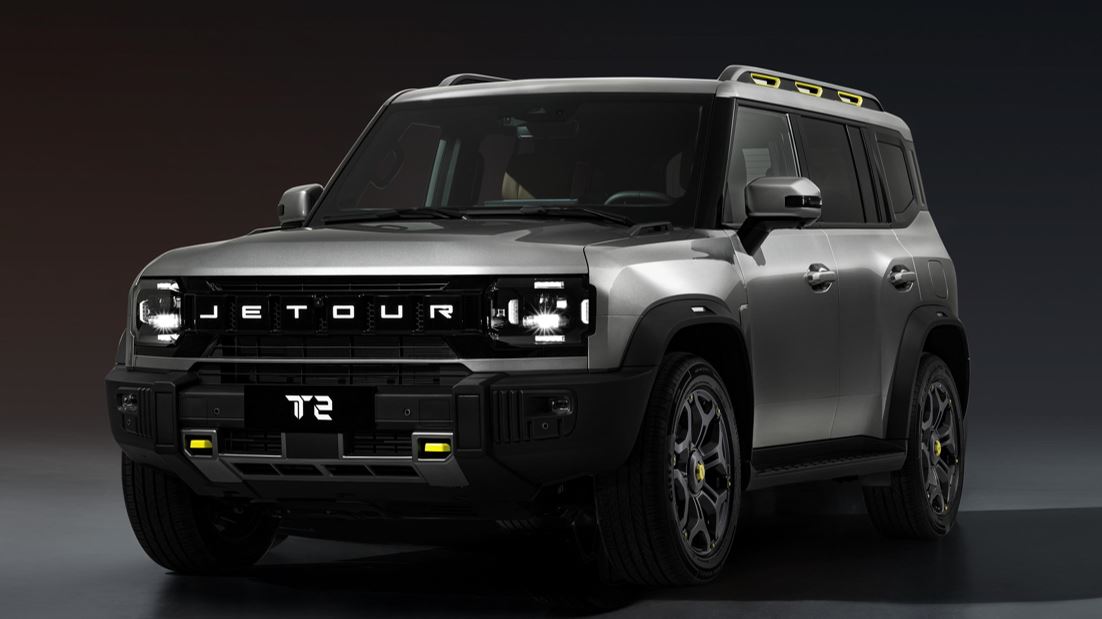
Jetour Set to Storm Abuja Show with Rugged Luxury T2
Jetour Set to Storm Abuja Show with Rugged Luxury T2
Abuja is set for a taste of rugged luxury as Jetour Nigeria puts its adventure-ready T2 SUV in the spotlight at the Jetour Experience Abuja from September 22 to 24, 2026, giving motorists in the Federal Capital Territory and neighbouring states an opportunity to test its blend of off-road capability, premium comfort and advanced technology.
The three-day showcase at Maha Event Centre, Area 8, Garki, will feature test drives, live demonstrations and direct interaction with Jetour product specialists, offering prospective buyers a closer look at the T2 and other models in the automaker’s growing Nigerian line-up.
Positioned as a premium SUV combining off-road capability with comfort and advanced technology, the Jetour T2 is designed for motorists seeking a vehicle capable of handling both city driving and challenging terrain.
Jetour Nigeria is distributing the T2 and other models via its seven accredited dealers — Elizade Nigeria Limited, New Era AutoVehicle Services Limited, Germaine Auto Centre, Kojo Motors, Mandilas Autos, R.T. Briscoe Motors and Tab Autos Limited.
The T 2 SUV is powered by a 2.0-litre turbocharged engine producing 254 horsepower and 390 Nm of torque. The engine is paired with a seven-speed dual-clutch transmission and BorgWarner sixth-generation intelligent four-wheel-drive system.
It also features five driving modes — Eco, Sport, Mud, Rock and X Smart — designed to provide improved adaptability across different road and terrain conditions.
Measuring 4,758mm in length, 2,006mm in width and 1,880mm in height, the SUV offers 220mm ground clearance and a 70-litre fuel tank, giving it the capability for extended journeys and off-road adventures.
Inside the cabin, the T2 combines rugged styling with modern comfort, featuring ergonomic seating and a 15.6-inch touchscreen infotainment system with Apple CarPlay, Android Auto and intelligent voice control.
Its safety and driver-assistance features include a 360-degree panoramic camera, rear parking sensors, Lane Departure Warning, Blind Spot Detection, Anti-lock Braking System and Emergency Brake Assist.
The SUV also comes with off-road crawl control as well as push-button and remote-start functions.
The Abuja experience follows Jetour Nigeria’s recent showcase in Lagos as the automaker continues to expand its presence and customer reach across the country.
With its combination of performance, technology, safety and luxury, the Jetour T2 is expected to attract motorists seeking an SUV capable of combining everyday urban mobility with adventure and off-road driving.
Auto
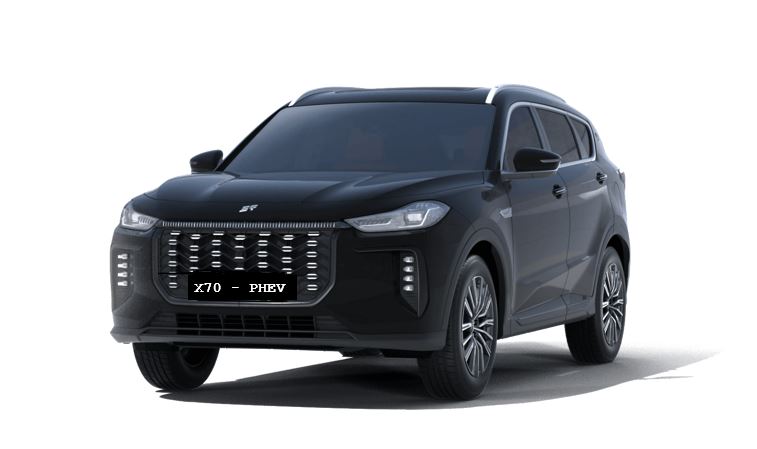
Jetour Targets Abuja Market with X70 PHEV as Nationwide Expansion Gathers Pace
Jetour Targets Abuja Market with X70 PHEV as Nationwide Expansion Gathers Pace
Jetour Nigeria is taking its hybrid SUV offensive to Abuja, with the X70 Plug-in Hybrid Electric Vehicle (PHEV) set to headline the three-day Jetour Experience from September 22 to 24 as the automaker accelerates its drive to expand its footprint and capture a larger share of Nigeria’s fast-evolving mobility market.
The Abuja showcase, coming on the heels of a strong Lagos edition that generated significant consumer interest, test drives and sales enquiries, is designed to bring Jetour’s latest technologies closer to customers in the Federal Capital Territory and neighbouring states.
The event at Maha Event Centre, Area 8, will give prospective buyers and auto enthusiasts the opportunity to test-drive the X70 PHEV and other Jetour models while interacting with product specialists and experiencing their technology, safety features, performance and comfort firsthand.
According to the company, expanding the showcase to the Federal Capital Territory was a direct response to rising demand from residents in Abuja and neighbouring states.
READ ALSO:
- ASUU Crisis Deepens: Lagos Universities Join UNIBEN, Taraba on Indefinite Strike
- Lagos Power Outage: Ikeja Electric Blames TCN as Businesses, Homes Groan
- US Court Blocks Trump Visa Rule Limiting Stay of Foreign Students, Journalists
To bolster buyer confidence, Jetour Nigeria—the country’s sole authorised distributor—backs the X70 PHEV with a five-year or 150,000-kilometre warranty.
The distributor operates through an accredited nationwide dealer network, including: Elizade Nigeria Limited,
New Era Auto Vehicle Services Limited, Kojo Motors, Germaine Auto Centre, Tab Autos Limited, R.T. Briscoe Motors, and Mandilas Autos.
The X70 PHEV pairs a 1.5-litre turbocharged engine with a 19.43kWh battery and a dedicated hybrid transmission. Designed to balance performance with fuel efficiency, the vehicle supports fast, slow, engine, and regenerative braking charging options—reducing reliance on external charging infrastructure.
Jetour’s rapid growth in the Nigerian market has earned both private and corporate patronage, driven by competitive pricing, high specification levels, and an expanding service footprint. The brand was named “Fastest Growing Auto Brand of the Year” at the 2024 Nigeria Auto Journalists Association (NAJA) Awards.
With the X70 PHEV leading the Abuja showcase, Jetour aims to deepen customer engagement and consolidate its position in the local automotive market.
Jetour Targets Abuja Market with X70 PHEV as Nationwide Expansion Gathers Pace
-

 International2 days ago
Islamic Council Condemns Attempted Attack on Holy City of Mecca
-

 metro3 days ago
Lagos Power Outage: Ikeja Electric Blames TCN as Businesses, Homes Groan
-

 News2 days ago
Keep Politics Out of My Office — Ogbomoso Grand Chief Imam Warns Politicians, Bloggers
-

 metro2 days ago
Niger Mosque Abductions: Terrorists Execute 30 of 500 Captive Muslim Worshippers
-

 Entertainment2 days ago
BREAKING: Olu Jacobs Dies at 84, Atiku Mourns Cultural Icon
-

 International3 days ago
US Court Blocks Trump Visa Rule Limiting Stay of Foreign Students, Journalists
-
 metro3 days ago
Fatal NURTW Leadership Clash in Osun Leaves Two Dead; State Orders Park Shut Down
-

 Business1 day ago
Fuel Prices Climb to ₦1,500 per Litre Across Nigeria, Sparking Calls for Urgent Action