
Business
N1bn lawsuit hits UBA over alleged breach of customer privacy
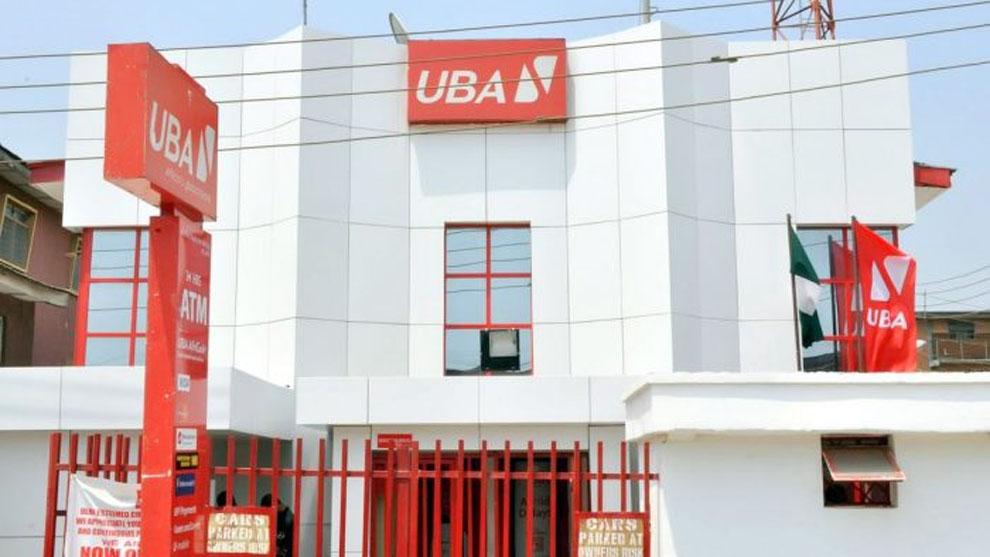
N1bn lawsuit hits UBA over alleged breach of customer privacy
One of the major commercial banks in the country, United Bank for Africa (UBA) Plc has been sued for ₦1 billion over claims that it disclosed the confidential financial records of a late customer and his widow without authorization.
The lawsuit, filed at the Federal High Court in Lagos and presided over by Justice Lewis Allagoa, was initiated by Mrs. Iyabo Fadairo, Mr. Lanre Omotade, and Mrs. Gloria Obafunke Williams.
The trio, who assert they are the legal executors of the estate of the late businessman Sir (Dr.) Charles Oladeinde Williams, accuse the bank of breaching privacy and fiduciary duties.
According to the plaintiffs, UBA allegedly provided sensitive banking details to three relatives of the deceased—Omolara, Olawale, and Temitope Oladeinde Williams—as well as a serving police officer, ASP Sunday Oyegbata. The Inspector General of Police is also listed among the defendants.
Mr. Omotade, in a sworn affidavit, stated that UBA released hard copies of account statements and related documents belonging to both the late Sir Charles and his widow. The plaintiffs maintain that these disclosures were made without their consent or any court order, and that the individuals involved exploited their access to the documents for improper purposes.
The contested documents reportedly include two years of records from Sir Charles’ personal current account (2019–2022), three years of statements from a joint account held with his widow (2018–2022), mandate forms for that joint account, and nearly a year of activity on another savings account.
READ ALSO:
- Medicine after death – Reno Omokri taunts Peter Obi for visiting late Buhari’s home after burial
- Breaking: Inter Milan table €40m for Ademola Lookman
- Russia defies Trump, unleashes drones, missile on Ukraine
The claimants emphasized that they had secured probate on December 1, 2022, officially granting them control over the deceased’s estate. They argue that UBA acted unlawfully and irresponsibly in releasing the bank records without consulting them.
They also allege that ASP Oyegbata used his official position to wrongfully obtain the documents, which were then used to intimidate and damage their reputations.
“UBA’s failure to respond to our pre-action notices and its refusal to provide the outcome of its promised internal investigation further confirms the negligent and irresponsible attitude of the bank,” Omotade added.
In addition to accusing the bank of breaching professional obligations, the plaintiffs say the disclosure also violated their constitutional and legal rights to privacy.
“The bank, by releasing those sensitive documents without our consent or any valid court order, breached its fiduciary duty and our right to privacy,” Mr. Omotade stated in his affidavit.
“This disclosure, especially of the joint account with Mrs. Gloria Williams, has caused us embarrassment as our private affairs are now in the public glare because of the negligence of UBA.
“UBA willfully, recklessly, and negligently handed the said statements of account to the 2nd to 6th defendants without obtaining our authorization and/or any valid court order to do so.
READ ALSO:
- PDP has lost its way, says Atiku, formally resigns from party
- Court frees Fayose of fraud, money laundering charges, EFCC to challenge verdict
- Why I didn’t attend Buhari’s burial – Peter Obi
“As a financial institution, the bank owes us a fiduciary duty and duty of care. However, through its actions, the bank has evidently breached both essential duties owed to us.
“UBA and others, by their acts, have breached our rights to privacy as guaranteed by Section 37 of the Constitution of the Federal Republic of Nigeria 1999 (as amended) and Section 30 of the Data Protection Act, 2023.”
They further claim that the bank’s negligence resulted in both emotional distress and reputational harm.
Among the reliefs sought are a court declaration that UBA violated their privacy rights under Nigerian law and that it breached its duty of care. They are also demanding ₦1 billion in general damages from the bank for what they describe as reckless conduct.
Additionally, the plaintiffs are asking the court to hold the 2nd to 6th defendants liable for unlawfully obtaining and using their banking details, and to award another ₦1 billion in damages against them.
This legal challenge comes not long after UBA was publicly criticized in a separate case involving Ibhahe Hope Ehieribo, a U.S.-based Nigerian customer who accused the bank of clearing over ₦106 million from his account based on a false death report. Following online backlash, the bank eventually refunded the full sum.
The case involving the estate of Sir Charles Oladeinde Williams is expected to continue on July 22, 2025.
N1bn lawsuit hits UBA over alleged breach of customer privacy










Business
Naira Could Trade Below ₦1,000/$ With Dangote Refinery at Full Capacity — Otedola

Naira Could Trade Below ₦1,000/$ With Dangote Refinery at Full Capacity — Otedola
Billionaire businessman Femi Otedola has projected that the naira could strengthen to trade below ₦1,000 per US dollar as the Dangote Petroleum Refinery achieves full operational capacity. The prediction comes as Nigeria anticipates a major boost in domestic fuel production, potentially reducing import dependence and easing pressure on the foreign exchange market.
Otedola made the projection in a post on X, congratulating Aliko Dangote on the refinery reaching its designed processing capacity of 650,000 barrels per day (bpd). He described the milestone as a historic moment for Nigeria’s energy sector, saying it could positively impact the naira exchange rate, foreign reserves, and overall economic stability.
According to Otedola, the refinery’s capacity to produce up to 75 million litres of Premium Motor Spirit (PMS) daily positions Nigeria to meet domestic fuel demand and even generate surplus for export. He highlighted that this would reduce the country’s reliance on imported petroleum products, which historically exerted heavy pressure on the naira and foreign exchange resources.
READ ALSO:
- Adeyanju Urges EFCC, DSS to Probe El-Rufai Over Alleged Corruption, Insecurity in Kaduna
- Granite-Laden Truck Kills Motorist, Leaves Wife Critically Injured in Lekki–Ajah Crash
- City Boy Movement Receives Bus Donations from Zenco, Obi Cubana for Tinubu’s Campaign
“With domestic refining now firmly underway after decades of reliance on imports, pressure on the foreign exchange market should ease significantly, potentially pushing the naira below ₦1,000/$ before year-end,” Otedola said. He also noted that the EFCC and monetary authorities’ support in maintaining a conducive economic environment would complement these gains.
The Dangote Refinery, located in the Lekki Free Zone, Lagos, is Africa’s largest single-train refinery. Experts say that reaching full production will conserve billions of dollars previously spent on importing refined petroleum products and strengthen Nigeria’s foreign exchange reserves. Plans are also underway to expand refining capacity to 1.4 million bpd, with increased production of petrochemicals like polypropylene and linear alkyl benzene, further reducing industrial import dependence.
Economic analysts have welcomed the refinery’s milestone but caution that naira stability will still depend on broader macroeconomic reforms, oil prices, foreign capital inflows, and Central Bank of Nigeria (CBN) policies. Nevertheless, Otedola’s projection reflects renewed optimism that domestic refining capacity could be a turning point for the Nigerian economy, energy security, and the foreign exchange market.
Naira Could Trade Below ₦1,000/$ With Dangote Refinery at Full Capacity — Otedola
Business
Dangote Refinery Slashes Petrol Price to ₦774, Ends PMS Bonus Window

Dangote Refinery Slashes Petrol Price to ₦774, Ends PMS Bonus Window
Dangote Petroleum Refinery and Petrochemicals FZE has announced a reduction in the gantry price of Premium Motor Spirit (PMS), commonly known as petrol, by ₦25 per litre, lowering the ex-depot rate from ₦799 to ₦774 per litre. The new pricing took immediate effect on Tuesday, 10 February 2026.
The refinery notified petroleum marketers through its Group Commercial Operations Department, stating:
“This is to notify you of a change in our PMS gantry price from ₦799 per litre to ₦774 per litre.”
Industry checks on platforms like petroleumprice.ng confirmed that the revised price has already been updated across petroleum pricing systems, ensuring transparency for downstream operators and consumers.
In the same notice, Dangote Refinery announced the end of its PMS lifting incentive programme, which had offered marketers bonuses for purchasing within specific volume thresholds. The refinery stated that credits for volumes loaded from 2 to 10 February 2026 would be posted to marketers’ accounts.
READ ALSO:
- El-Rufai: I Supported Tinubu Out of Party Principle, Not Friendship
- Trump Approves Deployment of 200 U.S. Soldiers to Support Nigeria’s Fight Against Terrorists
- Atiku Rejects Mixed Result Transmission
Analysts say the simultaneous price cut and closure of the bonus window signals a shift from volume-driven incentives to a more stable and predictable pricing framework, as the refinery consolidates its domestic market share.
The move comes amid continued volatility in PMS prices following the full deregulation of Nigeria’s downstream petroleum sector and the removal of fuel subsidies. In 2025, ex-depot prices fluctuated between ₦700 and over ₦800 per litre, driven by exchange rate pressures, global crude oil prices, and reliance on imported fuel, which in turn pushed pump prices higher nationwide.
With a production capacity of 650,000 barrels per day, Dangote Refinery — Africa’s largest single-train refinery — has become a key reference point for domestic fuel pricing. Its operations have helped moderate petrol prices, especially in southern and coastal distribution corridors, and reduce Nigeria’s dependence on imported fuel.
Industry observers note that the latest price reduction reflects easing production costs, improved operational efficiency, and increased competition from imported cargoes and modular refineries. As the refinery continues to expand, its pricing decisions are expected to influence national petrol rates, transportation costs, and inflationary pressures.
Dangote Refinery Slashes Petrol Price to ₦774, Ends PMS Bonus Window
Business
Fuel Self-Sufficiency: Dangote Refinery Counters Misinformation on Petrol Imports

Fuel Self-Sufficiency: Dangote Refinery Counters Misinformation on Petrol Imports
The Dangote Petroleum Refinery & Petrochemicals has clarified that there is no importation of finished Premium Motor Spirit (PMS) — commonly known as petrol — into Nigeria, countering recent reports suggesting otherwise. The company stated that locally refined petrol from the Dangote Refinery now meets a significant portion of Nigeria’s domestic demand, marking a major milestone in the country’s journey toward fuel self-sufficiency.
In a statement, the refinery dismissed claims that it imports finished PMS as false and misleading, stressing that such reports misrepresent its operations and could undermine public confidence in Nigeria’s local refining sector. The company also indicated that it has identified individuals behind these claims and warned that legal action may be pursued against parties spreading misinformation.
Oil marketers and industry observers confirm that the refinery has consistently supplied petrol to the Nigerian market, reducing reliance on imported fuel. The move has been welcomed by stakeholders, including the Independent Petroleum Marketers Association of Nigeria (IPMAN), which advised its members to prioritize purchasing petrol from Dangote’s facility to support domestic refining and strengthen local fuel supply chains.
READ ALSO:
- “Electoral Act Amendment: El-Rufai Calls Akpabio ‘Tinubu’s Lapdog’”
- Lookman Reflects on Bittersweet La Liga Debut as Atletico Madrid Fall at Home
- Fayose Claims Presidency Told Wike to Respect Fubara or Risk Losing Job
This announcement comes amid broader efforts to revamp Nigeria’s state-owned refineries. Talks are ongoing between the Nigerian National Petroleum Company (NNPC) and technical partners to enhance capacity at existing refineries, aiming to further reduce the country’s dependence on imported petroleum products.
Analysts say that the rise of local refining through Dangote’s facility is poised to have several benefits for Nigeria, including stabilizing fuel supply, saving foreign exchange, and potentially moderating fuel prices. As the refinery ramps up production, Nigerians can expect more reliable access to locally refined petrol, signaling a shift from historical dependency on imported fuel toward greater energy self-reliance.
The Dangote Refinery, now one of the largest in Africa, continues to deliver substantial volumes of petrol and other refined products across Nigeria, underlining its central role in the country’s energy infrastructure and the nation’s ambition to achieve self-sufficiency in petroleum products.
Fuel Self-Sufficiency: Dangote Refinery Counters Misinformation on Petrol Imports

-

 metro3 days ago
Leadership Crisis at NAHCON as Chairman Abdullahi Saleh Usman Resigns
-

 News2 days ago
Oyo Muslims Reaffirm Loyalty to Sultan on Islamic Matters — Grand Chief Imam
-

 News3 days ago
US Judge Orders FBI, DEA to Release Tinubu’s Criminal Records, Faults Delays
-

 International3 days ago
US to Deport 18 More Nigerians on ‘Worst-of-the-Worst’ Criminal List (Full Names)
-
metro2 days ago
Former NAHCON Chief Explains Why He Stepped Down, Denies Conflicts
-

 Business3 days ago
Naira Posts Strong Comeback, Breaking Two‑Year High Against Dollar
-

 Education6 hours ago
Supreme Court Affirms Muslim Students’ Right to Worship at Rivers State University
-

 metro1 day ago
Kwara, Katsina Bloodshed: TMC Condemns Attacks, Dismisses ‘Jihadist Preacher’ Claims