
metro
Naira Redesign: 3 governors under EFCC watch for Stashed Cash

Three serving state governors are being monitored over their moves to launder stashed billions of naira through table payment of salaries to workers, Chairman of the Economic and Financial Crimes Commission (EFCC), Abdulrasheed Bawa, told Daily Trust in an exclusive interview on Thursday.
He said raid on Bureau De Change operators will be sustained, urging Nigerians to support the system, for the benefit of all.
Daily Trust reports that the Central Bank of Nigeria (CBN) had on October 26 announced that the country’s currency would be redesigned to address many issues that have negative effects on the economy.
While the re-designed notes would be released on December 15, Nigerians have up to January 31, 2023, to deposit the old notes in banks. However, the mad rush by top politicians, traders, investors and other members of the public to cut corners and convert stashed funds into dollars, property and others, has created tension in the economy.
CBN Governor, Godwin Emefiele, had said the move was to counter-terrorism financing and hoarding of banknotes by members of the public. The apex bank is to redesign the N200, N500 and N1, 000 notes.
READ ALSO:
- Immigration Arrests Suspects With 29 Cartons Of Hard Drugs At Jigawa Border
- 38-year-old Nigerian man, lover arrested over romance scam in Philippines
- Pa Fasoranti denies taking over Afenifere leadership, says Adebanjo remains the head
Checks by this paper showed that a dollar was selling at N882 in Abuja on the black market yesterday, despite several raids by the operatives of the EFCC in Lagos, Kano and Abuja.
Sources told this paper that BDC operators are mopping up dollars from states as the scarcity of the currency bites harder.
In an exclusive interview with this paper yesterday, the EFFCC chairman disclosed that some governors are all out devising means to launder money they stashed in houses. He said so far, they are closely monitoring three of them.
Bawa, who refused to disclose the identity of the three governors, however, said two of them are from the North, while the 3rd one is from the southern part of the country.
He said intelligence at the disposal of the commission, showed that the three governors have concluded plans to inject the money into the system through table payment of their state workers’ salaries.
“Let me tell you something, the Intel that I have yesterday and I would want you to take this thing very seriously. Already, some state governors that have some of this cash stashed in various houses and the rest are now trying to pay salaries in cash in their state,” he said. Asked whether the commission would summon the governors, the EFCC chair said they are closely monitoring them.
He added that “I don’t know how they want to achieve that but we have to stop them from doing that. Well, we are working, they have not paid the salaries in cash yet but it is a very serious thing”, saying the move is against section 2 of the Money Laundering Prohibition Act.
“The law is very clear regarding cash transactions. Anybody that is to consummate any cash transaction as an individual, if it is not through a financial institution must not be above N5million and if it is above that it is criminal for you to engage in such transaction. And for corporate entities it is N10million.
“Yes, I agree the salaries are not up to that but why are you all of a sudden, and all along you have been paying people salaries through their bank accounts and now you want to pay them in cash, what are you trying to do? They will come under a lot of guises, they are trying to do verification of officers, that is what we have gotten,” he said.
Disposing of stashed funds through property
The EFCC boss also confirmed the mad rush by some people to dispose of their stashed funds by buying property.
READ ALSO:
- TETFund Contractor Muhammad Zanna Vanishes After Receiving Supplies for Bida Poly Contract
- Emirates suspends flights to Nigeria again over trapped funds
- Arrest embarrassing naira depreciation now, Clark tells CBN
“We are aware of that. Even if you dispose of your property and you receive cash, for that cash to be of value to you after January 31, 2023, you have to take it to the bank; so what happened, are you coming to the bank with those millions? That is why we are working with the bankers and if you have this information let us know about it,” he said.
Raids of BDCs to continue
He said the raids of BDC operators would continue. This he said, is very important to protect the system against the laundering of stashed funds.
“They (BDCs) are very important in the sense that a lot of people that have this naira cash, will want to convert them to USD or other foreign currencies, that is why they are very important.
“And based on the known gullibility of these people (BDCs), they are willing to accept this cash from the owners of these monies and they are willing to depart with the foreign currencies that they have and so that is why they are very important and very critical to us in this project that we said to ourselves that we are going to do,” he said. When Bawa’s attention was drawn to the fact that the dollar was rising despite the EFCC raids, he said it is a function of demand and supply.
“The truth of the matter here is just a simple function of demand and supply, people are rushing this commodity not that they are going to use it for any meaningful business engagement but they are just rushing for it, just a store of value, that is what is happening.
“And what they say in economics is the higher the demand, the higher the price; so people are just seeing USD or other hard currencies just the way that they are seeing gold, to get it exchanged and store their value,” he said.
Why I met chief compliance officers of banks
On why he met chief compliance officers of banks in Lagos recently, he said the parley was part of efforts to properly monitor the system and to seek their collaboration in respect of the likelihood of people bringing in their illegitimate funds back to the system.
“We knew a lot of people are hoarding these funds, it is with them and they will always find a way of trying to bring it back to the system.
“So, irrespective of what they use their cash for, whether they exchange it for dollars, whether they use it to purchase houses for those that are willing to accept cash, it has to eventually come back to the financial institution. So, irrespective of what you do, the banks are very important and critical in the sense that they are the end recipients of this cash.
“The owner of BDC must deposit the money he exchanged for the currency he did, the owner of real estate must also do the same and all of that. So, we sat down, we deliberated and we agreed on what to do. Everybody is happy about it,” he said.
No need for panic
He, however, urged Nigerians to be calm, saying “this (naira redesign) is just a routine thing that ordinarily CBN ought to have done after every eight years, the monies are going to be taken.
READ ALSO:
- INEC to spend N355bn on 2023 elections
- Immigration Nabs, Repatriates Foreigners With Voter Cards
- US University Honours Sunday Igboho With Doctoral Degree
- Bandits Gunned Down In Zamfara Market
“All that the government is saying is come and deposit the money at no cost to you; that is just what is happening, nothing more than that. “How can you have an economy where you have 85 per cent of your currency out there when you are calling for a cashless society when we have a lot of means by which people can consummate their transactions? What are you hiding? These days, people hardly go to the banks, you can transfer your money here using your app, and you can transfer your money through ATM, POS, and all of that, so why keep the money? Why are you scared of going to the bank to say that you want to deposit your money? He queried.
Daily Trust reports that in the last few days, videos of stashed naira denominations being brought out are common on social media.
Also, BDC operators in Abuja, Kano and Lagos said they have run out of US dollars as a result of increased demand.
“We don’t have the dollars anymore even though the buyers are increasing in number. Some of them are willing to buy it at N900/1$,” one of the BDC operators at Zone 4, in Abuja, said.
Asked if they were being harassed by EFCC operators, he said, “Not really, of course, there was this fear when they first came but they later explained to us that they needed our support to track unpatriotic Nigerians who want to launder proceeds of corruption.”










metro
JUST IN: FG Publishes List of 48 Individuals, Groups Linked to Terrorism Financing in Nigeria
JUST IN: FG Publishes List of 48 Individuals, Groups Linked to Terrorism Financing in Nigeria
The Federal Government has released a list of 48 individuals and organisations alleged to be involved in terrorism financing in Nigeria, marking a significant step in ongoing efforts to disrupt funding networks linked to insecurity across the country.
The list was published on Saturday by the Nigeria Sanctions Committee (NIGSAC), the inter-agency body responsible for enforcing financial sanctions in line with Nigeria’s counter-terrorism financing (CTF) and anti-money laundering (AML) frameworks.
According to the committee, the designated individuals and entities are suspected of providing financial, logistical, or operational support to terrorist organisations operating in parts of the country, particularly in the North-East and other security-affected regions.
The list reportedly includes individuals connected to proscribed organisations such as the Indigenous People of Biafra (IPOB), the Ansaru, and the Islamic State West Africa Province. Among those named are Tukur Mamu, Simon Ekpa, Abdulsamad Ohida, Usman Abubakar, Kubara Salawu, Rabiu Suleman, Simon Njoku, Godstime Itare, Francis Nmaduabuchi, Chukwuka Eze, Edwin Chukwuedo, and others listed in the official document.
READ ALSO:
- 2027: Oyo APC Governorship Aspirant Saheed Oladele Resigns From Party
- 42-Year-Old Married Woman Declared Missing Found in Hotel with Man
- ADC Threatens Civil Disobedience To Force INEC Chairman To Resign
Security and financial intelligence sources said the designation is part of strengthened efforts to enforce targeted financial sanctions against terrorism sponsors, in line with Nigeria’s obligations under international security and financial monitoring standards. The sanctions framework allows authorities to impose measures such as asset freezes, restrictions on financial transactions, and travel limitations on individuals and organisations identified as being involved in terrorism financing activities.
Officials said the move is aimed at cutting off funding channels that support insurgent groups and separatist-linked violence in affected parts of the country. The Nigeria Sanctions Committee explained that the publication of the list is part of broader efforts to strengthen national security by targeting the financial infrastructure behind terrorism.
It added that identifying and sanctioning individuals linked to terrorist financing is crucial to weakening the operational capacity of groups responsible for attacks on civilians and security forces. Authorities also stressed that the listings are part of ongoing investigations and do not replace judicial proceedings, noting that further legal and enforcement actions may follow where evidence is established.
The development comes amid intensified military operations against insurgent groups across the country, as well as increased coordination between security agencies and financial regulators to monitor suspicious transactions and disrupt illicit funding flows.
Officials reiterated that combating terrorism requires both military action and sustained efforts to dismantle the financial networks supporting terrorism in Nigeria.
As of the time of filing this report, the Federal Government has not issued additional details beyond the published list, while reactions are expected from some of the individuals and organisations named.
JUST IN: FG Publishes List of 48 Individuals, Groups Linked to Terrorism Financing in Nigeria
metro
42-Year-Old Married Woman Declared Missing Found in Hotel with Man
42-Year-Old Married Woman Declared Missing Found in Hotel with Man
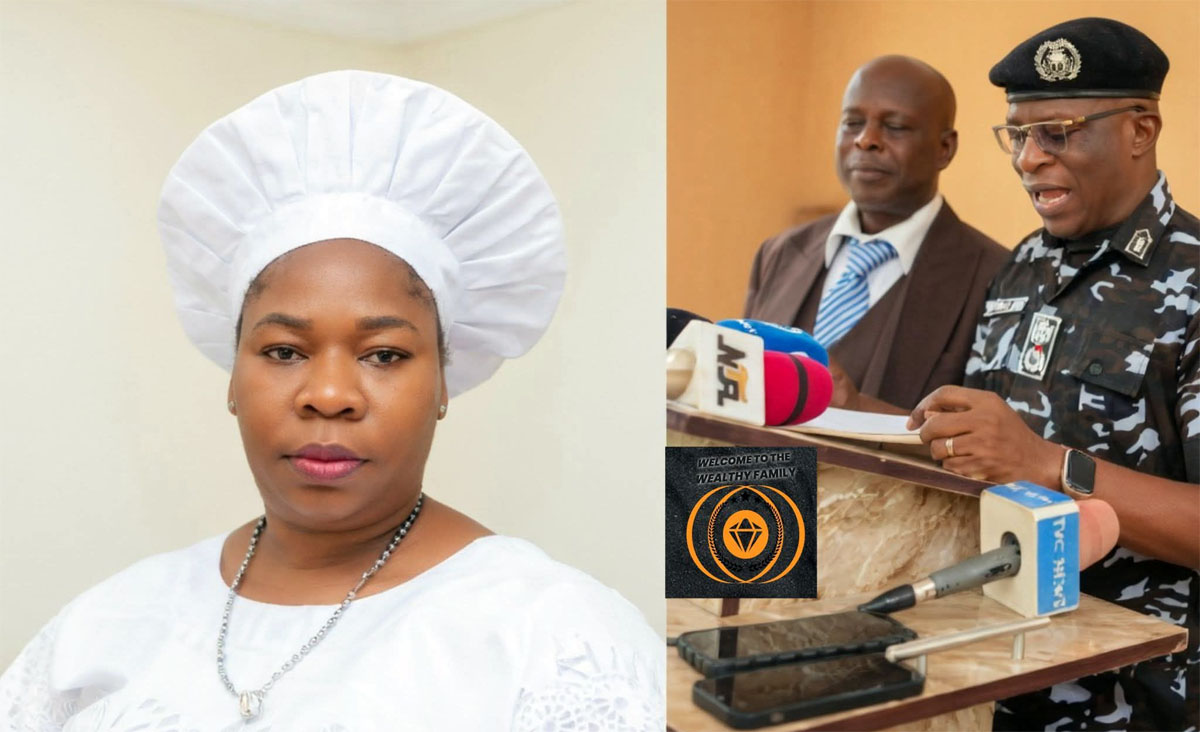
A 42-year-old woman declared missing in Ilara-Mokin, Ondo State, has been found in a hotel room in Ugbe-Akoko, sparking widespread reactions and renewed concerns over the circumstances surrounding her disappearance.
The woman reportedly left her matrimonial home in Ilara-Mokin in Ifedore Local Government Area without informing her husband or family members, prompting fears that she had been abducted or harmed.
Her husband was said to have raised the alarm after repeated attempts to reach her failed, leading to concern among relatives and residents of the community. The development triggered a search effort as anxiety grew over her whereabouts.
According to sources familiar with the case, the woman was later traced to Ugbe-Akoko in Akoko North-East Local Government Area, located about 124 kilometres from Ilara-Mokin. The journey between both locations typically takes over two hours by road.
READ ALSO:
- ADC Threatens Civil Disobedience To Force INEC Chairman To Resign
- World Bank Deletes Nigeria Development Update Report Days After Release
- US Revokes Green Cards of Iranian Family
She was reportedly discovered in a hotel in the area in the company of a 55-year-old man. Both individuals were taken in for questioning by relevant authorities to determine the circumstances surrounding their presence at the location.
Preliminary findings suggest that the woman may not have been abducted as initially feared but might have left home voluntarily without informing her family. However, officials are still working to establish the full details surrounding her movement and activities before she was found.
The incident has generated mixed reactions among residents of both communities, with many expressing shock, confusion, and concern over the circumstances that led to her disappearance and eventual discovery in a hotel.
Security agencies are continuing investigations to determine whether any offence was committed and to clarify the nature of the relationship between the woman and the man found with her.
As of the time of filing this report, there has been no official statement from law enforcement authorities, while the case continues to attract attention across Ondo State.
42-Year-Old Married Woman Declared Missing Found in Hotel with Man
metro
ADC Threatens Civil Disobedience To Force INEC Chairman To Resign
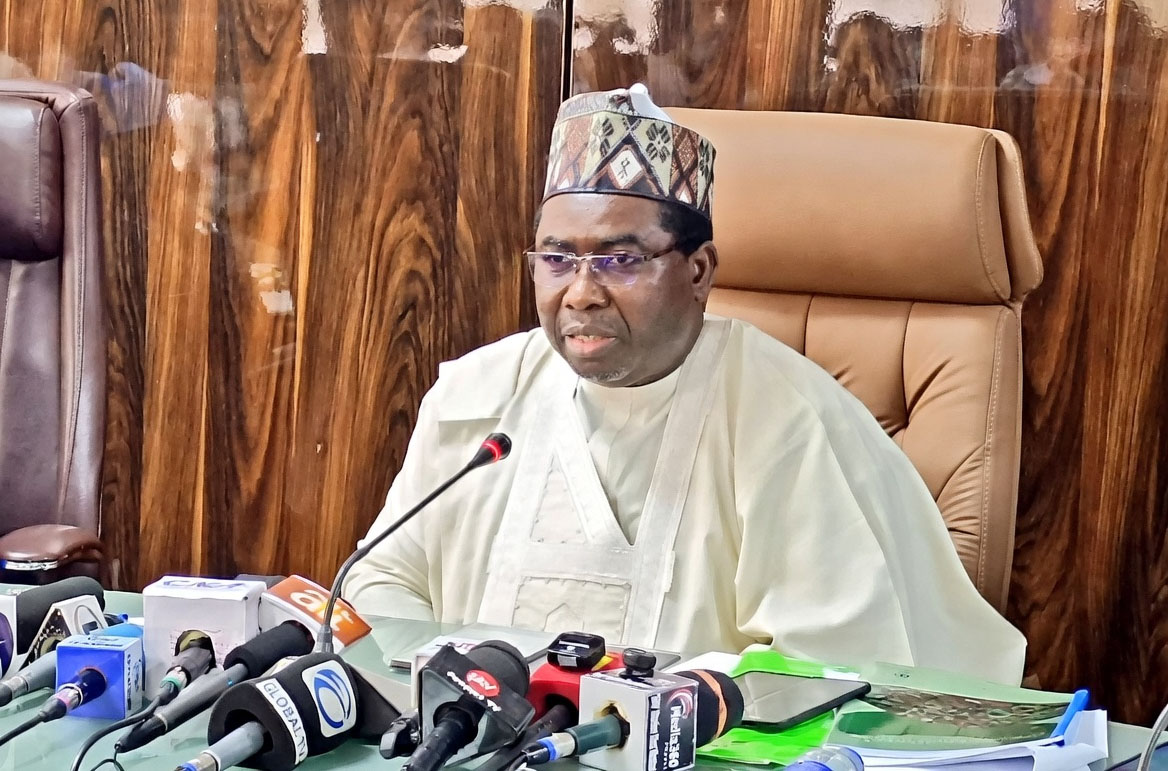
ADC Threatens Civil Disobedience To Force INEC Chairman To Resign
The African Democratic Congress (ADC) has demanded the immediate resignation of the Chairman of the Independent National Electoral Commission (INEC), Prof. Joash Amupitan, over allegations of political bias linked to controversial old social media posts, while also threatening civil disobedience if he remains in office.
The opposition party said its position follows growing concerns about the neutrality of the electoral body ahead of future elections, insisting that the credibility of the electoral process in Nigeria must not be compromised.
The controversy centres on alleged archived posts on X (formerly Twitter) attributed to an account bearing Amupitan’s name, which critics claim contained expressions perceived as supportive of the ruling All Progressives Congress (All Progressives Congress) and President Bola Ahmed Tinubu. The allegations gained wider attention after US-based Nigerian scholar Farooq Kperogi referenced the purported posts in a public commentary, arguing that they raise questions about the independence of INEC leadership. The claims have since sparked heated debate across social media, with supporters of the electoral commission questioning their authenticity while critics insist they undermine public trust in the institution.
READ ALSO:
- World Bank Deletes Nigeria Development Update Report Days After Release
- US Revokes Green Cards of Iranian Family
- 16-Year-Old Alleges Repeated Rape by Pastor During ‘Deliverance’ in Anambra
In response, the Chief Press Secretary and Media Adviser to the INEC Chairman, Adedayo Oketola, cautioned against misinformation and impersonation, warning that cybercriminals may be using fake accounts to circulate false narratives. He reaffirmed that INEC remains committed to delivering free, fair and credible elections in Nigeria, urging the public to rely only on verified communication channels from the commission.
Reacting to the controversy, ADC spokesperson Bolaji Abdullahi described the allegations as a serious breach of public trust and a threat to Nigeria’s democratic integrity, arguing that an electoral umpire must not only be neutral but must also be seen to be unquestionably impartial. According to him, the allegations—if proven true—undermine confidence in the leadership of the electoral body. Abdullahi further alleged attempts to manipulate or alter digital records linked to the controversy, describing the situation as a “calculated assault on truth and accountability.”
He said: “The referee cannot be running around in the shirt of one of the teams he is supposed to officiate.” The ADC insisted that Prof. Amupitan must resign immediately, warning that failure to do so would trigger escalated action, including civil disobedience protests across Nigeria. The party also said it would update petitions to relevant professional and international bodies, including the Nigeria Bar Association (Nigeria Bar Association), as part of efforts to intensify pressure on the electoral commission.
The controversy adds to rising political tension surrounding the leadership of INEC, as opposition parties increasingly scrutinise the commission’s neutrality ahead of upcoming electoral cycles. Analysts say the situation highlights ongoing concerns about trust in Nigeria’s electoral institutions, especially in the digital age where social media content can significantly influence public perception.
As of the time of filing this report, INEC has not issued a fresh statement addressing the ADC’s latest demand for the chairman’s resignation or its threat of civil disobedience.
ADC Threatens Civil Disobedience To Force INEC Chairman To Resign

-
 Africa3 days ago
ECOWAS Recruitment 2026: Over 30 Job Vacancies Open for Nigerians (How to Apply)
-
 metro8 hours ago
JUST IN: FG Publishes List of 48 Individuals, Groups Linked to Terrorism Financing in Nigeria
-

 Health2 days ago
Sleeping Positions: How They Affect Your Health and Which Ones to Avoid
-

 Politics3 days ago
Court Stops ADC Congress, Orders Status Quo in Leadership Row
-
 metro3 days ago
Boko Haram Attack in Borno: Brigadier-General, Soldiers Killed as ISWAP Overruns Military Base
-
 Politics18 hours ago
Did Faleke Just Reveal Lagos’ Next Governor? Party Moves Begin
-
 metro3 days ago
US Evacuates Embassy Staff in Nigeria, Lists 23 States as ‘Do Not Travel’
-

 Education1 day ago
Germany Opens Fully Funded Scholarships for Nigerians, Africans