
Auto
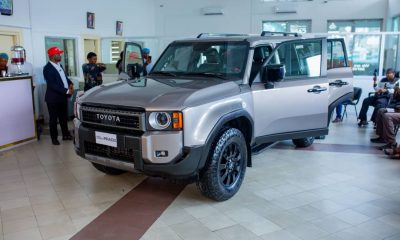
New Toyota Prado coming next year with hybrid tech

Toyota Motor Corporation is planning something unique for its new Land Cruiser Prado, a hybrid technology.
The latest reports from Japan indicate that the next new Toyota Prado after 13 years is due to be unveiled in 2023 – and there is speculation about a diesel hybrid, petrol hybrid and the possibility of a V6.
The new reports say the 2024 Toyota Land Cruiser Prado may be presented next year with new hybrid engines and the option of a turbo-diesel V6.
Indeed, Japanese publication The Best Car – known to be an outlet for leaking future product plans from Toyota – reports that the new generation Land Cruiser Prado is due to be shown to the world between July and September 2023.
Although Toyota has yet to confirm the plans, the report suggests that the Prado will be equipped with a hybrid version of the 2.8-litre turbodiesel found in the current model, along with either a 2.4- or 2. 5-litre four-cylinder gasoline engine – also with hybrid technology and could come with a turbocharger.
In August 2021, ‘The best car’ reported that the Prado would share a 2.5-litre diesel-electric hybrid system with the HiLux and HiAce.
Another report from The Best Car earlier this month said the Prado would adopt the 3.3-litre turbodiesel V6 engine from the LandCruiser 300 Series – potentially as an answer to the new Ford Everest V6 or even China’s GWM Tank 500.
While a detuned version of the V6 would help differentiate the Prado from its bigger Land Cruiser sibling, the report specifically lists power output as 227kW – the same as found in the 300 Series.
In the past, the Prado was offered with smaller engines than those in the range-topping Land Cruiser – recently borrowed from the HiLux ute range – so as to provide greater differentiation between the two Land Cruiser models.
Creative Trends, another Japanese auto website, also suggests that the new Prado will be based on a new version of Toyota’s Global Automotive Architecture known as TNGA (or TNGA-F for 4WD body-on-frame vehicles).
It says the chassis underpinning the Prado will share components found in the current Land Cruiser 300 series and – interestingly – the current, seven-year-old HiLux.

Toyota recently unveiled a new HiLux Rogue – featuring four-wheel disc brakes, new suspension and wider axles for a larger tire footprint – all of which could be used for the next-generation ute or potentially adopted by the Prado.
The next Prado is expected to retain the same width as the current 150 series model at 1,885mm, according multiple sources.
Already, Creative Trend has started calling the new Prado the “180 series”.
The Prado is a full-size four-wheel drive vehicle in the Land Cruiser range. It is one of the smaller vehicles in the Land Cruiser range.The Prado has since 2009 been based on Toyota’s J150 platform. It is available as the equivalent Lexus GX in some countries.




Auto
Jetour set to ignite Lagos with four-day automotive experience

Jetour set to ignite Lagos with four-day automotive experience
Lovers of sophisticated and elegant SUVs in Lagos are about to witness a combination of automotive engineering and urban lifestyle as Jetour Nigeria announces the hosting of a flagship event, “The Jetour Experience,” a four-day immersive festival designed to redefine how Nigerians interact with the road.
From April 16 to 19, 2026, The Podium in Lekki, Lagos, will be transformed into a high-energy hub where sleek design meets high-octane entertainment. This is not just a standard car show; it’s a curated lifestyle destination, says the organisers in a statement.
The four-day event is said to promise a fusion of horsepower, high fashion, and plenty of fun.
Tagged “The Jetour Experience,” the four-day extravaganza is not just about gleaming chrome and leather seats; it is a high-octane celebration aimed at blurring the lines between mobility and entertainment.
Specifically, it stated that the exhibition would feature test drives, virtual reality gaming, fitness sessions, and interactive activities with branded giveaways.
The statement added that the arena would buzz with entertainment, including contests and interactive games, giving guests the chance to win exclusive branded gifts and prizes.
In a massive show of force, Jetour says it is partnering with its seven prestigious accredited dealers—Elizade Nigeria Limited, New Era Autovehicle Services Limited, Kojo Motors, R.T. Briscoe, Tab Autos Limited, Mandilas Motors, and Germaine Auto Centre —to bring their full fleet to the public.
Whether you are an eco-conscious commuter or an off-road adventurer, the lineup has something for everyone, according to a statement by the Jetour Nigeria.
The Urban Explorers: X50 and X70
The Sophisticates: X70 Plus and X90 Plus
The Eco-Warriors: X70 PHEV and T2 PHEV (Plug-in Hybrids)
The Icons: The rugged T2 and the razor-sharp Dashing
Jetour is blurring the lines between mobility and entertainment. Running daily from 9:00 am to 7:00 pm, the event promises a packed itinerary designed to keep the adrenaline pumping.
Visitors will also push limits during test drives, explore virtual reality (VR) gaming such as foosball, and take part in curated fitness sessions.
In a creative masterstroke, the grand finale will feature a car runway fashion show. Attendees can expect a visual feast where automotive engineering meets sartorial elegance, reinforcing the idea that a Jetour is not just a vehicle but a fashion statement.
The firm stated, “Beyond the glitz, the event maintains a strong focus on safety. A dedicated panel discussion featuring stakeholders and officials from the Federal Road Safety Corps (FRSC) will explore road safety, tech-driven security, and the future of motoring in Nigeria.
“With its blend of adrenaline, artistry, and advocacy, Jetour Nigeria isn’t just hosting an event; it is creating a destination.”
Auto
Soaring Fuel Prices Drive Nigerians Toward Electric Vehicles
Soaring Fuel Prices Drive Nigerians Toward Electric Vehicles
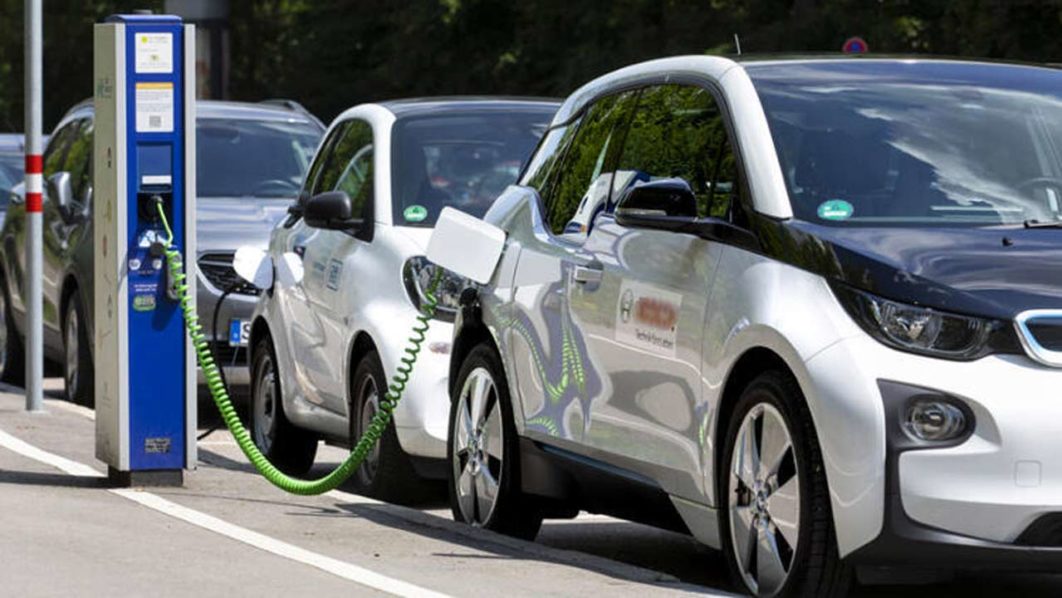
Rising fuel prices in Nigeria are accelerating interest in electric vehicles (EVs) as households, transport operators, and businesses seek cost-effective alternatives to petrol- and diesel-powered cars. Experts say the spike in petrol costs is no longer just an economic concern but a turning point, pushing electric mobility from a futuristic idea into a practical solution for everyday commuting and commercial use.
At the Abuja Compact on Electric Mobility Roundtable, stakeholders highlighted how increasing transport expenses are reshaping decisions, especially among commercial drivers and small business owners. Rising fuel costs are prompting many Nigerians to see EVs as a survival strategy rather than a luxury option.
Chairman of the Presidential Initiative on Compressed Natural Gas and Electric Vehicles (Pi-CNG & EV), Ismaeel Ahmed, explained that the removal of fuel subsidies has widened the cost gap between petrol-powered vehicles and EVs. Charging an EV for a 200-kilometre journey costs around ₦4,500, compared to roughly ₦22,500 for petrol vehicles — a difference that offers a “strong economic incentive” influencing consumer choices. Ahmed added that the federal government is pursuing a balanced transition strategy supporting both compressed natural gas (CNG) and electric vehicles to encourage sustainable energy alternatives.
Financial solutions are helping Nigerians overcome the high upfront costs of EVs. Mohammed Abdul, Divisional Head at Alternative Bank, noted that lease-to-own, pay-as-you-go, and partnership schemes are making EVs accessible to drivers in the informal transport sector. These financing models allow gradual adoption while easing financial burdens.
READ ALSO:
- Ogun Partners with NAHCON, Names Key Hajj Leadership Team
- Timi Frank: INEC Actions Threaten Democracy, Calls on Trump to Support Nigeria
- ADC Defies INEC, Moves Ahead with Congresses, Convention
Industry leaders also see wider economic benefits from EV adoption. Yusuf Suleiman, CEO of Bankrol Camel EV and Blue Camel Energy Ltd, said EV investments could improve energy access, boost industrial growth, and reduce Nigeria’s reliance on imported fossil fuels. Ahmed Garba Ahmed, COO of Bankrol Camel EV, added that EVs can cut energy costs per kilometre by up to 60%, benefiting ride-hailing drivers, logistics companies, and fleet operators.
Dapo Adesina, President of the Electric Mobility Promoters Association of Nigeria (EMPAN), explained that EV adoption can strengthen Nigeria’s power sector. Solar-powered charging hubs can simultaneously power vehicles and supply electricity to nearby communities, particularly in underserved areas. Private sector initiatives are also supporting Nigeria’s EV transition. Companies like SolarCity Gas are deploying superfast EV charging stations across key urban hubs and petrol stations, expanding the country’s charging infrastructure to meet growing demand.
Despite growing adoption, electric mobility in Nigeria faces challenges such as limited electricity infrastructure and inconsistent power supply. Analysts warn that significant investments in charging networks and supportive policies are necessary for sustainable EV growth. Nevertheless, with fuel prices remaining high, EVs are increasingly viewed as economically smart and environmentally friendly alternatives, offering Nigerians a viable solution to rising transport costs.
Soaring Fuel Prices Drive Nigerians Toward Electric Vehicles
Auto
Lagos NURTW Chairman Sego Distributes Exotic Cars, Luxury Items to Cabinet Members (Video)

Lagos NURTW Chairman Sego Distributes Exotic Cars, Luxury Items to Cabinet Members (Video)
The Chairman of the Lagos State chapter of the National Union of Road Transport Workers (NURTW), popularly known as Sego, has distributed exotic cars, luxury items, and other valuables to members of his cabinet.
The development, which took place on Tuesday, drew attention across Lagos as beneficiaries reportedly received high-end vehicles and other expensive gifts as part of what insiders described as a reward and appreciation gesture.
READ ALSO:
- Canada Raises Permanent Residence, Citizenship Fees for Nigerians, Others
- Plateau Palm Sunday Massacre: US Lawmaker Warns Nigeria
- Cars Torched as South Africans Protest Alleged Nigerian ‘Igbo King’ Coronation
Sources within the union disclosed that the items shared included luxury cars, household equipment, and other high-value materials, aimed at boosting morale among cabinet members and strengthening loyalty within the leadership structure of the union.
Observers say the move highlights the growing influence and financial strength of transport unions in Lagos, particularly the NURTW, which plays a key role in the state’s transport sector.
While supporters of the chairman have praised the gesture as a sign of generosity and leadership, critics argue that such displays of wealth raise questions about transparency and accountability within union operations.
As of the time of filing this report, there has been no official statement from Sego addressing the distribution, but the development has continued to generate reactions among stakeholders in the transport industry and the wider public.
The Chairman of the Lagos State chapter of the National Union of Road Transport Workers (NURTW), popularly known as Sego, has distributed exotic cars, luxury items, and other valuables to members of his cabinet
Tonto Dike | Blessing CEO | Kaduna | Pastors and Imams | Jerry Eze pic.twitter.com/YWGLjMiJyZ
— Newstrends.Ng (@Newstrends_ng) March 31, 2026
Lagos NURTW Chairman Sego Distributes Exotic Cars, Luxury Items to Cabinet Members (Video)

-

 metro2 days ago
FG Deports US Missionary Alex Barbir Over Alleged Role in Nigeria Insecurity
-

 Entertainment2 days ago
Veteran Nollywood Actor Davis Ofor ‘Clarus’ of New Masquerade Dies at 85
-

 metro1 day ago
2026 NYSC Batch A Stream II: Registration, Swearing-In Dates Announced
-

 metro2 days ago
Lagos Announces Partial Road Closures for Project Commissioning
-
 Africa8 hours ago
ECOWAS Recruitment 2026: Over 30 Job Vacancies Open for Nigerians (How to Apply)
-

 Entertainment1 day ago
Saheed Osupa Defends Juju Use Amid Backlash From Islamic Clerics
-

 Politics13 hours ago
Court Stops ADC Congress, Orders Status Quo in Leadership Row
-
 News2 days ago
Iran Lists Tough Conditions for Peace Talks with US