

International
New York Times labels Trump an autocrat, lists 12 reasons
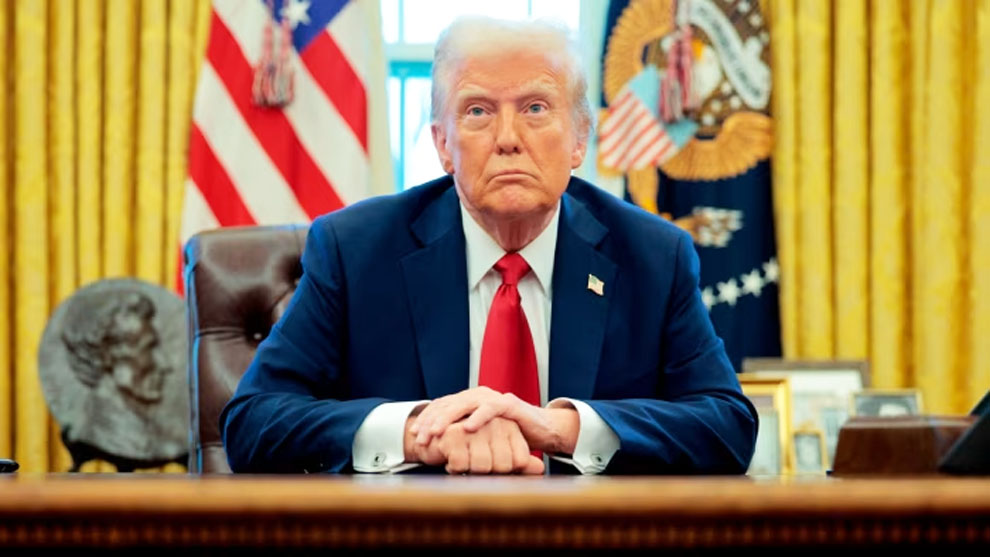
New York Times labels Trump an autocrat, lists 12 reasons
No previous American President has wielded power as Donald Trump, according to New York Times Editorial Board.
In a piece entitled: “Are We Losing Our Democracy?”, the Editorial Board of the publication said the incumbent American President has acted in defiance of the law.
A list of 12 markers of democratic erosion were highlighted with detailed explanation on each.
“Our country is still not close to being a true autocracy, in the mold of Russia or China. But once countries begin taking steps away from democracy, the march often continues. We offer these 12 markers as a warning of how much Americans have already lost and how much more we still could lose,”it read.
NO. 1
An authoritarian stifles dissent and speech. Trump has started to.
Authoritarian takeovers in the modern era often do not start with a military coup. They instead involve an elected leader who uses the powers of the office to consolidate authority and make political opposition more difficult, if not impossible. Think of Vladimir Putin in Russia, Nicolás Maduro in Venezuela and, to lesser degrees, Recep Tayyip Erdogan in Turkey, Viktor Orban in Hungary and Narendra Modi in India. These leaders have repressed dissent and speech in heavy-handed ways.
Over the past year, President Trump and his allies have impinged on free speech to a degree that the federal government has not since perhaps the Red Scare of the 1940s and 1950s. His administration pressured television stations to stop airing Jimmy Kimmel’s talk show when Mr. Kimmel criticized Trump supporters after the murder of Charlie Kirk; revoked the visas of foreign students for their views on the war in Gaza; and ordered investigations of liberal nonprofit groups. Mr. Trump so harshly criticizes people who disagree with him, including federal judges, that they become targets of harassment from his supporters.
Many forms of speech and dissent remain vibrant in the United States. But the president has tried to dull them. His evident goal is to cause Americans to fear they will pay a price for criticizing him, his allies or his agenda.
NO. 2
An authoritarian persecutes political opponents. Trump has.
In addition to restricting speech and dissent, autocrats use the immense power of law enforcement to investigate and imprison people who have fallen out of favor. Mr. Trump’s Justice Department has become an enforcer of his personal interests, targeting people for legally dubious reasons while creating a culture in which his allies can act with impunity.
READ ALSO:
- Senator Andy Uba cleared as police drop ₦400m fraud case after settlement
- Sanwo-Olu reintroduces Building Permit Amnesty to help Lagos property owners regularise structures
- Gabon unveils 27-man squad ahead of crucial World Cup playoff against Nigeria
Following the president’s demands, his appointees have secured indictments of a few critics (including Attorney General Letitia James of New York and the former F.B.I. director James Comey) and ordered investigations of others (including Senator Adam Schiff of California). Some of these appointees were once Mr. Trump’s personal lawyers. Mr. Trump has also used executive orders to go after perceived enemies, including law firms representing his critics. And he has systematically fired government employees who played roles in earlier investigations of him or his allies.
“We are all afraid,” Senator Lisa Murkowski of Alaska, a Republican, said this spring. “It’s quite a statement. But we are in a time and a place where I certainly have not been here before. I’ll tell you, I’m oftentimes very anxious myself about using my voice, because retaliation is real.”
Mr. Trump has simultaneously shielded his own supporters from legal consequences for their actions, including through his blanket pardon of the Jan. 6 rioters.
True authoritarians go much further than Mr. Trump has, but he has already targeted his opponents with legal persecution in shocking ways.
NO. 3
An authoritarian bypasses the legislature. Trump has started to.
When a democracy slides toward autocracy, the leader often finds ways to neuter the legislature, turning it into a body that rubber stamps his decisions. Congress has started down this path. The Constitution makes clear, in Article I, that Congress alone has the power of the purse. Mr. Trump is undermining this system.
His administration has violated federal law at least six times by withholding funding authorized by Congress for libraries, preschools, scientific research and more, the Government Accountability Office found. He has gutted or dismantled congressionally authorized agencies like the Department of Education and U.S.A.I.D. He has also imposed new taxes — his tariffs — without congressional approval. Since the current government shutdown began, he has used donations from billionaires to pay troops and finance the construction of a ballroom at the White House.
Some of the blame lies with the Republican leaders of Congress, who have failed to fight his power grabs. Their complicity does not change the fact that these power grabs have been illegal.
Mr. Trump has defied the Constitution by trampling on Congress’s power of the purse. In full autocracies, legislatures often formally transfer some of their authority to the executive, and some congressional Republicans have proposed such changes.
NO. 4
An authoritarian uses the military for domestic control. Trump has started to.
Even democracies occasionally use their militaries on home soil. The military can keep order and protect citizens after a devastating storm. In extreme and rare circumstances, troops can enforce the law when local authorities refuse to do so, as happened in the segregated South in the 1950s and 1960s.
READ ALSO:
- Chinese envoy reaffirms strategic partnership with Nigeria amid U.S criticism
- Edun unveils next phase of Tinubu’s economic reforms, targets 7% growth by 2027
- Pretty Mike arraigned over alleged drug offences at Lagos nightclub
Authoritarians use the military much more frequently and performatively — to suppress dissent, instill fear and convey supreme power. Mr. Trump deployed the National Guard in Los Angeles to crack down on protests, despite local officials’ insistence that they had the situation under control. He attempted the same in Portland, Ore., and Chicago, before being restrained by federal courts. He has also begun to treat the military as an extension of himself, firing several high-ranking officials without good reason and summoning hundreds of leaders to Virginia to listen to overtly political speeches by him and his appointees.
Mr. Trump’s use of the military for domestic control has been limited. But his willingness to use it as he has — and his threats to expand that use, through the invocation of the Insurrection Act and with troops beyond the National Guard — is extremely worrisome.
NO. 5
An authoritarian defies the courts. Trump has started to.
Would-be authoritarians recognize that courts can keep them from consolidating power, and they often take steps to weaken or confront judges.
Mr. Trump has baldly defied federal judges on several occasions. In March, for instance, his administration ignored a federal judge’s order to turn around airplanes that were deporting migrants to El Salvador. More often, the Trump administration has engaged in gamesmanship, going around orders rather than directly disobeying them. One example: After a federal judge blocked his deployment of the Oregon National Guard, the administration moved to deploy National Guards from other states instead.
So far, Mr. Trump has defied no Supreme Court orders and has pledged not to. But the justices have too often played into his strategy by failing to stand up for lower courts.
It is a hopeful sign that he has not ignored the Supreme Court, and the court may yet block his most blatant power grabs. Still, the court’s reluctance to restrain him appears to have emboldened him to sidestep lower court orders he does not like.
NO. 6
An authoritarian declares national emergencies on false pretenses. Trump has.
Authoritarians often curtail democracy by declaring an emergency and arguing that the threat requires them to exercise unusual degrees of power.
Mr. Trump’s recent predecessors were not perfect on this issue. They sometimes declared questionable emergencies. He has gone to another level. He has used manufactured emergencies to sidestep Congress and impose tariffs, deregulate the energy industry, intensify immigration enforcement and send the National Guard into Washington. Chillingly, he has claimed that a Venezuelan gang invaded the United States to justify the killing of foreign civilians in international waters, in defiance of U.S. and international law.
READ ALSO:
- Lagos police accused of demanding N300,000 to release woman after friend’s death
- MURIC condemns U.S lawmakers’ calls for abolition of Shari’ah in Nigeria
- Mob kills chief Imam in Kwara community, four suspects arrested
Mr. Trump’s willingness to kill people without due process, through the blowing up of boats that American officials could instead stop and search, represents one of his most extreme abuses of power. It raises the prospect that he may expand the use of emergency power to other areas, including domestic law enforcement.
NO. 7
An authoritarian vilifies marginalized groups. Trump has.
Authoritarians tend to demean minority groups, trying to turn them into a perceived threat that provides a justification for a leader to amass power. Mr. Trump has repeatedly suggested that marginalized groups are responsible for the nation’s problems.
Immigrants have topped his list. Mr. Trump has blamed them for destroying communities and his administration has tried to dehumanize them by posting mocking videos of shackled immigrants. In response, many Latinos have stopped speaking Spanish in public and started carrying their passports to prove citizenship.
He has vilified transgender Americans and barred them from military service. He has fired women and people of color from leadership posts and ended programs that promote workplace diversity. His administration has attempted to erase aspects of Black history, including by removing books on slavery and segregation from military libraries and pressuring Smithsonian museums to minimize those subjects. At the same time, he has suggested that white people and Christians are victims, which echoes the autocratic habit of claiming that majority groups are in fact oppressed.
Mr. Trump is borrowing from the autocrats’ playbook by suggesting that some citizens are legitimate and others are second-class.
NO. 8
An authoritarian controls information and the news media. Trump has started to.
Democratic governments prize accurate information as a guide to decision-making. Authoritarians seek to suppress inconvenient truths.
Mr. Trump has sought to manipulate government information in several ways. He fired the head of the Bureau of Labor Statistics after the agency reported disappointing job growth this summer. He shut down federal data collection efforts related to climate change, presumably because the information might encourage people to take action.
He has also taken steps to control the media, both traditional forms and new ones. He arranged for the sale of TikTok from a Chinese company to investors with ties to his political allies. He pushed Congress to end funding for public radio and television. He extracted multimillion-dollar payments from ABC, Paramount (which owns CBS), YouTube and Meta to settle baseless claims that he has been treated unfairly, and he is pursuing lawsuits against The New York Times and The Wall Street Journal. All of these moves are meant to reduce coverage that does not parrot his views.
In place of an independent and free press, Mr. Trump evidently hopes to create a shadow ecosystem willing to promote his interests and talking points.
NO. 9
An authoritarian tries to take over universities. Trump has started to.
Authoritarians, recognizing that universities are hotbeds of independent thought and political dissent, often single them out for repression. Mr. Putin and Mr. Erdogan have closed universities. Mr. Modi’s government has arrested dissident scholars, while Mr. Orban has appointed loyalist foundations to run universities.
READ ALSO:
- Soyinka says he predicted U.S would revoke visas, green cards under Trump
- Soyinka says he predicted U.S would revoke visas, green cards under Trump
- Atalanta Coach plays down touchline dispute with Ademola Lookman
A signature policy of Mr. Trump’s second term has been his attack on higher education. He has cut millions of dollars of research funding, tried to dictate hiring and admissions policies and forced the resignation of the University of Virginia’s president. It is a sustained campaign to weaken an influential sector home to many political progressives who do not support him — and to many young people, who typically form the crux of anti-authoritarian protest movements.
Because the federal government finances so much academic research, it has considerable power over universities. Initially, some universities seemed as if they might simply submit to Mr. Trump’s demands. More recently, several showed more willingness to resist, rejecting a proposal that would have rewarded them financially for adopting Trump-friendly policies.
NO. 10
An authoritarian creates a cult of personality. Trump has.
Emperors and kings often glorified themselves by displaying their portraits everywhere. The American tradition has rejected that kind of hagiography for living presidents. Our leaders haven’t needed to puff themselves up this way, until now.
Huge banners with Mr. Trump’s face hang from government buildings. He posts memes in which he wears a crown, including an A.I.-generated video that depicted him flying a jet that dropped fecal matter on protesters. He held a lavish military parade on his birthday. At televised meetings, members of his cabinet gush sycophantic praise. He announced the creation of a meme coin with his likeness. To celebrate the country’s 250th birthday next year, the Treasury Department plans to put his face on a physical coin.
The Trump cult of personality plays into his claims — common among autocrats — that he possesses a unique ability to solve the country’s problems. As he put it, “I alone can fix it.” He seeks to equate himself with the federal government, as if it does not exist without him.
NO. 11
An authoritarian uses power for personal profit. Trump has.
Authoritarians often turn the government into a machine for enriching themselves, their families and their allies. Mr. Trump glories in his administration’s culture of corruption.
He openly uses the presidency as an opportunity to pad his bottom line, in ways that range from the comically petty (like charging the Secret Service up to $1,200 per night for rooms at his hotels) to the shamelessly greedy (like the $40 million that Amazon paid for the rights to a Melania Trump documentary or his recent demand that the government pay him $230 million because he was investigated for breaking the law). He solicits favors from foreign governments, including an airplane from Qatar. His children also profit from their father’s position, through real-estate deals, crypto, a private club in Washington and more. And he rewards those who enrich them, recently pardoning the head of a cryptocurrency firm who worked with the Trump family.
In the first six months of this year, the Trump Organization’s income soared to $864 million, up from just $51 million a year earlier, according to a recent Reuters analysis. It’s worth noting that recent Supreme Court decisions have made corruption harder to police.
Mr. Trump’s culture of corruption may resemble the behavior of foreign autocrats more closely than any other category on this list. He is using what rightly belongs to American citizens — the power and resources of our democratic government — to enrich himself, and he is not trying to hide it.
NO. 12
An authoritarian manipulates the law to stay in power. Trump has started to.
Authoritarians change election rules to help their party, and they rewrite laws — or violate their spirit — to ignore term limits.
Mr. Trump’s biggest attempt to follow this playbook failed, when he was unable to undo his election defeat to Joe Biden in 2020. But that effort showed Mr. Trump’s willingness to break the law to remain in power.
In his second term, he has shown worrisome signs of using his power to entrench the Republican Party’s hold on the government. He has pressed Republicans to take gerrymandering to a new extreme. He issued an executive order in March that seeks to interfere with how states run their elections. These moves increase the chances that Republicans will keep control of Congress even if most voters want to oust them.
Mr. Trump has not taken concrete steps to remain in power for a third term, which the 22nd Amendment of the Constitution was written to forbid. He has alternated between floating the idea and suggesting he understands that he must leave the presidency for good on Jan. 20, 2029.
Even if he backs away from any scheme to serve more than two presidential terms, Mr. Trump’s attempts to tilt the electoral field in favor of Republicans is anti-democratic and could pervert American elections for years.
The clearest sign that a democracy has died is that a leader and his party make it impossible for their opponents to win an election and hold power. Once that stage is reached, however, the change is extremely difficult to reverse. And aspiring authoritarians use other excesses, like a cowed legislature and judiciary, to lock in their power.
The United States is not an autocracy today. It still has a mostly free press and independent judiciary, and millions of Americans recently attended the “No Kings” protests. But it has started down an anti-democratic path, and many Americans — including people in positions of power — remain far too complacent about the threat.
The 12 benchmarks in this editorial offer a way to understand and measure how much further Mr. Trump goes in the months and years ahead. We plan to update this index in 2026.
Methodology: In the scales above, the points on the left indicate roughly where the United States, flawed though it was, had been before Mr. Trump took office. Moving even one notch toward autocracy on these scales is a worrisome sign.
New York Times labels Trump an autocrat, lists 12 reasons
New York Times Editorial Board










International
Pope Leo XIV Warns Against Letting AI Make Human Decisions
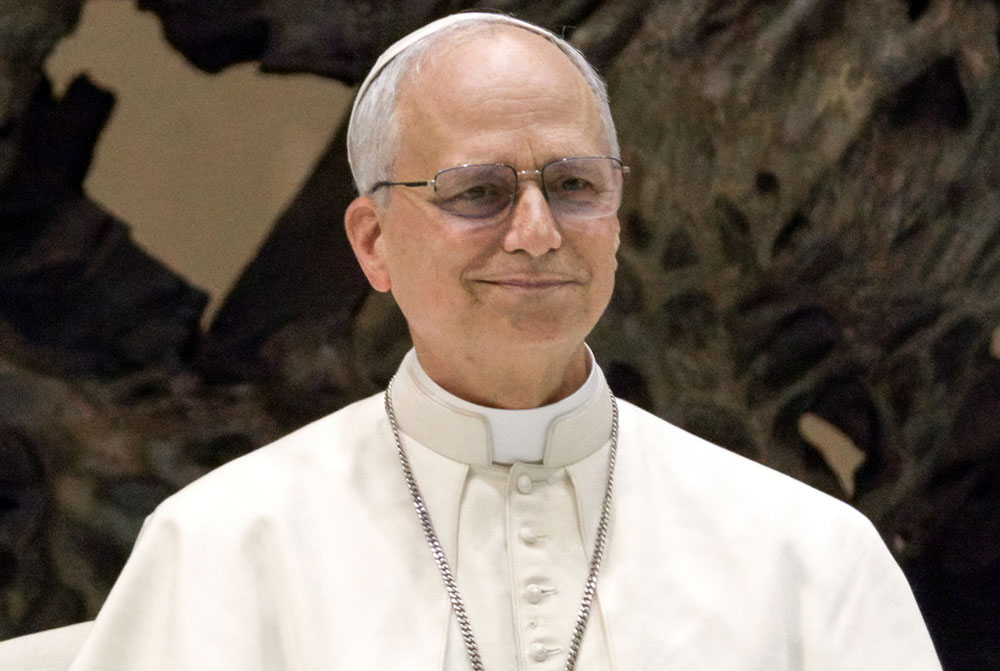
Pope Leo XIV Warns Against Letting AI Make Human Decisions
The rapid advancement of artificial intelligence has prompted a fresh warning from Pope Leo XIV, who says some decisions should never be handed over to algorithms.
The Pope made the remarks at his weekly audience in St Peter’s Square, where he addressed thousands of faithful and reflected on the impact of technology on modern human interaction.
While acknowledging that AI, social media and other forms of technological development can reduce barriers and connect people across great distances, he said they also carry a risk of making human relationships increasingly virtual.
His particular concern was the possibility that society could become accustomed to allowing algorithms to determine matters that should instead be guided by human conscience.
“Ensuring that social relationships have real substance and personal depth” is one way the Christian community seeks to respond to this challenge, he said.
The comments come amid broader concerns about the direction of AI development. Recent security incidents, along with the growing ability of some AI systems to improve their own performance without human intervention, have intensified debate about the technology.
Another major question is whether companies and organisations within the AI sector are capable of regulating themselves effectively as the technology becomes more powerful.
The Pope has previously made AI a major focus of his public interventions. His first major document, the May encyclical “Magnifica Humanitas”, urged efforts to prevent AI from becoming a force that dominates humanity.
The Holy See has also become more active in calls for international rules governing AI, grounding its position in the protection of human dignity. Its initiatives have extended to discussions involving nuclear technology, culture and artistic creation.
The latest warning places the Vatican’s concerns within a wider debate over how humanity should balance the benefits of increasingly powerful AI with the need to keep important decisions under human control.
Pope Leo XIV Warns Against Letting AI Make Human Decisions
International
Islamic Council Condemns Attempted Attack on Holy City of Mecca

Islamic Council Condemns Attempted Attack on Holy City of Mecca
International leaders call for accountability after Saudi defense systems neutralize an incoming drone before it entered protected airspace.
The Organisation of Islamic Cooperation has strongly criticized a failed drone attack directed toward the holy city of Mecca and the surrounding Medina region.
The international group, which represents 57 member nations, stated that any attempt to strike sacred places of worship or harm everyday people goes against basic human decency and international law.
The statement came after Saudi defense forces reported stopping an unmanned aircraft on Tuesday evening. Coalition officials confirmed that defense teams tracked the incoming drone and destroyed it south of Mecca before it could enter protected airspace.
Military representatives explained that keeping visiting worshippers and local communities safe remains an absolute priority, warning that threats against sacred sites will not be tolerated.
The OIC expressed full support for the safety steps Saudi Arabia uses to protect its borders, communities, and historical religious centers.

Although Houthi representatives in Yemen have previously stated that they do not intend to strike holy landmarks, global leaders emphasized that all groups must respect civilian safety and ensure that sacred religious spaces remain free from military conflict.
Islamic Council Condemns Attempted Attack on Holy City of Mecca
International
US Court Blocks Trump Visa Rule Limiting Stay of Foreign Students, Journalists

US Court Blocks Trump Visa Rule Limiting Stay of Foreign Students, Journalists
A federal court in the United States has temporarily blocked the Donald Trump administration from implementing a new immigration rule that would have imposed fixed time limits on how long foreign students, exchange visitors and journalists could remain in the country without applying for extensions.
The ruling, delivered by U.S. District Judge F. Dennis Saylor IV in Boston on Monday, September 14, came just one day before the controversial rule was scheduled to take effect.
The decision provides immediate relief for thousands of Nigerians in the United States, particularly international students, researchers, exchange visitors and journalists whose immigration status could have been affected by the new restrictions.
However, the ruling does not specifically exempt Nigerians. The rule applies broadly to foreign nationals covered by the affected visa categories, meaning Nigerians are among the people who would have been subject to the proposed restrictions.
The Trump administration’s rule, published by the U.S. Department of Homeland Security (DHS) in July, sought to replace the long-standing “duration of status” (D/S) system with fixed admission periods for holders of F, J and I visas.
Under the proposed system, F-1 international students would generally have been admitted for a maximum of four years, while J-1 exchange visitors would also have faced a four-year limit.
Foreign journalists holding I visas would have been permitted to remain for up to 240 days before being required to seek an extension. The Federal Register rule also contained a separate 90-day limit for certain Chinese journalists.
The changes would have represented a major departure from the system that has governed foreign students and researchers in the U.S. for decades.
Under the existing duration-of-status arrangement, eligible students can generally remain in the country for the period necessary to complete their approved programme, provided they maintain their immigration status and comply with the relevant requirements.
The proposed fixed-term system would instead have required many students whose programmes extend beyond four years to seek an extension from U.S. immigration authorities.
Judge Saylor ruled that the Department of Homeland Security had failed to provide an adequate justification for such a significant change.
The judge described the agency’s reasoning as “exceptionally weak”, finding that DHS had not sufficiently addressed the consequences of abandoning the existing system or considered less restrictive alternatives.
READ ALSO:
- Sokoto Shuts Mosque After Cleric Stabbing, Names Ulamas Probe Panel
- Iran Rejects US Talks as Trump’s Mixed Signals Deepen Hormuz Standoff
- Saudi Arabia Vows ‘Firm’ Response as Houthi Attacks Wound 13
The court’s decision also highlighted the potential impact on American universities, research institutions and the wider U.S. economy.
According to the ruling, approximately 1.6 million people hold F visas, while another 500,000 hold J visas. Major American research universities have significant numbers of international students, particularly at postgraduate level.
Saylor warned that implementing the rule could result in substantial financial and educational disruption, including declining international enrolment and increased administrative costs for universities.
He noted that the existing system had facilitated the arrival of millions of foreign students and researchers whose contributions had supported advances in science, medicine and technology as well as economic growth in the United States.
The legal challenge was brought by a coalition representing higher education, immigration and journalistic interests, which argued that the new restrictions would create uncertainty for international students, universities, researchers and journalists.
The groups maintained that forcing students and exchange visitors to repeatedly apply for extensions could disrupt academic programmes, research projects and professional activities.
They also argued that the rule could make American universities less attractive to international students at a time when institutions depend heavily on global talent.
The Trump administration, however, defended the policy as necessary to strengthen immigration enforcement and prevent abuse of the student and exchange-visitor visa system.
DHS General Counsel James Percival criticised the court’s decision, arguing that the existing system could allow people to remain in the United States for excessively long periods while technically maintaining student status.
The administration has particularly raised concerns about individuals who enrol in minimal academic programmes and remain in the country for years.
The court’s decision therefore represents a temporary legal setback for the administration’s effort to impose tighter controls on foreign student visas and other temporary immigration categories.
For Nigerian students in the U.S., the immediate consequence is that the proposed four-year F-1 limit does not take effect while the preliminary injunction remains in force.
Students who need more than four years to complete their programmes are therefore not currently required to leave the United States or obtain an extension solely because of the blocked rule.
READ ALSO:
- Peter Obi Rejects Anambra Debt Claims, Challenges Soludo Govt to Produce Evidence
- Peter Obi: Release My UNN Academic Records, I Have Nothing to Hide
- A Son Wouldn’t Have Done Better — Dangote Speaks on Daughters, Succession
The same applies to eligible exchange visitors and foreign journalists who would have been affected by the proposed fixed admission periods.
The ruling also means that the existing immigration framework remains in place while the legal battle continues.
However, Judge Saylor’s decision is a preliminary injunction, not a final judgment on whether the Trump administration has the legal authority to change the visa system.
The administration can continue defending the rule in court, and the final outcome could still change depending on subsequent proceedings or appeals.
A further hearing in the case is expected on October 2, 2026, as the parties continue their legal arguments over the new immigration policy.
The dispute comes amid a broader tightening of U.S. immigration policies under Trump, with the administration seeking greater scrutiny of foreign nationals entering or remaining in the country.
The blocked rule was formally published in the Federal Register on July 17 and was scheduled to become effective on September 15, 2026.
For now, however, foreign students, exchange visitors and journalists covered by the affected visa categories can continue operating under the existing rules while the court proceedings continue.
The ruling could therefore provide temporary certainty for Nigerian students in America, Nigerian researchers, exchange visitors and journalists who had faced the prospect of additional immigration applications and tighter deadlines under the now-blocked policy.
It also leaves open a wider debate over how the United States should balance immigration enforcement and national security with the interests of universities, international education, scientific research, cultural exchange and journalism.
The Federal Register had said the new system was intended to establish fixed periods of admission and clearer procedures for extensions. The court’s intervention means those provisions cannot currently be implemented as scheduled.
The case is consequently being closely watched by American universities and international students, including Nigerians, because any eventual decision could determine whether the U.S. returns permanently to fixed periods of admission or retains the long-standing duration-of-status framework.
For the moment, the key development is that Trump’s proposed visa time limits have been blocked, and the existing rules remain in effect pending further litigation.
US Court Blocks Trump Visa Rule Limiting Stay of Foreign Students, Journalists
-
 Politics2 days ago
2027: Northern Lecturers Back Tinubu, ASUU Disowns Endorsement
-

 metro3 days ago
Mother ‘sold daughter’s abuse videos for $300’: Nigeria child pornography case shocks nation
-

 metro2 days ago
Police Arrest Mother Over Alleged Brutal Abuse of 7-Year-Old Girl in Anambra
-

 News3 days ago
Adeleke Orders Arrests After Associate Ajagungbade Is Reportedly Killed in Ife
-

 News3 days ago
Petrol Subsidy: Presidency Rejects Atiku’s Plan, Says No Going Back
-

 Sports1 day ago
‘I Was Never the Chosen One’ — Dembele Responds to Mbappe
-
 Education3 days ago
JAMB Takes Over HND Admissions in Polytechnics, Health Institutions Nationwide
-
 News2 days ago
Nwifuru Dismisses Cubana Chief Priest as ‘Attention-Seeker’