

metro
Nigeria Power Sector Crisis: DisCos Lose ₦2.3trn as Blackouts Intensify

Nigeria Power Sector Crisis: DisCos Lose ₦2.3trn as Blackouts Intensify
Nigeria’s electricity crisis has worsened significantly as Electricity Distribution Companies (DisCos) recorded a combined loss of ₦2.349 trillion over the past two years, driven by billing inefficiencies and weak revenue collection, further destabilising the Nigerian Electricity Supply Industry (NESI).
At a time when homes and businesses are already grappling with worsening power outages, the sector is now burdened by an estimated ₦6 trillion debt, pushing it closer to systemic failure and raising fresh concerns about the sustainability of electricity supply across the country.
Data from the Nigerian Electricity Regulatory Commission (NERC) show that DisCos posted ₦1.015 trillion loss in 2024, which surged by 31.4 per cent to ₦1.334 trillion in 2025. This brings the cumulative loss within the two-year period to ₦2.349 trillion, underscoring deep-rooted inefficiencies in the distribution segment of Nigeria’s power value chain.
A detailed breakdown of the 2025 figures highlights the scale of the problem. Losses from billing inefficiencies alone stood at ₦649.87 billion, while poor revenue collection accounted for ₦684.28 billion, reflecting persistent leakages that continue to drain the sector’s finances despite rising revenues.
Quarterly data further reveal fluctuations in losses throughout 2025. DisCos recorded ₦378.11 billion in the first quarter, followed by ₦344.7 billion in the second quarter. Losses declined by 18 per cent to ₦282.8 billion in the third quarter, before rising again by 16 per cent to ₦328.54 billion in the fourth quarter, indicating inconsistent operational performance.
The growing financial strain is now clearly impacting electricity generation and supply. Industry data show that average power generation has dropped from about 4,600 megawatts in 2025 to below 3,500MW in early 2026, worsening electricity shortages nationwide. Generation Companies (GenCos), which are owed over ₦6 trillion, are increasingly unable to sustain operations, forcing many plants to scale down output or shut down units intermittently.
READ ALSO:
- Iran Threatens to Shut Strait of Hormuz as US Ultimatum Escalates Regional Tensions
- Baba Ijesha Speaks Out After Prison Release, Denies Sexual Assault Conviction
- Kurds: The Sepia Pawn on the Chessboard
The situation has been compounded by gas supply constraints, as suppliers cut deliveries due to unpaid invoices. This has significantly reduced generation capacity and deepened the supply deficit, triggering a resurgence of rolling blackouts across the country.
As a result, many Nigerians now receive less than 12 hours of electricity daily, with some communities experiencing as little as four to six hours of supply. In parts of Abuja, including Karu and Lokogoma under the Abuja Electricity Distribution Company (AEDC), electricity supply reportedly drops to barely three hours daily, leaving residents and businesses struggling with rising energy costs.
Similarly, areas under the Benin Electricity Distribution Company (BEDC), including Ughelli, Warri, Sapele, and Oleh in Delta State, continue to face erratic power supply, with prolonged outages and widespread complaints over high estimated billing despite poor service delivery.
In a move that reflects declining confidence in the national grid, the Presidential Villa in Abuja has commenced plans to exit grid electricity entirely. The project involves a ₦17 billion solar hybrid mini-grid, designed to guarantee uninterrupted power supply to the seat of government and reduce dependence on the unstable grid.
However, the decision has drawn criticism from industry stakeholders, including officials of AEDC, who argue that improved investment in network upgrades and energy storage could have ensured stable supply without abandoning the grid.
Consumers and advocacy groups have continued to express frustration over the situation. The Electricity Consumers Association of Nigeria (ECAN) has accused DisCos of exploiting customers through estimated billing, which many describe as arbitrary and unfair. According to the association, inflated bills and poor service have contributed significantly to widespread resistance to payment, further worsening revenue collection challenges.
Energy experts have identified metering gaps as a major driver of the crisis. Without accurate metering, electricity consumption cannot be properly measured, leading to billing disputes and revenue leakages. Analysts insist that end-to-end metering across generation, transmission, and distribution is critical to restoring transparency and financial stability in the sector.
There are also growing concerns about the lack of strong policy direction and sustained reforms. Experts warn that the expectation of government bailouts may be encouraging inefficiency among operators, as stakeholders assume the Federal Government will continue to intervene financially to keep the sector afloat.
The deepening crisis highlights a dangerous cycle of financial losses, declining power generation, and worsening electricity supply, with far-reaching implications for Nigeria’s economy and quality of life.
Unless urgent reforms are implemented—including mass metering, improved revenue collection, cost-reflective tariffs, and stronger regulatory enforcement—Nigeria’s power sector risks sliding into a full-scale collapse, leaving millions of consumers in prolonged darkness.
Nigeria Power Sector Crisis: DisCos Lose ₦2.3trn as Blackouts Intensify









metro
Kano Woman Pleads Guilty to Severing Boyfriend’s Manhood Over Marriage Dispute
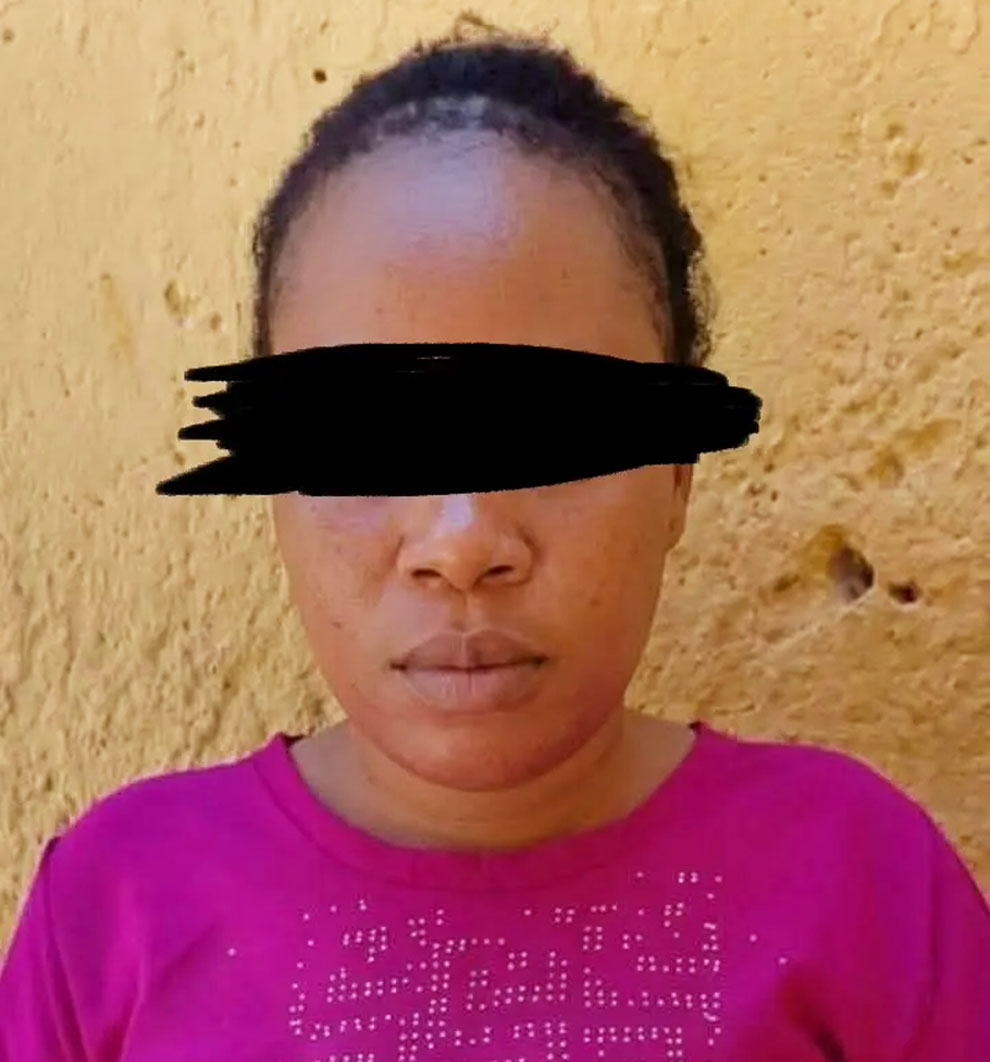
Kano Woman Pleads Guilty to Severing Boyfriend’s Manhood Over Marriage Dispute
A Kano Magistrates’ Court has ordered the remand of 25-year-old Maimuna Idris in a correctional centre after she pleaded guilty to allegedly cutting off her boyfriend’s manhood with a knife. The prosecution told the court that the attack occurred after she discovered his intention to marry another woman .
The Kano State Police Command arrested Idris, a resident of Maigatari Local Government Area of Jigawa State, following a report from the management of Durbar Hotel in Badawa Quarters, Kano, who alerted authorities to the shocking incident . The incident occurred on July 27, 2026, at about 11:00 a.m., when Idris allegedly attacked her boyfriend, Ashiru Sani, with a sharp knife after learning of his plan to marry another woman, a revelation that sparked a violent reaction with life-altering consequences . According to the prosecution, the attack was so severe that she completely severed Sani’s manhood during the altercation, leaving him with catastrophic injuries that required immediate emergency medical attention . The hotel management alerted security operatives at approximately 12:50 p.m., prompting the Badawa Divisional Police Officer to lead a team of detectives to the scene, where the suspect was arrested and the weapon—a sharp knife—was recovered as an exhibit that will be presented as evidence during the trial .
READ ALSO:
- Jorge Messi, Father and Agent of Lionel Messi, Dies at 68 After Long Illness
- Edo Spiritualist Arrested for $1,100 Sextortion of Indian Woman – EFCC
- Wike mocks Bode George, calls him ‘failed politician’ who can’t win his polling unit
Idris was arraigned before Magistrate Sadiya Usman on a two-count charge of attempted culpable homicide and causing grievous hurt, offences that contravene Sections 229 and 248 of the Penal Code, which carry severe penalties upon conviction . In a dramatic development that surprised the courtroom, she pleaded guilty to both charges when they were read to her in court, potentially paving the way for a swift resolution of the case . Magistrate Usman ordered that Idris be remanded in a correctional centre and adjourned the case until September 9, 2026, for further mention, giving the prosecution time to prepare and present their case fully .
Kano State Commissioner of Police, Ibrahim Adamu Bakori, has strongly condemned the attack, describing violence as an unacceptable response to personal disagreements and warning that such acts would not be tolerated in the state . The police assured residents that a diligent, transparent, and thorough investigation would be conducted, and that the suspect would be prosecuted following the completion of the probe to ensure that justice is served for the victim . The victim was rushed to Abubakar Imam Urology Hospital, Kano, where he is currently receiving medical treatment, with doctors working to address the extent of his injuries and provide the necessary care for his recovery . Police said the investigation is ongoing, and further details about the case are expected to emerge as the legal proceedings continue.
Kano Woman Pleads Guilty to Severing Boyfriend’s Manhood Over Marriage Dispute
metro
Edo Spiritualist Arrested for $1,100 Sextortion of Indian Woman – EFCC
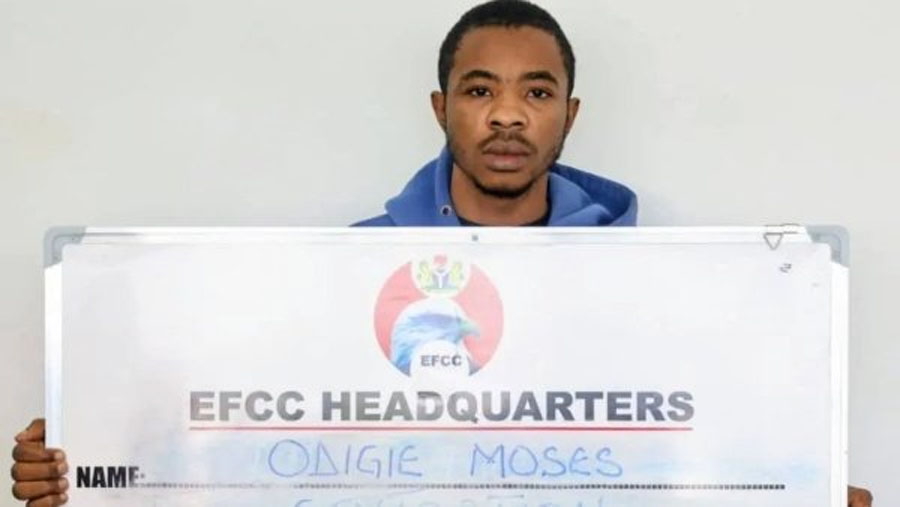
Edo Spiritualist Arrested for $1,100 Sextortion of Indian Woman – EFCC
The Economic and Financial Crimes Commission (EFCC) has arrested a self-acclaimed spiritualist, Odigie Moses, in Ekpoma, Edo State, for allegedly tricking an Indian woman into taking a naked spiritual bath, recording the session without her consent, and then blackmailing her for $1,100 .
The Economic and Financial Crimes Commission (EFCC) has arrested a self-acclaimed spiritualist, Odigie Moses, over his alleged involvement in a $1,100 sextortion scheme targeting an Indian woman . The anti-graft agency disclosed in a statement on Friday, August 7, 2026, that the suspect was apprehended in Ekpoma, Edo State, following an investigation into the alleged crime. The arrest forms part of the EFCC’s ongoing efforts to combat the growing menace of cybercrime and online blackmail, which have become increasingly sophisticated and transnational in nature, exploiting victims across borders through digital platforms.
READ ALSO:
- Wike mocks Bode George, calls him ‘failed politician’ who can’t win his polling unit
- P-Square’s Eldest Brother Henry Alleges Mother Opposed Jude Managing Duo
- DSS Arrests Three More Suspects Over Nasarawa University Professor’s Kidnap
According to the EFCC, Moses allegedly misrepresented himself on the social media payment platform Zelle as possessing spiritual healing powers capable of solving life-threatening challenges, a claim designed to attract vulnerable individuals seeking quick solutions to personal problems. The victim, an Indian woman seeking spiritual intervention for personal problems, contacted him believing he could help her overcome the difficulties she was facing, unaware that she was being lured into a carefully orchestrated scheme. The suspect subsequently deceived her into taking a naked spiritual bath, a ritual he presented as necessary for the healing process, which he recorded live without her permission, betraying the trust she had placed in him. Following the recording, the suspect allegedly threatened to release the explicit video publicly unless the victim paid him money, using the threat of public humiliation to extort funds from her. Under duress and to prevent the circulation of her nude footage, the woman transferred **$1,100** to the suspect, hoping the payment would put an end to the ordeal. “Investigation by the EFCC revealed that the victim had to pay the sum of $1,100 to the suspect in order to prevail on him not to release her nudity to the public,” the anti-graft agency stated, confirming the extent of the blackmail.
The EFCC described the act as sextortion, a form of image-based abuse involving threats to share nude or sexual images to coerce victims into complying with financial demands, a crime that has become increasingly common in the digital age as perpetrators exploit the anonymity and reach of the internet. The commission confirmed that investigations are ongoing and that Moses will be charged to court upon their conclusion, ensuring that the suspect faces the full weight of the law for his alleged crimes. The EFCC’s swift action in this case sends a strong message to cybercriminals that law enforcement agencies are committed to protecting victims and prosecuting offenders, regardless of where they operate from.
Edo Spiritualist Arrested for $1,100 Sextortion of Indian Woman – EFCC
metro
Fake Agency Director Blew N400m on Cars, Relatives, Luxury Items – Police
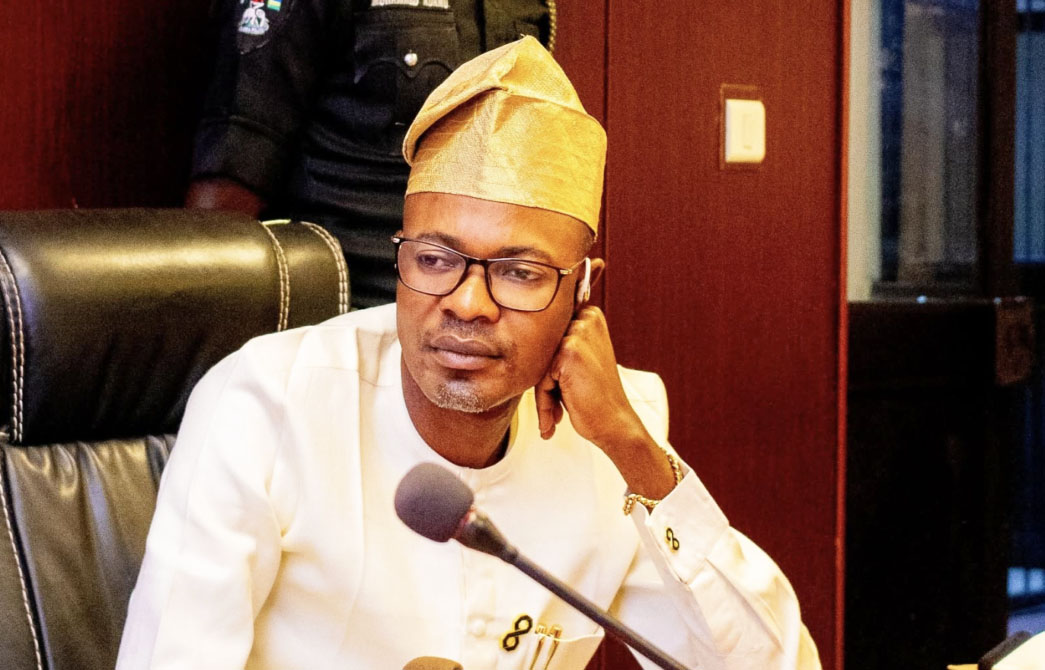
Fake Agency Director Blew N400m on Cars, Relatives, Luxury Items – Police
The Nigeria Police Force has uncovered how Adeniyi Adeyemi Matthew, who posed as Director-General of a fictitious Presidential Economic Advisory Council (PEAC) and Presidential Foreign Intervention Promotion Council (PFIPC), squandered N400 million on vehicles, family members, and luxury items. The investigation also revealed that he obtained an additional N100 million loan from a microfinance bank to sustain his extravagant lifestyle .
The Nigeria Police Force has conducted a comprehensive investigation into a case of alleged criminal conspiracy, forgery, impersonation, obtaining money under false pretences, theft of public funds, and money laundering , following a petition from the Chief of Staff to the President that exposed the activities of fraudsters operating within government circles. The probe was initiated following a written petition dated October 17, 2025, from Rt. Hon. Femi Gbajabiamila, Chief of Staff to the President, addressed to the Director-General of the Department of State Services and copied to the Inspector-General of Police . The petition drew attention to the activities of fraudsters forwarding official appointment letters purportedly from the Chief of Staff’s office, a revelation that prompted immediate security intervention and a comprehensive investigation into the matter.
The Inspector-General of Police directed the IGP-Monitoring Unit to investigate the case, setting in motion a chain of events that would uncover the full extent of the deception . The unit immediately commenced investigation and arrested the principal suspect, Prince Adeniyi Adeyemi Matthew, who claimed to be Director-General of a fictitious Presidential Economic Advisory Council (PEAC)/Presidential Foreign Intervention Promotion Council (PFIPC) , on October 27, 2025 . His statement was obtained under caution, in which he claimed he received the fake appointment letter from one Babatunde Dolapo Tanimola, who is now deceased, a convenient explanation that would later be contradicted by forensic evidence . The suspect was subsequently charged to Court in November 2025 for criminal conspiracy and forgery, but the investigation was far from complete as more evidence continued to emerge. A second petition from the Chief of Staff dated June 29, 2026, was referred to the Nigeria Police Force National Cybercrime Centre for discreet investigation and report . The investigation team obtained voluntary statements from the complainant and seven witnesses, along with cautionary statements from 22 suspects whose names emerged during the investigation, revealing the extensive network of individuals who had been drawn into the fraudulent scheme . The team also forwarded specimen signatures of the complainant and one Mr. Segun Imohiosen for forensic analysis, a critical step that would prove decisive in establishing the forgery .
READ ALSO:
- DSS Arrests Three More Suspects Over Nasarawa University Professor’s Kidnap
- I Delivered 10 Babies with My Bare Hands in Captivity — Rescued Kwara Nurse Recounts Ordeal
- Son Allegedly Kills Father, Dumps Body in Well in Adamawa
Analysis of the suspect’s World Entrepreneurs Nigeria Ltd, GTBank account No. 0695674387 revealed that the suspect received a total of N380 million in four tranches from Divine Dopacy Nigeria Ltd, a company owned by Oyekunle Gbenga Collins, who was allegedly lured by the suspect to part with the funds under the false pretence of facilitating the award of a N2.8 billion contract for the renovation of an official residence purportedly allocated to the suspect by the EFCC . Collins had been promised a N2.8 billion contract for the renovation of an official residence purportedly allocated to the suspect by the EFCC, a promise that proved entirely fictitious . The payments were made between May and July 2025: N100 million on May 16, another N100 million on May 22, a third N100 million on May 28, and N80 million on June 20, 2025, demonstrating the systematic nature of the fraud . Further analysis on the account revealed that the suspect used the proceeds for the purchase of two personal vehicles and transferred large sums to his personal accounts and family members, revealing the true destination of the funds he had fraudulently obtained . This directly contradicted Adeyemi’s claim that he converted the total N400 million to USD and handed it over to the complainant through the late Babatunde Dolapo Tanimola, exposing his lies about the fate of the money . Analysis conducted on the suspect’s Sunshine Confectionery and Catering Services Access Bank Plc Account No. 1379777557 revealed that the suspect received N20 million from the same Divine Dopacy Nigeria Ltd on July 29, 2025, bringing the total fraudulently obtained funds to N400 million . The suspect also laundered the proceeds through personal expenses and donations, again contradicting his claim about the funds being converted to dollars and proving that he had systematically defrauded his victims . Police investigations revealed that Adeyemi also obtained an N100 million loan from a microfinance bank to sustain his high-end lifestyle, indicating that even the substantial proceeds from his fraudulent activities were insufficient to fund his lavish spending habits .
Response letter from Handwriting Experts dated March 18, 2026, confirmed that the signatures on the disputed documents are not the same as the signature of the complainant, proving the purported letters of appointment were forged and not issued by the Chief of Staff, thereby dismantling Adeyemi’s claims of legitimacy . One Mr. Segun Imohiosen, the former Director, Information and Public Relations, Office of the Secretary to the Government of the Federation, confirmed that he did not sign the purported Mandate and Terms of Reference for the pioneering office of the Presidential Foreign Investment Promotion Council dated January 6, 2025, further exposing the extent of the forgery and the lengths to which the suspect had gone to create an elaborate web of deception . The police investigation identified five top government officials who played a major role in facilitating the commission of the offences, individuals whose negligence or complicity enabled the fraud to succeed . They have been recommended for trial depending on the opinion of the Director of Public Prosecution, meaning they could face legal consequences for their roles in the scandal . The officials include two directors in the Office of the Accountant-General of the Federation and the Office of the Head of the Civil Service of the Federation, a Special Assistant in the Budget Office, an Assistant Director with the Ministry of Budget and Economic Planning, and a seconded staff from the Office of the Secretary to the Government of the Federation . The report stated: “Investigation further revealed that some key staff of ministries and agencies played a major role in facilitating the commission of the offences” , confirming that institutional failures had enabled the fraud to persist . The ICPC’s investigation separately identified weaknesses in verification procedures, inter-agency coordination, and internal controls in these MDAs that were exploited by the suspect, pointing to systemic issues that needed to be addressed to prevent similar frauds in the future .
The suspect successfully smuggled forged documents to the Offices of the Secretary to the Government of the Federation, the Head of Service of the Federation, the Accountant-General of the Federation, and the Director-General, Budget Office of the Federation, convincing multiple government agencies of his legitimacy through a combination of forged paperwork and personal charm . Staff in these offices negligently processed and approved all requests made by the suspect, leading to the fictitious agency receiving an Administrative Code, office space at the Federal Secretariat, official vehicles, Authorized Establishment, Administrative Waiver to recruit 300 staff, Secondment of Officers, opening of two accounts with the CBN (USD and GBP), Provisional Self-Accounting Status, and inclusion in the 2026 Appropriation budget . The report noted that staff in these offices failed to conduct due diligence, thereby allowing the forged documents smuggled by the principal suspect to get approvals, a failure that has now been identified as a major weakness in government administrative processes . The ICPC, in its separate investigation ordered by President Bola Tinubu on July 7, 2026, uncovered two additional fictitious government agencies allegedly created by Adeyemi: the FCT Investment Promotion Agency (FIPA) and the Foreign Investment Promotion Agency/Public-Private Partnership (FIPA-PPP) . The suspect used fake legislative instruments styled as enabling Acts to facilitate their creation and relied on them to open bank accounts, further demonstrating the scale and sophistication of his fraudulent enterprise .
Fake Agency Director Blew N400m on Cars, Relatives, Luxury Items – Police
-

 Sports3 days ago
Super Falcons Thrash Egypt 6-2, Book WAFCON Quarter-Final Date with Cameroon
-
 metro2 days ago
Former Finance Minister Kemi Adeosun Loses Husband, Niyi Adeosun
-
 metro2 days ago
Osun Govt Sues EFCC, First Bank for ₦2 Billion Over Unlawful Account Freeze
-
 metro3 days ago
Two Rifles, Live Ammunition Recovered as FCT Police Storm Bandits’ Hideout
-
 Politics2 days ago
Osun Election: ‘Prepare to Sign Your Uncle as Dancer’ — Uzodimma Fires Back at Davido
-

 metro2 days ago
Customs Intercepts 140 Pump-Action Rifles, Cannabis-Infused Products Worth ₦373.8 Million at Tin Can Port
-

 Politics2 days ago
Osun Account Freeze: Atiku Accuses Tinubu of Weaponising State Institutions Against Opposition
-

 metro2 days ago
Nigerian Army Places N60m Bounty on Wanted ISWAP Leaders