

International
Nigerian man hacks US varsity systems, steals $235,000

Nigerian man hacks US varsity systems, steals $235,000
A Nigerian man living in the United Kingdom, Farouk Adekunle Adepoju has been arrested following a U.S. request for extradition on charges of wire fraud and computer fraud, Acting United States Attorney Troy Rivetti announced.
Adepoju was arrested by U.K. authorities on September 15, 2025, and is awaiting extradition to face a seven-count indictment in the Western District of Pennsylvania.
According to the unsealed indictment, between March and April 2023, Adepoju allegedly hacked into a computer belonging to a Western Pennsylvania construction company working for a university, altered email rules, created a spoofed email account, and tricked the university into sending about $235,266.80 to a fraudulent bank account. The funds have not been recovered.
READ ALSO:
- Trump introduces revised civic test to make US citizenship harder
- Why London Mayor, Sadiq Khan, was excluded from state banquet – Trump
- Reason behind Fubara’s failure to resume at Rivers govt house emerges
“Adepoju is charged with using sophisticated cyber means to illegally access accounts belonging to a business in order to victimize one of our region’s universities,” aid Acting United States Attorney Rivetti in a press release from the U.S. Attorney’s Office.
“Even from halfway across the world, however, Adepoju was not beyond the investigative reach of the Federal Bureau of Investigation.”
FBI Pittsburgh Special Agent in Charge Kevin Rojek added, “Criminals who think they can reach across the globe into the United States to line their pockets at the expense of the American public need know one thing: the FBI and our partners are not going to let you get away with it.”
Adepoju faces six counts of wire fraud and one count of computer fraud, which carry a maximum sentence of 20 years and five years in prison respectively.
Nigerian man hacks US varsity systems, steals $235,000








International
Netanyahu Faces Political Setback as Israeli President Picks Rival to Form Government
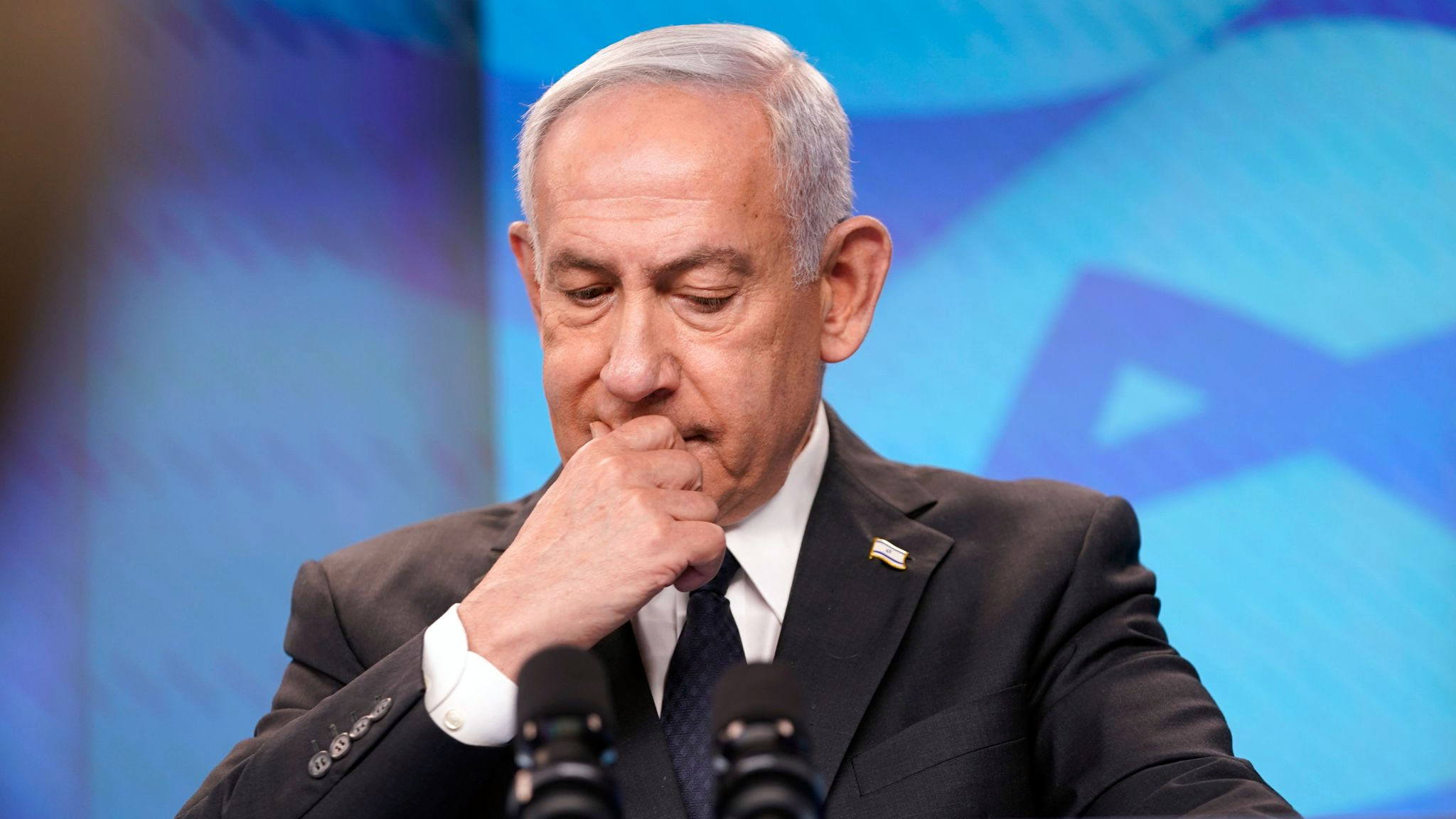
Netanyahu Faces Political Setback as Israeli President Picks Rival to Form Government
Israeli President Isaac Herzog has given opposition leader and former military chief Gadi Eisenkot the first opportunity to form the country’s next government, dealing Prime Minister Benjamin Netanyahu a major political setback after a closely contested general election.
Herzog announced his decision on Saturday, November 7, 2026, following consultations with political parties elected to the 26th Knesset, Israel’s parliament.
Eisenkot, leader of the Yashar party, emerged with the highest number of recommendations from lawmakers, receiving the backing of representatives from factions controlling 67 seats, compared with 46 seats for Netanyahu. Representatives of another faction controlling seven seats did not recommend either candidate.
The decision followed the October 27 general election, which left neither Netanyahu’s governing bloc nor the opposition grouping with the 61 seats required for a parliamentary majority in the 120-member Knesset.
Netanyahu’s religious-nationalist coalition secured 53 seats, while the four-party opposition alliance led by Eisenkot won 48. The two Arab-led parties made significant gains, securing a combined 19 seats, placing them in a potentially decisive position in negotiations over the next government.
Eisenkot is expected to receive the formal mandate from Herzog at a ceremony at the President’s Residence in Jerusalem on Sunday, November 8.
READ ALSO:
- 2027: Tinubu Challenges Atiku to Explain How He Financed University
- Afenifere Crisis: ‘There Is Only One Afenifere’, Secretary Insists Amid Breakup Allegations
- Illicit Donations: Adeboye Orders RCCG to Refund Billions Traced to Church Projects
Under the Israeli government-formation process, he will have 28 days to negotiate a coalition, with the possibility of a further 14-day extension.
The former military chief will face difficult negotiations because his opposition alliance does not have enough seats to govern independently. Although the Arab-led parties have endorsed him, Eisenkot has previously expressed reservations about forming a coalition with them.
One possible route is to establish a minority government with support from Arab-led lawmakers on confidence votes and key legislation. Another option would involve reaching an agreement with ultra-Orthodox parties that have traditionally aligned with Netanyahu.
However, both options could create tensions within Eisenkot’s own political alliance, particularly among members who oppose relying on Arab parties or making concessions to religious parties.
A broader national unity government involving Netanyahu’s Likud party is another possibility, although the two leaders have significant disagreements over key political and security issues.
Eisenkot has previously ruled out serving in a government alongside Netanyahu, while criticising the prime minister’s handling of the war in Gaza and his reliance on far-right political partners.
Netanyahu, Israel’s longest-serving prime minister, had sought to prevent an opposition-led government from emerging with the support of Arab-led parties.
Shortly before Herzog announced his decision, Netanyahu called for a national unity government and warned against the formation of an administration dependent on what he described as supporters of terrorism, referring to the Arab-led parties.
His comments drew criticism from Eisenkot’s political camp, which accused the prime minister of using divisive language to undermine the opposition’s efforts to form a government.
The Arab-led parties, which represent a significant section of Israel’s Palestinian citizens, have indicated their willingness to support efforts to end Netanyahu’s long tenure in office.
Their combined 19 seats could provide Eisenkot with the parliamentary backing needed to overcome the deadlock, although securing a workable arrangement remains uncertain.
Eisenkot, 66, served as chief of staff of the Israel Defence Forces from 2015 to 2019 before entering politics in 2022. He later served as an observer in Netanyahu’s wartime cabinet following the Hamas-led attacks on Israel on October 7, 2023.
He subsequently became one of Netanyahu’s most prominent critics, particularly over the conduct of the war in Gaza, the government’s security decisions and the influence of far-right politicians.
If Eisenkot fails to form a government within the stipulated period, Herzog may give another candidate the opportunity to try. If the process remains unsuccessful, Israel could be forced into another general election.
Netanyahu will remain prime minister in a caretaker capacity until a new government is sworn in.
Herzog’s decision therefore represents an important development in Israel’s political transition, but the final outcome will depend on whether Eisenkot can overcome divisions among opposition parties and secure sufficient parliamentary support.
Netanyahu Faces Political Setback as Israeli President Picks Rival to Form Government
International
White House Reaffirms US Policy Recognising Only Two Genders

The White House has reaffirmed the United States government’s policy recognising only two sexes, male and female, under President Donald Trump’s administration.
The administration restated its position in a message published on its official X account on Friday, November 6, 2026, declaring that the United States government officially recognises only two genders.
“It is the official policy of the United States government that there are only two genders: male & female,” the White House stated.
The latest declaration reinforces Trump’s position on gender identity and his administration’s efforts to make biological sex the basis for federal government policies, official documents and administrative procedures.
Trump formally established the policy on January 20, 2025, through an executive order titled Defending Women From Gender Ideology Extremism and Restoring Biological Truth to the Federal Government.
Under Section Two of the executive order, the President declared that it was the policy of the United States to recognise two sexes, male and female.
The directive defined sex as an individual’s unchangeable biological classification as either male or female, distinguishing it from gender identity.
READ ALSO:
- ‘Stop Blaming Us’, APC Tells Atiku, ADC Over Court Judgment
- Atiku to Tinubu: You Cannot Use Courts to Escape Nigerians’ Verdict
- University Funding Crisis: States Beg FG to Take Over Cash-Strapped Institutions
It also instructed federal agencies to adopt the definitions when interpreting and implementing federal laws, regulations and government policies.
Among other measures, the executive order directed government agencies to review and remove official statements, policies, regulations and communications considered inconsistent with the administration’s position.
It further required federal agencies to ensure that official forms requesting information about an individual’s sex provided only male and female options.
The policy marked a significant departure from measures introduced under former President Joe Biden, whose administration expanded federal recognition of gender identity in several areas of government operations.
In 2022, the Biden administration introduced an X gender marker option on US passports, allowing applicants who did not identify as male or female to select the alternative designation.
Trump’s executive order sought to reverse such measures and restore biological sex as the basis for federal government recognition.
The administration has maintained that the policy is intended to protect sex-based rights and ensure consistency in the interpretation of federal laws.
However, the policy has generated considerable debate over transgender rights, gender identity, discrimination and the legal recognition of transgender and non-binary people in the United States.
The White House’s latest declaration did not announce a new executive order or additional regulatory measures but reaffirmed the administration’s existing position on an issue that continues to attract political, legal and social debate.
White House Reaffirms US Policy Recognising Only Two Genders
International
US Offers $20m Reward, Relocation for Information on Iran’s Nuclear Programme
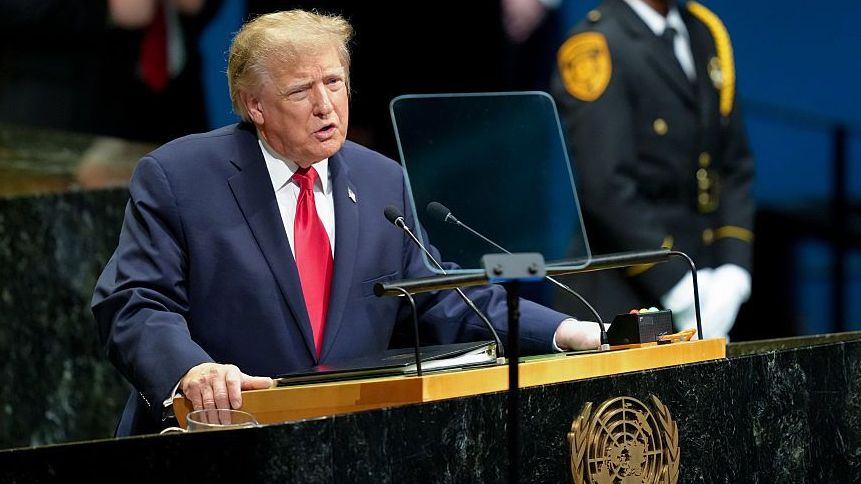
The United States has announced a reward of up to $20 million, alongside the possibility of relocation, for anyone who provides credible information about Iran’s nuclear programme, including its facilities, equipment and personnel.
The offer was announced by the US Department of State through its Rewards for Justice programme and publicised by the US Central Command (CENTCOM) on Friday, November 6, 2026.
According to the announcement, the reward covers information about Iran’s nuclear facilities, equipment and individuals associated with the programme, including members of the scientific community.
The US is also seeking intelligence about the movement of any of the facilities, equipment or personnel connected to the programme.
The Rewards for Justice programme said the offer could provide informants with up to $20 million and the possibility of relocation, although it did not specify the exact criteria for determining the amount payable for particular information.
The initiative is part of Washington’s efforts to obtain intelligence on Iran’s nuclear activities amid continuing tensions between the two countries over Tehran’s nuclear ambitions.
In explaining the decision, the US State Department referred to concerns raised by the International Atomic Energy Agency (IAEA) about Iran’s uranium enrichment activities and its compliance with international nuclear safeguards.
The department said the IAEA reported in 2025 that Iran was enriching uranium to 60 per cent purity, a level significantly higher than the enrichment required for most civilian nuclear applications and relatively close to the 90 per cent generally associated with weapons-grade uranium.
READ ALSO:
- ‘Stop Blaming Us’, APC Tells Atiku, ADC Over Court Judgment
- Atiku to Tinubu: You Cannot Use Courts to Escape Nigerians’ Verdict
- University Funding Crisis: States Beg FG to Take Over Cash-Strapped Institutions
According to the US government, further enrichment of Iran’s existing stockpile could potentially produce enough material for several nuclear weapons.
Washington also accused Tehran of failing to meet its safeguards obligations to the IAEA, saying the agency had lost what it described as its “continuity of knowledge” regarding Iran’s production and inventory of important nuclear components, including centrifuges.
Centrifuges are machines used to enrich uranium by increasing the concentration of the uranium-235 isotope.
The United States maintains that Iran’s nuclear activities pose a security concern, although Tehran has consistently insisted that its nuclear programme is peaceful and intended for civilian purposes.
The Rewards for Justice programme was established in 1984 under the US government’s national security rewards initiative. It is administered by the State Department’s Bureau of Diplomatic Security and offers financial incentives for information that protects American lives and advances US national security interests.
The latest offer comes amid continuing diplomatic efforts to address the nuclear dispute and prevent further escalation of the conflict involving the United States and Iran.
US President Donald Trump has repeatedly claimed that American military operations have severely damaged Iran’s nuclear capabilities. However, Washington continues to seek intelligence about the programme, including the location of facilities and the activities of individuals connected to it.
Trump said on Friday that Iran was interested in reaching an agreement with Washington, adding that discussions were ongoing.
Iranian President Masoud Pezeshkian has also indicated that his government remains interested in resolving the crisis through dialogue.
The latest $20 million offer signals that the United States is continuing to pursue intelligence on Iran’s nuclear infrastructure even as diplomatic efforts to address the dispute remain underway.
US Offers $20m Reward, Relocation for Information on Iran’s Nuclear Programme
-

 metro3 days ago
₦50,000 Relief Fund: FG Reveals Criteria for Selecting Beneficiaries
-

 News3 days ago
BREAKING: Court Sacks David Mark-Led ADC Exco, Nullifies Atiku’s 2027 Presidential Candidacy
-

 News3 days ago
Sultan Honours MURIC Founder Ishaq Akintola for Decades of Religious Rights Advocacy
-

 metro2 days ago
NNPCL Slashes Petrol Price By Up To ₦80, Sells At ₦1,325 Per Litre In Abuja
-

 Politics3 days ago
Trouble in ADC as Momodu, South-West Leaders Raise Alarm Over Atiku Campaign
-

 Insurance3 days ago
Continental Reinsurance Strengthens IPO Appeal As Major Shareholder Commits To Five-Year Stake Retention
-
 News2 days ago
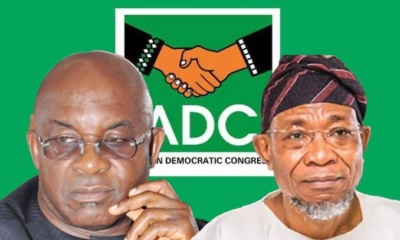
ADC Heads to Appeal, Insists Mark, Aregbesola Remain Party Leaders Despite Court Ruling
-

 News2 days ago
Tinubu’s Visit: One Feared Dead, Several Injured as APC Women’s Bus Collides With Security Vehicle in Uyo