
metro
Nigerians to pay more for bread over Russia-Ukraine war
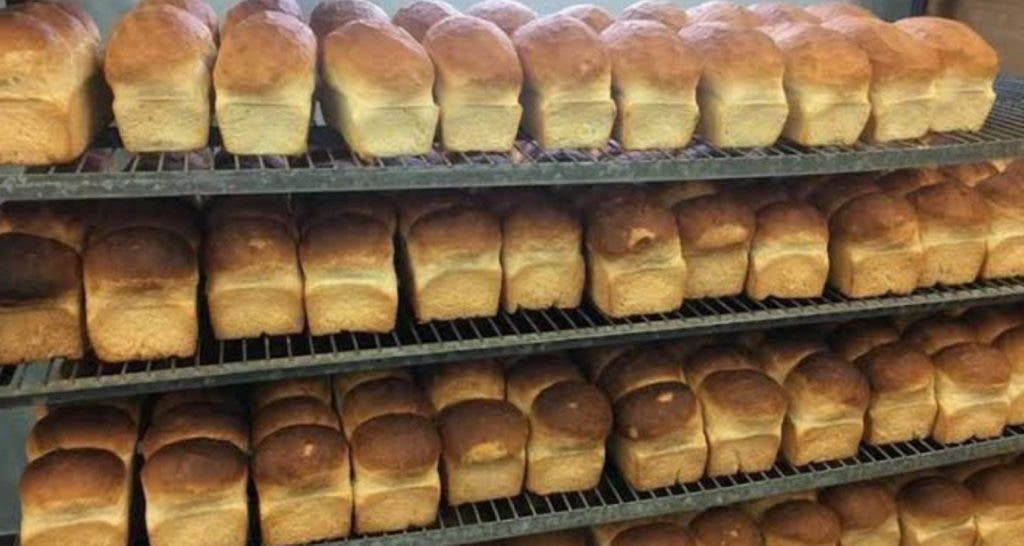
The price of bread is set to rise if the current Russian-Ukrainian war persists.
Russia is the world’s largest exporter of wheat, accounting for more than 18 per cent of international exports.
The downside to the war is that if supply from Russia is distorted for whatever reason, Nigeria could be faced with further surging wheat prices in its local market as a result of the supply gap, which could lead to an increase in the price of some other by-products of wheat, such as bread, wheat meal amongst others.
The price of bread was increased by more than 80 per cent between 2020 and 2021.
In 2020, the Association of Master Bakers and Caterers of Nigeria (AMBCN) had hinted at a 50 per cent increase in the price of bread citing the surging cost of raw materials and COVID-19 impact.
According to the Central Bank of Nigeria (CBN), wheat is the third most widely consumed grain in the country, with its local production only accounting for just one per cent of the five to six million metric tons consumed annually, with the country relying on importation to meet local demands.
The demand-supply gap has necessitated the spending of over $2 billion on wheat importation annually, representing the second-highest contributor to the country’s food import bill.
The National Bureau of Statistics (NBS) says Nigeria imported goods valued at N813.19 billion (over $2bn annually) between January and September 2021, representing 3.7% of Nigeria’s total import in the same period.
A further look at the data shows that Nigeria imported durum wheat worth over N128.1 billion in the nine-month period of 2021, while it recorded a N144.14 billion durum wheat import in the previous year.
Also, Nigeria imports different types of seafood from Russia, some of which include mackerel, meat, herrings, blue whiting, other fish, all in frozen form.
It is also worth noting that Nigeria imported vaccines for human medicine from Russia in Q4 2020.
In 2019, Russia and Ukraine together exported more than a quarter (25.4 per cent) of the world’s wheat, according to the Observatory of Economic Complexity (OEC).
In the event of outright aggression, the flow of wheat and grain could be disrupted. Economic sanctions or military action could have a significant effect on the cost of food as importers seek to find alternatives.
Ukraine is the fifth largest exporter of wheat, accounting for seven per cent of sales globally in 2019.
Daily Trust reported President of Association of Master Bakers & Caterers of Nigeria (AMBCN), Mansur Umar, as saying the current situation will definitely lead to an increase in the prices of flour.
He said, “Flour millers are happy to hear of things like this because they will capitalise on it to increase prices by hoarding the product to induce artificial scarcity.
“We are in trouble. I wish we were ready with the cassava flour at least, we can substitute with up to 10 per cent and that will save this country billions of naira.
“As we speak, a major distributor of one of the brands has announced a N100 increase from Monday.”






metro
Court Orders Final Forfeiture of Jeremiah Useni’s UK Property to FG
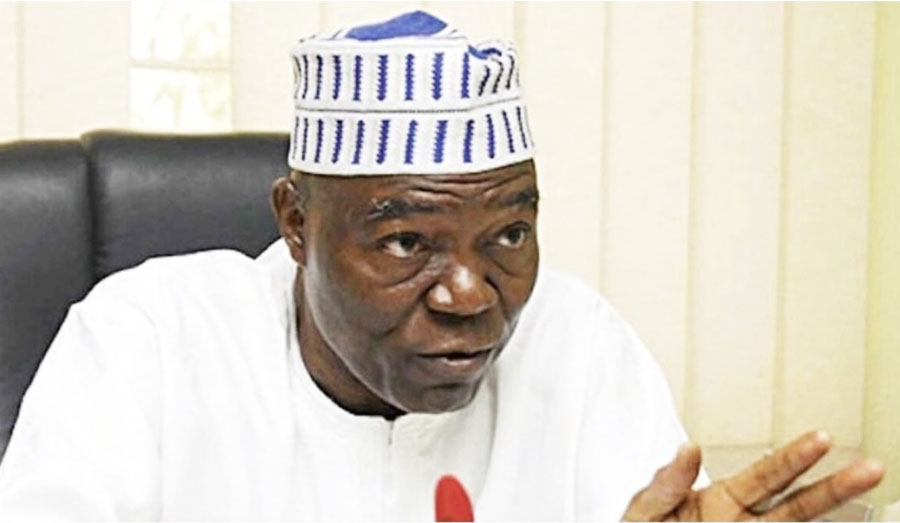
Court Orders Final Forfeiture of Jeremiah Useni’s UK Property to FG
The Federal High Court in Abuja has ordered the final forfeiture of a UK property linked to late former FCT Minister, Jeremiah Useni, to the Federal Government, in a ruling that reinforces Nigeria’s push to recover suspected illicit assets.
Delivering judgment on Tuesday, Binta Nyako granted the application filed by the Code of Conduct Bureau (CCB), declaring that the property was reasonably suspected to have been acquired with proceeds of unlawful activities. The forfeited asset is located at No. 79, Randall Avenue, Neasden, London NW2 7SX, in the United Kingdom.
The court held that evidence presented by the CCB showed a clear mismatch between Useni’s legitimate earnings while in public office and the value of the London property. According to the agency, findings from its Financial Investigation and Forensic Accounting Unit (FIFAU) revealed that the late minister’s declared income could not justify the acquisition, indicating the likelihood of undeclared or illicit funds.
READ ALSO:
- Senate approves Tinubu’s $6bn loan request
- US Warns Iran Against Closing Strait of Hormuz, Cites “Severe Consequences”
- China Thanks ‘Relevant Parties’ as Ships Cross Strait of Hormuz Amid Tensions
Before the final ruling, the court had granted an interim forfeiture order on November 20, 2025. Following this, a public notice was published inviting anyone with interest in the property to contest the forfeiture. However, no individual or organisation filed any claim within the stipulated timeframe, paving the way for the final forfeiture order. The case, marked FHC/ABJ/CS/2333/2025, listed the administrators and executors of Useni’s estate, alongside the property itself, as respondents.
In a related development, the United Kingdom’s First-Tier Tribunal (Property Chamber), in case REF/2023/0155, had earlier ruled that Useni was the beneficial owner of the property. The tribunal found that the property was acquired under a fictitious identity, a move aimed at concealing ownership.
Ownership claims by individuals identified as “Ms Tali Shani” and senior lawyer Mike Ozekhome were dismissed by the tribunal. The court held that documents presented to support the claims were fraudulent and unreliable, further strengthening the case for forfeiture.
Counsel to the CCB, Sufyan Ahmad, anchored the application on provisions of the Proceeds of Crime (Recovery and Management) Act, 2022 and the 1999 Constitution (as amended). In her ruling, Justice Nyako stated that the forfeiture aligns with Nigeria’s legal framework on asset recovery and serves the interest of justice, particularly in cases involving suspected proceeds of corruption.
The judgment underscores the Federal Government’s intensified efforts to trace, recover, and reclaim illicit assets held both locally and abroad. It also highlights increasing collaboration between Nigerian authorities and international legal systems in tackling financial crimes and corruption-linked assets.
Court Orders Final Forfeiture of Jeremiah Useni’s UK Property to FG
metro
Teen alleges torture by stepmother, loses hand

Teen alleges torture by stepmother, loses hand
A 19-year-old boy, identified as Friday, has accused his stepmother of subjecting him to torture that resulted in the amputation of one of his hands.
Friday’s account was made public in a viral video shared by Nigerian content creator Lucky Udu.
The teenager alleged that the incident occurred while his father was away, during which his stepmother accused him of having an inappropriate relationship with her and demanded that he confess.
He claimed she threatened him with a knife when he denied the allegation.
Friday further alleged that he was taken to a man who accused him of witchcraft and subjected him to torture, including burning his hands over charcoal.
He said his injuries later became infected, but his stepmother allegedly refused to take him to a hospital and instead forced him to continue working.
According to him, a passerby who noticed his condition alerted the police, leading to his rescue and the arrest of the stepmother.
He was subsequently taken to a specialist hospital where doctors amputated his hand due to the severity of the damage.
The incident has generated reactions on social media, with many Nigerians calling for justice and stronger protection for vulnerable children.
Authorities have yet to issue an official statement on the matter.
Teen alleges torture by stepmother, loses hand
metro
Cars Torched as South Africans Protest Alleged Nigerian ‘Igbo King’ Coronation

Cars Torched as South Africans Protest Alleged Nigerian ‘Igbo King’ Coronation
Violence erupted on Monday in KuGompo City, Eastern Cape, South Africa, following the reported coronation of a Nigerian national as a traditional king, prompting the Nigerian High Commission to issue a 10-point safety advisory urging Nigerians in the country to prioritise safety and maintain a low profile.
According to the advisory titled “Advisory to All Nigerians Living in the Republic of South Africa,” citizens were urged to exercise caution, limit movement, avoid interactions with unfamiliar persons, and suspend socio-cultural activities to reduce the risk of becoming targets amid rising tensions. The circular also advised Nigerians to respect local laws and customs and refrain from posting inflammatory content on social media that could escalate the situation.
What began as a peaceful protest over the alleged installation of Solomon Eziko as Igwe Ndigbo quickly escalated. Videos and images of the coronation circulated widely, sparking anger among residents and civic groups. Protesters torched vehicles, vandalised properties, and clashed with law enforcement. Police reportedly deployed teargas and rubber bullets to disperse the crowds, while fire services worked to contain the blazes.
READ ALSO:
- AI Facial Recognition Error: Grandmother Wrongfully Jailed for Five Months
- El-Rufai Alleges Plot to Arrest Brother to Force Negotiation
- WAEC Releases 2026 WASSCE Timetable for School Candidates
A man was stabbed during the unrest and taken to hospital. Authorities clarified that the victim was not linked to the demonstration, though some civic groups claimed one of their members was injured and also struck by a vehicle.
Several groups, including ActionSA, the Patriotic Alliance, and the civic movement March and March, joined traditional leaders in condemning the alleged coronation as illegal and unconstitutional.
- Athol Trollip, ActionSA Eastern Cape leader, said: “There is no constitutional provision for any foreigner, legal or illegal, to coronate themselves in the Eastern Cape. We support existing local kings, not Nigerian kings.”
- Steve Motale, Patriotic Alliance spokesperson, said: “We condemn this fake coronation. Even the Nigerian High Commissioner has denounced it.”
The Royal House of AbaThembu also denied involvement, calling social media claims linking King Buyelekhaya Dalindyebo to the coronation false and misleading.
The unrest follows recent anti-migrant protests in South Africa, where residents demanded stricter immigration policies targeting Nigerians and other foreign nationals. Analysts say the protests reflect broader xenophobic tensions and concern over foreign influence on local traditional structures.
The Federal Government of Nigeria continues to monitor the situation closely, urging citizens in South Africa to remain law-abiding, cautious, and vigilant until stability returns.
Cars Torched as South Africans Protest Alleged Nigerian ‘Igbo King’ Coronation

-

 Entertainment2 days ago
Funke Akindele, Toyin Abraham Spark Reactions Over Alleged Snub at Iyabo Ojo’s Premiere
-
 metro2 days ago
Jos Attack: Plateau Govt Declares 48-Hour Curfew After Deadly Assault
-
 Education23 hours ago
WAEC Releases 2026 WASSCE Timetable for School Candidates
-

 Auto18 hours ago
Lagos NURTW Chairman Sego Distributes Exotic Cars, Luxury Items to Cabinet Members (Video)
-
 News2 days ago
UK Raises Visa Costs, Tightens Immigration Rules From April 8
-
 International2 days ago
Iran Threatens US-Linked Universities in Middle East Amid Escalating Tensions
-

 metro22 hours ago
Cars Torched as South Africans Protest Alleged Nigerian ‘Igbo King’ Coronation
-
 Auto2 days ago
Motoring World marks 30 years, set to rally industry leaders in Lagos