

News
Three killed after second attack on Russian bomber base

Ukraine war: Drone attack on Russian bomber base leaves three dead
Three Russian military personnel were killed early on Monday by falling wreckage of a Ukrainian drone that was shot down as it was attacking a base in Russia’s Saratov region, Russian news agencies have reported.
The three Russian servicemen died from severe injuries sustained after the Ukrainian drone attack on Engels bomber base in south Russia.
Air defences reportedly shot down the drone but falling debris caused the casualties in the overnight attack, it was learnt.
BBC News reports that earlier this month, Russia accused Ukraine of a similar attack on the airfield, home to strategic bombers that have taken part in missile attacks on Ukraine.
The base lies about 500km (310 miles) north-east of Ukraine’s border.
The Ukrainian military has not officially commented on the attacks but BBC Russia Editor Steve Rosenberg says the latest incident will come as an embarrassment to Russian authorities.
Russia’s defence ministry says its air defences shot down the Ukrainian drone flying at low altitude at about 01:35 on Monday (22:35 GMT Sunday).
Three Russian servicemen died of injuries caused by drone debris, it adds.
Saratov governor Roman Busargin expressed his condolences to the men’s families and friends, and said there was “absolutely no threat to residents” in the town of Engels itself.
Earlier, social media users posted videos where what sound like blasts and air sirens can be heard at the Engels airfield.
In the previous reported attack on 5 December on the airfield and another air base in the Ryazan region, three servicemen were also killed by debris from a downed Ukrainian drone, Moscow said at the time. Two aircraft were lightly damaged.
The Ukrainian military made no comment on the reported attacks.
The Engels air base has been repeatedly used by Russia to carry out missile strikes on various targets in Ukraine since Moscow launched its full-scale invasion on 24 February.
The Kremlin has accused Ukraine of attacking its territory before, but the alleged attacks in December are deeper into Russia than previous ones.










News
‘Debt Is Worse Than Leprosy’: Obasanjo Slams Tinubu’s Borrowing Policy
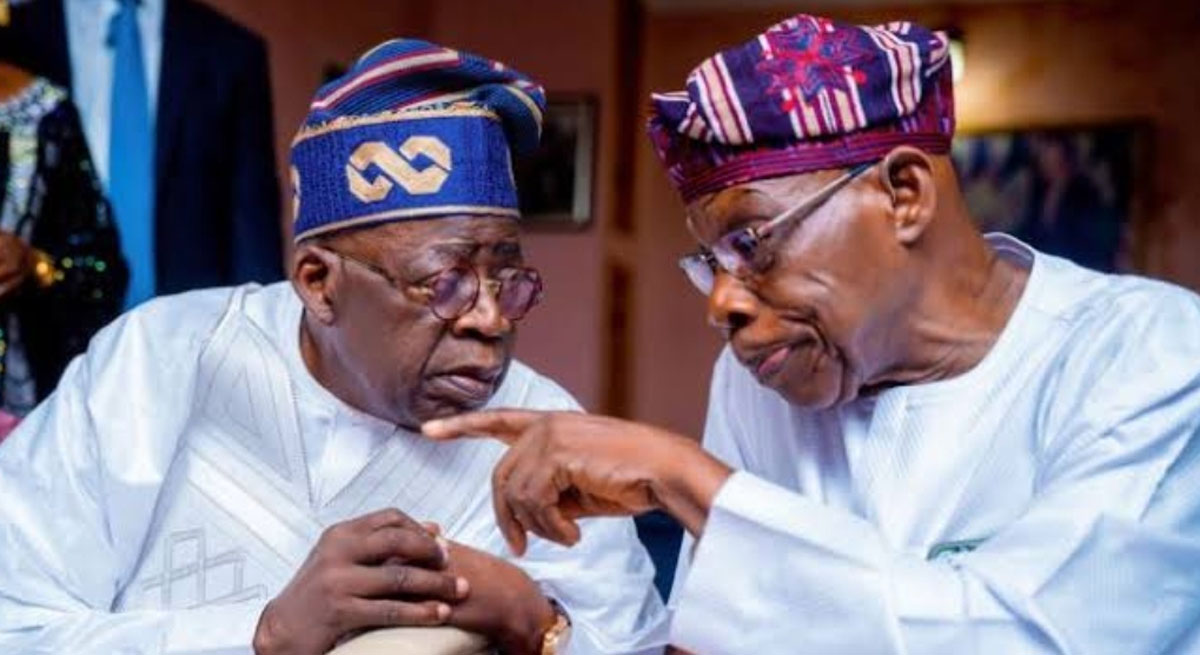
Former President Olusegun Obasanjo has criticised President Bola Ahmed Tinubu over his administration’s borrowing policy, describing the president’s position that borrowing is not leprosy as “absolute nonsense”.
Obasanjo warned that excessive borrowing could mortgage the future of generations of Nigerians, arguing that the consequences of accumulated national debt extend far beyond the present generation.
The former president made the remarks on Friday, October 30, 2026, while speaking at the Ajibosin Platform, a public forum held in Abeokuta, Ogun State, with the theme, “Leveraging Artificial Intelligence to Solve Grassroots Problems and Accelerate National Development.”
His comments were a direct response to Tinubu’s defence of government borrowing in April, when the president maintained that taking loans was not necessarily wrong if the government could generate sufficient revenue to repay them.
“If we have to borrow, we borrow. Borrowing is not leprosy; we just have to work hard to be able to pay for it,” Tinubu had said during a meeting with Plateau State leaders at the Presidential Villa in Abuja.
Rejecting the president’s comparison, Obasanjo said debt was more destructive than leprosy because its effects could burden entire generations.
“And for anybody to say debt is no leprosy is absolute nonsense. Debt is worse than leprosy. Because leprosy destroys only one person. Debt destroys generations,” the former president declared.
READ ALSO:
- US Midterm Elections: Democrats Outpace Republicans as Early Voting Hits Record 48 Million
- NCC Deploys Device Checker App to Tackle Fake, Cloned Phones in Nigeria
- Romance Scam: FBI Declares Nigerian Woman Wanted, Offers ₦6.7m Reward
Obasanjo also questioned Nigeria’s economic performance over the past 47 years, particularly the dramatic depreciation of the naira against the United States dollar.
Recalling when he established his farm nearly five decades ago, the former president said the naira exchanged at approximately N1 to $1.85, contrasting the historical rate with what he described as the current exchange rate of about N1,500 to the dollar.
“When I started my farm, 47 years ago, naira to the dollar was one naira to $1.85. Forty-seven years ago. What has Nigeria done in 47 years that we now have 1,500 naira to the dollar? What have we done?” he asked.
He also questioned the capacity of Nigeria’s political leadership to formulate policies that would improve the living conditions of ordinary citizens.
“What do our leaders know? And what do they not know? And from what they know, what can they do for us?” Obasanjo queried.
The former president further criticised Nigeria’s dependence on foreign financial institutions, particularly the World Bank and International Monetary Fund (IMF), arguing that their economic prescriptions were not necessarily designed to address the country’s peculiar challenges.
According to him, Nigeria should not unquestioningly adopt economic policies recommended by international institutions without considering local realities.
“World Bank and IMF were not designed for us. They were not built by us. They were built before we became independent. And that’s the people who would determine what we do,” he said.
READ ALSO:
- ₦50,000 Monthly Relief: FG Begins Cash Payments to Vulnerable Nigerians
- Zamfara Kidnap: Three Imams Regain Freedom After Weeks in Captivity, Three Others Still Held
- Atiku’s Son Dumps Father’s Political Camp, Launches Tinubu Re-Election Campaign
Obasanjo also recalled Nigeria’s past agricultural policies, arguing that the country had been discouraged from supporting its farmers through subsidies even as developed economies continued to provide substantial assistance to their agricultural sectors.
He cautioned Nigerian policymakers against relying excessively on recommendations from foreign-trained economists without examining whether such policies would work under the country’s economic conditions.
The former president’s criticism comes amid renewed debate over Nigeria’s rising public debt and the Tinubu administration’s latest borrowing plans.
On October 27, Tinubu asked the National Assembly to approve a supplementary external borrowing plan totalling approximately $20.52 billion and €1.045 billion for the 2026–2027 period.
The request, conveyed in a letter read by Senate President Godswill Akpabio, is intended to finance projects and programmes across several sectors, including infrastructure, power, transportation, healthcare, education, agriculture, security and job creation.
The proposed borrowing has renewed concerns about the country’s ability to manage its debt obligations and generate sufficient revenue to finance public expenditure.
According to figures from the Debt Management Office (DMO), Nigeria’s public debt stood at N166.79 trillion as of June 2026, compared with N87.38 trillion in June 2023. Exchange-rate movements also contributed to the increase in the naira value of the country’s debt.
Tinubu’s administration has consistently defended borrowing as necessary to bridge infrastructure gaps, finance development projects and support its ambition of building a $1 trillion economy by 2030.
The president has argued that the more important consideration is how borrowed funds are invested, the economic value they generate and the government’s capacity to repay its obligations.
However, Obasanjo’s latest intervention has added to the growing public debate over the country’s borrowing strategy, debt sustainability and the long-term economic consequences for future generations.
‘Debt Is Worse Than Leprosy’: Obasanjo Slams Tinubu’s Borrowing Policy
News
Tinubu Orders Release of 300 Containers of Electricity Equipment Trapped at Nigerian Ports
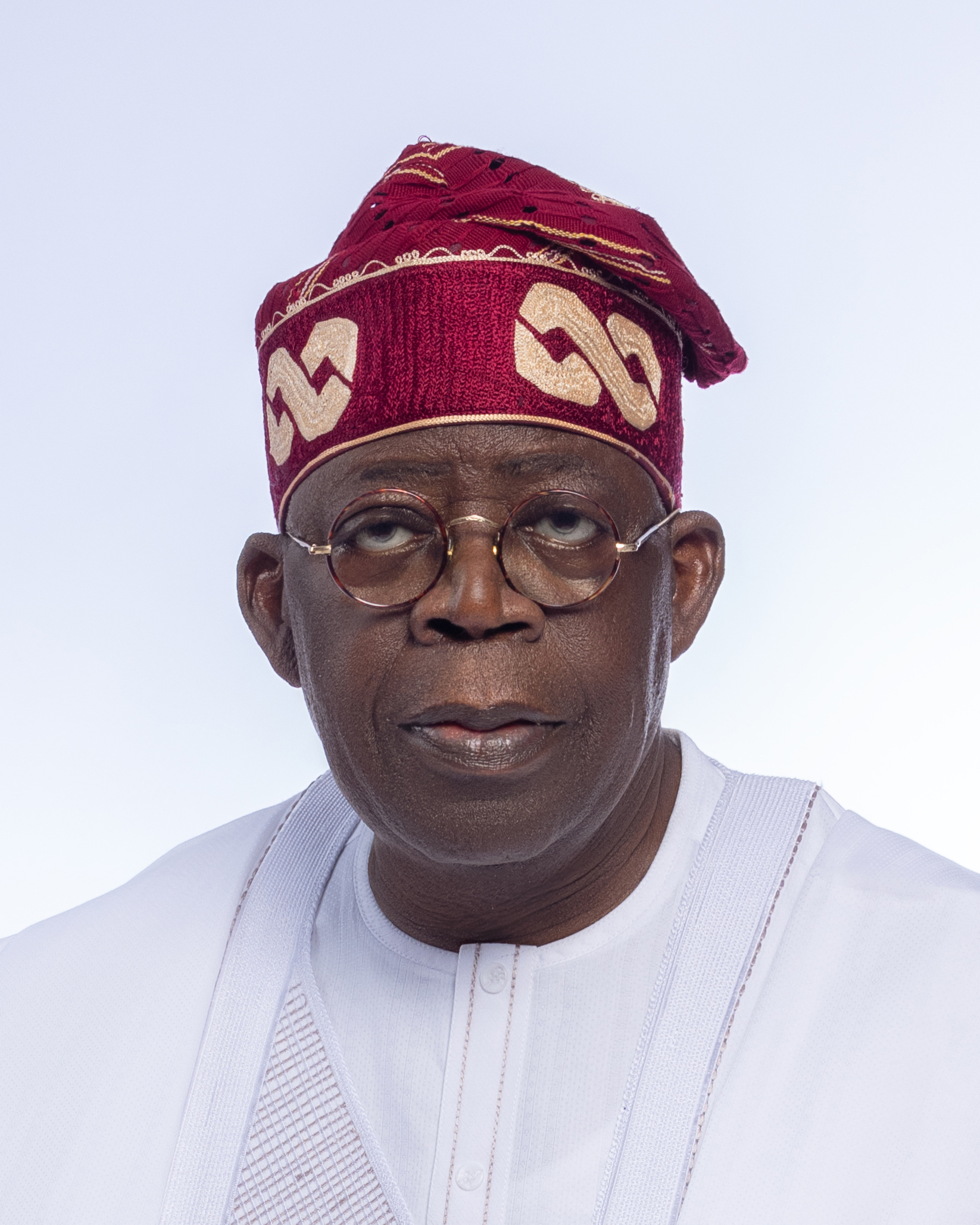
Tinubu Orders Release of 300 Containers of Electricity Equipment Trapped at Nigerian Ports
President Bola Tinubu has reportedly ordered the release of more than 300 containers of electricity equipment that have remained stranded at Nigerian ports, with some consignments said to have been held for as long as 20 years.
The equipment will undergo technical assessment to determine which items remain usable and can be deployed to support efforts to improve electricity supply across the country.
The development could provide an opportunity to recover valuable power-sector assets that have remained unused at the ports for years, although their actual contribution to electricity generation and distribution will depend on their condition, suitability and cost of rehabilitation.
The Federal Government is also pursuing plans to increase Nigeria’s electricity capacity to 19,000 megawatts (MW), as part of broader efforts to address the country’s persistent power challenges.
READ ALSO:
- US Police Release Bodycam Footage After Dispute Over Three-Year-Old Soccer Prodigy
- Kano Task Force Arrests Suspected Gang Leader in Port Harcourt Over Deadly Clashes
- Abuja Market Shooting: NSCDC Suspends Officer, Orders Trial
However, the proposed assessment of the stranded equipment will be crucial in determining how much of it can be salvaged and whether it can be integrated into the country’s existing electricity infrastructure.
Nigeria has continued to face electricity supply challenges, including inadequate generation, transmission constraints, distribution difficulties and ageing infrastructure.
The release and possible deployment of the equipment could support ongoing interventions in the power sector if the items are found to be functional and suitable for use.
Further details are expected on the assessment process, the estimated value of the equipment and the timeline for deploying any recoverable items.
Tinubu Orders Release of 300 Containers of Electricity Equipment Trapped at Nigerian Ports
News
Ijeh Barracks Mosque: Police Promise to Monitor Reconstruction as MURIC Urges Calm
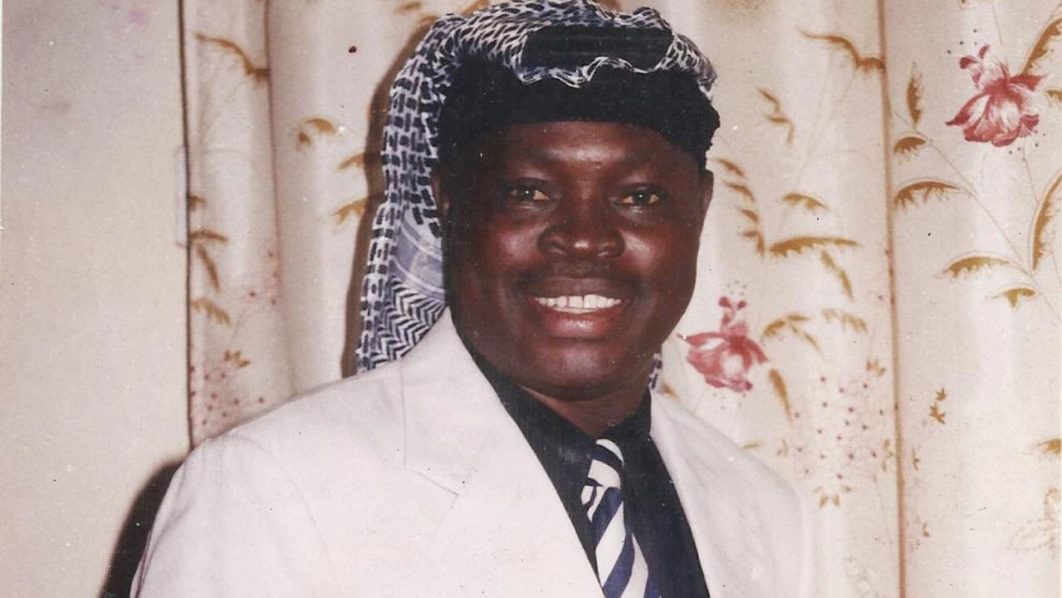
Ijeh Barracks Mosque: Police Promise to Monitor Reconstruction as MURIC Urges Calm
The Nigeria Police Force has assured the Muslim Rights Concern (MURIC) that its complaint over the demolition of the Ijeh Police Barracks Mosque in Obalende, Lagos State, is receiving attention, with the Lagos State Police Command’s Criminal Investigation Department (CID) promising to monitor the mosque’s reconstruction.
MURIC Executive Director, Professor Ishaq Akintola, disclosed this in an update issued on Thursday, October 29, 2026, following telephone calls from police officials in Abuja and Lagos.
According to Akintola, a senior Muslim police officer at the Police Headquarters in Abuja contacted him to confirm that the authorities were aware of MURIC’s complaint and its public outcry over the alleged refusal of the contractor handling the barracks project to rebuild the demolished mosque.
The officer reportedly assured him that the matter was receiving attention and that the mosque would not be abandoned.
Akintola said he received another call about five minutes later from officials of the Lagos State Police Command’s CID at Panti, who assured him that they would monitor the mosque’s reconstruction.
He declined to disclose the identity of the senior police officer who contacted him from Abuja, saying the officer’s identity should remain confidential.
READ ALSO:
- 2027: Akpabio Says Tinubu’s Online Critics Are Paid, Mobilises Northern Youths
- 2027 Election: PRP Asks Court to Bar APC From Rivers Governorship Race
- Atiku Challenges Tinubu Over Mecca Trip, Demands Daily Photo, Video Proof
Following the communications, the MURIC director urged members and supporters of the organisation to remain peaceful and allow the police authorities to address the matter.
“Therefore, let us relax, remain calm and allow the police authorities to handle the issue,” Akintola said.
He described the calls from the police offices in Abuja and Lagos as signs that the authorities were sensitive to the concerns raised by the Muslim community.
“By contacting us from Police Headquarters, Abuja and also from Lagos Police Command, the Nigeria Police has displayed sensitivity, professionalism and accountability,” he said.
Akintola also thanked MURIC members and supporters for their solidarity during the controversy and urged them to exercise patience while awaiting further action.
The organisation’s complaint followed the demolition of the Ijeh Police Barracks Mosque in Obalende and concerns over the alleged failure of the contractor handling the barracks project to rebuild the facility. MURIC has called for fair treatment of Muslim worshippers and the restoration of the mosque.
However, the police assurances, as relayed by Akintola, do not establish that reconstruction has commenced or that a completion date has been agreed upon. No specific timeline for the rebuilding was announced in MURIC’s update.
The immediate issue is therefore whether the relevant authorities will take concrete steps to ensure that the demolished mosque is rebuilt.
For now, MURIC says it will allow the police to handle the complaint while urging its members to remain calm and peaceful as they await further developments.
Ijeh Barracks Mosque: Police Promise to Monitor Reconstruction as MURIC Urges Calm
-

 International2 days ago
Hackers Leak Details of 41,000 US Homeland Security Personnel in Major Data Breach
-
 metro2 days ago
Ajaero Fires Back at TUC Over Rejection of FG’s ₦70,000 Allowance
-
 metro1 day ago
Captured Bandit Exposes Alleged Military Arms Supplier, Claims Gang Collected ₦1bn From Two Customs-Linked Kidnappings
-

 metro2 days ago
Eight Days After Abduction, Kidnappers Demand ₦50m for Nasarawa Teacher
-
 metro3 days ago
TUC Rejects Tinubu’s ₦70,000 Transport Allowance, Demands ₦300,000 Salary
-
 News2 days ago
Ijeh Barracks Mosque: Police Promise to Monitor Reconstruction as MURIC Urges Calm
-
 Entertainment3 days ago
Emeka Ike Loses ₦10bn Privacy Suit Against Wike’s Aide, INEC
-

 Education3 days ago
NELFUND Introduces Token System to Stop Double Payment of School Fees